We discuss the terms cognitive, motor and affective empathy.
We explore the possible roles of shared neural activations in empathy.
We critically discuss the relationship of mirror neurons and empathy.
We outline that empathy and morality are not directly linked.
In the last decade, the phenomenon of empathy has received widespread attention by the field of social neuroscience. This has provided fresh insights for theoretical models of empathy, and substantially influenced the academic and public conceptions about this complex social skill.
The present paper highlights three key issues which are often linked to empathy, but which at the same time might obscure our understanding of it.
These issues are:
(1) shared neural activations and whether these can be interpreted as evidence for simulation accounts of empathy;
(2) the causal link of empathy to our presumed mirror neuron system; and
(3) the question whether increasing empathy will result in better moral decisions and behaviors.
The aim of our review is to provide the basis for critically evaluating our current understanding of empathy, and its public reception, and to inspire new research directions.
I am really enjoying reading your blog. If you want to buy villa in Noida Extension then call on the given number-8375000707 as we give you the best offers for buying villa in Noida Extension. https://www.villasinnoida.com/villas-in-noida-extension.php
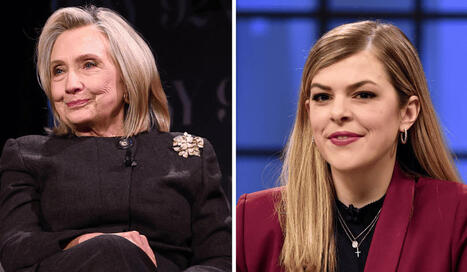
by Paul J. Batura It’s not too often that you see former First Lady, Senator and Secretary of State Hillary Clinton and Christian podcaster Allie Beth Stuckey in the same story — but that’s exactly what happened last week.
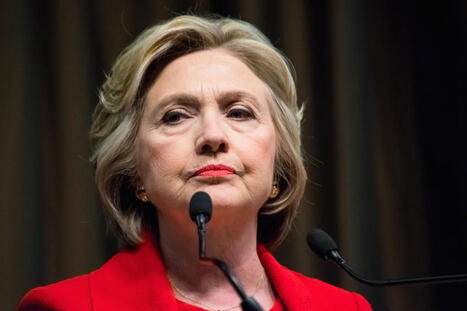
Writing in the Atlantic, Mrs. Clinton called out Mrs. Stuckey for her use of the term “toxic empathy” — which is also the name of the social conservative’s bestselling book. In the context of the magazine article, though, the former Secretary of State was incredulous that a Christian could string those two words together.
“Toxic empathy!” Clinton wrote. “What an oxymoron. I don’t know if the phrase reflects moral blindness or moral bankruptcy, but either way it’s appalling.”
Mrs. Clinton’s comments certainly reflect her worldview.
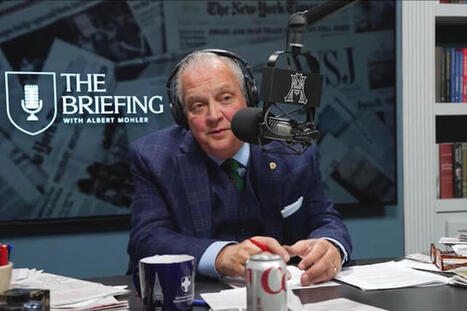
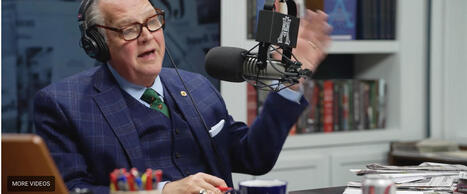
“Empathy is not a thing,” said Dr. Albert Mohler on the Feb. 3 edition of “The Briefing,” a show in which Mohler analyzes current events, giving his take on them from a Christian worldview. Mohler made his statement while addressing an opinion piece Hillary Clinton wrote in which she called out commentator Allie Beth Stuckey, as well as Pastors Joe Rigney and Douglas Wilson.
“I want to say even as I’ve been challenged on this in the last few days, it’s not so much that I think empathy is wrongly defined. It is the fact that I don’t think empathy is a thing,” said Mohler, who is president of the Southern Baptist Theological Seminary (SBTS).
Toward the Design of an Empathy Economy An empathy‑based economy requires careful design to ensure that emotional solidarity does not fade into a momentary sentiment. To address this challenge, we must first clarify what an economic zone actually is. An economic zone is not merely a marketplace where transactions occur; it is a self‑reinforcing ecosystem in which values, actions, and flows of resources circulate among participants. Traditional capitalist economies have been driven by consumption impulses ventilated by advertising. In contrast, an empathy‑driven economic zone is coordinated by affinity born from shared empathy and by acts of active care.
REICHARD: Clinton called Rigney an “extremist pastor,” citing his book Leadership and the Sin of Empathy. She accused him—along with Allie Beth Stuckey—of waging what she called a “war on empathy” and rejecting Christian virtues like mercy and compassion.
EICHER: But Rigney says that charge misunderstands his argument. Here now is his response.
JOE RIGNEY: When I read an article by Hillary Clinton accusing me of being a bad Christian for waging a “war on empathy,” I realized it was an opportunity to clarify something important.
Empathy has become one of those ideas that feels almost untouchable. It’s hard to criticize without sounding cold or dismissive, and so we rarely do. In psychology, education, and public life, we’re encouraged—often rightly—to understand where people are coming from, especially when their behavior is troubling or difficult to defend. But over time, I’ve become less certain that empathy, on its own, is the moral guide we sometimes assume it to be
iAl Mohler on "The Briefing" Al Mohler doesn’t believe empathy is a real thing, but he does believe Hillary Clinton has ruined the idea of social justice.
In his Feb. 3 podcast called “The Briefing,” the president of Southern Baptist Theological Seminary joined the conservative evangelical war on empathy and responded to Clinton’s recent essay in The Atlantic titled, “MAGA’s War on Empathy.”
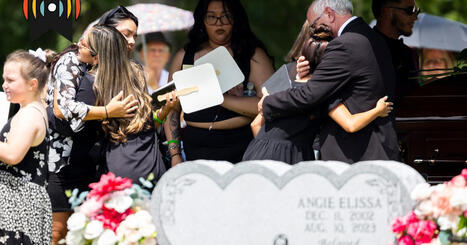
In that essay, the former U.S. secretary of state and senator laments conservatives’ apparent disregard for empathy for immigrant families and peaceful protesters. She draws examples from Minneapolis and the murders of Renee Good and Alex Pretti.
“Whatever you think about immigration policy, how can a person of conscience justify the lack of compassion and empathy for the victims in Minnesota, and for the families torn apart or hiding in fear, for the children separated from their parents or afraid to go to school?” she asks. “That compassion is weak and cruelty is strong has become an article of MAGA faith.”
by Sarah Cain Hillary Clinton has written an op-ed for The Atlantic that is permeated with moral indignation. She decries “MAGA’s War on Empathy” and then engages in a one-woman war on Truth. Her piece may remind readers of the older rhetoric of the political Left, which they don’t use as much anymore, wherein they proclaim that those on the Right are immoral monsters and those on the Left are heroically trying to protect the victims and institute virtuous policies.
Hillary claims that the conservative movement is morally descending. Thus, she laments the lost era of Reagan’s optimism and cheery personality, but her entire essay stands in testament to his reminder that “the trouble with our liberal friends is not that they’re ignorant; it’s just that they know so much that isn’t so.”
Every Wednesday evening Ingrid and I host an empathy circle on Zoom. We just passed the one-year mark - over 60 meetings. People show up, some very consistent, frequently new people, and something happens that still surprises me.
Something opens in a person when they feel fully heard. Not advised. Not fixed. Not redirected. Not even commented on... just received. After doing circles for over a year, it has become clear to me that listening like this is not part of our conditioning; it's new.
Hillary Clinton wrote an op-ed in The Atlantic where she describes a "war on empathy" at the heart of the MAGA movement, as she directly called out Christian conservative writer Allie Beth Stuckey.
Today Allie addresses Hillary Rodham Clinton's recent hit piece titled "MAGA'S War on Empathy" published in the Atlantic. Allie passionately responds to the misrepresentations made in this article about her and highlights Clinton's hypocrisy on several issues, including abortion, immigration, and transgenderism. Hillary tries to call for more, not less, empathy and for Christians to ignore conservatives' voices. Why is she attacking Allie and others right now? Democrats are trying to sway the Christian vote. Tune in for Allie's biblical and logical response as she navigates the lies portrayed of her in this article.
Buy Allie's book "Toxic Empathy: How Progressives Exploit Christian Compassion": https://www.toxicempathy.com
Background: Empathy is a core component of effective physician-patient communication and is associated with improved clinical relationships and patient experience. As generative artificial intelligence (AI) models such as ChatGPT (OpenAI, San Francisco, California, United States) are increasingly explored for clinical documentation support, it is important to understand whether these systems can produce language that reflects empathic communication.
Objective: This study evaluated empathic communication in ChatGPT-generated clinical notes through two distinct approaches: (i) quantitative measurement of linguistic markers using established communication frameworks, and (ii) qualitative characterization of empathic styles and patterns.
You may recognize the name Allie Beth Stuckey. A popular Christian conservative podcaster, she rose to prominence in the late 2010s after launching her show, Relatable. The podcast surged in popularity in 2020, as Stuckey gained notoriety for criticizing lockdowns and the Black Lives Matter movement. In 2024, she published a New York Times bestseller, Toxic Empathy, which accused the progressive movement of exploiting Christian empathy to advance its political aims.
Today, Stuckey is one of the most prominent voices on the Christian right. And last week, Hillary Clinton took aim at her in The Atlantic, casting Stuckey as the centerpiece of the MAGA movement’s so-called “war on empathy.” It’s a forceful essay, one that exposes a deeper clash between two visions of religious morality and the role it should play in public life. That’s one of the defining debates of this moment—which is why we invited Stuckey to respond. —Jillian Lederman
Reading Hillary Clinton’s most recent article, “MAGA’s War on Empathy,” it’s hard not to have at least some sympathy, and perhaps even empathy, for her.
Yes, Clinton was one of the most ruthless political operators of the last century, a woman who would seemingly do almost anything in pursuit of power. She was extremely close to becoming president, the prize she had always wanted, before being thwarted by Donald Trump of all people, a figure she treated as little more than an absurdity during much of her 2015-16 campaign.
Not in the way many of us misunderstand it. Values are meaningless when we treat them like commodities to be gambled with on the stock market of political correctness. Judaism, wrote Abraham Joshua Heschel in God in Search of Man, “is not just a way of living; it is a way of thinking.” And we’ve all but lost a good chunk of that “way of thinking” by blindly hopping onto whichever bandwagon of “empathy” happens to be in vogue, assuming naively that “empathy” is a Jewish value.
Empathy isn’t kindness–it’s power. It starts from caring about your neighbors to being vulnerable by sharing emotional experiences. Empathy drives us to take action for the things we truly care about, even issues that don’t affect us personally. This sentiment is seen as “soft” and “weak.” Empathy is more than a sentiment. It is a powerful weapon for action and connection worldwide. It all just depends on who’s holding it. Empathy’s leverage is frequently exploited by those in power, and more often than not, those who wish to have power.
People in power employ empathy as much as they do force. With force, there’s resistance, therefore, they turn to empathy. Empathy encourages the public, lowering the guard of individuals, framing control as care. Values are often turned against an ordinary person in ways that benefit the authority figure, causing further division. People with strong morals continue to be victims of this tactic and it is time that we resist.
What Is The Empathy Gap? Studies have shown that the American workforce has been calling for empathy and caring from higher-ups and corporate honchos. Sadly, that message hasn’t thoroughly filtered up the chain because of the empathy gap. That happens when business leaders have trouble understanding or feeling the emotional states of employees.
Businesssolver’s 2025 State of Workplace Empathy Report reveals a gap between CEOs, HR and employees as business leaders insist they’re more empathetic than workers say they are. According to the report, employees at un-empathetic companies are 1.5 times more likely to quit, the empathy gap costing as much as $180 billion annually through employee turnover, mental health issues and workplace toxicity. Still, nearly 60% of CEOs see empathy as a perk.
Is empathy a weakness? Recently The Atlantic published an opinion piece by Hillary Clinton titled “MAGA’s War on Empathy.” The Trump Administration, she writes, equates empathy and compassion with weakness and cruelty with strength. At the same time, the New York Post published an op ed on the “perils of toxic empathy.” The author of the latter, Bethany Mandel, blames empathy for the current unrest in Minneapolis. She argues that empathy is an emotion “that’s strangling any hope of reasoned debate on law enforcement and illegal immigration.” And Elon Musk really did say that ‘The fundamental weakness of Western civilization is empathy.”
When I first saw that former Secretary of State Hillary Clinton had called me “an extremist pastor” in The Atlantic, I immediately thought, “I should probably double my life insurance.” My next thought was “This should be fun to answer.” After all, we have very different worldviews. Probably the only two things we agree on is that 1) Empathy is central to our cultural divide, and 2) Epstein didn’t kill himself.
Clinton identifies me and Allie Beth Stuckey as part of a “cadre of hard-right Christian influencers who are waging a war on empathy.” According to Clinton, we reject “bedrock Christian values such as dignity, mercy, and compassion” and our criticisms of empathy “reveal a moral rot” and reflect “moral blindness or moral bankruptcy.”
Edwin Rutsch and Martin Golder, author of Journey to Empathy, discuss the concept of empathy, its definitions, and its practical applications. Martin, a retired architect and mediator, shares his journey from mechanical empathy to genuine empathy, emphasizing the importance of understanding and connecting with others.
They explore the definition of empathy, the role of empathy in mediation, and its impact on brain structure. Edwin introduces his model of Wholistic Empathy, which includes Basic Empathy, Self-Empathy, Imaginative Empathy, Mutual Empathy and Empathic Action. They also discuss the potential of empathy circles to bridge political divides and improve societal dynamics, advocating for empathy as a tool for better communication and conflict resolution.
Today Allie addresses Hillary Rodham Clinton's recent hit piece titled "MAGA'S War on Empathy" published in the Atlantic. Allie passionately responds to the misrepresentations made in this article about her and highlights Clinton's hypocrisy on several issues, including abortion, immigration, and transgenderism.
Hillary tries to call for more, not less, empathy and for Christians to ignore conservatives' voices. Why is she attacking Allie and others right now? Democrats are trying to sway the Christian vote. Tune in for Allie's biblical and logical response as she navigates the lies portrayed of her in this article.
Today Hillary Clinton published a piece in the Atlantic on her Christian faith, the United States.
“How can a person of conscience justify the lack of compassion and empathy for the victims in Minnesota, and for the families torn apart or hiding in fear, for the children separated from their parents or afraid to go to school?”
In her piece, she wrestles with the question of how we—those who think of themselves as compassionate in a Christian or secular key—can possibly respond with empathy for those who clearly lack it. She includes among those who lack empathy the men who killed Renee Good and Alex Pretti.
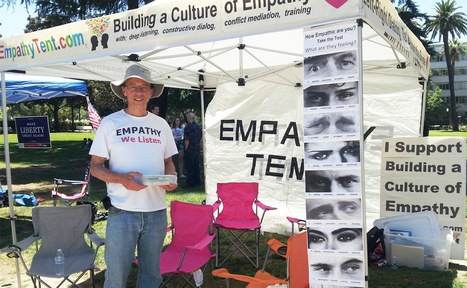
Explore and experience an Empathy Circle on the topic The Power of Self-Empathy. No experience necessary. All are welcome.
Empathy Circles are a great way to enhance your communication skills, whilst connecting with other people -- around the world!It is very easy to learn, in a chill environment. You will be really glad that you gave it a try because it is not only enjoyable, but also relaxing. And, a great way to spend an evening that is new and rewarding.
Empathy is having a moment. Scientific research has indicated empathy works against selfishness and indifference, strengthening societies. But there’s a growing number of mostly conservative voices — in the U.S. and in Canada — who strongly disagree. Their argument is that empathy can be dangerous — driving irrational thinking and behaviour in public life. The result is a growing battle over empathy in a world that has never seemed to need it more.
To get content containing either thought or leadership enter:
To get content containing both thought and leadership enter:
To get content containing the expression thought leadership enter:
You can enter several keywords and you can refine them whenever you want. Our suggestion engine uses more signals but entering a few keywords here will rapidly give you great content to curate.




 Your new post is loading...