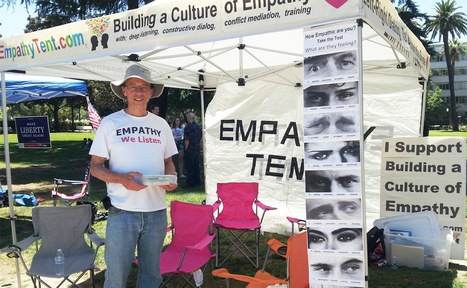
As we keep our ear to the ground, we continue to hear reports that emotional intelligence—and specifically empathy—is spiraling downward among kids. The sociology department at the University of Michigan, led by Dr. William Axinn at the Population Studies Center, tells us thatcollege students today are approximately 40% less empathetic than they were just ten years ago. That’s quite a drop. I find it quite strange that in a generation more connected to each other than ever, young adults find it increasingly difficult to feel compassion toward each other.
I am really enjoying reading your blog. If you want to buy villa in Noida Extension then call on the given number-8375000707 as we give you the best offers for buying villa in Noida Extension. https://www.villasinnoida.com/villas-in-noida-extension.php
The experiences of nurses and the essential role of empathy in healthcare took center stage Oct. 21 at Nashville’s Belcourt Theatre during a special screening of “NURSE: Empathy Heals.” The documentary shares nurses’ personal stories, offering a closer look at the emotional demands of caregiving and the people behind patient care.
The film is part of the Nurse Narratives Initiative (NNI), a collaboration led by East Tennessee State University (ETSU) that brings together StoryCollab, the ETSU College of Nursing, the Tennessee Center for Nursing Advancement and the ETSU Research Corporation, with support from Ballad Health.
We hear a lot today about the importance of empathy, especially in leadership and management. Most of us would likely say we value empathy and try to bring it to our relationships and interactions.
But empathy is more complex than simply caring about people or trying to understand how they feel. And there can be a significant gap between believing we’re demonstrating empathy and how other people actually experience us.
Recent research also challenges the idea that empathy is simply something we either possess or don’t. A 2025 Stanford Graduate School of Education study examining empathetic communication in the workplace describes empathy as a complex but learnable skill.
But chatbots can’t be empathic partners because they haven’t lived a human life. They don’t experience love. They don’t fear illness and death. They don’t know what it’s like to start out small and dependent and grow up so you’re in charge of your own life, but still feel many of the insecurities you knew when you were little. Without a body, they have no standing to talk about pain, fear, loss, joy, or passion. And they have no stake in our social world—our ability to live and work together in the real. More.
That empathy is both a pseudo-strength and a fatal weakness. When the user says “Me, me, me!”, the bot can reply, “Yes, you, you, you!” Real relationships can never be like that because both parties are real.
What Is Empathy? Empathy is the ability to understand another person’s emotions and perspective and respond with genuine care. It’s saying, I may not know exactly what you’re going through, but I want to understand, and I’m here with you.
Notice what empathy doesn’t require. It doesn’t mean we’ve experienced the same hardship or feel every emotion another person feels. Instead, it means we’re willing to slow down, listen well, and help someone feel seen and heard.
At its core, empathy is an expression of love.
The apostle Paul captures this beautifully in Romans 12:15: “Rejoice with those who rejoice; weep with those who weep” (CSB). He doesn’t tell us to solve every problem. He simply invites us to step into another person’s joy or sorrow. At its core, empathy is an expression of love. It shifts our attention from ourselves to others and reminds us to listen before speaking, understand before correcting, and care before evaluating.
It becomes positively insulting when offered as compensation for failures that somebody has the authority to address, writes Terence Cosgrave
There was a time when if a politician was accused of lacking empathy they might have attempted a defence based on competing financial obligations perhaps – or maybe produced a photograph of themselves listening gravely to a child or elderly woman. Now, in influential corners of American conservatism, the defence has become rather more ambitious. Empathy itself is in the dock. “You don’t need it,” is the cry. You might be better off without it.
If we want to build a culture of empathy, we have to look below the waterline. In her insightful piece "Time to Look Below the Waterline," Maša Blaznik uses the systems thinking Iceberg Model to illustrate how our most urgent crises—war, political polarization, environmental degradation, and social alienation—are symptoms of an underlying paradigm rooted in dominance and disconnection.
True systemic leverage doesn't come from treating surface symptoms; it requires shifting our foundational mental models to an Empathy Paradigm, where empathy serves as the core organizing principle for our institutions and communities.
But moving from theory to practice requires concrete, repeatable ways of relating: this is precisely why we practice Empathy Circles. https://www.empathycircle.com/
By providing a structured, accessible space for mutual active listening and authentic presence, the Empathy Circle operationalizes this shift, bridging divides and rebuilding the interpersonal connection needed to make a violence-based society obsolete.
Gallery Exhibit Encourages Visitors to Imagine, Describe, and Understand the Emotions of Other
Oceans of Empathy features Brian Skerry's photographs of sea creatures that live in the waters of the Gulf of Maine. For five decades, Skerry has explored Earth's oceans across every continent and ecosystem. His photography reveals a world in trouble but also a place of hope, showing how thoughtful care and attention can help the oceans rebound. Skerry is based in Maine.
Oceans of Empathy also features the work of Rebecca McGee Tuck, a fiber artist, sculptor, and ocean activist who collects, takes apart, and transforms trash from the ocean into sculptures. With her work, she strives to illustrate the impact that humans make on the environment. Tuck lives and works in Massachusetts.
The exhibition is the second in the Museum's Gallery presented as part of Empathy at the Heart, the Museum's five-year initiative funded by a grant from Lilly Endowment Inc. to foster empathy in young children and empower the adults in their lives to support this vital character development.
The initiative helps children and caregivers explore the foundational skills that nurture empathy, including kindness, perspective-taking, self-respect, and respect for others. Exhibitions such as Oceans of Empathy give children and adults meaningful opportunities to strengthen these skills together.
A survey released Tuesday (Oct. 20) found that Republicans and evangelicals increasingly see empathy as a danger that can lead society away from God. The survey found that more than half of Americans see President Trump as a threat to democracy.
A new survey from Washington, D.C.-based Public Religion Research Institute has found a new dividing line among Americans ahead of the 2026 midterm elections: empathy.
According to a PRRI report released Tuesday (Oct. 20), Democrats (84%) and Independents (70%) are more likely than Republicans (53%) to see empathy as a benefit to society. Forty-three percent of Republicans see empathy as a danger if it leads society away from God.
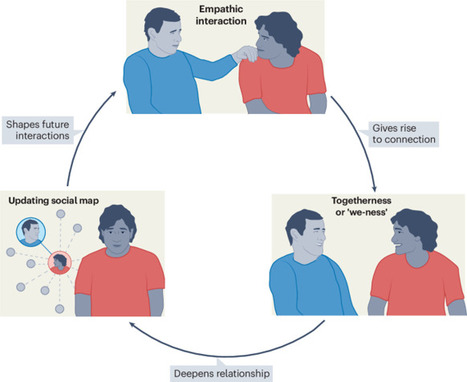
Empathy lies at the core of human social life and shapes interpersonal understanding, cooperation and psychological well-being. Traditionally, empathy research has focused on the empathizer: the individual who experiences and expresses empathy towards another person or group.
However, a growing body of work suggests that empathy is best understood within a dyadic process that is shaped by both partners over the course of an exchange. In this Review, we conceptualize empathic interaction as a shared, ongoing, dyadic process that involves an empathizer, a recipient (target) and a jointly constituted experience that can foster positivity resonance and togetherness.
We consider the cognitive, affective and motivational aspects of empathy through a dyadic lens. In doing so, we clarify how each component manifests for both empathizers and recipients, and how partners’ reciprocal cues, interpretations and responses dynamically influence one another across these components.
Key takeaways 1. Empathy is a business strategy, not a soft skill. Majercsik argues that empathy is often misunderstood. It isn't about being nice all the time. It's about listening, understanding another person's perspective, and using that understanding to build stronger relationships with employees and customers.
2. You can't train someone to be empathetic, but you can give them the tools. Genesys reinforces empathy through active listening, manager development, radical candor, and regular feedback. The goal is helping leaders listen to understand rather than listen to respond, making empathy a daily practice instead of an aspiration
Understanding why someone believes something does not require adopting that belief. Listening to another person’s experience does not require surrendering your own. Showing compassion toward someone on the opposite side does not make you weak.
It makes meaningful disagreement possible.
Yet much of modern culture pushes us in the opposite direction.
Social media rewards outrage. Political fundraising thrives on fear. Cable television knows conflict keeps audiences watching. Algorithms learn what makes us angry and provide more of it.
This argument has gained currency over the past few years due to a slew of best-selling books. Allie Beth Stuckey, an influential podcaster in Christian Evangelical circles, has written one such volume called “Toxic Empathy.” This condition, she writes, “blinds a person to both reality and morality, ignoring the victim on the other side of the moral equation.” Stuckey takes aim, for example, at progressives who express concern for the plight of asylum-seekers “while obscuring the chaos and death enabled by the [immigration] crisis.”
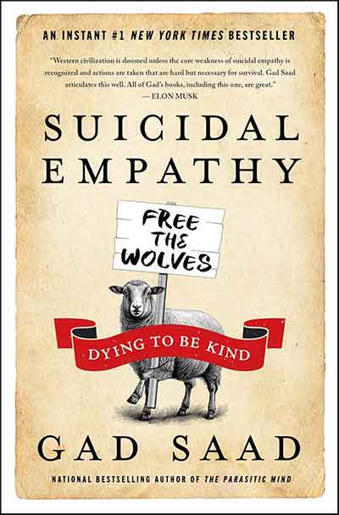
An even stronger version of the argument is put forward by Gad Saad, an academic whose previous work applied evolutionary psychology to the study of marketing. In his recent book, “Suicidal Empathy,” Saad argues that while the ability to understand and share the feelings of others is a noble virtue, it can lead entire societies astray when it is the primary basis for policymaking.
Empathy is one of those things that really shouldn’t need defending.
Being aware of other people’s feelings, sensitive to them, and able to put yourself in another person’s shoes is pretty much essential for humans to function as a community. But the current conservative project has zero room for that sort of thing. And it’s not just that they don’t see the point of it. Rather, they see it as an active danger to civilization.
Tuesday, PRRI released its 2026 American Values Survey. As part of the survey, it tried to gauge how Americans feel about empathy.
It’s a (sadly) timely question: empathy has, lately, become a whipping boy if the Right. (Elizabeth Bruenig puts it like this: “A crusade against empathy is sweeping through the right.”) The anti-empathy crusade has become particularly popular among Silicon Valley tech billionaires, but it’s not limited to them. Some pastors and other Christian leaders have framed empathy as a sin (or, at least, a potential sin).
The article argues that the review uses "suicidal empathy" as a cover for anti-Muslim prejudice rather than as a real psychological idea. It says the viper fable—where a farmer warms a snake that then bites him—tells readers to see kindness toward Muslim migrants as foolish and self-destructive, no matter who the people actually are.
The author criticises the review for using one rape case as an example of "orgiastic empathy," saying it turns a survivor's complicated story into a political prop and draws broad conclusions from a single emotionally charged example.
The article also argues that evolutionary psychology, which the review uses to claim empathy can become a civilisational disorder, is a contested field whose own scholars warn you cannot jump from "this is how empathy evolved" to "therefore we should restrict empathy toward Muslims or refugees."
The author concludes that whether empathy can misfire is a fair question for psychologists, but the review hijacks that debate to dress up political views in scientific language.
Medical student empathy trends For a study published in the journal International Medical Education last summer, researchers examined cognitive empathy, compassion, self-compassion and resilience among 98 medical students across all four years of training. Their findings suggest that empathy-related traits come under the greatest strain during the second and third years of medical school.
Across all four years, the study points to a broad pattern in which empathy-related traits appear more intact at the start of medical school, come under greater strain in the second and third years, and then rebound somewhat by the fourth year.
The study’s authors noted that while traditional narratives in medical education have held that empathy dips are most pronounced during the third year, the second year may also be a key pressure point.
If you've practiced and integrated Nonviolent Communication (NVC), you have probably felt and witnessed the transformative power of empathy.
You feel seen, your shoulders soften, and you notice the nuances of your feelings and the needs driving them. The same when you support someone who is upset. You know that identifying their needs changes the perspective.
And yet...
Have you ever found yourself supporting someone who could easily identify their feelings and needs, had received plenty of empathy, understood their situation perfectly well... and still seemed stuck?
Perhaps you've wondered:
When is empathy enough? Is my empathy good enough? What would a more skilled practitioner do in my place? In this free 60-minute session, we'll explore a question that many NVC practitioners, including trainers, encounter:
Artificial intelligence has entered a remarkable new phase of human interaction. Intelligent systems increasingly recognize emotional language, generate compassionate responses, and support conversations once reserved for colleagues, counselors, educators, and organizational leaders. As these capabilities expand, society faces profound questions about emotional expression, interpersonal responsibility, and genuine human connection. Empathy has consequently emerged as one of the most important human capabilities for navigating technological transformation.
Maša Blaznik An empathy-based society is not something to be invented from scratch. Around the world, countless acts of care, justice, and protection are laying the foundations of another way of living together. This Call is an invitation to see these efforts as parts of a coherent alternative, to connect what is now fragmented, and to help build the future we choose to create.
“It's not enough to only fight the existing reality. To change something, we also need to build a new model that makes the existing one obsolete.”
Across our world, we are witnessing the consequences of a society organised around normalised violence: the genocide and deliberate starvation of children in Gaza, economic systems that produce billionaires alongside preventable suffering and poverty, the slaughter of more than 80 billion animals every year, and the accelerating breakdown of Earth's living systems. More and more people can see that something is profoundly wrong.
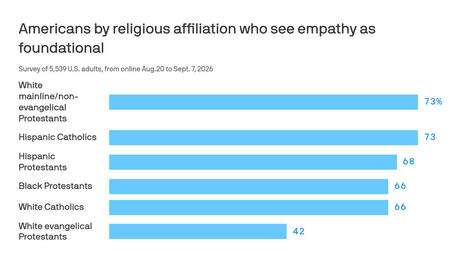
White evangelical Protestants are the only major religious group in which a majority says empathy can become dangerous when it leads people away from a society guided by God's truth, according to a new survey.
Why it matters: The survey lands amid a quiet civil war within American Christianity over who deserves empathy.
Conservatives ranging from evangelical pastors to Elon Musk have framed empathy as a vulnerability in debates over immigration, racial justice and LGBTQ+ rights. In a February 2025 interview with Joe Rogan, Musk called empathy "the fundamental weakness of Western civilization," while acknowledging its potential good and warning against its weaponization. By the numbers: The annual American Values Survey from the nonpartisan Public Religion Research Institute (PRRI) released Tuesday found that 42% of white evangelical Protestants agreed that empathy is a foundational moral value that helps build a healthy society.
Empathy provides a cognitive and emotional bridge that connects individuals and promotes prosocial behavior. People empathize with others via two complementary perceptual routes: Cognitive Empathy or the ability to accurately recognize and understand others' emotional states, and Affective Empathy or the ability to 'feel with' others. This Element reviews past and current research on both cognitive and affective empathy, focusing on behavioral, as well as neuroscientific research. It highlights a recent shift towards more dynamic and complex stimuli which may capture better the nature of real social interaction. It expands on why context is crucial when perceiving others' emotional state, and discusses gender differences, biases affecting our understanding of others, and perception of others in clinical conditions. Lastly, it highlights proposed future directions in the field.
In our conversation, we explore: → Empathy as a skill: what his lab found, and how to turn a belief into a plan and daily habits → Kind systems: why people think they are alone in wanting more empathy at work, and how leaders can change the norm → Stack ranking, cynicism and accountability: why pitting people against each other backfires → Artificial empathy: why chatbots now sound more caring than strangers, and the risk of AI that only tells us we are right → Young people, self-criticism and hope, and three practices to start tomorrow morning
"It's like a suit of armor that you put on, but instead of protecting you, it suffocates you." Jamil Zaki, on cynicism
If you have ever been told that empathy is soft, or felt that cynicism keeps you safe, this conversation is for you.
In my previous article, I wrote about the empathy gap in social innovation, which is the distance between those designing solutions and those living with the problems they aim to solve. Research, funding and expertise can create the illusion of understanding while still missing what people actually need. Good intentions are not enough; meaningful innovation requires staying close to lived experience.
In the age of AI, another gap matters just as much: the frontline gap. This is the distance between decision-makers and the people experiencing systems every day. As AI makes it easier to automate and scale, that distance is more consequential. The faster we build, the more important it is to make sure we are solving the right problem.
✨ Empathy begins with the ability to imagine another person’s experience.
In this clip from LIGHTWORKERS, Keith Olbermann reflects on why empathy matters, the simple but powerful act of placing ourselves in someone else’s position and recognizing our shared humanity.
We may not live the same lives. We may not face the same struggles. But we can choose understanding.
LIGHTWORKERS is a documentary from filmmaker Bobby Roth asking a simple but urgent question:
“What can we do?”
Featuring voices including Keith Olbermann, Henry Winkler, Tom Morello, Jamie Raskin, Adam Kinzinger, Peter Coyote, and many others.
According to Yale psychologist Paul Bloom, empathy is inherently biased, and there is no point in attempting to convince ourselves we feel strongly and compassionately for all human beings. Bloom notes that our desire to help others is usually selectively aimed at those we relate to or that experience similar life circumstances. The issue, however, does not end here. It is not simply a lack of empathy that we are facing, but also a perverted obsession with punishment looming over online spaces. It is not enough that the woman is paralysed and has already lost her three children and husband – we want to see her suffer more, suffer endlessly to satisfy an itch for vengeance. In particular, we want to see the punishment of a woman, even more so than that of a murderer.
To get content containing either thought or leadership enter:
To get content containing both thought and leadership enter:
To get content containing the expression thought leadership enter:
You can enter several keywords and you can refine them whenever you want. Our suggestion engine uses more signals but entering a few keywords here will rapidly give you great content to curate.


 Your new post is loading...