A recent study links compassion training with an area of the brain that has also been linked with altruism. Neuroscience and Compassion Training Predict a Better World
In 2000, Dr. Richie Davidson brought over a number of monks, who practiced a form of compassion meditation, to his lab in Madison, Wisconsin for at least 10,000 hours to find out what was happening in their brains. He hooked them up to brain imaging machines and found that when exposed to a sound of human pain, their brains weren’t disturbed, but areas of the brain involved with empathy and compassion lit up.
I am really enjoying reading your blog. If you want to buy villa in Noida Extension then call on the given number-8375000707 as we give you the best offers for buying villa in Noida Extension. https://www.villasinnoida.com/villas-in-noida-extension.php
Overview Introduction Defining Strategic Empathy The ROI of Understanding: Tangible Benefits for Teams Cultivating Empathy: Practical Steps for Leaders and Teams Empathy as a Competitive Edge
Overview This leadership article makes the case for empathy as a measurable business strategy rather than a soft skill. Covering psychological safety, team performance, employee retention, and practical implementation steps, it is relevant to managers, HR professionals, and organisational leaders seeking sustainable competitive advantage.
On the other hand, technology is a powerful tool, but it must not take away our ability to look and communicate. We understand that Artificial Intelligence is not a threat to humanism, but an ally. We aim to train doctors who use AI to automate mechanical and diagnostic tasks, allowing them to recover time for empathy, active listening and a close, human approach. We have been implementing specific programmes to train verbal and non-verbal communication, empathy, end-of-life support and a comprehensive understanding of patients.
The exhibition Empathy at Vantaa Art Museum Artsi (15 April–18 October 2026) opens perspectives on empathy—as an emotion and an experiential skill that shapes how we encounter other people, communities, and the surrounding nature. The exhibition highlights the personal, cultural, and ecological dimensions of empathy and invites us to reflect on what empathy means right now, in our present time.
Empathy as emotion, skill, and choice
Empathy is not merely a spontaneous emotional reaction, but the ability to perceive another person’s experience and to make choices in relation to it. The exhibition examines how facial expressions, gestures, tones of voice, and the nuances of silence communicate emotions—and how emotional intelligence helps us read these signals. Empathy is also a decision: the choice to listen, to make space, and to affirm the value of another. While empathy enables understanding, compassion goes further, giving rise to the desire to act.
When people traditionally think of empathy, they often think of “walking a mile in the other person’s shoes.” This kind of empathy focuses on how emotion is shared and understood between people. Yes, this can help; it humanizes people and turns someone who may be viewed as “the enemy” into a fellow person. However, “affective empathy,” as this sort of empathy is often called, does not focus on increasing a person’s knowledge base.
Instead, “cognitive empathy,” or understanding how a person thinks and gathers information, is incredibly important to broadening one’s own scope. Just as one blind man’s conclusions in the story are limited to the single area he managed to feel, one’s own experiences only go so far, as they are developed from a limited background. No matter how extensive a person’s affective empathy can span, it is still limited by the stories that the specific person has accumulated. It would be difficult to relate to a person who has a completely different background.
This article explores the transformative power of cognitive empathy as an essential skill for navigating modern challenges, highlighting its role in fostering understanding, solving problems, and bridging divides in both personal and professional contexts.
Understanding Perspectives: Cognitive empathy enables individuals to step outside their own worldview and see situations through others’ eyes, fostering connection and clarity.
Problem-Solving Power: Unlike emotional empathy, cognitive empathy focuses on understanding motivations and circumstances, empowering individuals to resolve conflicts and drive action.
Bridging Divides: Its application spans diverse contexts, from improving workplace collaboration to enhancing relationships by addressing core perspectives.
A Survival Tool: In an increasingly polarized world, cognitive empathy acts as a critical tool for cutting through noise, fostering understanding, and creating meaningful connections.
In today’s polarized political landscape, the ability to understand and empathize with those across the aisle has reached concerning lows. New research published in Personality & Social Psychology Bulletin reveals an asymmetry in this empathy deficit: liberals consistently show less empathy toward their conservative peers than vice versa.
This lack of both empathy and fair-mindedness is not foreign to far-right extremists–in fact, it has become a standard to which only the most powerful figures have begun holding themselves to. In an episode of The Joe Rogan Experience which aired in February of 2025, Elon Musk stated “the fundamental weakness of Western civilization is empathy.” Is this notion, one that deems empathy self-destructive and threatening amongst conservative circles, a defense mechanism? Or is this aversion to emotionally connecting with and understanding others an attempt to inflict destruction without consequence?
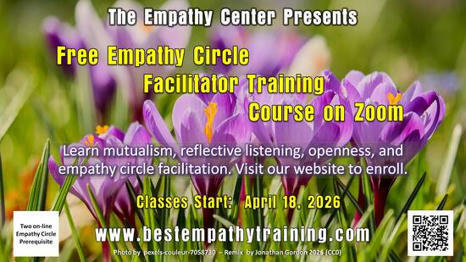
On April 18, 2026 the Empathy Center will be conducting a Facilitator training course on Zoom. The intent of this training is to teach the participant how to organize and conduct Empathy Circles.
The course is experiential and consists of 4 classes taught over 4 consecutive Saturdays. Each class lasts about two and half hours. In addition to attending 4 sessions of 2.5 hours each, there are weekly assignments to complete that may take 1-2 hours. We will also pair you weekly with an empathy buddy to practice empathy.
It's no secret that the U.S. school system is struggling with kids far below where they should be in terms of grade levels and teachers leaving the profession in droves. Former teacher Mike Bonitatibus puts the blame squarely on showing too much empathy in the classroom.
Empathy is an important part of being a good person. We should all be able to understand how others are feeling and be sensitive to their issues. However, as the idiom goes, too much of anything is never good, especially when it comes to kids. But most people think of that in terms of sugar, not empathy.
Another type of empathic response that decreased after the AI intervention was motivational empathy, for example, You are doing the best you can or I think that is a great start. In the figure below from the study, I found it interesting that as motivational empathy, which people naturally expressed a substantial portion of the time, decreased, validating emotions and encouraging elaboration increased after the AI coaching.
I could not help but feel that people’s expressions began to sound quite similar to what I think of as the typical conversational style of common AI chatbots. At the same time, on the receiving end, motivational empathy did not seem to come across as especially empathic or as making people feel heard.
What happens when a society elevates victimhood to a virtue and decides that punishment is cruel? You get the disease Dr. Gad Saad calls suicidal empathy. And the West may be terminally infected.
Saad says "maladaptively irrational altruism" has gripped our culture. He calls it a mind parasite that has hijacked the empathy module of our progressive elite, leading to a catastrophic miscalibration of moral priorities. The results are everywhere: from coddling violent criminals to protecting rapists to branding self-defense as toxic behavior. He says we are witnessing a civilization in rapid decline, with bad policies instituted because we prioritize the feelings of ostensibly marginalized groups over the truth, criminals over victims, and squatters over homeowners. Saad says this is not only not humane—it’s an active dismantling of the pillars that keep us safe and free.
In this episode of The Empathy Edge, people and culture strategist Julia Armet — a workplace facilitator and proud neurodivergent leader — joins Maria Ross to explore how empathy transforms work and inclusion. Julia shares her personal journey navigating neurodivergence and introduces the double-empathy problem — a powerful lens for understanding communication across differences.
Join me for this FREE mini-class on How to Communicate with Empathy. We'll explore what empathy is, how to cultivate it, and discuss its powerful impact on communication skills. This class also touches on the often-overlooked "dark side" of empathy, providing a comprehensive look into this crucial aspect of emotional intelligence.
Moderated by Jennifer Bourque, this event brings together two thought leaders who explore how political polarization erodes our capacity for empathy. As public debates become more conflictual, how do we remain present to one another’s suffering, even when we fundamentally disagree?
Rabbi Lisa Grushcow offers a spiritual perspective on empathy and suffering, while anthropologist Samuel Veissière examines the social forces driving deepening division. Together, they invite us to consider how we might listen, connect, and heal in fractured times.
One of my priorities as president is for the nation to Look to Michigan as a model of robust discourse on critical issues, grounded in empathy, reason, and humility.
I have always contended that for an institution to demonstrate its priorities, they must be reflected in its budget. That is why we are investing $50 million, as a starting point, to establish the Center for American Dialogue and strengthen our commitment to diversity of thought and principled discussion.
The Center represents a lasting commitment to broadening our campus culture by providing a forum that welcomes all perspectives and fosters respectful engagement.
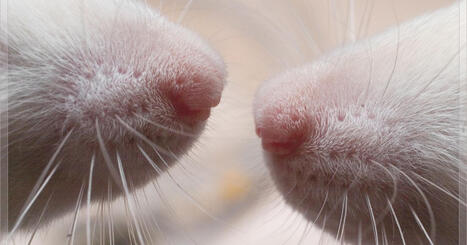
by Mary Bates Rats are social animals, exquisitely attuned to the emotions of the rats around them. In a new study published in PLoS Biology, researchers from the Netherlands Institute for Neuroscience show that rats may use this sense of empathy as a way to gauge danger.
Most studies of empathy conceive of it as a one-way phenomenon in which an observer “catches” the emotions of another. But in real life, it’s more of an interactive process in which information flows in two directions.
by Peter Sear A lack of empathy isn't just a choice; it's a neurological byproduct of power.
A leader who cannot fully "read" the opposition cannot predict their next move.
Strategic empathy allows a leader to sense psychological friction.
We often mistake dominance for leadership. We look at individuals who command rooms and impose their will as being the "best" at what they do. As a psychologist working within elite performance, I have observed a recurring phenomenon: Power can act as a neurological anaesthetic. It deadens the very empathic faculties that are essential for sustainable success.
On May 2nd, we're uniting America with empathy.Thank you for signing up to participate in our Community Empathy Project with the Roslindale Food Collective.
On Saturday, participants will take part in a hands-on session where we will learn about food insecurity in our community and work together to assemble fresh produce bags for local families. This is an active, collaborative experience focused on service, dignity, and community care.
In this episode of the Impostor Syndrome Files, we look at self-empathy as a practical skill you can use in everyday life. My guest, Melissa Robinson-Winemiller, is a former professional musician and university professor who later founded EQ via Empathy where she works today. Melissa shares how a tough career pivot pushed her to study empathy and write the book, The Empathic Leader.
Here we talk about how to build your self-empathy muscles in easy moments first so that you have the skills available to you when the stakes rise. We also explore why high achievers take the blame when things go wrong yet wave away credit when things go well, how empathy and judgment cannot coexist, and a simple practice to interrupt reactivity so you can lead with more clarity at work and at home.
Claire Yorke is an Author, academic and advisor specializing in the role and limitations of empathy and emotions in security, international affairs, politics, leadership, and society. Her doctoral research focused on the role of empathy in diplomacy. How Empathy - can be a tool for navigating complex international transitions and building state relations. Claire is author of Empathy in Politics and Leadership: The Key to Transforming Our World.
Edwin Rutsch and Claire York discuss the importance of empathy in politics and society. Claire, a senior lecturer at Deakin University, emphasizes the need for empathy to connect people and understand their intrinsic dignity. They explore the challenges of empathy, such as dealing with conflict and dehumanization.
Edwin introduces his wholistic empathy definition model, which includes basic, self, imaginative, and mutual empathy. They debate the effectiveness of empathy circles and the importance of active listening.
Empathy can be one of our best qualities ― a force that deepens relationships, builds trust and helps us show up for others. But in some dynamics, that positive instinct can be turned against you.
“Weaponized empathy is a pattern of using empathy, compassion or guilt to influence another person’s behavior, often at the expense of personal boundaries and preferences,” Caitlyn Oscarson, a licensed marriage and family therapist, told HuffPost.
A microphone and oyster shell passed from hand to hand in a circle of folding chairs as neighbors spoke about their own spirituality and listened to others’ without interpretation.
The Natick Freedom Team, a volunteer anti-bias, racism and bigotry organization, gave residents the chance to explore their neighbors’ belief systems at an interfaith listening circle March 25 at the First Congressional Church of Natick.
“Our goal is to listen and help create an opportunity for people to share,” said Don Greenstein, an ombudsperson at Brandeis University and member of the Natick Freedom Team who led and moderated the circle. “It was met and then some.”
Title: Empathy in Action: Strengthening the Patient-Provider Connection - Part I Runtime: 5 min 57 sec Speaker: Tara Harding, DNP Empathy in Healthcare: A new educational initiative,"Empathy in Action," launched this week focusing on how healthcare providers can use specific "active listening" techniques to prevent patient "un-hearing," which is a leading cause of delayed diagnoses in 2026.
Background Therapeutic empathy improves patient and practitioner outcomes, yet existing measures are often lengthy, conceptually inconsistent, and cannot be easily compared across respondent groups. Brief, universal measures (usable by patients, practitioners, students, and observers) are lacking. We therefore developed a universal single-item scale and conducted psychometric testing of the patient-reported version.
Methods Following best-practice, we used a three-phase approach:
(1) item development;
(2) pre-testing the scale by obtaining expert panel feedback (n=9) and conducting cognitive interviews with stakeholders (n=35); and
(3) scale validation in an international patient sample (n=521) assessing convergent, discriminant, and known-groups validity.
Validation involved assessing correlations with the Consultation and Relational Empathy (CARE) measure and clinical neutrality measure, and by assessing differences in scores by patient ethnicity.
To get content containing either thought or leadership enter:
To get content containing both thought and leadership enter:
To get content containing the expression thought leadership enter:
You can enter several keywords and you can refine them whenever you want. Our suggestion engine uses more signals but entering a few keywords here will rapidly give you great content to curate.





 Your new post is loading...