 Your new post is loading...

|
Scooped by
BigField GEG Tech
March 19, 2:58 AM
|
Engineered T cells, reprogrammed to express chimeric antigen receptors (CAR) or T cell receptors (TCR), have transformed cancer treatment and are being explored as therapeutics for autoimmune and infectious diseases. Enhancing T cell function through genome editing, either by disrupting endogenous genes or precisely inserting DNA payloads, has shown considerable promise1. However, the ex vivo manufacturing process is lengthy and costly, limiting accessibility of these therapies. In vivo generation of CAR T cells could overcome these barriers, but current methods rely either on transient expression with limited durability, or on random integration of DNA payloads that lack specificity. Here we demonstrate that stable and cell-specific transgene expression can be achieved through in vivo site-specific integration of large DNA payloads. We developed a two-vector system to deliver CRISPR–Cas9 ribonucleoproteins and a DNA donor template, using enveloped delivery vehicles and adeno-associated viruses, respectively. We optimized both vectors for T cell-specific delivery and gene-targeting efficiency. By integrating a CAR transgene into a T cell-specific locus, we generate therapeutic levels of CAR T cells in vivo in humanized mouse models of B cell aplasia, and haematological and solid malignancies. These findings offer a pathway to more efficient, precise and widely accessible T cell therapies. Stable and cell-specific transgene expression can be achieved through in vivo site-specific integration of large DNA payloads using a two-vector system of enveloped delivery vehicles and adeno-associated viruses.
|
|
Scooped by
BigField GEG Tech
November 5, 2025 10:20 AM
|
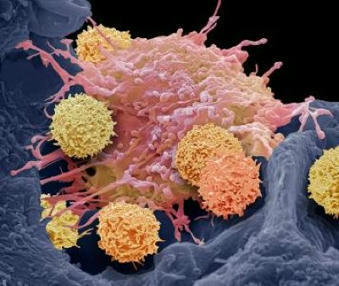
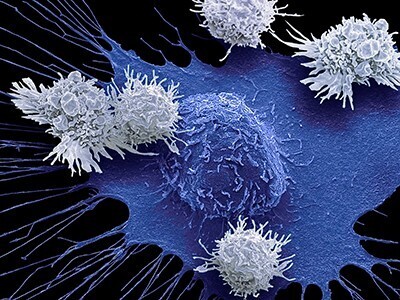
Chimeric antigen receptor (CAR) T cell therapy, which uses a patient's own immune cells to fight cancer, has emerged as a powerful way to treat lymphoma and other blood cancers.
|
|
Scooped by
BigField GEG Tech
September 30, 2025 5:44 AM
|
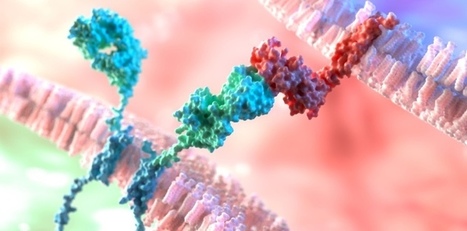
A computational approach by St. Jude Children's Research Hospital scientists promises to make designing T cell-based immunotherapies that target two cancer-related antigens at the same time far easier and faster.
|
|
Scooped by
BigField GEG Tech
September 23, 2025 5:45 AM
|
A new study, led by researchers at Children's Hospital of Philadelphia (CHOP), identified tiny pieces of messenger RNA that are missing in pediatric high-grade glioma tumors but not in normal brain tissues.
|
|
Scooped by
BigField GEG Tech
September 5, 2025 5:34 AM
|
Researchers at MUSC Hollings Cancer Center have identified a signaling loop involved in the growth and persistence of leukemia cells – and developed a novel immunotherapy that can disrupt that loop to boost immune function and improve survival.
|
|
Scooped by
BigField GEG Tech
July 22, 2025 11:30 AM
|
The Calibr-Skaggs Institute for Innovative Medicines, the drug development division of Scripps Research, today announced a milestone in cancer treatment with the dosing of the first patient in a phase 1 trial (NCT06878248) evaluating CLBR001 + ABBV-461, a modular, switchable chimeric antigen receptor T cell (sCAR-T) therapy in patients with advanced or metastatic breast cancer who have no suitable treatment options.
|
|
Scooped by
BigField GEG Tech
July 10, 2025 6:44 AM
|
Chimeric Antigen Receptor (CAR)-T cells are a promising cancer therapy that are made from the patient's own T cells, which are reprogrammed to fight their cancer. One of the limitations of CAR-T cell therapy is the ability of these cells to survive long enough to target the entire tumor.
|
|
Scooped by
BigField GEG Tech
July 7, 2025 9:12 AM
|
When a neuron in our body gets damaged, segments of RNA produce proteins that can help repair the injury.
|
|
Scooped by
BigField GEG Tech
June 12, 2025 6:29 AM
|
Renier Brentjens, MD, PhD, discusses the current landscape of CAR T-cell agents in patients with solid tumors.
|
|
Scooped by
BigField GEG Tech
June 4, 2025 6:46 AM
|
Trial in China is one of the first times the immune therapy has worked against solid tumours.
|
|
Scooped by
BigField GEG Tech
June 2, 2025 7:13 AM
|
A new review outlines genetic engineering strategies, including CRISPR, to enhance the therapeutic potential of innate immune cells in cancer immunotherapy. The authors evaluate preclinical studies and emerging clinical data on how these cells can be retooled to overcome the limitations of conventional CAR T cell therapy.
|
|
Scooped by
BigField GEG Tech
May 21, 2025 10:22 AM
|
|
|
Scooped by
BigField GEG Tech
May 19, 2025 11:55 AM
|
Genome editing has advanced at a rapid pace with promising results for treating genetic conditions-but there is always room for improvement.
|
|
|
Scooped by
BigField GEG Tech
December 22, 2025 4:55 AM
|
Testing in mice suggests that rejuvenating T cells could make vaccines and some cancer therapies more effective.
|
|
Scooped by
BigField GEG Tech
October 13, 2025 5:47 AM
|
A new generation of CRISPR technology developed at UNSW Sydney offers a safer path to treating genetic diseases like Sickle Cell, while also proving beyond doubt that chemical tags on DNA - often thought to be little more than genetic cobwebs - actively silence genes.
|
|
Scooped by
BigField GEG Tech
September 29, 2025 11:17 AM
|
Preliminary results from a small trial offer the clearest evidence yet that the brain disease’s progression can be slowed.
|
|
Scooped by
BigField GEG Tech
September 15, 2025 5:10 AM
|
A landmark study published in Cell has shown that prime editing, a cutting-edge form of gene editing, can correct mutations causing Alternating Hemiplegia of Childhood (AHC) with a single in-brain injection. The research team fixed the most prevalent ATP1A3 gene mutations in mouse models, reducing symptoms and more than doubling survival, a first-of-its-kind success in treating a neurological disease directly in the brain. CRISPR-based gene editing was delivered through an harmless adeno-associated virus called AAV9. In parallel, patient-derived cells (iPSCs) responded similarly, reinforcing the method’s promise for human translation. Importantly, this success opens the door to targeting other genetic brain disorders previously deemed untreatable. Although results are preliminary, this study provides robust proof‑of‑concept for personalized gene editing in the brain and opens doors toward potential treatments for other intractable genetic neurological disorders.
|
|
Scooped by
BigField GEG Tech
July 28, 2025 5:01 AM
|
The promise of genome editing to help understand human diseases and create new therapies is vast, but technological limitations have limited advancement of the field.
|
|
Scooped by
BigField GEG Tech
July 17, 2025 5:40 AM
|
Cancer therapies called checkpoint inhibitor drugs, which ratchet up the immune system, work better when this bacterium is around.
|
|
Scooped by
BigField GEG Tech
July 8, 2025 6:23 AM
|
Experimental treatment could offer a safer, cheaper alternative to CAR-T-cell therapies for disorders such as lupus.
|
|
Scooped by
BigField GEG Tech
June 17, 2025 7:04 AM
|
After treatment with CAR-T cells - immune cells engineered to attack cancer - patients sometimes tell their doctors they feel like they have "brain fog," or forgetfulness and difficulty concentrating.
|
|
Scooped by
BigField GEG Tech
June 5, 2025 6:56 AM
|
Investigators from Mass General Brigham and Beth Israel Deaconess Medical Center have developed STITCHR, a new gene editing tool that can insert therapeutic genes into specific locations without causing unwanted mutations.
|
|
Scooped by
BigField GEG Tech
June 2, 2025 11:16 AM
|
|
|
Scooped by
BigField GEG Tech
May 27, 2025 6:56 AM
|
Imagine a super-charged immune cell that can launch a focused attack on stubborn solid tumors - a smart fighter that destroys cancer cells for days without tiring.
|
|
Scooped by
BigField GEG Tech
May 20, 2025 5:05 AM
|
‘Directed’ evolution in the laboratory creates an editing tool that outperforms classic CRISPR systems.
|














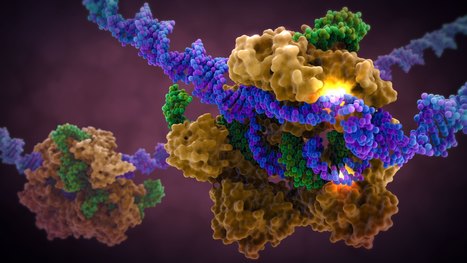






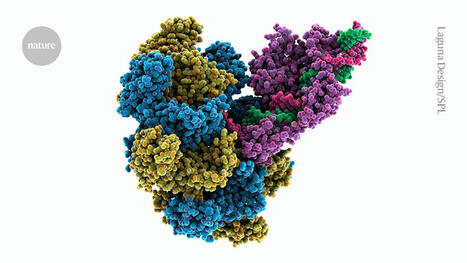





World’s First Patient Treated with Personalized base editing system !
This proof of principle paves the way for precision gene therapy administered directly in vivo. In addition to having a significant therapeutic effect, this trial will allow the collection of critical data for designing tomorrow's precision gene therapies, both in terms of efficacy and biosafety. We know that the liver, a target organ in this pathology, is a prime target for in vivo gene therapy because after systemic injection, vectors accumulate there without a specific targeting system and liver cells multiply rapidly, allowing rapid colonization of cured cells. Consequently, these results support the idea that the field of vectorology is key to harnessing the power of new genome editors such as base editing systems, prime editing systems. The design of vectors that can target the desired cell populations, without compromising efficacy and biosafety, is the next critical step to enable precision gene therapy for a large number of genetic pathologies.