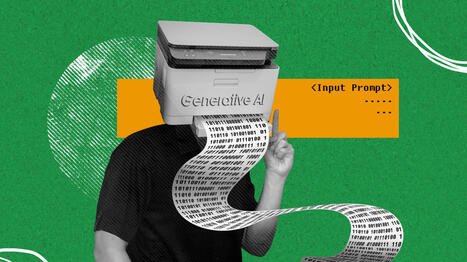
The result comes from OpenAI's GPT-4.5 model, which tricked the judges into thinking it was the human 73% of the time, while another model was just 56%.
Via EDTECH@UTRGV
Your new post is loading...
EDTECH@UTRGV's curator insight,
June 9, 9:34 AM
"[I]n short text conversations, under a specific experimental design, it's possible for an LLM to be mistaken for a person more often than the person it's paired against."
EDTECH@UTRGV's curator insight,
June 10, 1:35 PM
"A new report suggests that districts are moving on AI faster than many expected, but the infrastructure needed to do it responsibly is struggling to keep up."
EDTECH@UTRGV's curator insight,
June 8, 12:03 PM
"Teachers are the closest source for identifying what is missing from the classroom, and when school leaders start there rather than at the vendor’s value proposition, the solution space opens up in ways that serve schools better." |
EDTECH@UTRGV's curator insight,
June 11, 9:29 AM
"[T]he outcome of the lawsuits, whether they ultimately settle out of court or end up with jury verdicts against companies, could change the way social platforms operate forever."
EDTECH@UTRGV's curator insight,
June 9, 9:37 AM
"OpenAI intends to ditch the prompts and features, betting that its models will be able to automatically understand users’ intentions when they are on the app or site."
EDTECH@UTRGV's curator insight,
June 8, 12:07 PM
“We've got to make sure we're not stomping on kids that are actually utilizing these devices for really important reasons.” |
"[I]n short text conversations, under a specific experimental design, it's possible for an LLM to be mistaken for a person more often than the person it's paired against."