Your new post is loading...

|
Rescooped by
Dennis Swender
from Moodle Best LMS
December 6, 2017 2:19 AM
|
LinkedIn continues to raise the interest of players and enthusiasts in the EdTech space. After the acquisition of content company Lynda, now LinkedIn Learning, a privileged position in the lifelong learning and professional development serves as the starting point of ambitious, if also cautious, moves.
The latest LinkedIn Learning announcement mirrors that of similar content companies, including Open Educational Resources (OER) providers. Beginning with up-and-coming LMS like Degreed, Digital Chalk, Cornerstone OnDemand, and Docebo, LinkedIn Learning will now let users access their vast repository, made mostly of video lessons.
This will allow instructors to use the tracking and reporting tools of the LMS, if they are available, to measure engagement of Learning materials. The announcement also outlays plans for modular tracks and “bespoke learning pathways” by mid-2018. To date, it is unclear if Learning will create the pathways or if organizations will have the tools to build them for themselves.
Via Miloš Bajčetić
|
|
Rescooped by
Dennis Swender
from Creative teaching and learning
December 6, 2017 2:10 AM
|
"Educational Technology: Technology is growing fastly. It has also become a part of Education. It’s becoming more advances and providing much benefits ..." ©
Via Leona Ungerer
|
|
Rescooped by
Dennis Swender
from DIGITAL LEARNING
December 2, 2017 11:34 PM
|
Wondering what are some Smartphone Apps For Students? Check 7 Smartphone Apps For Students available today to help them learn and organize.
Via Bhushan Thapliyal
|
|
Rescooped by
Dennis Swender
from Tools for Teachers & Learners
December 2, 2017 11:29 PM
|
Take & share time-stamped video notes, bookmark online videos, TurboNote provide the most efficient solution for online video note taking!
Via Nik Peachey
|
|
Rescooped by
Dennis Swender
from Higher Education
December 2, 2017 1:00 AM
|
Above all, introducing computer science projects and activities can bring a new, experimental hands-on element to many science lessons. This integrative approach also helps students who do not have a CS elective in their school, or who cannot add a CS elective due to schedule conflicts or space availability. (Many schools have limited CS elective classes due to a teacher shortage.)
Via Carlos Fosca
|
|
Rescooped by
Dennis Swender
from Higher Education
December 2, 2017 12:59 AM
|
Do you know that passive teaching methods lead to a concept retention rate of less than 30 percent? On the other hand, participatory techniques generate retention rates of up to 90 percent. Where our traditional education system fails is that we remain largely focussed on outworn practices that keep student engagement passive, and retention at the bare minimum.
Via Nik Peachey, Carlos Fosca
|
|
Rescooped by
Dennis Swender
from Daily Magazine
November 30, 2017 10:19 AM
|
|
|
Rescooped by
Dennis Swender
from Learning & Technology News
November 30, 2017 10:15 AM
|
This newsletter includes links to: Free ebooks and lesson plans.Free apps and online games for educationSome of the best edtech and learning articles from around the internet
Via Nik Peachey
|
|
Scooped by
Dennis Swender
November 30, 2017 10:12 AM
|
Gmail, Outlook, and some exciting startups are all trying to rebuild email for 2017.
Amid the latest online brouhaha over use of devices in the classroom, educators say it’s time to focus on helping students however they need it -- laptop or no laptop.
Via Peter Mellow
Dozens of professors and others at one university share their ideas and examples for online learning across disciplines in a new book.
Via Peter Mellow
|
|
Rescooped by
Dennis Swender
from Edumorfosis.it
November 27, 2017 2:02 PM
|
Do you know the chemistry that’s making learning ever more sensational?
Learning can be made sensational if UX is the backbone in creation of that LMS.
In the case of learning management systems, user experience plays a vital role because effective learning is closely related with it. Perhaps this is the reason why organizations are at a constant search for LMSs which offer enhanced UX.
The learning management systems is in a constant evolving stage and in order to meet the needs of modern organizations, the developers need to meet the demands of modern organizations. On the part of the organizations, this selection process at times becomes quite bewildering.
There are a lot of LMS systems and making the right choice out of the many is indeed a tough call. So what are the essential elements which LMS must contain for enhanced user experience? Or how do you select a tool with enhanced user experience?
Take a look at the essential elements of this tool to help you in making a wise decision.
Via Edumorfosis
This is the official site for managing the COMPLETE list of twitter education chats. It is managed by a group of educator tweeps who care about keeping one up to date list of chats which everyone can use.
Via Dr. Tom D'Amico (@TDOttawa)
|
|
|
Rescooped by
Dennis Swender
from Best Education Infographics
December 6, 2017 2:18 AM
|
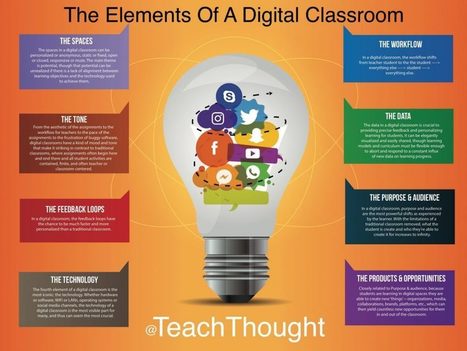
"The spaces in a digital classroom can be personalized or anonymous, static or fixed, open or closed, responsive or mute. The main theme is potential, though that potential can be unrealized if there is a lack of alignment between learning objectives and the technology used to achieve them."
Via EDTECH@UTRGV, Nevermore Sithole
|
|
Rescooped by
Dennis Swender
from DIGITAL LEARNING
December 2, 2017 11:34 PM
|
Get It In Drive
When you save everything to Google Drive you have access to it on your mobile device, your computer, or even a friends computer. No more “oh it’s on my other computer, I’ll get it later.”
Chrome Extension
The Save to Google Drive Chrome extension helps you get things into Drive. Install the extension and then right click on things on the web to your Google Drive.
Via Jim Lerman, Evdokia Roka, Bhushan Thapliyal
|
|
Rescooped by
Dennis Swender
from Tools for Teachers & Learners
December 2, 2017 11:28 PM
|
ReClipped is the best way to discover, annotate, save, share and collect most interesting parts from videos, without the need to download anything. We support Youtube, Vimeo, Dailymotion, Coursera, TED, LinkedIn, Amazon PrimeVideos platforms and adding many more soon.
Via Nik Peachey
|
|
Rescooped by
Dennis Swender
from Higher Education
December 2, 2017 12:59 AM
|
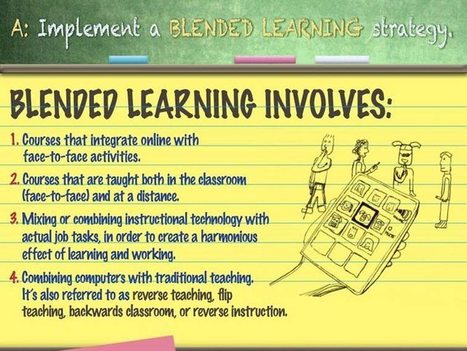
Blended Learning is not so much an innovation as it is a natural by-product of the digital domain creeping into physical spaces.
Broadly speaking, blended learning just means a mix of learning online and face-to-face, which means it’s likely your students are already doing some form of blended learning, and have for years.
As digital and social media become more and more prevalent in the life of learners, it was only a matter of time before learning became ‘blended’ by necessity.
Finding The Model That Works For Your School, Classroom, And Students
Via Carlos Fosca
Instagram is testing several new features, including "close friends, GIF search, and the ability to follow specific hashtags, according to screenshots.
Via massimo facchinetti
The Kirkpatrick levels of evaluation offer L&D teams and managers a way to determine whether eLearning is effective. Add Kirkpatrick level 5 to measure ROI.
Via Ana Cristina Pratas
|
|
Rescooped by
Dennis Swender
from Into the Driver's Seat
November 30, 2017 10:14 AM
|
Making a YouTube channel gives you a powerful platform to upload and share knowledge. You can also use YouTube to record your screen for free. In this article, I’ll show you:
How to make a YouTube channel
How to customize your YouTube channel
How to optimize your channel for search
How to record your screen for tutorials or classes for free with YouTube
Via Jim Lerman
|
|
Scooped by
Dennis Swender
November 29, 2017 8:18 PM
|
Search committees want to see how you teach, not how you use PowerPoint.
We should accept a modest level of attrition so we can keep providing opportunities for part-time and online students, who might not otherwise be able to study.
Via Peter Mellow
|
|
Rescooped by
Dennis Swender
from Edumorfosis.it
November 27, 2017 2:02 PM
|
Learning — to some it is the sound of chalk on blackboards, the search through stacks of scribbled notes, and backpacks full of heavy textbooks. For others with a less traditional lens, learning is the summoning of professors with a click of a mouse, assignments no longer living on paper, but in a cloud, and the ‘classroom’ being everywhere. Education has changed considerably in recent years and we don’t expect it to slow down anytime soon.
Because of the advancement of technology, institutions are able to reach more students than ever with the help of quality and accessible online courses. ‘eLearning’, ‘distance education’, ‘blended learning’, ‘online campuses,’ and other related programs have grown more prominent in higher education institutions. According to NCES data, there were 5.5 million students enrolled in distance education courses at degree-granting postsecondary institutions in fall of 2013.
There are many technologies flooding the market that help foster innovative teaching and learning. These tools, such as learning management systems, lecture capture systems, simulation creators, authoring, and video and audio tools, have flooded into the classrooms and lecture halls of higher education. However, the inference that these innovative tools aid learning should not be immediately assumed. With faculties’ full work load, learning and implementing new and often complex tools to improve their online pedagogy isn’t a priority. In fact, as the needs and tools of institutions have evolved, instructional designers have positioned themselves as pivotal players in the design and delivery of learning
experiences. Instructional designers exist to bridge the gap between faculty instruction and student online learning. But who, exactly, are instructional designers? What do they do? Where do they fit in higher education?
Via Edumorfosis
|
|
Rescooped by
Dennis Swender
from Edumorfosis.it
November 27, 2017 2:00 PM
|
The days of sitting in a classroom like setting for employee training may soon be a thing of the past. The Using eLearning in Employee Training Infographic shows how much more effective eLearning for employee training can be compared to traditional methods.
In standard employee training, the employee forgets 65% of the material covered just 7 days later and that figure jumps to 90% after six months. Research has shown that eLearning increases retention rates by 25-60% and it isn’t very hard to understand why. eLearning puts employees in control and they can learn at their own pace – anytime, anywhere. If an employee forgets something from their training, they can simply load up the video to revise. 42% of companies say that e-learning has led to increased revenue and an 18% increase in employee engagement.
It’s vital to train employees properly as badly trained employees are generally unhappy employees. For example, 40% of employees who receive poor training leave their position within the first year. One of the major problems with traditional employee training is that there is no way to revise the material covered. Research has shown that the average employee forgets 65% of the material covered after just one week.
Video allows employees to learn at their own pace or revise a particular area that has been causing them difficulty. With video that can put it on at a point of need or when they have the time. If you are producing eLearning videos for your employees, don’t slack on the production quality. The quality should be the same as it would be for any customer facing content. Find out more in the infographic.
Via Edumorfosis
|