


Responding to declining high school enrollments and state higher education austerity, some public universities are scaling up online.
Via Peter Mellow

 Your new post is loading...
 Scoop.it! Responding to declining high school enrollments and state higher education austerity, some public universities are scaling up online. Via Peter Mellow No comment yet.
Sign up to comment
Scoop.it!

Key Takeaways
Via Kim Flintoff
Scoop.it!

Key Takeaways Via Kim Flintoff
Scoop.it!

This leaves us constantly in the position of trying to build our tech integrations strategy on quicksand. We have to be constantly finding new apps and services to replace the ones that have folded and then starting again learning and training how to use and build ideas and materials around these. Via Kim Flintoff 
Kim Flintoff's curator insight,
September 6, 2017 7:15 PM
This leaves us constantly in the position of trying to build our tech integrations strategy on quicksand. We have to be constantly finding new apps and services to replace the ones that have folded and then starting again learning and training how to use and build ideas and materials around these.
Scoop.it!
Scoop.it!

"PikWizard is a free site that offers thousands of high quality images that you can download and re-use for free. PikWizard provide ..." Via Leona Ungerer
Scoop.it!

As in previous years, it would be quite easy to fill a whole article in this series on “data insecurity,” on the data breaches and cyberattacks that continue to plague education – both schools and software. The issue extends well beyond education technology, of course, and in 2017 we witnessed yet again a number of high profile incidents (including some corporate admissions of breaches that had happened in years past): that over 140 million Social Security Numbers and other personal data had been stolen in a data breach at Equifax, for starters; that every single account at Yahoo – some 3 billion in all – had been affected in its 2013 breach. Via Miloš Bajčetić
Scoop.it!

What would happen if you were to arrive to your classroom, unplug the devices, turn off the projector, and step away from the PowerPoint slides … just for the day?
Jim Lerman's insight: Indeed, how to maximize the value of class time when out-of-class time is used for content delivery. Via Jim Lerman
Scoop.it!

Each year, states, districts, schools, and classrooms across the United States and around the world hold thousands of events to celebrate Digital Learning Day. If you’re planning to participate in … Via Dr. Tom D'Amico (@TDOttawa)
Scoop.it!

The Hour of Code is here. Computer science is foundational for every student to learn. Via Dr. Tom D'Amico (@TDOttawa)
Scoop.it!
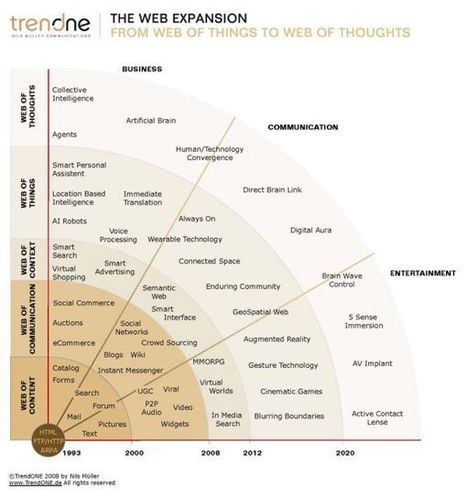
Do you know the answer to the next simple question? "What do you know about web 2.0 technology?" What's so interesting about this video, is the simple fact that none of these so called digital natives are familiar with the term web 2.0. Although they never had a life without technology, they just don't know… Via Ramiro Aduviri Velasco, Pascual Pérez-Paredes, Olaf Husby 
Becky Christensen's comment,
July 15, 2016 8:52 AM
This article gives me hope that someday the Internet will be a real resource for specific information without the mountains of unnecessary information that doesn't really apply to my searches.

Edinson Uriarte's curator insight,
November 14, 2016 8:25 AM
Do you know the answer to the next simple question? "What do you know about web 2.0 technology?" What's so interesting about this video, is the simple fact that none of these so called digital natives are familiar with the term web 2.0.
Scoop.it!

According to a new national survey, online and adult students are generally more satisfied with their overall college experience than traditional on-campus students. Via Peter Mellow |
Scoop.it!
|

|
Rescooped by
Dennis Swender
from Digital Learning - beyond eLearning and Blended Learning
December 15, 2017 12:03 PM
|
Scoop.it!
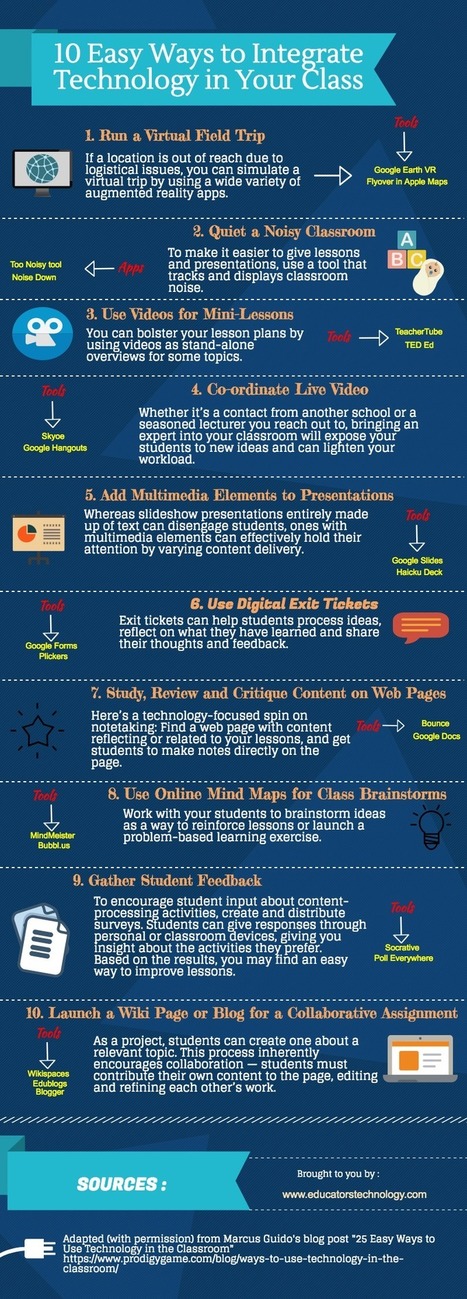
Using technology in class should always be motivated by a real need to optimize students' learning and to enhance your teaching. Every time you want to digitize a teaching task ask yourself the following questions: what are the added advantages of integrating technology in this task? And what are the alternative plans if things did not go as planned? The purpose is to make sure your use of technology is pedagogically sound and that it aligns with your own teaching goals. There are actually several ways to integrate technology in your classroom from collecting students feedback to grading paperlessly. In today's post, we are sharing with you this handy visual that features10 good examples of how you can put technology to serve your teaching. This visual is based on Marcus Guido's blog post "25 Easy Ways to Use Technology in the Classroom". We have done little bit of tweaking (with permission) on Marcus original list and ended up with the list below.
|
|
Rescooped by
Dennis Swender
from Digital Learning - beyond eLearning and Blended Learning
December 15, 2017 12:01 PM
|
Scoop.it!
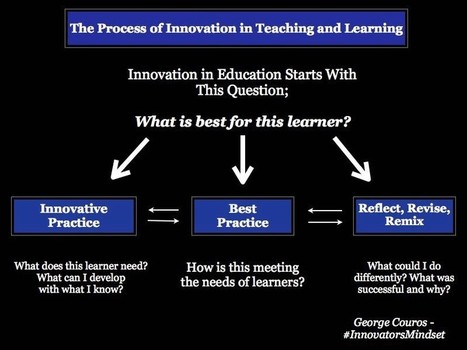
If a classroom gets iPads, a question you will often hear immediately is, “What apps should I download?” In our concern for machines taking over education, we often do things that encourage machines to take over our teaching. I have been privy to seeing many educators use “flashcard” apps with students, not because they see it as a better process, but because they feel they need to justify iPads in their classroom by using them (the device) in some way with their students. This is often because devices are thrust onto educators without much thought and support on what is possible to do with them and how this aligns with the vision of the community.
I always ask educators to think, “What could you create with this iPad that you couldn’t create before?” Focusing on what we can “create” versus what we “consume” only, is a great starting point. It is not that consumption and content isn’t important. It is just that both consumption and creation should be evident in education for true deep learning.
"I always ask educators to think, “What could you create with this iPad that you couldn’t create before?” Focusing on what we can “create” versus what we “consume” only, is a great starting point. It is not that consumption and content isn’t important. It is just that both consumption and creation should be evident in education for true deep learning."
|
|
Rescooped by
Dennis Swender
from Digital Learning - beyond eLearning and Blended Learning
December 15, 2017 12:00 PM
|
Scoop.it!

Quick Take: In a knowledge economy, we need to ensure that every student is getting the right opportunities to fulfill their potential. Online learning offers a flexibility that can help transform Education into a student-centered learning system beneficial to all.
Michael Horn is an expert in online learning, blended learning, competency-based learning and student-centered education. He works with several education organizations to improve student learning experiences and his work has also led him to serve on education organizations advisory boards. He is co-founder of the Clayton Christensen Institute for Disruptive Innovation, a non-profit think tank, and is the author of the bestseller book “Blended: Using Disruptive Innovation to Improve Schools.” Horn holds a BA in history from Yale University and an MBA from the Harvard Business School.
In this interview, he shares how to transform the educational system into a student-centered learning (SCL) approach, how to use online learning to maximize student success, and why online learning is considered a disruptive innovation in education. He also shares his perspective on the challenges of blended learning, as well as some of the trends educational institutions will experience in the coming decades.
|
|
Rescooped by
Dennis Swender
from Creative teaching and learning
December 15, 2017 11:07 AM
|
Scoop.it!
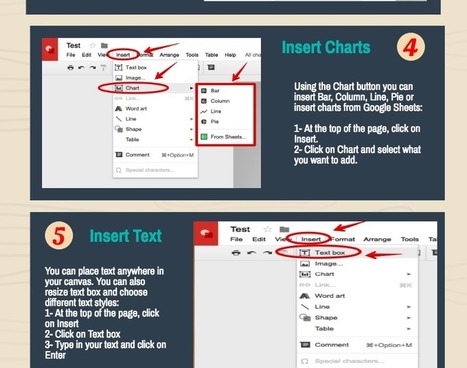
"There are several web tools teachers can use to easily design educational visuals, posters and infographics to use in their instruction without the need for any graphics design knowledge. ..."
|
|
Rescooped by
Dennis Swender
from Tools for Teachers & Learners
December 15, 2017 11:05 AM
|
Scoop.it!

If you're new here, it's best to browse the video quizzes in our library and see what an interactive video quiz is (it's simple: questions popping up during the video).
If you like them, you can make your own quiz from any Youtube or Vimeo video here on iSLCollective (Click here or on the Upload menu). It takes 5 minutes to learn to use the quiz maker, and about 0.5-1 hour to finish a quiz.

A huge collection of free video activities and a tool and tutorial to create your own.


|
|
Rescooped by
Dennis Swender
from Daily Magazine
December 15, 2017 11:03 AM
|
Scoop.it!

The cryptojacking incident happened with Stensul CEO Noah Dunkin would rather sound unusual to many. Earlier this month, Dunkin was up at a Buenos Aires Starbucks for a caffeine doze. There he connected to the store’s free wireless internet only to find himself surprised after what happened.

WARNING!! Your free WiFi craving is not so good for your computer's health.
|
|
Rescooped by
Dennis Swender
from iPads, MakerEd and More in Education
December 15, 2017 11:02 AM
|
Scoop.it!

"With each click of the mouse or flip of the channel, our society is inundated with headlines focused on natural disasters, sexual harassment allegations, countries on the brink of war, and teen suicides. While none of this is anything new, the bombardment of these stories is unique to this generation of student. Social media, the 24-hour news cycle, and questionable media sources (or questionable reporting techniques) have become their own newsworthy headlines. As a result, life can appear dark, far darker than in pre–social media days.
As adults, we bring our prior knowledge of history and our optimism about humanity to help us process and filter this inundation. Our students, however, do not have hindsight to combat their feelings of helplessness. They are surrounded by unfiltered current events—a rapid fire of negativity that can leave them vulnerable and overly anxious. It’s no wonder that teen stress is on the rise.
Nevertheless, our students have to know about the world around them, and part of our job as educators is to prepare them for the realities of the world outside the classroom walls. It’s difficult, however, to walk this precarious high wire of responsibility knowing that we need to expose students to current events and yet still nurture them developmentally."

|
|
Rescooped by
Dennis Swender
from Digital Delights for Learners
December 15, 2017 11:00 AM
|
Scoop.it!
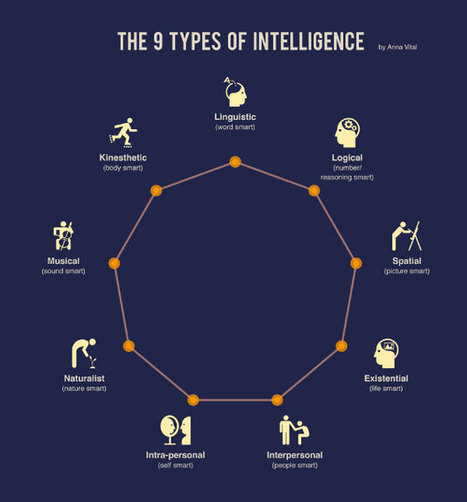
Adioma is an infographic maker that automates design for you using visual language and infographic templates. Sign up and create infographics in minutes.
|
|
Scooped by
Dennis Swender
December 10, 2017 7:40 PM
|
Scoop.it!

|
|
Rescooped by
Dennis Swender
from Moodle Best LMS
December 10, 2017 7:37 PM
|
Scoop.it!
|
|
Scooped by
Dennis Swender
December 9, 2017 2:18 PM
|
Scoop.it!

Contemporary learning environments might be best understood when viewed as a complex mix of environments and overlapping social networks. Learners fluidly move between social networks and their learning is influenced by their participation within and across these physical and virtual networks.






