


zipBoard is a web-based visual feedback and bug tracking tool that helps developers, testers and project managers collaborate during product development.
Via Nik Peachey

 Your new post is loading...
 Scoop.it! zipBoard is a web-based visual feedback and bug tracking tool that helps developers, testers and project managers collaborate during product development. Via Nik Peachey
Scoop.it!

Google Classroom is a great way to organize your lessons and resources. However, for new users it can be a little overwhelming. Here ar Via WebTeachers
Scoop.it!

The question of whether e-learning is replacing face-to-face training is one of the burning questions of the moment in corporate training departments around the world.
Scoop.it!

A growing body of evidence shows that college students generally learn less when they use computers or tablets during lectures. That is probably true in workplace meetings, too. Via Miguel Zapata-Ros, LGA
Scoop.it!
Asynchronous learning - WikipediaThe online learning resources used to support asynchronous learning include email, electronic mailing lists, threaded conferencing systems, online discussion boards, wikis, and blogs. Course management systems such as CampusCruiser LMS, Desire2Learn, Blackboard, WebCT, Moodle, and Sakai, have been developed to support online interaction, allowing users to organize discussions, post and reply to messages, and upload and access multimedia.
Scoop.it!

Educators play a critical role in the development of the essential skills students need to navigate the blizzard of unfiltered information available to them via the Web. Via Kristen Swanson
Scoop.it!
This author’s position is that asynchronous online discussions face an array of resolvable pedagogical and course management challenges. Online discussions can transform mere course chatter into a cyber forum of student-centered learning through meticulous planning, designing and orchestrating. After introducing common issues, a literature review summarizes the contributions that online discussions bring to distance learning. The author then addresses pedagogical and managerial issues that plague online discussions with strategies that instructors may readily employ. In the pedagogical realm, these include insights on organizing online discussions, using groups to facilitate interactions, establishing discussion parameters, and ensuring that the course syllabus introduces online discussion details. In the managerial realm, approaches are offered regarding overseeing discussion windows, using icebreakers, assessing student performance, ongoing communications, maintaining an online presence, netiquette, and a variety of other online discussion tips. In support of online instructors, the article weaves in relevant literature with the hard learned lessons from the author’s ongoing attempts to improve online discussions. It concludes by urging instructors to cultivate improvement continuously through candid self-critique supplemented by student feedback. Via Kristen Swanson
Scoop.it!

Online Learning is More Than Learning, Online - it's an opportunity to change the way people learn.
Via Kristen Swanson
Scoop.it!

This is a post from August 2010 but found it to be really interesting with some good points for curators. Yes, you can use Twitter for curation.
The author talks about mixing content that your audience will find interesting similar to a DJ. "As a Content Curator, you should be entertaining."
1. First realized that you ARE a subject matter expert. 2. Know your market. 3. Search via hashtags and alerts. 4. Know the "Power of Three" to effectively engage. 5. Know that how you write your tweets is just as important as what you are tweeting. 6. Elevate your peers. 7. Develop good taste! 8. Become a valued resource to your community. 9. Be the good news channel. 10. Know "when" to tweet. 11. Become part of a bigger conversation. 12. Follow industry conferences. 13. Understand there are differences if you curate for a global audience. 14. Content Curators need to follow a lot of people. 15. Curate Twitter lists that others will want to follow. 16. Become a trusted resource. 17. Track your results.
Adds by Gust MEES:
18. #criticalthinking i also a need 19. Knowing #quality sources is a must! 20. Knowing #itsecurity is a must to share ONLY secure links!!! 21. Knowing the right #itsecurity tools for surfing secure is a must!!!
Related #itsecurity links:
- http://gustmeesen.wordpress.com/2012/01/05/pc-security-howto-secure-my-pc/
- http://gustmeesen.wordpress.com/2012/02/13/why-ict-security-why-the-need-to-secure-a-computer/
This works for Scoopit and Pinterest and other curating tools also. Good read! Via Barbara Bray, Gust MEES, Kristen Swanson
Scoop.it!

Ally Greer's curator insight,
November 18, 2013 4:13 PM
e-Learning is awesome. The internet helps us learn in so many more advanced ways than our predecessors could have ever imagined. One of the coolest parts about learning online is the visualization of information to make it easier to consume, more understandable, and more exciting! Here's an awesome infographic that goes through a brief history of e-learning, starting in 1924 with an Ohio State University professor who invented the "testing machine," and leading all the way to the present with tools like YouTube, Twitter, iTunes U, and Scoop.it.
Scoop.it!

More and more organisations are choosing to complement their face-to-face inductions online or move to an entirely online induction model. Here are 3 reasons why…
“The Day 1” experience Sometimes it’s the time it takes to set new starters up on your systems or finalise the paperwork, sometimes it’s not having enough people start around the same time to justify the cost and resource of running a face to face induction session. Whatever the reason, it’s rare that new starters experience a consistent, formal induction on their first day.
Sure, there’s the office tour, the meet and greets, but how do they understand where your organisation is headed, the values that drive you, and what’s expected of them… from day one? Or even before their start date?
An online induction means these all-important messages that set the scene and communicate who you are and what you do are delivered from the get-go. This can include video of your CEO or MD talking conversationally about what your organisation’s vision and values mean to them. From Day 1, your new starters can have the impression that senior leaders are approachable and accessible.
Streamlined content Often the content that new starters need to be aware of is housed in multiple locations: your web page, your intranet, your shared drive, in old emails, in people’s heads. A new starter needs a map.
An online induction corrals all that must-know, or must-know-where-to-find information in a cohesive way. It signposts people to the places they can access the information now, and return to later as needed. And if they need to find it later… it’s the most up to date version, not a new starter manual that is out of date as it’s too hard to maintain.
Getting connected There is so much opportunity to connect new starters to each other and encourage that sense of belonging to a ‘cohort’. Consider allocating someone the responsibility of being your “Induction community manager” and taking advantage of the discussion groups on your LMS, or standalone social networks.
This means you can dish out work-integrated challenges or activities for them to complete, and come back to post and share their insights amongst the group. Moving your induction online means new starters can form connections with colleagues across geographical and departmental boundaries – at a fraction of the cost and potential time lags involved in achieving this face to face.
To read more about moving your induction process online click here. And see a vignette of one of our Inductions.
Learn more about how to move your induction online
Sarah Davie is the Global Design Lead for The Learning Factor. Sarah has a passion for Onboarding and Induction solutions. She is an experienced learning consultant with a demonstrated history of delivering for clients from large Corporate organisations, Government sectors, global Consulting Firms and boutique Learning Agencies. Via The Learning Factor 
The Learning Factor's curator insight,
November 23, 2017 5:51 PM
More and more organisations are choosing to complement their face-to-face inductions online or move to an entirely online induction model. Here are 3 reasons why...
Scoop.it!

"Technology is widely used in today’s early-childhood classrooms and creates new opportunities for children to create their own content and express their thinking. But 1:1 device models and personalized learning might not be the best type of instruction in preschool and the early grades, Kathleen Paciga, an associate professor of education at Columbia College Chicago, said Friday during a featured session at this year’s conference of the National Association for the Education of Young Children in Atlanta." Via EDTECH@UTRGV 
Berenice Cano-Aguilar's curator insight,
February 8, 2022 11:29 PM
Various studies show how using technology interactively and with interaction like sharing a device with a partner score higher on early literacy assessments.
|
Scoop.it!

For those of you who haven’t seen it yet,here is a handy visual featuring what we think are some of the best educational web tools for Bloom’ taxonomy. For each of Bloom’s thinking levels we came up with a number of suggested tools that go with it. We have been very selective concerning the choices included and because of space constraints we excluded several other tools that worth the mention here. Also, the visual is not hyperlinked, check out the chart at the bottom of the page for links of the featured tools. For an iPad version of this graphic, click here. Via John Evans
Scoop.it!

There were no major surprises in Educause’s 2017 ECAR Study of Undergraduate Students and Information Technology. For four years running, the number of students preferring a blended learning environment that includes “some to mostly online components” has increased and those preferring a face-to-face only learning environment has continued to decline. The report did find, however, that tablets, which were gaining popularity a few years ago, are now on their way out as a device of preference. 
Willem Kuypers's curator insight,
November 29, 2017 3:22 AM
Etude intéressante, sauf qu'en Belgique la montée des tablettes avec clavier est en augmentation ! Les ordinateurs portables sont en diminution.
Scoop.it!

Download 1,250 free online courses from the world's top universities -- Stanford, Yale, MIT, & more. Over 40,000 hours of free audio & video lectures. Via LGA
Scoop.it!
Much of the literature concerned with online education has focused on the development and implementation of strategies and techniques for improving learner outcomes. Other studies have examined the varying levels of expertise both students and instructors possess in using online technology, or how courses delivered in traditional classrooms can be modified for online delivery. Missing from the literature has been a discussion of how teaching online can inform traditional classroom pedagogy. This paper details the authors’ experience with the development and delivery of an online statistics course. The pedagogical and practical benefits of teaching online are identified, and specific suggestions are made for how instructors can use these benefits to improve their traditional classroom pedagogy. Via Kristen Swanson
Scoop.it!
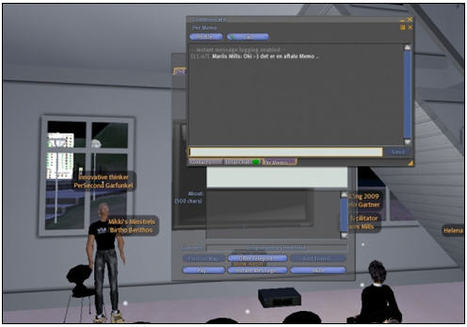
Presence - or having a sense of active participation - in distance education has increased with the expanding use of and affordances of communications technologies. Virtual worlds have been on the forefront of popular and education technology in the last three years and innovative methods of teaching and learning are emerging in these contexts. Using the recently validated community of inquiry (COI) instrument, this study focuses on students’ perceptions of teaching, social and cognitive presence in virtual world contexts. The authors examine whether the COI Instrument can effectively be applied to virtual world learning events. The results are exciting: in a diverse sample, virtual world learners perceive teaching presence, social presence and cognitive presence. Via Kristen Swanson
Scoop.it!

By: Jennifer Garrett, Distance Learning Administration Via Kristen Swanson
Scoop.it!

Examining motivation in online distance learning environments: Complex, multifaceted and situation-dependent... Via Kristen Swanson
Scoop.it!

Distance learning has already emerged as a close substitute for traditional on-campus education, and been appeared as an effective way to educate all sections in a society. The delivery processes o... Via Ana Cristina Pratas, Julie F 
Julie F's curator insight,
November 17, 2013 6:50 PM
Guys, go learn and discover something deeper for the whole theme, please!!! 
Tara Daniels's curator insight,
November 23, 2013 9:48 PM
Distance Education has bones. As educators we need to dress it with flesh - the knowledge, understanding and insight of antiquity. 
Sabrina Jimenez's curator insight,
March 29, 2016 8:18 PM
Guys, go learn and discover something deeper for the whole theme, please!!!
Scoop.it!

Distance learning has been around in the U.S. since at least 1892, when University of Chicago offered its first correspondence course. Via Julie F
Scoop.it!

RT @jackiegerstein: Online Self-organizing Social Systems: The Decentralized Future of Online Learning http://t.co/s4ohZL13... Via Pekka Puhakka, june holley
Scoop.it!

Whether you’re a frequent traveler, simply learning a new language, or interacting with someone who speaks in a different language, Siri for iOS now has the fantastic ability to translate between languages on the fly. For example, you can ask Siri to say “I need a taxi ride to the airport” in French, and Siri will not only instantly translate that for you in written text, but also say it aloud. Via John Evans, Yuly Asencion |







This could be an interesting way to give students feedback on digital projects and start developing their project management skills.