Your new post is loading...

|
Scooped by
Dennis Swender
April 16, 2019 7:23 AM
|
It’s time to learn. Instructional design (or instructional systems design) combines the art of creating engaging learning experiences with the science of how the brain works. This site is designed to support students, teachers, instructional designers, learning engineers, and anyone interested in creating more effective learning experiences. Resources on this site were created by Greg Kearsley and Richard Culatta Why Instructional Design Matters ... Learn MoreHome
|
|
Rescooped by
Dennis Swender
from MarketingHits
April 15, 2019 1:39 AM
|
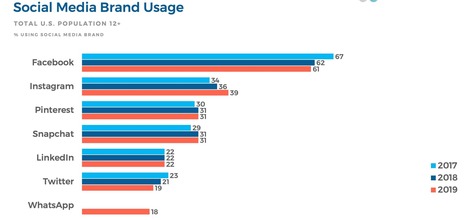
Advertisers are getting squeezed on all sides. Traditional ads are going away, digital ads are skyrocketing in price. What's the solution? Advertisers are getting squeezed on all sides. Traditional ads are going away, digital ads are skyrocketing in price.
Via Brian Yanish - MarketingHits.com
" Backchannel is the practice of using networked computers to maintain a real-time online conversation alongside live spoken remarks.
Via Dr. Tom D'Amico (@TDOttawa)
Free resource of educational web tools, 21st century skills, tips and tutorials on how teachers and students integrate technology into education
Via Dr. Tom D'Amico (@TDOttawa)
Free resource of educational web tools, 21st century skills, tips and tutorials on how teachers and students integrate technology into education
Via Dr. Tom D'Amico (@TDOttawa)
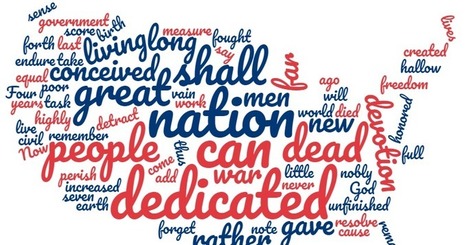
The popularity of word cloud generation tools seems to have declined from their peak of about six years ago. None-the-less they are still useful in providing students with a nice way to visualize the most frequently used words in a passage of text. Wordle is probably the best known tool for making word clouds. But Wordle doesn't work well in many web browsers today so here are seven other word cloud generators to try.
Via John Evans
|
|
Rescooped by
Dennis Swender
from Education 2.0 & 3.0
April 13, 2019 10:44 AM
|
Check some of the main reasons why a Digital Learning Strategy can be described as crucial for your professional success and your organization's welfare.
Via LGA, Yashy Tohsaku
|
|
Rescooped by
Dennis Swender
from Educación a Distancia y TIC
April 13, 2019 10:41 AM
|
Check the impact of Online Assessment On The Educational Sector and figure out what method of assessment suits your students' needs best and why.
Via LGA
Free resource of educational web tools, 21st century skills, tips and tutorials on how teachers and students integrate technology into education
Via Dr. Tom D'Amico (@TDOttawa)
|
|
Scooped by
Dennis Swender
April 12, 2019 1:28 PM
|
Nifty portfolios speak volumes for Instructional Design pros. Browse efficient templates, learn how to differentiate, and come up with a creative response.
|
|
Scooped by
Dennis Swender
April 12, 2019 1:25 PM
|
Currently, the primary method to scale online course quality is through the use of rubrics that inform online course (re)design. Understanding the rubric field is critical for educational institutions that a) want to offer quality online programs, credentials, and/or certificates, and b) want to increase online student success rates. To support these institutions—especially those that do not yet use a rubric at scale—as well as the rubric providers themselves, I conducted a review of the most widely used online course design rubrics, which I have turned into a three-part series:
Part 1: WHAT? A comparison of the seven most widely used online course design rubrics, along with their collective strengths and limitations
Part 2: SO WHAT? A discussion of why using these rubrics has become so important, and some early evidence of impact
Part 3: NOW WHAT? Recommendations for what the rubric providers and adopters should do next to increase online student success further
|
|
Scooped by
Dennis Swender
April 12, 2019 1:20 PM
|
Imagine the contributions instructional designers would make to society if they ruled the world.
“The censorship of social networks has plunged citizens back into isolation.”
Via Igor Espanhol
|
The cost of publishing is usually borne by researchers in many institutions—a huge burden particularly in developing countries with weaker currencies.
Via Igor Espanhol
Keyboarding is, perhaps, the most essential of all 21st-century skills. With computers in use across the majority of U.S. schools now, many educator
Via Dr. Tom D'Amico (@TDOttawa)
When you teach digital citizenship to your students, you help create a positive school culture that supports safe and responsible technology use. Our K–12 digital citizenship program is a comprehensive learning curriculum including lesson plans, videos, games, assessments, teacher training, support materials, and more.
Via Dr. Tom D'Amico (@TDOttawa)
Learn how innovative spaces, structures, rituals, stories, and symbols promote and celebrate learner agency, risk-taking, collaboration, and curiosity.
Via Dr. Tom D'Amico (@TDOttawa)
I recently discovered Boclips for Teachers, a portal hosting more than 2 million short-form educational videos from more than 100 of the educational video producers you already know and love.
Familiar sites like TED-Ed, LearnZillion, Associated Press, PBS, Crash Course, Reuters, Bozeman Science and Smithsonian have offered permission for the site to curate their excellent content in a distraction-free, ad-free environment. Content is selected by teachers for teachers.
Boclips for Teachers spans age/grade levels and disciplines. Content includes instructional video, animations, mini-documentaries, historical footage, breaking news and virtual reality. Teachers may use the platform to share, edit, and store videos or they might easily copy BoClips links to share on their own websites and learning management systems. Unfortunately, the search does not yet allow users to filter for subject, age level, curriculum standards, etc
Via John Evans
Field notes for busy people on self-learning software and its commercial applications.
Via John Evans
|
|
Rescooped by
Dennis Swender
from consumer psychology
April 13, 2019 10:42 AM
|
"Consumers have spoken. About 30-percent of those surveyed would rather have smart controls to make their "old" appliances "smart", rather than paying extra to purchase "smart appliances ..."
Via Leona Ungerer
|
|
Rescooped by
Dennis Swender
from Edumorfosis.it
April 13, 2019 10:41 AM
|
At the Learning While Working Virtual conference, you talked about the work you’ve been doing with chatbots and learning transfer. Before we start talking about the chatbot bit, I think we need to explore your philosophy to learning transfer. What do you think are the key factors for learning transfer to happen?
I think learning transfer is such an interesting challenge, because basically we’re talking about the behavioural change part of learning, so how do we get someone to actually shift their behaviours after or as part of the learning intervention?
There’s a lot of talk at the moment around the Ebbinghaus forgetting curve, which of course has been around for ages, but I think neuroscience is giving it a resurgence and helping people remember what they’ve learned. For us and the type of learning we work with, which is often soft skills, leadership, or sales, it’s less about whether someone can remember what they’ve learned and more about whether they actually put it into practice.
Via Edumorfosis
|
|
Scooped by
Dennis Swender
April 12, 2019 1:29 PM
|
“Inside Digital Learning” talked to numerous instructional designers and digital learning leaders on different-size teams for this article; most said they’re optimistic that institutions are starting to understand the importance of instructional designers as online programs expand.
|
|
Scooped by
Dennis Swender
April 12, 2019 1:26 PM
|
Look no further. If you want to learn more about instructional design, eLearning and how people learn, here is an updated selection of books for you to browse. If you are already competent, there are a few books here that will expand your skills and understanding. In this updated article, there are a range of books, from the smaller less expensive ones to pricey graduate level texts.
|
|
Scooped by
Dennis Swender
April 12, 2019 1:25 PM
|
Strong scaffolding not only helps students complete course-specific assignments, but it teaches them valuable skills about completely work independently (Beed, Hawkins, & Roller, 1991). While scaffolding is meant to be helpful, it shouldn’t take the form of hand-holding or other techniques that might lead students to become overly reliant on step-by-step instructions.
|
|
Scooped by
Dennis Swender
April 12, 2019 1:15 PM
|
For designing smarter learning experiences
|