Twitter is a social media platform and micro-blogging site which has 126 million daily users. Because Twitter is an open platform it provides unique opportunities for teaching and learning, such as engaging students online, building community and relationships in courses, curating digital resources, and supporting students to engage in public conversations.
Past research suggests that the use of an online learning orientation is an effective proactive strategy to ease online students' transition into online learning. Based on a sample of 3888 online students from an urban public university, we used ordinal logistic regression to understand the influence of students' satisfaction with an online learning orientation (OLO), their prior level of online learning experience, and their demographics on their academic self-efficacy (ASE). Consistent with prior research, our findings confirmed the influence of students’ satisfaction with OLO, their prior online learning experience, and their gender on their ASE. In contrast, students’ age and enrollment status proved not to be significant. Overall, our findings provide strong evidence about how the use of an OLO as proactive support strategy can boost online students' academic self-efficacy.
Education is a field with a unique affinity for jargon. In any given day, a teacher fosters classroom community with IEPs in mind while practicing effective pedagogy. That sentence alone would sound like gibberish to someone outside of education. The steadily increasing infusion of educational technology into schools has necessitated new terms to describe the various ways the classroom is changing. In theory, these new terms are helpful since they make it possible to speak with more exact language. In practice, though, this edtech jargon leaves many teachers feeling alienated and intimidated. With that in mind, here are some frequently used edtech terms made simple.
With changing times, technological advancements have revolutionized how we consume information on a daily basis. Traditional classroom instruction and training has simply gone obsolete in a world students have access to information all the time through technology. These technological advancements have also led to universities becoming competitive, and joining the digital revolution by implementing digital learning facilities. As the higher education industry is one of the strongest pillars of academic as well as professional learning and development worldwide, its acknowledgement of digital learning being the most accessible and efficient method of acquiring knowledge in modern times, and the subsequent application of digital learning facilities in universities, matters a lot. In this article, we’ll discuss how digital learning can help universities educate their students better and make life easier for them.
Psychotherapists, as much as anyone and perhaps even more so at times, need therapeutic support. Find out why an increasing number of clinicians are seeking this support online.
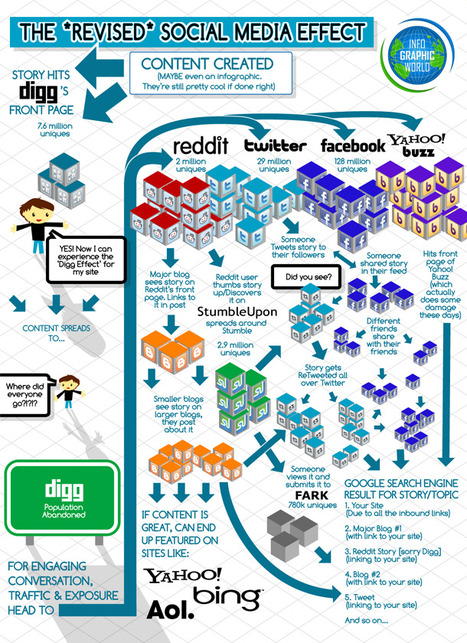
The following ===> infographic <=== covers the topic of social media and how it affects our content.
Would you imagine how social networking would be if there were no websites in the calibre of Stumble Upon, Twitter, Reddit, Digg, and Facebook ? I don't think we will have the same easy and instant access to the information as we do now.
We should be so thankful to those people behind the creation of such tools especially when we measure their importance and benefit in education.
It is arguably human nature—and most certainly bureaucratic nature—to want to quantify our successes and failures. The ability to calculate a numerical value to represent the progress of an individual or an institution, a country even, is now central to evidence‐based policy and practice. The counterpoint to “treasuring what we measure,” is of course, “what counts can't always be measured, and what's measurable doesn't always count.” All institutions, education being no exception, have long wrestled with the tension that the powerful abstractions afforded by quantitative analysis also lose vital detail as context is stripped out. This is what makes the design of metrics to gauge the quality of nuanced human processes and outcomes (such as teaching and learning) so controversial. Across society, we see this debate now playing out in all spheres of human life, with ethical frameworks and professional codes of practice proliferating (eg, Asilomar, 2017; Floridi et al., 2018; IEEE, 2017; Montreal, 2017; Partnership on AI [PAI], 2018)—although it is not clear that these are making much impact yet on computing companies (Whittaker et al., 2018, Section 2.3). How this debate should unfold in education and lifelong learning is the focus of this special issue, which brings together leading scholars in the field of Learning Analytics (LA) and Artificial Intelligence in Education (AIED)—fields that are viewed with varying degrees of excitement and suspicion by parents, students, teachers, journalists and scholars.
The fears are reasonable: that quantification and autonomous systems provide a new wave of power tools to track and quantify human activity in ever higher resolution—a dream for bureaucrats, marketeers and researchers—but offer little to advance everyday teaching and learning in productive directions. This fear is justified in our post‐Snowden era of pervasive surveillance, and post‐Cambridge Analytica data breaches. Partly however, this fear is also born of lack of awareness about the diverse forms that LA/AIED take, which is equally understandable—to outsiders, these are new and opaque technologies. It follows that if we do not want to see concerned students, parents and unions protesting against AI in education, we need urgently to communicate in accessible terms what the benefits of these new tools are, and equally, how seriously the community is engaging with their potential to be used to the detriment of society.
What do you do when there are no schools or not enough teachers? Or even when you don’t have enough money to build all the schools and hire all the teachers that you need? Could so-called 'virtual schools' play a role, and if so: how?
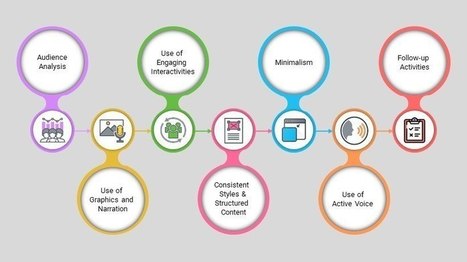
Have you ever wondered why you were advised to use active voice or to follow minimalism? Did you ever think about why you have to follow such guidelines? We intuitively know that these are the right things to do, but it helps to understand the theoretical framework that supports the right things.
While techniques for text mining, sentiment analysis and other natural language processing are ubiquitous on the Internet, they’re not always accessible to students.I recently ran this tutorial in my …...
Best Personal Injury Attorney( http://www.cochrantexas.com/ )handles many cases like an auto accident, truck accident, and medical malpractices. There are
The Top 50 Edutech Tools in Higher Education Report identifies top 50 edutech tools for colleges and universities along with essential information on the edutech market and its growth. The report aims to be an edtech guide for higher education educators, leaders and administrators.
I've grown fascinated lately with the Instagram #BookChallenge and the #BookBento photo technique. So, here's my rendition, see above graphic or make a copy of my GoogleDoc. Feel free to take, use, share, make it yours - with attribution please.
I'm kinda lazy, some book challenges are 30 or 31 days...I chose 10 pictures just to make it doable and easy.
Have you heard of these? Have you ever participated in one? I've been working for the last 6 months on a new presentation for a keynote appearance in Ohio and it's making me more thoughtful about the potential of Instagram. More clever ways to interact with Libraries, literacy, books, reading, kids, and our community.
To get content containing either thought or leadership enter:
To get content containing both thought and leadership enter:
To get content containing the expression thought leadership enter:
You can enter several keywords and you can refine them whenever you want. Our suggestion engine uses more signals but entering a few keywords here will rapidly give you great content to curate.


 Your new post is loading...