Video provides unique challenges that are different from the traditional approach to Instructional Design. The accessibility and ease of creating videos are getting easier for the designer, while the range and depth of the capabilities of software providers continue to grow. The challenge for the Instructional Designer is creating and producing video that impacts the learner and meets the objectives of the course. Typically, a designer would write content that paints a picture in the learner’s mind. Now, imagery is a critical component to successfully creating a video that meets the stated objectives. This adds another skillset for the designer.
Recent research uncovered just a handful of distinct elements that set great online teaching apart from the merely good. The findings came out of interviews with eight faculty members who have won awards for their online teaching from three professional associations: the Online Learning Consortium, the Association for Educational Communications & Technology and the United States Distance Learning Association.
Been going for many years… and like the vibe… fruity mixture of tech, academic, government from 73 countries. There's the added attraction of Berlin, a Christmas market right across the street and free drinks at the Marlene Bar! Gave three talks, all on AI theme… AI and ethics (the overblown hysteria),
The number of K-12 students enrolled in online courses has risen dramatically over the last decade, giving more students the flexiblity to learn from home or pursue areas of study not available at their schools. But the growth has also prompted criticism from educators and others that online learning lacks high standards or accountability.
To address concerns about quality and try to improve online learning, the Virtual Learning Leadership Alliance and Quality Matters recently unveiled newly revised standards for virtual education—one set each for online teaching, programs, and courses. Representatives from the two organizations spent two years combing through the existing standards from the Aurora Institute (formerly known as the International Association for K-12 Online Learning, or iNACOL) and soliciting feedback from the field to shape the new standards. It has been nearly a decade since those standards were updated.
Education Technology or EdTech offers unique opportunities for student development. The roots of edtech in whiteboards, projectors and tablets have given rise to popular learning platforms. Now, students can access on-demand courses, and learn whatever they want thanks to technological advances in the field. Companies can provide classes to their workers the same way, allowing them to leverage industrial edtech for their own business needs and purposes.
The development of edtech isn't expected to slow down any time soon. No traditional teaching methods can compete with the levels of student attentiveness, availability and convenience that edtech currently offers. Professionals from Forbes Technology Council look at the most compelling recent advances in edtech, and why they're such a big deal to education in the 21st century.
Tech-savvy students are adept at using the latest internet-enabled devices, but they don’t do enough to protect their sensitive information in cyberspace.
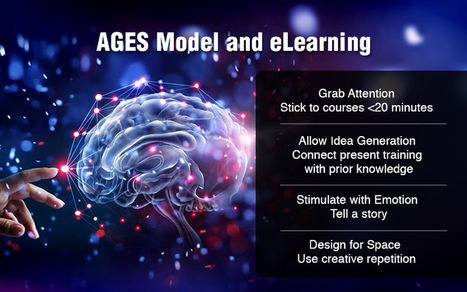
Neuroscientists have spent years trying to understand the fascinating relationship between the hippocampus and the amygdala and their role in learning and memory, and voila! The AGES Learning Model was developed.
AGES is an acronym for ATTENTION, GENERATION, EMOTION, and SPACE. So, what’s the big deal? The big deal is that you can use the AGES model to make your eLearning programs more effective and learner centric.
How? Well, that’s what this blog is all about. Let’s get down to the brass tacks.
Open-source software powers nearly all the world’s major companies. This software is freely available, and is developed collaboratively, maintained by a broad network that includes everyone from unpaid volunteers to employees at competing tech companies. Here’s how giving away software for free has proven to be a viable business model.
Mobile plus Internet is the combination that will keep on giving for content consumers all over the world. Learners too, of course, both those natively interconnected as well as the growing base of adults who become comfortable with the idea of longlife learning.
But you will be missing out on a lot of critical developments if you don’t sail the currents, nor dive into the depths. Internet is the ocean and devices (phones, tablets, gadgets, fridges and all the rate of new IoT devices impossible to make sense of by any one person) are the aqualung.
So what’s happening online in 2020? Consulting firm Activate is sharing its “Technology & Media Outlook 2020.” A collection of 16 statistical trends, each one slated to influence classrooms and learning practices at varying magnitudes.
SPOCs that connect top universities and business schools with emerging markets and international students could be the big edtech story of the coming decade
We might imagine advanced AI "learn” in ways similar to a toddler. But there are actually key differences - and understanding them help us to understand the machines that make our decisions.
I read the The Cluetrain Manifesto online in 1999, and later purchased the book. Even though the authors stated that it was not a business book, it provided a good lens though which to view our networked world at the time. I did not agree with all the theses but the book was still worth it.
We have analyzed this reality through two case studies with consultants, auditors and independent professionals, and have identified the factors in the use of these practices and highlighted four informal learning methods based on digital technology:
Google Docs, Sheets, and Slides have evolved to become very component online productivity tools, enabling you to churn out documents, spreadsheets and presentations from any computer (with other collaborators, if necessary). But are you taking full advantage of everything these web apps have to offer? These 21 tips will save you time, improve your work, and help you do more with these apps.
Colleges and corrections departments increasingly are turning to online instruction for incarcerated students. But while those programs may be easier to scale, challenges and questions about quality remain.
As instructional designers, at the start of every new eLearning project, we are called upon to think of a strategy which is best suited to the project at hand given the technical, time, and financial constraints. In this scenario, we often tend to mix up our strategies with models. Though the two might overlap, there is a fine distinction between a strategy and a model. We will understand the distinction between the two so that we have a very clear idea of what each is and what is its place in the scheme of things.
To get content containing either thought or leadership enter:
To get content containing both thought and leadership enter:
To get content containing the expression thought leadership enter:
You can enter several keywords and you can refine them whenever you want. Our suggestion engine uses more signals but entering a few keywords here will rapidly give you great content to curate.


 Your new post is loading...