Education 2.0 & 3.0
177.6K views | +77 today
 
Scooped by Yashy Tohsaku
onto Education 2.0 & 3.0
September 3, 3:50 PM
Scoop.it!

You Don’t Need 50 AI Courses: You Need These 7 Skills | by CodeWithMasood | Aug, 2026

You Don’t Need 50 AI Courses: You Need These 7 Skills Stop collecting courses. Start building skills. Here’s what actually matters. Most people believe that becoming an AI engineer means learning …
No comment yet.
Education 2.0 & 3.0
All about learning and technology
Curated by Yashy Tohsaku
Your new post is loading...
Rescooped by Yashy Tohsaku from Edumorfosis.it
Today, 11:49 AM
Scoop.it!

Unprepared: Education beyond 2030 ·

Unprepared: Education beyond 2030 · | Education 2.0 & 3.0 | Scoop.it

Education systems are headed toward the 2030s with an unraveling assumption: that schools, universities, training systems, ministries, employers, and international organizations can prepare people for futures that are still stable enough to understand and shape. The central education crisis beyond 2030 is the collapse of preparation under technological acceleration, ecological stress, labor disruption, demographic divergence, and institutional lag.

The report uses the Technological Singularity as a stress horizon rather than a prediction. The term is used cautiously: not as a science-fiction forecast, but as a way to name a human and governance threshold where technological change, institutional dependence, ecological pressure, labor disruption, and governance failure exceed the ability of people and public institutions to imagine, interpret, govern, and respond with coherence.

Current signals already point toward this stress horizon. AI adoption is outrunning educational governance. Generative AI is changing work at the level of tasks, which makes broad reskilling narratives inadequate. Climate hazards are already disrupting schooling for hundreds of millions of learners. Demographic pressure is pushing some systems toward contraction and fiscal stress, and others toward overcrowding, displacement, and unmet demand. At the same time, foundational learning remains unresolved: many systems will confront AI, climate, labor, and demographic shocks before securing basic literacy and numeracy.


Via Edumorfosis
No comment yet.
Rescooped by Yashy Tohsaku from iGeneration - Humane Use of Technology in an AI world (Pedagogy & Digital Innovation)
Today, 11:48 AM
Scoop.it!

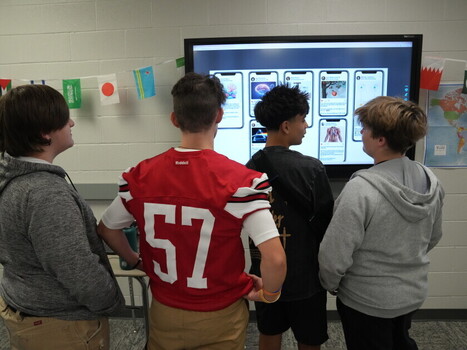
286 AI Task Cards for teaching AI literacy - all grades, including no screens activities - via Finland FaktaBaari - thanks for the share Kari Kivinen

286 AI Task Cards for teaching AI literacy - all grades, including no screens activities - via Finland FaktaBaari - thanks for the share Kari Kivinen | Education 2.0 & 3.0 | Scoop.it

Via Dr. Tom D'Amico (@TDOttawa)
No comment yet.
Rescooped by Yashy Tohsaku from Digital Delights - Digital Tribes
Today, 11:48 AM
Scoop.it!

OpenAI's GPT-6 Astra Is Here. It Came With a Warning. 🚀

OpenAI's GPT-6 Astra Is Here. It Came With a Warning. 🚀 | Education 2.0 & 3.0 | Scoop.it
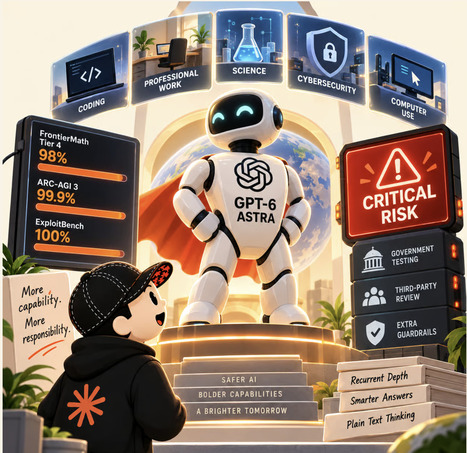
OpenAI released GPT-6 Astra this week, and Sam Altman is calling it the best model in the world for computer use, professional work, science, coding, and cybersecurity. The benchmark numbers back the confidence: 98% on FrontierMath Tier 4, 99.9% on ARC-AGI 3, and a clean 100% on ExploitBench.

Via Ana Cristina Pratas
No comment yet.
Scooped by Yashy Tohsaku
Today, 11:46 AM
Scoop.it!

Control Alt Achieve: EdTech Links - Week of 8-24-2026

Control Alt Achieve: EdTech Links - Week of 8-24-2026 | Education 2.0 & 3.0 | Scoop.it
Each week I keep an eye out for the latest edtech resources through blogs, social media, podcasts, videos, user groups, and more. I the
No comment yet.
Scooped by Yashy Tohsaku
Today, 11:44 AM
Scoop.it!

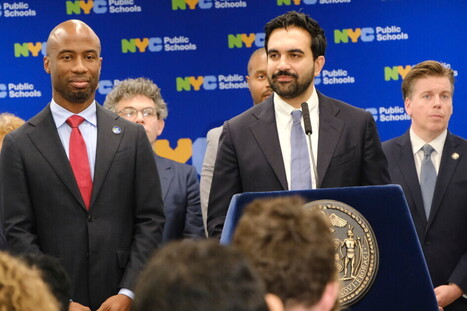
New York, Los Angeles Restrict Student AI Use. Will Other Districts Follow?

New York, Los Angeles Restrict Student AI Use. Will Other Districts Follow? | Education 2.0 & 3.0 | Scoop.it
The restrictions come amid rising concerns about overreliance on technology in schools.
No comment yet.
Scooped by Yashy Tohsaku
Today, 11:40 AM
Scoop.it!

Bill Gates' Stark Warning on AI in Education: It Could Result in 'People Learning Less'

Bill Gates' Stark Warning on AI in Education: It Could Result in 'People Learning Less' | Education 2.0 & 3.0 | Scoop.it
The Microsoft co-founder is more worried about the technology than he was just a few years ago.
No comment yet.
Rescooped by Yashy Tohsaku from Digital Delights for Learners
September 4, 11:20 AM
Scoop.it!

11 AI prompts for teachers to save time this semester

11 AI prompts for teachers to save time this semester | Education 2.0 & 3.0 | Scoop.it
Customize these 11 free AI prompts to catch your blind spots, plan lessons, build rubrics and generate review questions. Works with Claude, ChatGPT or Gemini.

Via Ana Cristina Pratas
No comment yet.
Rescooped by Yashy Tohsaku from Educational Technology News
September 4, 11:19 AM
Scoop.it!

Classroom screen time bans won't solve everything, says APA

Classroom screen time bans won't solve everything, says APA | Education 2.0 & 3.0 | Scoop.it
A new, cautionary APA report wades into the growing debate around screens, classroom technology, and AI.

Via EDTECH@UTRGV
EDTECH@UTRGV's curator insight, September 4, 8:38 AM

"[T]he APA urges educators to test how well students can apply learned skills in real-world contexts outside of the technology itself, whether it's an app, computer game, or chatbot. If students struggle, the report says, the tech has failed."

Rescooped by Yashy Tohsaku from Educational Technology News
September 4, 11:18 AM
Scoop.it!

Schools are starting to teach AI literacy. For many, that means helping kids see chatbots’ flaws

"Artificial intelligence chatbots have become the bane of teachers everywhere, but to prepare for the new school year, a group of educators in Charleston, South Carolina, packed into a high school auditorium and talked about inviting AI into the classroom."


Via EDTECH@UTRGV
EDTECH@UTRGV's curator insight, September 4, 8:40 AM

"After initially trying to ban AI use, a growing number of U.S. public schools are trying a new strategy: encouraging classroom experimentation, partly so students can see its shortcomings, including generative AI’s notorious tendency to “hallucinate,” or fabricate information."

Rescooped by Yashy Tohsaku from e-learning-ukr
September 4, 11:17 AM
Scoop.it!

Artificial Intelligence as a Pedagogical Tool in Higher Education: Enhancing Reflection and Formative Assessment

Artificial Intelligence as a Pedagogical Tool in Higher Education: Enhancing Reflection and Formative Assessment | Education 2.0 & 3.0 | Scoop.it
Discover practical ways to use AI for formative assessment, reflection, and metacognitive learning while keeping human instruction at the center.

Via Vladimir Kukharenko
No comment yet.
Scooped by Yashy Tohsaku
September 3, 3:50 PM
Scoop.it!

You Don’t Need 50 AI Courses: You Need These 7 Skills | by CodeWithMasood | Aug, 2026

You Don’t Need 50 AI Courses: You Need These 7 Skills Stop collecting courses. Start building skills. Here’s what actually matters. Most people believe that becoming an AI engineer means learning …
No comment yet.
Rescooped by Yashy Tohsaku from e-learning-ukr
September 3, 12:33 PM
Scoop.it!

Three shifts in course design to update pedagogies for the AI era

Three shifts in course design to update pedagogies for the AI era | Education 2.0 & 3.0 | Scoop.it
How can education truly prepare students for the unpredictability of the working world? Find three ways to encourage students to develop the skills they’ll need

Via Vladimir Kukharenko
Rescooped by Yashy Tohsaku from Educational Technology News
September 3, 12:32 PM
Scoop.it!

Lisa Nielsen: The Innovative Educator: Why Elementary Students Need Access to Screens

Lisa Nielsen: The Innovative Educator: Why Elementary Students Need Access to Screens | Education 2.0 & 3.0 | Scoop.it

"Just as schools are preparing to open, New York City is putting new limits on technology use. As reported in The New York Times and Chalkbeat, there will be no individual screens before third grade and recommended caps on screen time for grades 3 - 8."


Via EDTECH@UTRGV
EDTECH@UTRGV's curator insight, September 3, 11:05 AM

"[T]he problem with screen-time rules is that they measure the device rather than what students are doing with it. That's particularly problematic with young children because sometimes the screen is... an accessibility tool"

Rescooped by Yashy Tohsaku from Learning & Technology News
Today, 11:48 AM
Scoop.it!

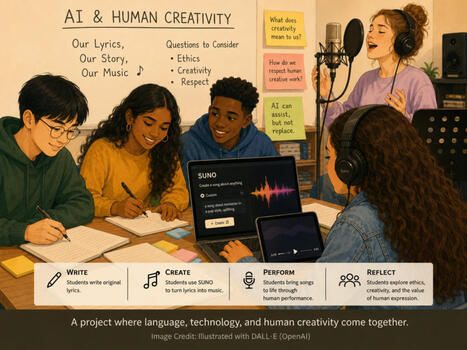
AI as Collaborator: Human-Written Lyrics, AI-Sung Music, and Critical Reflection

AI as Collaborator: Human-Written Lyrics, AI-Sung Music, and Critical Reflection | Education 2.0 & 3.0 | Scoop.it
AI as Collaborator: Human-Written Lyrics, AI-Sung Music, and Critical Reflection

Via Nik Peachey
Nik Peachey's curator insight, Today, 6:25 AM

AI as Collaborator: Human-Written Lyrics, AI-Sung Music, and Critical Reflection https://fltmag.com/ai-collaborator-lyrics-music/ Some nice ideas in this article.

Rescooped by Yashy Tohsaku from Digital Delights - Digital Tribes
Today, 11:48 AM
Scoop.it!

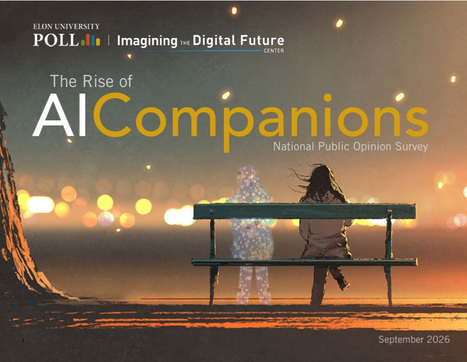
The Age of AI Companions Has Begun

The Age of AI Companions Has Begun | Education 2.0 & 3.0 | Scoop.it

"We are releasing a new report today with survey results showing that 27% of U.S. adult internet users have significant social and emotional interactions with large language model (LLM) systems such as ChatGPT, Gemini, Claude and Copilot. A third of those users consider their AI bot a friend.


These AI users use LLMs in ways that build bonds of connection, confidence and trust. Some say they rely on AI tools and prefer interacting with them to dealing with humans. They confide in them, seek advice on important life issues, roleplay scenarios that they might encounter in romantic or other settings and would be unhappy to lose access to their bots."


Via Ana Cristina Pratas
No comment yet.
Rescooped by Yashy Tohsaku from Digital Delights - Digital Tribes
Today, 11:47 AM
Scoop.it!

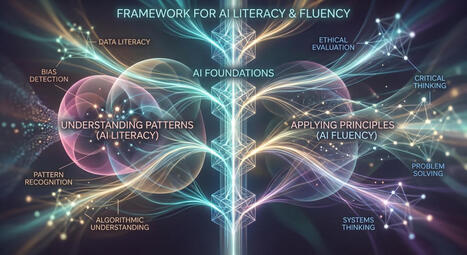
I Don’t Love the Term “AI Literacy” 

I Don’t Love the Term “AI Literacy”  | Education 2.0 & 3.0 | Scoop.it
I don't love the term "AI literacy". Some people in this space actively dislike it, and I understand why: it's vague, easily borrowed by marketing, and it means something slightly different in every room it's used in, much like "AI" itself, which is usually a cognate for things that aren't AI at all, or for…

Via Ana Cristina Pratas
No comment yet.
Scooped by Yashy Tohsaku
Today, 11:46 AM
Scoop.it!

Homo Habilis

Homo Habilis | Education 2.0 & 3.0 | Scoop.it
We called them this because they used tools. The first proto-humans to clearly do so. The question that we need ask ourselves today, “Are you a tool user or a tool maker?” Everyone uses…
No comment yet.
Scooped by Yashy Tohsaku
Today, 11:41 AM
Scoop.it!

Schools Caught Flat-Footed After Google Makes Gemini Chatbot Available to All Students

Schools Caught Flat-Footed After Google Makes Gemini Chatbot Available to All Students | Education 2.0 & 3.0 | Scoop.it
Schools wrestle with the question of whether to permit or prohibit access to the AI chatbot.
No comment yet.
Rescooped by Yashy Tohsaku from Edumorfosis.it
September 4, 2:49 PM
Scoop.it!

Educating for what machines can’t do is the wrong approach·

Educating for what machines can’t do is the wrong approach· | Education 2.0 & 3.0 | Scoop.it

Schools keep searching for skills that machines cannot replace. That strategy makes machine capability the reference point for human development. Each advance in AI then forces schools to revise what they consider distinctively human.

A stronger basis for human advantage is personal knowledge: what people develop through experience, judgment, relationships, context, and purpose, then apply where the problem, pathway, or value to be created has not been fully specified.


Via Edumorfosis
Edumorfosis's curator insight, September 4, 2:46 PM

John Moravek expone que la educación no debería enfocarse en las ventajas competitivas humanas. Es decir, lo que la IA es incapaz de hacer por el ser humano. El mercado laboral pasa por unas tendencias que afectan la contratación de los egresados universitarios. La escalera de experiencia laboral se está desmantelando por los avances de la IA Generativa y Agéntica. Cada año que pase, los mdelos mejorarán sus capacidades algorítmicas para realizar tareas de trabajo inicial: análisis, redacción, organización, ejecución, solución de problemas. Eso tendrá un impacto en el nivel de exposición de tareas a ser ejecutadas por los agentes sin supervisión humana.


En vez de implantar un modelo masivo de enseñanza que compita con las capacidades algorítmicas, se debe incorporar un modelo educativo basado en el Conocimiento Personal: El que se desarrolla a través de la participación. La experiencia acumulada a través de la memoria, las relaciones, la cultura, el juicio, los errores, los compromisos, los intereses y el propósito.

Las universidades no necesitan predecir las ocupaciones de 2035 ni identificar un catálogo permanente de habilidades exclusivamente humanas. Necesitan conocer a sus estudiantes lo suficientemente bien como para ayudarlos a desarrollar lo que los distingue en sus conocimientos, intereses, juicio y capacidad de contribuir.
Rescooped by Yashy Tohsaku from e-learning-ukr
September 4, 11:19 AM
Scoop.it!

12 Literary Opinions That Would Get Me Kicked Out of an MFA Program

These publishing rules are slowly killing great literature

Via Vladimir Kukharenko
No comment yet.
Rescooped by Yashy Tohsaku from iGeneration - Humane Use of Technology in an AI world (Pedagogy & Digital Innovation)
September 4, 11:18 AM
Scoop.it!

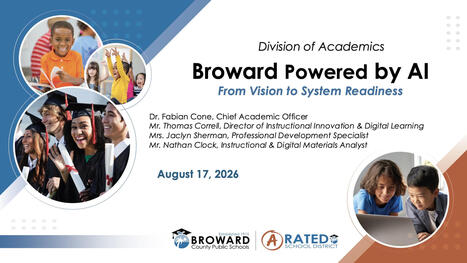
Broward Powered by AI - Great example of a district addressing AI Literacy beyond AI Tools - well done Broward County

Broward Powered by AI - Great example of a district addressing AI Literacy beyond AI Tools - well done Broward County | Education 2.0 & 3.0 | Scoop.it
The U.S. Department of Education describes responsible AI in schools like an electric bike, not a robot vacuum: the human stays fully aware and fully in control, while their effort is multiplied. Every AI tool in Broward is meant to be inspectable, explainable, and able to be overridden by an...

Via Dr. Tom D'Amico (@TDOttawa)
No comment yet.
Rescooped by Yashy Tohsaku from Educational Technology News
September 4, 11:18 AM
Scoop.it!

The turbulent AI era is here. The choices we make now are critical.

The turbulent AI era is here. The choices we make now are critical. | Education 2.0 & 3.0 | Scoop.it
We need a plan to ensure that the good outweighs the bad. The transition to the AI era will be one of the most turbulent times in human history.

Via EDTECH@UTRGV
EDTECH@UTRGV's curator insight, September 4, 8:41 AM

"AI will either be the greatest equalizer ever invented, or the worst source of injustice."

Rescooped by Yashy Tohsaku from Digital Delights - Digital Tribes
September 4, 11:17 AM
Scoop.it!

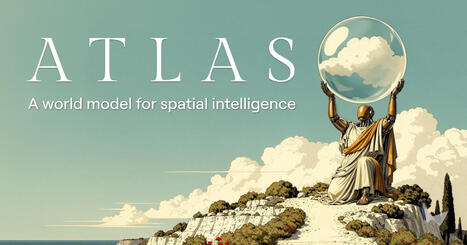
Atlas: A World Model for Spatial Intelligence | World Labs

Atlas: A World Model for Spatial Intelligence | World Labs | Education 2.0 & 3.0 | Scoop.it
Introducing Atlas, our new omni world model for spatial intelligence.

Via Ana Cristina Pratas
No comment yet.
Scooped by Yashy Tohsaku
September 3, 2:17 PM
Scoop.it!

The "Cognitive Offloading" Paradox

New research shows that offloading learning tasks to AI can improve - rather than erode - human thinking and learning
No comment yet.
Rescooped by Yashy Tohsaku from Educational Technology News
September 3, 12:33 PM
Scoop.it!

Higher Education Does Not Need More AI Tools but Better AI Experiences

Higher Education Does Not Need More AI Tools but Better AI Experiences | Education 2.0 & 3.0 | Scoop.it
For most colleges and universities, access to AI tools is no longer the barrier. The real work is building the clarity, confidence, and shared responsibility to use them well.

Via EDTECH@UTRGV
EDTECH@UTRGV's curator insight, September 3, 10:59 AM

"AI gains traction when embedded in familiar learning environments and supported by policy, trusted platforms, educator agency, peer examples, and practical training."