 Your new post is loading...

|
Scooped by
Ana Cristina Pratas
February 16, 2013 1:37 AM
|
Digital Tribes - What's Your Tribe?
|
|
Scooped by
Ana Cristina Pratas
October 7, 10:33 AM
|
Tools and Trends Using DeepSeek:What Happens to the Information You Enter? September 11, 2026 Tools and Trends What DeepSeek collects, where your information goes, what you can control and what it costs What part of DeepSeek is free to use? The chat at chat.deepseek.com and the phone app are free.
|
|
Scooped by
Ana Cristina Pratas
September 7, 1:15 PM
|
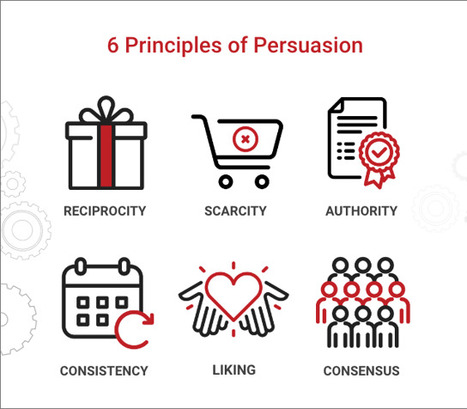
Robert Cialdini’s 7 principles of persuasion are reciprocity, commitment and consistency, social proof, authority, liking, scarcity, and unity. They are the bedrock of persuasive UX design, and they work because they’re mental shortcuts hardwired by evolution to keep our ancestors alive
|
|
Scooped by
Ana Cristina Pratas
September 5, 9:00 AM
|
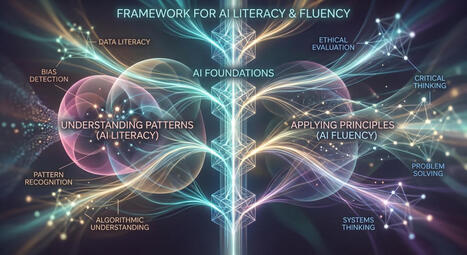
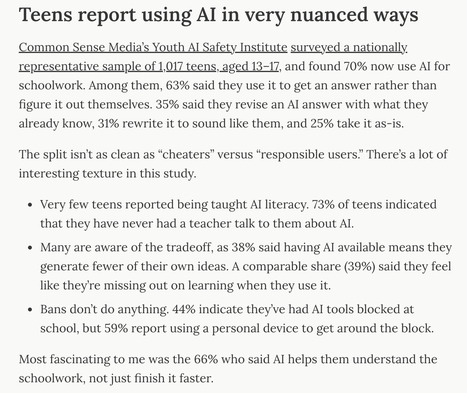
I don't love the term "AI literacy". Some people in this space actively dislike it, and I understand why: it's vague, easily borrowed by marketing, and it means something slightly different in every room it's used in, much like "AI" itself, which is usually a cognate for things that aren't AI at all, or for…
|
|
Scooped by
Ana Cristina Pratas
September 5, 7:21 AM
|
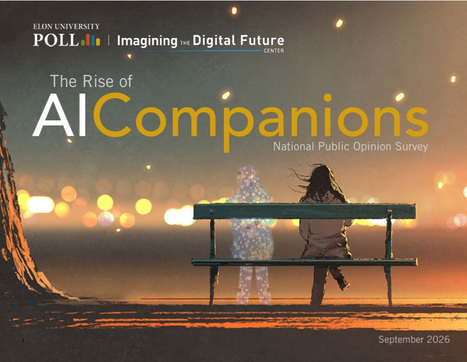
"We are releasing a new report today with survey results showing that 27% of U.S. adult internet users have significant social and emotional interactions with large language model (LLM) systems such as ChatGPT, Gemini, Claude and Copilot. A third of those users consider their AI bot a friend.
These AI users use LLMs in ways that build bonds of connection, confidence and trust. Some say they rely on AI tools and prefer interacting with them to dealing with humans. They confide in them, seek advice on important life issues, roleplay scenarios that they might encounter in romantic or other settings and would be unhappy to lose access to their bots."
|
|
Scooped by
Ana Cristina Pratas
September 2, 12:44 PM
|
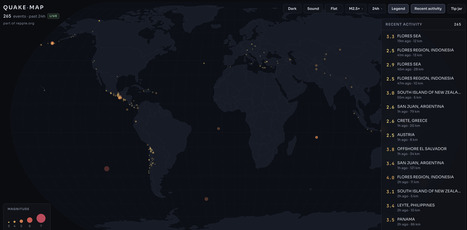
A live world map of earthquakes, the moment they happen.
|
|
Scooped by
Ana Cristina Pratas
August 30, 9:08 AM
|
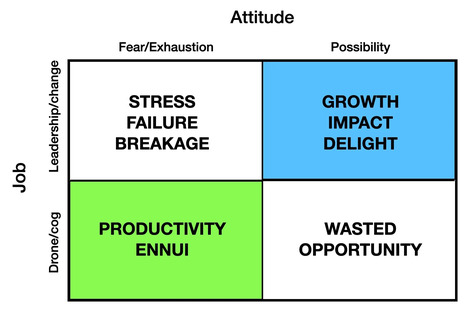
"The first day of classes, some students slouch in the back row, unprepared and uninterested. Some are up front, eager and ready. But it’s only the morning of the first day–these attitudes aren’t related to the teacher. It’s a pattern, one that is the result of culture, systems and personality. Many of these students have been let down before, and it’s easier to be skeptical than to make a commitment, only to be disappointed later. If it happens over time, it becomes part of how we see ourselves. And that person might end up in a job where they seek to do as little as possible and care less. For good reasons, then, there are two sorts of attitudes people bring to work: how much can I contribute, what can I learn, how do I make this count?
dread, ennui and a desire to do as little as possible.
(...) "
|
|
Scooped by
Ana Cristina Pratas
August 27, 2:19 PM
|
|
|
Scooped by
Ana Cristina Pratas
August 25, 9:20 AM
|
With the increasing availability of assistive AI, many people have turned to AI frameworks and harnesses (Hermes Agent, Claude Cowork, etc.) to help them achieve day-to-day goals. In many cases the AI has been directed to carry out those tasks that people want to hand-off. That is good, but is it the right thing to do? Is AI actually the ideal solution, or is it something to help you create that solution?
|
|
Scooped by
Ana Cristina Pratas
August 23, 6:17 AM
|
"Peter Drucker argued that the purpose of a corporation is to serve the customer. It turns out that organizations that focus on this do well. Milton Friedman argued (mistakenly, in my view) that the corporation doesn’t need to care about customers, unless this helps increase the value of the company to shareholders. Corporations are a cultural fiction, something we created and permit to exist because it serves the community. In exchange for leverage and insulation, the corporations are expected to be of use and to improve conditions for those they serve–not to be a tool to enrich a few shareholders. As power becomes more concentrated and money becomes more leveraged, it’s easy to see how attractive it is to sell Friedman’s idea to people seeking a short-term profit. As we drift away from Drucker’s point, though, we all suffer. Financial engineering rarely builds value for the long run."
|
|
Scooped by
Ana Cristina Pratas
August 22, 12:49 PM
|
Anonymize a document in your browser: redact names, emails, phone numbers, social security numbers, and IBAN. Nothing you paste or upload leaves this page.
|
|
Scooped by
Ana Cristina Pratas
August 17, 12:08 PM
|
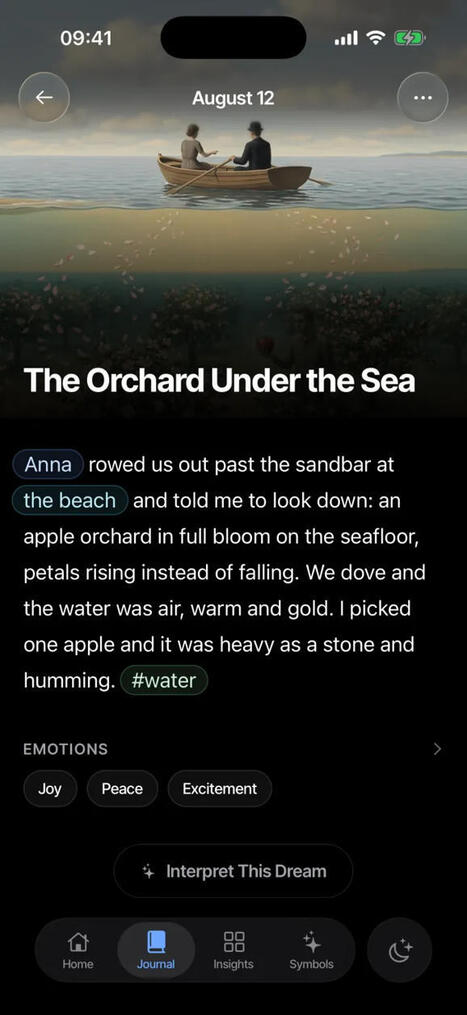
A dream journal built for the 3 a.m. moment. Speak or type before the dream fades, then explore the people, places, symbols and patterns that recur over time.
|
|
Scooped by
Ana Cristina Pratas
August 11, 10:04 AM
|
Newer AI models keep launching. These five failure modes aren't going anywhere. Here's why, and how to work around them.
|
|
|
Scooped by
Ana Cristina Pratas
October 8, 2:24 PM
|
News about artificial intelligence feels both overwhelming and starving for context.
|
|
Scooped by
Ana Cristina Pratas
September 17, 11:04 AM
|
Why a result about water and air has the people building AI talking about human extinction.
|
|
Scooped by
Ana Cristina Pratas
September 7, 1:13 PM
|
In the increasingly overloaded lives we lead, more than ever we need shortcuts or rules of thumb to guide our decision-making. Dr. Cialdini's research has identified six of these shortcuts as universals that guide human behavior.
|
|
Scooped by
Ana Cristina Pratas
September 5, 7:41 AM
|
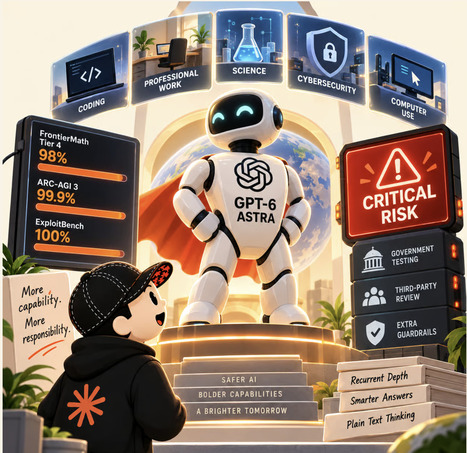
OpenAI released GPT-6 Astra this week, and Sam Altman is calling it the best model in the world for computer use, professional work, science, coding, and cybersecurity. The benchmark numbers back the confidence: 98% on FrontierMath Tier 4, 99.9% on ARC-AGI 3, and a clean 100% on ExploitBench.
|
|
Scooped by
Ana Cristina Pratas
September 4, 10:24 AM
|
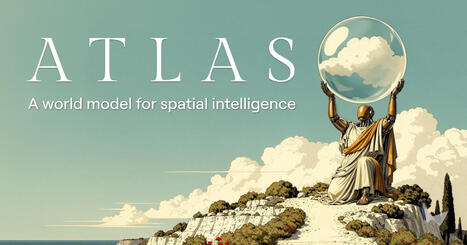
Introducing Atlas, our new omni world model for spatial intelligence.
|
|
Scooped by
Ana Cristina Pratas
September 2, 4:35 AM
|
An interview with Pangram founder and CEO Max Spero on how AI writing has flooded the internet, why it matters, and why it’s worth cleaning up
|
|
Scooped by
Ana Cristina Pratas
August 28, 8:33 AM
|
"For fifteen or twenty years, this question is relentlessly answered, whether or not we ask it. After we learn fractions, the teacher moves on to decimals. After we read O’Connor, we’re handed Faulkner. In music history, Debussy follows Brahms. Chemistry after biology. It persists in some places after school… the museum hangs Picasso in the next room after Braque. And in the old days, the newspaper editors spent a lot of time organizing their stories and their pages. But now… nothing. Random access. No attention paid to what we need to know now, what follows from where we are, what’s about to be important. Not at work and not as citizens. Instead, it’s a random-access blizzard of emails, meetings and alerts. A mob screaming about the emergency of the moment without lining up the context first. Part of our dislocation and ennui come from the lack of a shared curriculum. Choosing what’s next might be the most important decision we make today."
|
|
Scooped by
Ana Cristina Pratas
August 27, 9:54 AM
|
What happens to our words, work, and movements once they become data.
|
|
Scooped by
Ana Cristina Pratas
August 25, 9:18 AM
|
Rebuilding the internet of weird little things one data enrichment at a time
|
|
Scooped by
Ana Cristina Pratas
August 22, 12:51 PM
|
Use ChatGPT, Claude, and other AIs, privately. Protect chats from hackers, scammers, and companies. Keep info confidential. Free. No account required.
|
|
Scooped by
Ana Cristina Pratas
August 19, 7:36 AM
|
"Teaching and learning aren’t always aligned. Sometimes organized teaching is defensive. “Here, take all this down in your notes, it will be on the test.” This gives the teacher deniability, but might not create the conditions for the student to actually learn. The alternative is to seek the “aha.” This is the autodidact moment, the opportunity to teach ourselves. Most online courses and videos simply tell you the answer. Easier to get clicks that way. But the best learning is almost always autodidactic. When the teacher creates the conditions for learning, the student does the work. This requires trust. Trust in the process and trust in the destination. And it requires tension. The tension of it might not work and the incentive to put in the work. Great teachers set it up, and great students find the aha."
|
|
Scooped by
Ana Cristina Pratas
August 14, 6:33 AM
|
For years now, Google has been tweaking its search formula to prop up AI and bury actual links. Now it’s rounding into its final form—and changing the internet forever.
|
|
Scooped by
Ana Cristina Pratas
August 7, 4:25 AM
|
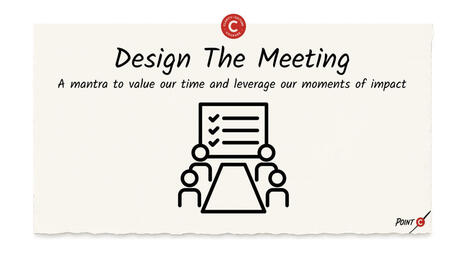
A mantra to value our time and leverage our moments of impact
|



 Scoop.it!

















We live in circles, in tribal groups, whether analogue or digital.
Digital Delights-Digital Tribes is a compilation of articles, resources and points of references on Leadership, Education, Innovation, Creativity, Visual Information, Videos, Marketing, Blogging, Perspectives from Different Generations and more.
What's your tribe?