


Immunology
199.2K views |
+32 today
Teaching and Learning Immunology. Information you never would have searched for!
Curated by
Gilbert C FAURE
 Your new post is loading...
 Scoop.it! 
Abstract The relationship between the extrinsic environment and the internal transcriptional network is circular. Naive T cells first engage with antigen‐presenting cells to set transcriptional dif... 
Scoop.it!

The most recent updated classification of inborn errors of immunity/primary immunodeficiencies, compiled by the International Union of Immunological Societies Expert Committee, was published in January 2020. Within days of completing this report, it was already out of date, evidenced by the frequent publication of genetic variants proposed to cause novel inborn errors of immunity. As the next formal report from the IUIS Expert Committee will not be published until 2022, we felt it important to provide the community with a brief update of recent contributions to the field of inborn errors of immunity. Herein, we highlight studies that have identified 26 additional monogenic gene defects that reach the threshold to represent novel causes of immune defects.
Scoop.it!
Teamwork for T cells Via Krishan Maggon
Scoop.it!

The LMU is one of the most prestigious and traditional universities in Europe. It combines outstanding research with a challenging range of courses.

Michael Craver 's curator insight,
June 17, 2021 8:25 PM
https://vaporwavepsychedelic.com
Scoop.it!

Cellular and humoral immunity to SARS-CoV-2 is critical to control primary infection and correlates with severity of disease. The role of SARS-CoV-2-s…
Scoop.it!

Interferon gamma (IFNγ) supports effector responses of CD8+ cytotoxic T lymphocytes (CTLs) and is a surrogate marker for detection of antigen-specific T cells. Here, we show that tumor-specific CTL clones have impaired IFNγ expression and production upon activation. Assessment of the relationship between IFNγ production and the 5′methylcytosine-guanine (CpG) dinucleotide methylation of the IFNγ promoter using bisulfite treatment has shown that IFNγ− CTL clones accumulates CpG hypermethylation within the promoter at key transcription factor binding sites (−186 and −54), known to be vital for transcription. We confirmed these findings using ex vivo isolated and short-term expanded bulk tumor-specific CTL lines from four cancer patients and demonstrated that IFNγ methylation inversely correlates with transcription, protein level, and cytotoxicity. Altogether, we propose that a sizeable portion of human tumor-specific CTLs are deficient in IFNγ response, contributed by CpG hypermethylation of the IFNγ promoter. Our findings have important implications for immunotherapy strategies and for methods to detect human antigen-specific T cells.
Scoop.it!

Regulatory T (Treg) cells are critical mediators of immune function, with essential roles in controlling inflammation and tissue homeostasis. In cancer, Treg cells play a detrimental role and ca Via Krishan Maggon
Scoop.it!
IKAROS, encoded by IKZF1, is a zinc finger transcription factor and a critical regulator of hematopoiesis. Mutations in IKZF1 have been implicated in immune deficiency, autoimmunity, and malignancy in humans.
Scoop.it!

Scientists across the world are closely tracking the spread of mutations in the coronavirus and investigating whether they could render current vaccines less effective. SARS-CoV-2 is no Ferrari among viruses when it comes to mutations. Scientists reckon that its 30,000-base RNA genome acquires around two single-letter mutations a month, a rate around half as fast as influenza and one-quarter the rate of HIV. But allowed to multiply and jump from body to body for more than a year, SARS-CoV-2 has inevitably flourished into a genetically diverse tree branching into countless different variants. Many variants—defined by a specific assortment of mutations—are relatively unremarkable. But scientists have been keeping a close watch on three rapidly spreading variants—first identified in the UK, South Africa, and Brazil—which harbor an unusual constellation of mutations. They all share a mutation called N501Y that affects the receptor binding domain (RBD) of the spike protein, which the virus uses to clasp onto human cells’ receptors and enter them. That mutation replaces SARS-CoV-2’s 501st amino acid, asparagine, with tyrosine, potentially allowing it to bind more tightly to ACE2 receptors, studies in cells and animal models suggest. By itself, that mutation isn’t unusual, but the variants possess an exceptionally large number of other mutations, some also on the spike protein. Substantive changes to a virus’ behavior, such as heightened transmissibility, are likely the result of multiple mutations rather than individual ones, molecular epidemiologist Emma Hodcroft of the University of Bern tells The Atlantic. The observation that similar mutations have appeared in three independent variants, and the fact that they are spreading, makes scientists suspect that they may have an evolutionary edge. “They have multiple, eight to ten, mutations in the spike protein all stacked up at once—that suggests that there [is] a lot of evolution and adaption of the protein happening,” Daniel Jones, a molecular pathologist at the Ohio State University, tells The Scientist. “The concern being that since that’s the target of vaccinations and . . . the target for antibody [therapies] like the Regeneron cocktail, for instance, that it might be the beginning of a virus that could evade antibody therapy and/or vaccine coverage.”
SARS-CoV-2 mutations’ effects on transmissibilityIt’s often in a virus’ interest to become more transmissible so it can spread and replicate more quickly. Earlier in the pandemic, a spike protein mutation known as D614G—which is widely believed to have made the virus more transmissible—surged to dominance around the world, notes virologist John Moore of Weill Cornell Medical College. Epidemiological data suggest that the B.1.1.7 variant, a descendant of the D614G lineage first identified in the UK that has spread to other parts of the world, also has heightened transmissibility. Eight of the 17 mutations it has recently accumulated are in the spike protein, which could feasibly have an effect on ACE2 binding and virus replication. Hypothetically, if a virus can bind more tightly to the body’s ACE2 receptors, it could be more capable of establishing an infection once it gets into the body and/or of generating more viral particles in the upper respiratory tract, making it easier to transmit to other people, particularly during the presymptomatic stage, explains Theodora Hatziioannou, a virologist at the Rockefeller University in New York. She adds that in her view, it’s hard to definitively ascribe case surges, including the current one in the UK, to single factors such as increased transmissibility, over other driving factors, such as what she sees as ineffective lockdown policies. “I’m not saying that [increased] transmissibility is out of the question. I’m just saying it’s extremely hard to prove.” In South Africa, epidemiologists have estimated that the new variant there, B.1.351 (also known as 501Y.V2), is around 50 percent more contagious compared with dominant lineages, based on its rapid spread, according to The Wall Street Journal. In Brazil, it’s too early to conclude whether a variant now circulating there, called P.1, is inherently more transmissible. First reported on January 12 in the state of Amazonas, it’s been associated with a devastating surge in cases in Manaus, a city where researchers had previously estimated that 75 percent of residents had already been infected with SARS-CoV-2. But it’s still unclear whether properties of the virus itself are contributing to the surge, says virologist Paola Resende of the Oswaldo Cruz Institute in Rio de Janeiro. “In Brazil, we can see a lot of parties, we can see the pubs crowded, and people are on the streets not wearing masks. I think this behavior of the population is the main reason [for] the increase.” Evading the immune systemOur immune system—and, in particular, antibodies—is a powerful evolutionary force on viruses. Some pathogens such as influenza, and maybe also common cold-causing coronaviruses, mutate their proteins toward new shapes to avoid being targeted by antibodies that would normally prevent them from infecting cells, a process known as antigenic drift. A study recently posted as a preprint to bioRxiv by Hatziioannou and her colleagues suggests that the RBD mutations present in the B.1.351 variant are due to antigenic drift. The team passaged a model virus bearing the dominant SARS-CoV-2 spike protein in the presence of individual neutralizing antibodies extracted from people who had received either the Moderna or Pfizer/BioNTech vaccine. Depending on which antibody they were cultured with, the viruses would gradually adopt a single mutation—either E484K, K417N, and N501Y—which are present in B.1.351. That suggests that “the virus is mutating in these positions to avoid antibodies,” Hatziioannou says. Such antibody-escape mutations don’t necessarily mean that the virus will cause more severe disease or entirely outwit the immune response, she cautions. There are other parts of the immune system to help clear the virus. There’s no evidence so far to suggest that the variants identified in South Africa or Brazil are more lethal. Based on an analysis of several datasets, scientists in the UK suggested last week there’s a “realistic possibility” that B.1.1.7 is deadlier than previous strains, but experts say it’s still too early to draw that conclusion. Another concern is about whether people who have overcome mild infections with older variants could become reinfected with a new one. Nobody that I know has been losing a moment of sleep over the UK variant from a vaccine-efficacy perspective..... Via Juan Lama
|
Scoop.it!

The interactions of CD4+ T cells and B cells are fundamental for the generation of protective antibody responses, as well as for the development of harmful autoimmune diseases. Recent studies of human tissues and blood samples have established a new subset of CD4+ B helper T cells named peripheral...
Scoop.it!
Gilbert C FAURE's insight:
eryptotic? erythrocytes, https://pubmed.ncbi.nlm.nih.gov/16910766/
https://www.karger.com/Article/FullText/447895
Scoop.it!

High levels of soluble CD25 in COVID‐19 patients were found being associated with severe disease and prolonged viral shedding. We discovered that the elevation of sCD25 was caused by th
Gilbert C FAURE's insight:
of men and mice
Scoop.it!
Introduction: Burn injury is associated with a high risk of death. Whether a pattern of immune and inflammatory responses after burn is associated with outcome is unknown. The aim of this study was to explore the association between systemic immune and inflammatory responses and outcome in severely-ill burn patients.Materials and methods: Innate immunity, adaptive immunity, activation and stress and inflammation biomarkers were collected at admission and day 2, 7, 14 and 28 in severely-ill adult burn patients. Primary endpoint was mortality at day 90, secondary endpoint was secondary infections. Healthy donors (HD) served as controls. Multiple Factorial Analysis (MFA) was used to identify patterns of immune response.Results: 50 patients were included. Age was 49.2 [44.2-54.2] years, total burn body surface area was 38.0% [32.7-43.3]. Burn injury showed an upregulation of adaptive immunity and activation biomarkers and a down regulation of innate immunity and stress/inflammation biomarkers. High interleukin-10 (IL-10) at admission was associated with risk of death. However, no cluster of immune/inflammatory biomarkers at early timepoints was associated with mortality. HLA-DR molecules on monocytes at admission were associated with bacterial infections and septic shock. Later altered immune/inflammatory responses in patients who died may had been driven by the development of septic shock. Conclusion: Burn injury induced an early and profound upregulation of adaptiv
Scoop.it!

Type 2 diabetes is the most prevalent and serious metabolic disease all over the world, and its hallmarks are pancreatic <svg style="vertical-align:-2.29482pt;width:8.8500004px;" id="M1" height="13.425" version="1.1" viewBox="0 0 8.8500004 13.425" width="8.8500004" ...
Scoop.it!
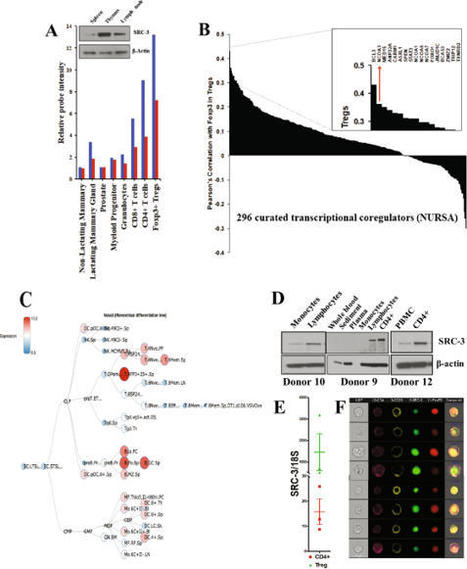
A subset of CD4 + lymphocytes, regulatory T cells (Tregs), are necessary for central tolerance and function as suppressors of autoimmunity against self-antigens. The SRC-3 coactivator is an oncogene in multiple cancers and is capable of potentiating numerous transcription factors in a wide variety of cell types. Src-3 knockout mice display broad lymphoproliferation and hypersensitivity to systemic inflammation. Using publicly available bioinformatics data and directed cellular approaches, we show that SRC-3 also is highly enriched in Tregs in mice and humans. Human Tregs lose phenotypic characteristics when SRC-3 is depleted or pharmacologically inhibited, including failure of induction from resting T cells and loss of the ability to suppress proliferation of stimulated T cells. These data support a model for SRC-3 as a coactivator that actively participates in protection from autoimmunity and may support immune evasion of cancers by contributing to the biology of Tregs.
Scoop.it!

Click on the article title to read more.
Gilbert C FAURE's insight:
quelques ressources https://www.scoop.it/topic/immunology?q=germinal+center
et d'autres sur https://www.scoop.it/topic/mucosal-immunity?q=germinal+center
Scoop.it!

From
dgfi

Dipl.-Ing. Jan Dudeck und Prof. Dr. Anne Dudeck, Institut für Molekulare und Klinische Immunologie (v.l.) © Melitta Schubert, Universitätsmedizin Magdeburg Ein
Scoop.it!
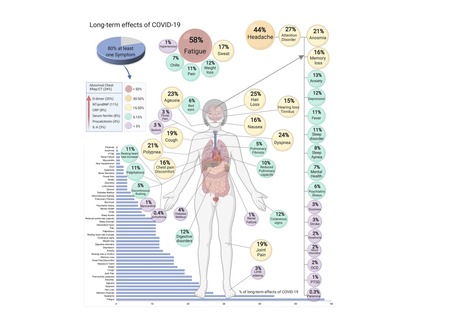
COVID-19, caused by SARS-CoV-2, can involve sequelae and other medical complications that last weeks to months after initial recovery, which has come to be called Long-COVID or COVID long-haulers. This systematic review and meta-analysis aims to identify studies assessing long-term effects of COVID-19 and estimates the prevalence of each symptom, sign, or laboratory parameter of patients at a post-COVID-19 stage. LitCOVID (PubMed and Medline) and Embase were searched by two independent researchers. All articles with original data for detecting long-term COVID-19 published before 1st of January 2021 and with a minimum of 100 patients were included. For effects reported in two or more studies, meta-analyses using a random-effects model were performed using the MetaXL software to estimate the pooled prevalence with 95% CI. Heterogeneity was assessed using I2 statistics. The Preferred Reporting Items for Systematic Reviewers and Meta-analysis (PRISMA) reporting guideline was followed.
A total of 18,251 publications were identified, of which 15 met the inclusion criteria. The prevalence of 55 long-term effects was estimated, 21 meta-analyses were performed, and 47,910 patients were included. The follow-up time ranged from 15 to 110 days post-viral infection. The age of the study participants ranged between 17 and 87 years. It was estimated that 80% (95% CI 65-92) of the patients that were infected with SARS-CoV-2 developed one or more long-term symptoms. The five most common symptoms were fatigue (58%), headache (44%), attention disorder (27%), hair loss (25%), and dyspnea (24%). All meta-analyses showed medium (n=2) to high heterogeneity (n=13). In order to have a better understanding, future studies need to stratify by sex, age, previous comorbidities, severity of COVID-19 (ranging from asymptomatic to severe), and duration of each symptom. From the clinical perspective, multi-disciplinary teams are crucial to developing preventive measures, rehabilitation techniques, and clinical management strategies with whole-patient perspectives designed to address long COVID-19 care.
Preprint available in medRxiv (Jan. 30, 2021): https://doi.org/10.1101/2021.01.27.21250617 Via Juan Lama
Scoop.it!
Neuroimmunology is one of the fastest-growing fields in the life sciences, and for good reason; it fills the gap between two principal systems of the organism, the nervous system and the immune system.
|
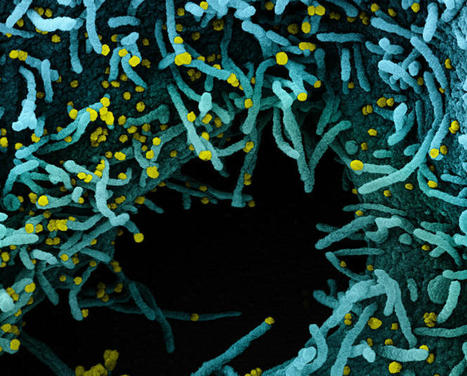









limits of T-cell response