Your new post is loading...

|
Scooped by
Gilbert C FAURE
January 29, 2021 2:39 AM
|
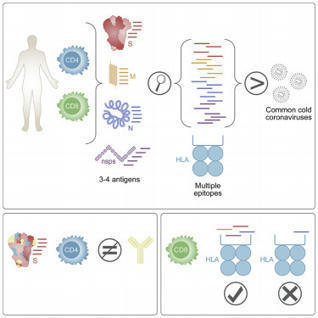
Tarke et al. shows a broad T cell repertoire suggesting that viral escape of T-cell
immunity is unlikely. CD4 immunodominant regions correlate with HLA binding and not
with high common cold coronavirus homology.
|
|
Scooped by
Gilbert C FAURE
January 28, 2021 10:22 AM
|
INTRODUCTION: Les tests sérologiques anti-SRAS-CoV-2 pourrait jouer un rôle majeur dans l´estimation de la prévalence de la Covid-19. L´objectif était d´estimer la prévalence de la Covid-19 dans la ville de Bukavu, à l´Est de la République Démocratique du Congo, parmi les voyageurs et travailleurs.
|
|
Scooped by
Gilbert C FAURE
January 26, 2021 6:19 AM
|
Immunological memory is a mechanism to protect us against reinfection. Antibodies
produced by B cells are integral to this defence strategy and underlie virtually all
vaccine success. Here we explain how B cells memory is generated by infection and
vaccination, what influences its efficacy and its persistence and how characterising
these parameters in the immune response to SARS-CoV-2 will help achieve protective
immunity through vaccination.
Treg cells are known to display tissue-specific heterogeneity. Miragaia and colleagues
probe Treg cells in lymphoid and barrier tissues by single-cell transcriptomics. They show that Treg cells segregate into subpopulations along a continuum of tissue adaptation and present conserved expression...
Via Krishan Maggon
|
|
Scooped by
Gilbert C FAURE
January 20, 2021 4:38 AM
|
In an exciting, state-of-the-art study currently available on the medRxiv* preprint server, US researchers created a multi-coronavirus protein microarray containing full-length proteins, peptide libraries, and overlapping protein fragments from the severe acute respiratory syndrome coronavirus 2...
|
|
Scooped by
Gilbert C FAURE
January 18, 2021 1:12 PM
|
Longitudinal analysis of immune memory following mild COVID-19 elicits memory lymphocytes
that persist and display functional hallmarks of antiviral immunity.
|
|
Scooped by
Gilbert C FAURE
January 17, 2021 3:46 AM
|
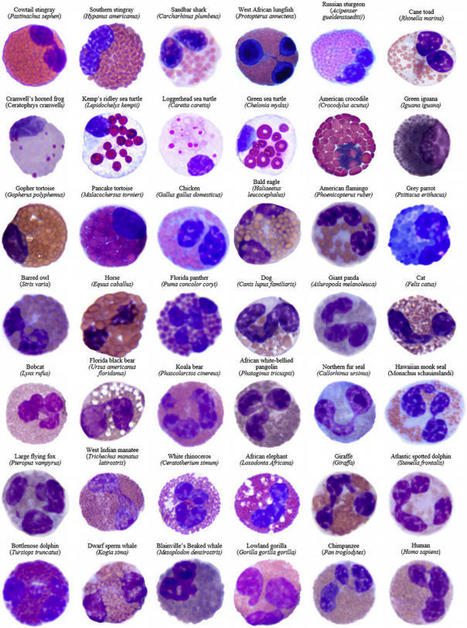
Eosinophils have distinctive morphological and biochemical features differentiating
them from other granulocytes. Fig 1 shows eosinophils in vertebrates across taxa from
an evolutionary perspective, demonstrating an appreciation of their morphological
diversity despite a number of conserved features that define the lineage. The presence
of “eosinophilic” or acidophilic blood cells/hemocytes has been recognized as well
in various invertebrate species, but it is still unknown whether these are evolutionary
precursors to eosinophils in vertebrates.
|
|
Scooped by
Gilbert C FAURE
January 14, 2021 1:04 PM
|
Cellular function is reliant on the dynamic interplay between the plasma membrane and the actin cytoskeleton. This critical relationship is of particular importance in immune cells, where both the cytoskeleton and the plasma membrane work in concert to organize and potentiate immune signaling events. Despite their importance, there remains a critical gap in understanding how these respective dynamics are coupled, and how this coupling in turn may influence immune cell function from the bottom up. In this review, we highlight recent optical technologies that could provide strategies to investigate the simultaneous dynamics of both the cytoskeleton and membrane as well as their interplay, focusing on current and future applications in immune cells. We provide a guide of the spatio-temporal scale of each technique as well as highlighting novel probes and labels that have the potential to provide insights into membrane and cytoskeletal dynamics. The quantitative biophysical tools presented here provide a new and exciting route to uncover the relationship between plasma membrane and cytoskeletal dynamics that underlies immune cell function.
|
|
Scooped by
Gilbert C FAURE
January 14, 2021 5:05 AM
|
Helping B cells and antibody responses is a major function of CD4+ T cells.It has been 10 years since the publication of Bcl6 as the lineage-defining…...
|
|
Scooped by
Gilbert C FAURE
January 12, 2021 2:32 PM
|
Comparison of the Immune Response to Natural COVID-19 Infection and Vaccination - Full Text View.

|
Suggested by
LIGHTING
January 12, 2021 4:08 AM
|
Most of what we know about adaptive immunity has come from inbred mouse studies, using methods that are often difficult or impossible to confirm in humans. In addition, vaccine responses in mice are often poorly predictive of responses to those same vaccines in humans. Here we use human tonsils, readily available lymphoid organs, to develop a functional organotypic system that recapitulates key germinal center features in vitro, including the production of antigen-specific antibodies, somatic hypermutation and affinity maturation, plasmablast differentiation and class-switch recombination. We use this system to define the essential cellular components necessary to produce an influenza vaccine response. We also show that it can be used to evaluate humoral immune responses to two priming antigens, rabies vaccine and an adenovirus-based severe acute respiratory syndrome coronavirus 2 vaccine, and to assess the effects of different adjuvants. This system should prove useful for studying critical mechanisms underlying adaptive immunity in much greater depth than previously possible and to rapidly test vaccine candidates and adjuvants in an entirely human system. An in vitro human tonsil tissue-based system captures key features of a functional germinal center and can be used to study humoral immune responses to vaccines, new antigens and adjuvants.
Abstract
Naturally occurring CD4+ regulatory T cells (Tregs), which specifically express the transcription factor FoxP3 in the nucleus and CD25 and CTLA-4 on the cell surface, are a functionally distinct T cell subpopulation actively engaged in the maintenance of immunological self-tolerance and homeostasis. Recent studies have facilitated our understanding of the cellular and molecular basis of their generation, function, phenotypic and functional stability, and adaptability. It is under investigation in humans how functional or numerical Treg anomalies, whether genetically determined or environmentally induced, contribute to immunological diseases such as autoimmune diseases. Also being addressed is how Tregs can be targeted to control physiological and pathological immune responses, for example, by depleting them to enhance tumor immunity or by expanding them to treat immunological diseases. This review discusses our current understanding of Treg immunobiology in normal and disease states, with a perspective on the realization of Treg-targeting therapies in the clinic.
Keywords
regulatory T cells, autoimmune disease, cancer immunity, organ transplantation, FoxP3
Via Krishan Maggon
|
|
Scooped by
Gilbert C FAURE
January 10, 2021 5:30 AM
|
COMMENTARY Control of phagosomal pathogens by innate immune cells both fascinates and confuses me at the same time. My fascination with immune control of pathogens is born out of the diversity of pathogens that immune cells must confront and ultimately eliminate. On the other hand, I find pathogen control confusing at times given the sheer number of proposed antimicrobial mechanisms and our limited understanding of how these antimicrobial mechanisms synergize or antagonize one another (1). The phagosome is an undisputed cornerstone of the interaction between host and pathogen; however, how this dynamically formed organelle coordinates the appropriate biochemistry required for pathogen restriction or killing remains incompletely understood. A common mechanism often invoked to explain how control of intracellular pathogens is achieved involves the induction of inducible nitric oxide synthase (iNOS); however, as Price et al. beautifully demonstrate in reference 2, this model falls short in explaining the observed relationship between interferon gamma (IFN-γ) treatment, host genotype, and control of Legionella pneumophila (3–5). Using a series of genetic knockouts, Price et al. demonstrate that six genes contribute to the totality of IFN-γ-mediated control and thus expand the mechanistic basis for control of intracellular bacteria. Using a series of mutant macrophages lacking genes such as iNOS, ATG5, and guanylate-binding proteins (GBPs) infected with a luminescent strain of Legionella, Price et al. demonstrated that loss of individual genes did not abrogate IFN-γ-mediated L. pneumophila control. The authors next made use of small-molecule perturbation studies and gene expression profiling to test hypotheses related to IFN-γ-mediated metabolic remodeling and the unfolded protein response. These experiments did not reveal a unifying model to explain how IFN-γ enhances L. pneumophila control. Price et al. returned to gene expression data in conjunction with their L. pneumophila growth experiments in the presence of distinct small molecules to identify transcriptional programs associated with permissive or restrictive macrophage states. Using this approach, the authors identified an association between Acod1 (which encodes the protein Irg1 that contributes to itaconate production) expression and Nos2 expression and macrophage antimicrobial states (6, 7). The authors next generated macrophages lacking Acod1 and again determined that loss of this gene in isolation did not abrogate IFN-γ-mediated control. The authors next turned to higher-order mutations and ultimately demonstrated that deletion of six genes was required to fully disrupt interferon IFN-γ-mediated control. For me, this paper confirmed a model that I had always believed to be true but did not have the data to support. I remember beginning my postdoctoral training trying to learn as much as possible about the antimicrobial functions of phagocytes; however, I remember finding myself making a list of the many antimicrobial mechanisms implicated in bacterial control ranging from oxidative radicals to acidification to nutritional immunity and asking how these antimicrobial mechanisms work in concert (8–10). It always made intuitive sense that a cell would have multiple redundant antimicrobial mechanisms in order to ensure effective pathogen clearance. Many of the studies I had read had focused exclusively on a specific antimicrobial pathway without analyzing the induction of the litany of additional antimicrobial mechanisms. For some of these studies, similar to the observations of Price and colleagues, loss of specific genes in these studies demonstrated that loss of an individual gene partially restored bacterial growth and survival. What is accounting for the residual pathogen control in an activated phagocyte lacking a key antimicrobial gene? To me, this paper underscores the importance of characterizing a broad and diverse array of antimicrobial programs induced or disrupted in the setting of enhanced or worsened pathogen control. As a biological engineer, these studies encouraged me and my group to deepen our characterization and identification of the diverse array of antimicrobial programs that contribute to bacterial control before ascribing enhanced control to a specific mechanism. Additionally, the observed partial loss of bacterial control via genetic mutants has also encouraged us to deepen our characterization of the phagosome—does the partial abrogation of bacterial control reflect subpopulation dynamics or do all phagosomes acquire similar properties during activation? Looking ahead, I am eager to see how this model generalizes to additional pathogens and phagocytes. Are the six genes identified by Price and colleagues similarly required for control of other pathogens whose control is enhanced by IFN-γ? Notably, iNOS is robustly detected in murine macrophages following activation with IFN-γ; however, detection of iNOS in human macrophages has been more challenging and controversial. Do human macrophages have similar redundancies? Are these six genes required for control in other restrictive macrophage settings induced by other cytokines or small molecules? The number of questions raised by this simple but elegant study will undoubtably invigorate our collective thinking about the complexity of antimicrobial control and the diverse paths that immune cells traverse to protect us from some of the world’s most deadly pathogens.
|
|
|
Scooped by
Gilbert C FAURE
January 28, 2021 1:45 PM
|
Alors que la pandémie de Covid-19 se poursuit, les scientifiques font chaque jour des progrès notables pour mieux comprendre la transmission du coronavirus SARS-CoV-2 ainsi que la réponse immunitaire qu’il déclenche lors d’une infection. Des chercheurs apportent de nouvelles données concernant les étapes très précoces de la réponse immunitaire.
|
|
Scooped by
Gilbert C FAURE
January 28, 2021 9:27 AM
|
January 28, 2021 @ All Health & Fitness Tips - A new study led by scientists at La Jolla Institute for Immunology (LJI) suggests that T cells try to fight SARS-CoV-2 by targeting a broad range of sites on the virus -- beyond the key sites on the virus's spike protein.
|
|
Scooped by
Gilbert C FAURE
January 26, 2021 5:27 AM
|
Among the family of interferons (IFNs), type III IFNs (or IFN-λs) were the most recently discovered. Four members of this family are known in humans (IFN-λ1,2,3 and IFN-λ4) but only IFN-λ2,3 are expressed in mice.
Abstract Background Information We have previously observed that in response to antigenic activation T cells produce actin‐rich protrusions that generate forces involved in T cell activation. These...
Via Krishan Maggon
|
|
Scooped by
Gilbert C FAURE
January 19, 2021 1:46 PM
|
Natural killer (NK) cells integrate signals from both innate and adaptive immune components to act as regulatory and effector cells in the immune response to pathogens. Here, we review how distinc
|
|
Scooped by
Gilbert C FAURE
January 18, 2021 12:57 PM
|
Single-cell-sequencing techniques enable the decades-old T helper subset dogma to be re-examined in an unsupervised manner, bringing nuance to the definition of known subsets while simultaneously identifying interesting new cell states.
|
|
Scooped by
Gilbert C FAURE
January 16, 2021 5:03 AM
|
|
|
Scooped by
Gilbert C FAURE
January 14, 2021 6:49 AM
|
Buck research points to the possibility of new immunotherapeutics and highlights critically needed changes in experimental techniques...
|
|
Scooped by
Gilbert C FAURE
January 14, 2021 5:03 AM
|
As the SARS-CoV-2 pandemic has progressed, increasing attention has focused on establishing natural and vaccine-induced immunity against this coronavi…...
|
|
Scooped by
Gilbert C FAURE
January 12, 2021 2:32 PM
|
ASM is a nonprofit professional society that publishes scientific journals and advances microbiology through advocacy, global health and diversity in STEM programs.
|
|
Scooped by
Gilbert C FAURE
January 11, 2021 1:07 PM
|
Your default description here...
|
|
Scooped by
Gilbert C FAURE
January 10, 2021 12:51 PM
|
Immune checkpoints are key regulatory mechanisms integral to the maintenance of self-tolerance and execution of antigen-specific immune responses. In …
|



 Scoop.it!