Your new post is loading...

|
Scooped by
Gilbert C FAURE
April 15, 2021 4:55 AM
|
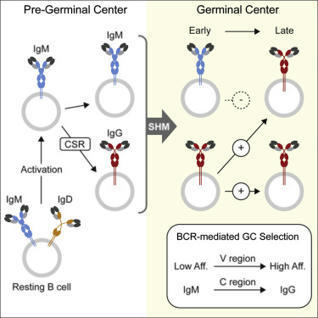
Positive selection of high-affinity B cells within germinal centers (GCs) drives affinity maturation of antibody responses. Here, we examined the mech…
|
|
Scooped by
Gilbert C FAURE
April 12, 2021 12:25 PM
|
The global emergence of SARS-CoV-2 urgently requires an in-depth understanding of molecular functions of viral proteins and their interactions with the host proteome. Several individual omics studies have extended our knowledge of COVID-19 pathophysiology1–10. Integration of such datasets to obtain a holistic view of virus-host interactions and to define the pathogenic properties of SARS-CoV-2 is limited by the heterogeneity of the experimental systems. We therefore conducted a concurrent multi-omics study of SARS-CoV-2 and SARS-CoV. Using state-of-the-art proteomics, we profiled the interactome of both viruses, as well as their influence on transcriptome, proteome, ubiquitinome and phosphoproteome in a lung-derived human cell line. Projecting these data onto the global network of cellular interactions revealed crosstalk between the perturbations taking place upon SARS-CoV-2 and SARS-CoV infections at different layers and identified unique and common molecular mechanisms of these closely related coronaviruses. The TGF-β pathway, known for its involvement in tissue fibrosis, was specifically dysregulated by SARS-CoV-2 ORF8 and autophagy by SARS-CoV-2 ORF3. The extensive dataset (available at
https://covinet.innatelab.org
) highlights many hotspots that can be targeted by existing drugs and it can guide rational design of virus- and host-directed therapies, which we exemplify by identifying kinase and MMPs inhibitors with potent antiviral effects against SARS-CoV-2.
|
|
Scooped by
Gilbert C FAURE
April 11, 2021 5:04 AM
|
A previous history of SARS-CoV-2 infection was associated with an 84% lower risk of
infection, with median protective effect observed 7 months following primary infection.
This time period is the minimum probable effect because seroconversions were not included.
This study shows that previous infection with SARS-CoV-2 induces effective immunity
to future infections in most individuals.
|
|
Scooped by
Gilbert C FAURE
April 7, 2021 6:23 AM
|
Good News :
Exposure to SARS-CoV-2 generates T-cell memory in the absence of a detectable viral infection
A new study in Nature shows that not only do...
|
|
Scooped by
Gilbert C FAURE
April 5, 2021 3:40 AM
|
bioRxiv - the preprint server for biology, operated by Cold Spring Harbor Laboratory, a research and educational institution
|
|
Scooped by
Gilbert C FAURE
April 3, 2021 4:02 AM
|
|
|
Scooped by
Gilbert C FAURE
March 27, 2021 4:11 AM
|
Summary Tuberculosis (TB) kills more people than any other single infectious disease globally. Despite decades of research, there is no vaccine to prevent TB transmission. Bacille Calmette–Guérin (...
|
|
Scooped by
Gilbert C FAURE
March 20, 2021 8:39 AM
|
Severe acute respiratory syndrome coronavirus 2 (SARS-CoV-2) is a highly transmissible and pathogenic coronavirus that emerged in late 2019 and has caused a pandemic of acute respiratory disease, named ‘coronavirus disease 2019’ (COVID-19), which threatens human health and public safety. In this Review, we describe the basic virology of SARS-CoV-2, including genomic characteristics and receptor use, highlighting its key difference from previously known coronaviruses. We summarize current knowledge of clinical, epidemiological and pathological features of COVID-19, as well as recent progress in animal models and antiviral treatment approaches for SARS-CoV-2 infection. We also discuss the potential wildlife hosts and zoonotic origin of this emerging virus in detail. In this Review, Shi and colleagues summarize the exceptional amount of research that has characterized acute respiratory syndrome coronavirus 2 (SARS-CoV-2) and coronavirus disease 2019 (COVID-19) since this virus has swept around the globe. They discuss what we know so far about the emergence and virology of SARS-CoV-2 and the pathogenesis and treatment of COVID-19.
|
|
Scooped by
Gilbert C FAURE
March 15, 2021 2:04 PM
|
Since the initial reports of a cluster of pneumonia cases of unidentified origin in Wuhan, China, in December 2019, the novel coronavirus that causes this disease — severe acute respiratory syndrome coronavirus 2 (SARS-CoV-2) — has spread throughout the world, igniting the twenty-first century’s deadliest pandemic. Over the past 12 months, a dizzying array of information has emerged from numerous laboratories, covering everything from the putative origin of SARS-CoV-2 to the development of numerous candidate vaccines. Many immunologists quickly pivoted from their existing research to focus on coronavirus disease 2019 (COVID-19) and, owing to this unprecedented convergence of efforts on one viral infection, a remarkable body of work has been produced and disseminated, through both preprint servers and peer-reviewed journals. Here, we take readers through the timeline of key discoveries during the first year of the pandemic, which showcases the extraordinary leaps in our understanding of the immune response to SARS-CoV-2 and highlights gaps in our knowledge as well as areas for future investigations. A timeline of the major scientific discoveries during the first year of the COVID-19 pandemic showcases the collaborative efforts that enabled the key aspects of the immune response to SARS-CoV-2 to be reported at unprecedented speed.
|
|
Scooped by
Gilbert C FAURE
March 11, 2021 1:45 PM
|
|
|
Scooped by
Gilbert C FAURE
March 10, 2021 1:18 PM
|
As a stressor widely existing in daily life, noise can cause great alterations to the immune system and result in many physical and mental disorders, including noise-induced deafness, sleep disorders, cardiovascular diseases, endocrine diseases and other problems. The immune system plays a major role in maintaining homeostasis by recognizing and removing harmful substances in the body. Many studies have shown that noise may play vital roles in the occurrence and development of some immune diseases. In humans, both innate immunity and specific immunity can be influenced by noise, and different exposure durations and intensities of noise may exert various effects on the immune system. Short-term or low-intensity noise can enhance immune function, while long-term or high-intensity noise suppresses it. Noise can lead to the occurrence of noise-induced hearing loss (NIHL) through the production of autoantibodies such as anti-Hsp70 and anti-Hsp60 and exert adverse effects related to other immune-related diseases such as some autoimmune diseases and non-Hodgkin lymphoma. The neuroendocrine system, mainly including the hypothalamic-pituitary-adrenal (HPA) axis and the sympathetic-adrenal-medullary (SAM) system, is involved in the mechanisms of immune-related diseases induced by noise and gut microbiota dysfunction. In addition, noise exposure during pregnancy may be harmful to the immune system of the fetus. On the other hand, some studies have shown that music can improve immun
|
|
Scooped by
Gilbert C FAURE
March 10, 2021 4:28 AM
|
Read more about published medical research into Long Covid in children with Long Covid Kids. Long-lasting symptoms of COVID-19 can also be called Post Covid Syndrome.
|
|
Scooped by
Gilbert C FAURE
March 8, 2021 1:31 PM
|
Tumor Necrosis Factor Receptor 2 (TNFR2) expression is increasingly being linked to tolerogenic immune reactions and cells with suppressor function, including a subset of T regulatory cells.
|
|
|
Scooped by
Gilbert C FAURE
April 13, 2021 1:47 PM
|
Immunology Wars is an educational resource to teach the basis of immunology through the characters of Star Wars
|
|
Scooped by
Gilbert C FAURE
April 11, 2021 2:07 PM
|
Luster and colleagues review the role of the chemokine system in anti-tumor and pro-tumor
immune responses and discuss how malignant cells and the tumor microenvironment regulate
the overall chemokine landscape to shape the type and outcome of immune responses
to cancer and cancer treatment.

|
Suggested by
LIGHTING
April 10, 2021 4:38 AM
|
Kalimuddin et al show that Spike protein-binding antibodies and Spike-specific T cells,
but not neutralizing antibodies, could explain the onset of vaccine efficacy after
the first dose of BNT162b2 vaccination. Their findings provide insight into the components
of the adaptive immune response necessary for protection against Covid-19.
|
|
Scooped by
Gilbert C FAURE
April 5, 2021 1:06 PM
|
|
|
Scooped by
Gilbert C FAURE
April 3, 2021 11:42 AM
|
Extensive diversity has been identified in the human heavy chain immunoglobulin locus, including allelic variation, gene duplication, and insertion/deletion events. Several genes have been suggested to be deleted in many haplotypes. Such findings have commonly been based on inference of the germline repertoire from data sets covering antibody heavy chain encoding transcripts. The inference process operates under conditions that may limit identification of genes transcribed at low levels. The presence of rare transcripts that would indicate the existence of poorly expressed alleles in haplotypes that otherwise appear to have deleted these genes has been assessed in the present study. Alleles IGHV1-2*05, IGHV1-3*02, IGHV4-4*01, and IGHV7-4-1*01 were all identified as being expressed from multiple haplotypes, but only at low levels, haplotypes that by inference often appeared not to express these genes at all. These genes are thus not as commonly deleted as previously thought. An assessment of the 5’ untranslated region (up to and including the TATA-box), the signal peptide-encoding part of the gene, and the 3’-heptamer suggests that the alleles have no or minimal sequence difference in these regions in comparison to highly expressed alleles. This suggest that they may be able to participate in immunoglobulin gene rearrangement, transcription and translation. However, all four poorly expressed alleles harbor unusual sequence variants within their coding region that ma
|
|
Scooped by
Gilbert C FAURE
March 27, 2021 4:15 AM
|
Herd Immunity Herd immunity is essentially a simple concept describing the totality of naturally acquired and vaccine-based immunity to a given infectious agent as a proportion of the whole population. From: Handbook of Models for Human Aging, 2006 Related terms: View all Topics Models for the Study of Infection in Populations John R. Williams, in Handbook of Models for Human Aging, 2006 HERD IMMUNITY Herd immunity is essentially a simple concept describing the totality of naturally acquired and vaccine-based immunity to a given infectious agent as a proportion of the whole population. While the individual objective of vaccination is clearly to prevent or reduce the risk of infection for the individual concerned, the public health objective of vaccination is to increase the level of herd immunity to that required for control or elimination of the infection from the population, and in the longer term on a regional or global scale to eradicate the infection altogether. (Note the distinction between elimination where an infectious agent is no longer present in a particular population and eradication in which the agent is eliminated world- or region-wide; the smallpox virus remains, at the time of writing, the only infection for which global eradication has been achieved.) The term herd immunity is occasionally used to describe the level of population immunity that will result in elimination of a specific infection from a population, but here herd immunity for elimination would be more appropriate. This level of herd immunity for elimination is that at which an infection cannot propagate effectively in the population; at this level of immunity there may be some secondary cases or even short chains of infection, but these chains are sooner or later broken and prove insufficient to prevent the infection from dying out. In other words, the effective reproduction number, R, in these circumstances is less than 1.0. Herd immunity is obviously dynamic, as natural or vaccine-based immunity is lost over time through waning of immunological memory or deaths of immune individuals, and newly susceptible individuals arrive through births or migration. Thus to maintain the effectiveness of vaccination programs, vaccine coverage and herd immunity need to be monitored at regular intervals and if necessary a strategy planned, informed by dynamic modeling, of supplementary vaccination programs introduced to boost herd immunity to the necessary level (Nokes and Anderson, 1988). Epidemiology and control of community infections D. Reid, D. Goldberg, in Medical Microbiology (Eighteenth Edition), 2012 Herd immunity Herd immunity is an important element in the balance between the host population and the micro-organism, and represents the degree to which the community is susceptible or not to an infectious disease as a result of members of the population having acquired active immunity from either previous infection or prophylactic immunization (see p. 731). Herd immunity can be measured: 1 Indirectly from the age distribution and incidence pattern of the disease if it is clinically distinct and reasonably common. This is an insensitive and inadequate method for infections that manifest subclinically. 2 Directly from assessments of immunity in defined population groups by antibody surveys (sero-epidemiology) or skin tests; these may show ‘immunity gaps’ and provide an early warning of susceptibility in the population. Although it may be difficult to interpret the data in absolute terms of immunity and susceptibility, the observations can be standardized to reveal trends and differences between various defined population groups in place and time. The decision whether to introduce herd immunity artificially by immunization against a particular disease will depend on several epidemiological principles. • The disease must carry a substantial risk. • The risk of contracting the disease must be considerable. • The vaccine must be effective. • The vaccine must be safe. The effectiveness and safety of immunization programmes are monitored by observing the expected and actual effects of such programmes on disease transmission patterns in the community by appropriate epidemiological techniques. Cervical Cancer: Screening, Vaccination, and Preventive Strategies Paolo Giorgi Rossi, Francesca Carozzi, in Encyclopedia of Cancer (Third Edition), 2019 Vaccination of boys Herd immunity is the main driver for the proposal of universal vaccination, that is, including boys and girls. With growing evidence of the involvement of HPV in a relevant proportion of head and neck cancers, in particular oropharynx (Plummer et al., 2016), it has become clear that the burden of vaccine-preventable disease in males is not negligible (de Martel et al., 2017). The vaccine has proven to be effective also on precancerous lesions of genital mucosae in males (Palefsky et al., 2011). Nevertheless, most models still predict that the largest benefit of vaccinating boys is the indirect effect on cervical cancer in women due to the reduction of circulating virus and to establishing of herd immunity faster (Brisson et al., 2011). The opportunity and cost effectiveness of vaccinating boys is still under debate, with the extreme heterogeneity of policies adopted in industrialized countries reflecting this uncertainty. Given the very high incidence of HPV-related cancers in males having sex with males, there is consensus that vaccinating this group is opportune (Markowitz et al., 2014; Kirby, 2015; Sauvageau and Dufour-Turbis, 2016), even though implementing effective strategies to target high-risk populations without indirectly fostering discrimination or stigmatization is challenging. Influenza vaccine—live Catherine J. Luke, ... Kanta Subbarao, in Vaccines (Sixth Edition), 2013 Herd immunity and indirect protection from LAIV Herd immunity is defined as the proportion of persons with immunity in a given population,180 and the indirect protection afforded by this immunity to the unimmunized segment of the population is defined as the herd effect. Herd immunity has been demonstrated for infectious diseases of viral and bacterial etiology, and it is widely accepted that this phenomenon occurs with influenza.181 Despite the facts that influenza vaccine policy in the United States has been focused on the immunization of persons aged 65 years and older and that vaccination rates increased from 31% to 67% between 1989 and 1997, influenza epidemics still cause widespread morbidity and mortality in this age group.181–183 Several lines of evidence suggest that widespread immunization of otherwise healthy populations may result in interruption of transmission of influenza and thereby may indirectly protect those in high-risk groups. For example, vaccination of health care workers was associated with reduced morbidity and mortality from influenza among nursing home residents,184–188 and health care workers now constitute a priority group for influenza vaccination in the United States.169 Widespread vaccination of schoolchildren has also been proposed as a measure to reduce the burden of influenza in the community, because children are important vectors for the spread of influenza. The ability to modify the course of an influenza outbreak by vaccination of schoolchildren has been demonstrated in several studies. A vaccination rate of 86% in schoolchildren in Tecumseh, Michigan, with a monovalent inactivated vaccine, resulted in a three-fold reduction in the excess attack rate for the community from influenza compared with a neighboring community in which schoolchildren were not vaccinated.189 A clear difference was observed in the rates of school absenteeism between the communities, and there was evidence that protection was not limited to children of school age. In Japan, vaccination of schoolchildren was mandatory between 1977 and 1987. In 1987, the laws were relaxed, and parents could decide whether or not their children received vaccine. In 1994, vaccination rates fell to low levels amid doubts about the effectiveness of the program. In an analysis of all-cause mortality and death attributed to influenza and of vaccination rates from Japan and from the United States between 1949 and 1998, Reichert and colleagues found that excess mortality rates, predominantly in older persons, dropped significantly in Japan with initiation of the vaccination program for schoolchildren, from rates 3 to 4 times those in the United States to rates similar to the United States.190 Excess mortality rates in Japan increased with discontinuation of the vaccination program for schoolchildren. From a practical standpoint, LAIV could be an extremely effective method to achieve herd immunity if high vaccination rates with an efficacious vaccine are achieved in schoolchildren and influenza transmission to other segments of the community is interrupted. Large numbers of children could be vaccinated in a short period of time, and intranasal administration is preferred over injection of inactivated vaccine. There is evidence from several studies that this is an effective approach. A study conducted in the 1990s demonstrated that vaccination of schoolchildren with either inactivated or Russian LAIV resulted in significant protection. In schools where the children received LAIV, vaccination rates and illness among staff and unvaccinated children were inversely correlated, suggesting reduction of transmission as a result of vaccination. Such a correlation was not seen in the schools where children received inactivated vaccine or in schools where children received placebo.191 There are several studies in a community in central Texas that report both direct and indirect protection against ILI afforded by vaccination of children. In these studies, age-specific rates of MAARI during the influenza season in intervention communities, where children received LAIV, were compared with rates in comparison communities, where children did not receive vaccine. Vaccination of approximately 20% to 25% of children, 1.5 to 18 years of age, in intervention communities resulted in indirect protection of 8% to 18% against MAARI in adults older than 35 years. This small effect may translate into a substantial effect at the population level. Moreover, the size of this effect may be diluted from use of clinical rather than laboratory endpoints.192 In another study, significant protection against laboratory-confirmed influenza illness and pneumonia and influenza events was observed in the children who received LAIV, but not in those who received TIV. Indirect effectiveness against MAARI was observed in 5- to 11-year-old children and in 35- to 44-year-old adults.193 In a third study,194 when schoolchildren were vaccinated with LAIV against antigenically mismatched influenza viruses, significant indirect protection from influenza was observed in all age groups, with the exception of those aged 12 to 17 years. Combined virologic surveillance and MAARI visit data suggested that a single dose of LAIV provided better protection against influenza than TIV. King and colleagues reported a small pilot study followed by a larger, multistate, school-based immunization intervention study using LAIV.195,196 In the pilot study,195 significant (45% to 70%) relative reductions in fever or respiratory illness–related outcomes including physician visits by adults, physician visits by children, prescription or other medicines purchased by household members, and family schooldays and workdays missed, were observed for intervention ("target") school households compared with control school households. In the larger trial, intervention school households reported significantly fewer ILI-related doctor or clinic visits for children; fewer episodes of fever plus cough or sore throat in children and adults; lower ILI-related prescription, over-the-counter, and herbal medication use for ILI; lower absenteeism rates for elementary and high-school students; and fewer missed workdays for adults caring for their own ILI or for others during the peak influenza week. Relative reductions across these outcomes ranged from 25% to 40%, again confirming indirect as well as direct benefit. Limitations of this study included the lack of placebo groups and the use of questionnaires for reporting of ILI. In summary, a large body of data demonstrates the effectiveness of vaccination of schoolchildren for the control of influenza in communities, from both direct and indirect effects of immunization. Both LAIV and TIV are highly efficacious against influenza in children, and a mechanism to explain how LAIV could afford better indirect protection is not clear. The data from these studies support the widespread vaccination of schoolchildren as a means of reducing morbidity and mortality in other high-risk members of communities. Vaccine-Preventable Diseases In Immunology for Pharmacy, 2012 Summary • Herd immunity forms the theoretical basis for mass vaccination programs. • In the twentieth century, mass vaccination programs were highly successful in eradicating childhood diseases such as diphtheria, pertussis, and tetanus. • Vaccines administered by the subcutaneous or intramuscular route prevent dissemination of bacteria or viruses to multiple organs but may not prevent infection. • Vaccines that are administered by the intranasal route prevent both infection and dissemination of bacteria or viruses. • Bacterial antigens used in vaccines are usually stable. • Viral antigens often change as a consequence of antigenic drift, antigenic shift, or genetic reassortment. Community Protection Paul E.M. Fine, ... W. John Edmunds, in Plotkin's Vaccines (Seventh Edition), 2018 Case Reproduction Numbers We can approach this herd immunity concept from an alternative, and equally informative, perspective. If an infection is to persist, each infected individual must, on average, transmit the agent to at least one other individual. If not, incidence will decline and the infection will disappear progressively from the population. The number, or distribution, of actual onward transmissions per case thus describes the spread of an infection in a population, and it is a function of four things: (1) the duration of infectiousness; (2) the likelihood of transmission per “contact” between infectious and susceptible individuals; (3) the rate and pattern of contact between members of the host population; and (4) the proportion susceptible in the host population. Its value under any set of circumstances is known as the reproduction number of the infection, by analogy with standard demographic measures (the average number of progeny per individual per generation). This average number of actual transmissions should be at a maximum if all members of the host population are susceptible—in which circumstance it is known as a basic reproduction number (R0), defined formally as the average number of transmissions expected from a single primary case introduced into a totally susceptible population.14,15 This definition can be translated directly into the mass action formulation (Eq. 1) by setting Ct = 1 and St = T, to represent the single case introduced into a fully susceptible population. The number of secondary cases, Ct + 1, is then equivalent, by definition, to the basic reproduction number (R0): [Eq. 4]Ct+1=T×r=R0 This basic reproduction number describes the maximal spreading potential of an infection in a population. Continuing with the example in Fig. 77.3, the introduction of a single primary case into the population of T = 100,000 susceptible persons should lead to 10 secondary cases (Ct+1=100,000 × 0.0001 = 10 = R0). Table 77.2 shows examples of numerical values of this statistic that are applicable to different infections and derived by methods described later. Fig. 77.5A is an illustration of the concept. If immune individuals are present in a population, then some of the contacts of infectious individuals will be with these immune persons, and hence will fail to lead to transmission. As a result, the average number of actual infection transmissions per case will be less than the basic case reproduction number, and this has been defined as the net, or actual, or effective, reproduction number (Rn).13,14 The actual number of transmissions (Rn) should be equivalent to the basic case reproduction number (R0) times the proportion susceptible in the population (S): [Eq. 5]Rn=R0×S By this expression, if the proportion susceptible (S) were equal to the reciprocal of the basic reproduction number of the infection (1/R0), the average number of transmissions per case (Rn) should be 1, and thus incidence should remain constant over time. Fig. 77.5B illustrates this, and it once again leads us directly to the herd immunity threshold (H). Because the proportion immune is just the complement of the proportion susceptible (H = 1 − S), we have [Eq. 6]H=1−1/R0=(R0−1)/R0 The same expression can also be derived just by combining Eqs. 3 and 4. As long as the proportion immune is maintained above this threshold, incidence should decrease, ultimately to the point of eradication of the infection from the population. Fig. 77.6 shows the relationship graphically, which shows the implications for persistence or decline of an infection depending on its basic reproduction number and the proportion of immune persons in the population.1,13,16 Poliovirus vaccine—inactivated Emmanuel Vidor, Stanley A. Plotkin, in Vaccines (Sixth Edition), 2013 Herd immunity The best evidence for a herd immunity effect of IPV is the experience in the United States where IPV was introduced into routine use in 1955 and was replaced by OPV in 1962. A sharp drop in the numbers of cases of paralytic and nonparalytic polio was evident during the years 1955 to 1962 (Figure 27-5). The apparent reduction in the number of cases observed exceeded the expectation based on the percentage of children vaccinated (Figure 27-6).214 More specific regional data were published that suggested a greater than expected reduction in polio cases.215 The second example of herd immunity comes from the Netherlands where vaccination is refused by a religious community that is well dispersed throughout the country, although IPV is routinely administered to the rest of the population. Two outbreaks of polio have occurred in this religious group, one caused by type 1 virus in 1978 (110 cases) and the second by type 3 virus from 1992 to 1993 (71 cases). Despite the wide circulation of the virus in this community, there was only one case of polio in other Dutch communities. Approximately 400,000 unvaccinated individuals not belonging to this religious community also remained unaffected.216–220,270 The virulent viruses also spread to similar religious groups in North America, but cases only resulted from the 1978 outbreak.221–223 Oostvogel et al224 did an analysis of the circulating viruses in schools affected by the outbreak from 1992 to 1993. Proof of recent type 3 infection was found in 59.5% of the unvaccinated children and in 22.2% of the vaccinated children. The evidence for herd immunity comes from countries where oral-to-oral transmission was probably the dominant mode of interhuman poliovirus transmission. It is less clear if IPV is able to induce herd immunity in countries where the fecal-to-oral route is thought to be the primary role in transmission. Rabies Control in Wild Carnivores RICHARD C. ROSATTE, ... DAVID H. JOHNSTON, in Rabies (Second Edition), 2007 10.2 Bait density Control ultimately depends on establishing herd immunity through animals taking baits and sero-converting. Hence, bait density must correlate with animal density in some positive fashion (Rosatte and Lawson, 2001). This includes the density of all bait-consuming species, not just the target vector. Non-target species, such as opossum (Didelphis virginiana), may consume a considerable proportion of baits intended for raccoons. In urban habitats, raccoon density may be extremely high, e.g. in Washington DC raccoon density was 67–333/km2 (Riley et al., 1998). High bait densities will be required to reach a substantial portion of the population. In Scarborough, Ontario, where raccoon density ranged from 37 to 94/km2 (Broadfoot et al., 2001), raccoon acceptance of baits was 74% when bait density was 200/km2 (Rosatte and Lawson, 2001). Roscoe et al. (1998) used fishmeal polymer V-RG baits at a density 64/km2 in the Cape May area of New Jersey to control raccoon rabies during 1992–1994. Tetracycline was detected in 73% of the sampled raccoons and 61% of the raccoons tested seroconverted (Roscoe et al., 1998). In Newfoundland, under severe winter snowconditions, Whitney et al. (2005) eradicated an invading epizootic of arctic-strain rabies in red fox using a density of 35 baits/km2 and, in France, Vuillaume et al. (1998) distributed vaccine baits at fox dens at a density of 11.4 baits/den. Given the wide variation in results in a small number of trials, it is necessary in planning ORVPs to consider other factors, such as the methods of vaccine placement, timing of vaccination, spatial variations in animal density and bait design (Table 18.1) (Bachmann et al., 1990; Robbins et al., 1998; Olson et al., 2000; Rupprecht et al., 2004). TABLE 18.1. Baiting success guidelines derived from counts of tetracycline biomarker lines in teeth of carnivore vector species Species (location)a Sample (n) (year class) Total tetracycline biomarker (%+) Median (range), tetracycline biomarker lines/(+) animal Baiting success, guideline (Type) Red fox (NL)b 25 (1st year class) 66 6.3 (1–11) BSG, Type 1 Coyote (TX)c 117 (1st year) 82 3.3(1–8) BSG, Type 1 Red fox (ON)d 210 (all years) 70 2.8 (1–28) BSG, Type 2 Red fox (DE-Rügen)e 28 (all years) 75 2.5 (1–7) BSG, Type 2 Red fox (CZ)f 19 210 (all years) 78 2.0 BSG, Type 2 Raccoon (NY)g 207 (all years) 73 2.0 (1–9) BSG, Type 2 Raccoon (OH)h 22 (1st year) 76 1.5(1–6) BSG, Type 2 Gray fox (TX)c 141 (1st year) 36 2.1 (1–5) BSG, Type 3 a NL = Newfoundland, TX = Texas, ON = Ontario, DE = Deutschland, CZ = Czech Republic, OH = Ohio; b Whitney et al. (2005); c Sidwa et al. (2005); d Johnston and Voigt (1982); e Müller et al. (unpublished); f Matouch and Vitasek (2005); g Bigler and Lein (2001); h Nohrenberg, USDA(unpublished). Neisseria meningitidis David S. Stephens, Michael A. Apicella, in Mandell, Douglas, and Bennett's Principles and Practice of Infectious Diseases (Eighth Edition), 2015 Herd Immunity and Introduction Strategies Protection against the bacterial meningitis pathogens through herd immunity is a remarkable, powerful, and unanticipated effect of bacterial polysaccharide-protein conjugate vaccines.35 Herd immunity can account for approximately one half of their effectiveness at preventing disease and has significantly enhanced their cost-effectiveness. It is an important strategy for vaccine introduction, implementation, and evaluation. As noted, in 1999 to 2000 the meningococcal serogroup C conjugate vaccines were introduced in the United Kingdom as a broad catch-up campaign for those younger than 19 years of age, reduced nasopharyngeal carriage of serogroup C in adolescents more than 75%, and created herd immunity that has persisted for more than a decade.413,417 The explanation for this remarkable herd immunity effect is the low R0 (basic reproduction number, or the average number of secondary infectious cases that are produced by a single index case in completely susceptible population), estimated at 1.3, for meningococcal disease providing herd immunity with 17% to 26% vaccine coverage of the population.35,434 In contrast, measles, mumps, pertussis, polio, and rubella have an R0 greater than 5 and require much higher thresholds (i.e., >80% for herd immunity).427 The immunologic basis of mucosal (herd) immunity with conjugate vaccines remains unclear. Generation of capsule-specific mucosal immunoglobulins, transudation of high-avidity serum IgG to mucosal surfaces, and Th17-induced immunity via macrophage clearance have been proposed.35 Cost-effectiveness, measured as a quality-adjusted life-year (QALY) score, is increasingly becoming an important consideration of vaccine recommendations in public health.419 Using standard cost-effectiveness methods, a recent analysis estimated a routine infant meningococcal vaccination program was approximately $647,000 per QALY saved compared with the $157,000 per QALY saved with the two-dose adolescent vaccination program at the current price of $90 a dose. The ACIP concluded that routine infant meningococcal vaccination with HibMenCY was not cost-effective at this time.433
|
|
Scooped by
Gilbert C FAURE
March 26, 2021 3:30 PM
|
Abstract Vaccination strategies against mycobacteria, focusing mostly on classical T‐ and B‐cells, have shown limited success, encouraging the addition of alternative targets. Classically restricte...
|
|
Scooped by
Gilbert C FAURE
March 20, 2021 8:16 AM
|
Abstract Humoral immunity is a critical component of the coordinated response required to resolve viral infections and mediate protection following pathogen clearance or vaccination. A better under...
|
|
Scooped by
Gilbert C FAURE
March 12, 2021 3:34 AM
|
Immune checkpoint blockade, which blocks inhibitory signals of T cell activation, has shown tremendous success in treating cancer, although success still remains limited to a fraction of patients. To date, clinically effective CD8+ T cell responses appear to target predominantly antigens derived from tumour-specific mutations that accumulate in cancer, also called neoantigens. Tumour antigens are displayed on the surface of cells by class I human leukocyte antigens (HLA-I). To elicit an effective antitumour response, antigen presentation has to be successful at two distinct events: first, cancer antigens have to be taken up by dendritic cells (DCs) and cross-presented for CD8+ T cell priming. Second, the antigens have to be directly presented by the tumour for recognition by primed CD8+ T cells and killing. Tumours exploit multiple escape mechanisms to evade immune recognition at both of these steps. Here, we review the tumour-derived factors modulating DC function, and we summarize evidence of immune evasion by means of quantitative modulation or qualitative alteration of the antigen repertoire presented on tumours. These mechanisms include modulation of antigen expression, HLA-I surface levels, alterations in the antigen processing and presentation machinery in tumour cells. Lastly, as complete abrogation of antigen presentation can lead to natural killer (NK) cell-mediated tumour killing, we also discuss how tumours can harbour antigen presentation defects and still evade NK cell recognition. Immune checkpoint inhibition does not benefit all patients. This Review discusses how antigen presentation, which is crucial for the success of this therapy, may be disrupted in tumours and dendritic cells of patients, and how tumours may further evade natural killer cell recognition.
|
|
Scooped by
Gilbert C FAURE
March 11, 2021 11:35 AM
|
NK1.1 and its human homolog CD161 are expressed on NK cells, subsets of CD4+ and CD8+ T cells, and NKT cells. While the expression of NK1.1 is thought to be inhibitory to NK cell function, it is reported to play both costimulatory and coinhibitory roles in T-cells. CD161 has been extensively studied and characterized on subsets of T-cells that are MR1-restricted, IL-17 producing CD4+ (TH17 MAIT cells) and CD8+ T cells (Tc17 cells). Non-MAIT, MR1-independent CD161-expressing T-cells also exist and are characterized as generally effector memory cells with a stem cell like phenotype. Gene expression analysis of this enigmatic subset indicates a significant enhancement in the expression of cytotoxic granzyme molecules and innate like stress receptors in CD8+NK1.1+/CD8+CD161+ cells in comparison to CD8+ cells that do not express NK1.1 or CD161. First identified and studied in the context of viral infection, the role of CD8+CD161+ T-cells, especially in the context of tumor immunology, is still poorly understood. In this review, the functional characteristics of the CD161-expressing CD8+ T cell subset with respect to gene expression profile, cytotoxicity, and tissue homing properties are discussed, and application of this subset to immune responses against infectious disease and cancer is considered.
|
|
Scooped by
Gilbert C FAURE
March 10, 2021 4:34 AM
|
Abstract Both, jawless and jawed vertebrates possess three lymphocyte lineages defined by highly diverse antigen receptors: Two T‐cell‐ and one B‐cell‐like lineage. In both phylogenetic groups, the...
|
|
Scooped by
Gilbert C FAURE
March 9, 2021 2:01 PM
|
Summary The factors responsible for the spectrum of coronavirus 19 (COVID‐19) disease severity and the genesis and nature of protective immunity against COVID‐19 remain elusive. Multiple studies ha...
|




 Scoop.it!