Your new post is loading...

|
Scooped by
Marcelo de Carvalho Bittencourt
February 12, 2022 8:31 AM
|
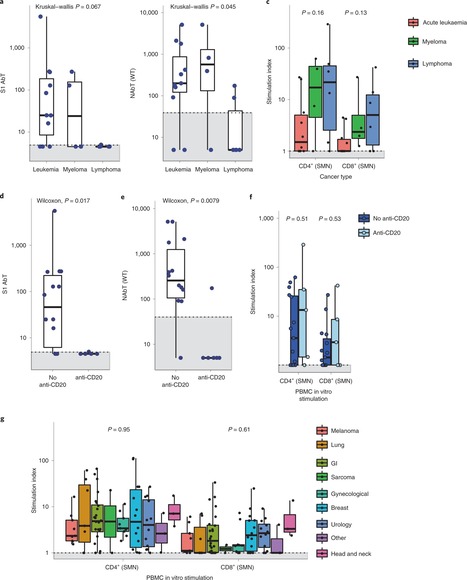
Patients with cancer have higher COVID-19 morbidity and mortality. Here we present the prospective CAPTURE study, integrating longitudinal immune profiling with clinical annotation. Of 357 patients with cancer, 118 were SARS-CoV-2 positive, 94 were symptomatic and 2 died of COVID-19. In this cohort, 83% patients had S1-reactive antibodies and 82% had neutralizing antibodies against wild type SARS-CoV-2, whereas neutralizing antibody titers against the Alpha, Beta and Delta variants were substantially reduced. S1-reactive antibody levels decreased in 13% of patients, whereas neutralizing antibody titers remained stable for up to 329 days. Patients also had detectable SARS-CoV-2-specific T cells and CD4+ responses correlating with S1-reactive antibody levels, although patients with hematological malignancies had impaired immune responses that were disease and treatment specific, but presented compensatory cellular responses, further supported by clinical recovery in all but one patient. Overall, these findings advance the understanding of the nature and duration of the immune response to SARS-CoV-2 in patients with cancer. Turajlic and colleagues assess longitudinal antibody and cellular immune responses against SARS-CoV-2 variants of concern in patients with cancer, following either recovery from SARS-CoV-2 infection or vaccination, in two back-to-back reports from the CAPTURE study.

|
Scooped by
Gilbert C FAURE
February 10, 2022 6:51 AM
|
Neutrophils are the most abundant leukocytes in human blood and the first cells responding to infection and injury. Due to their limited ex vivo lifespan and the impossibility to cryopreserve or expand them in vitro, neutrophils need to be purified from fresh blood for immediate use in experiments. Importantly, neutrophil purification methods may artificially modify the phenotype and functional characteristics of the isolated cells. The aim of this study was to expose the effects of ‘classical’ density-gradient purification versus the more expensive but faster immunomagnetic isolation on neutrophil phenotype and functionality. We found that in the absence of inflammatory stimuli, density-gradient-derived neutrophils showed increased polarization responses as well as enhanced release of reactive oxygen species (ROS), neutrophil extracellular traps (NETs) and granular proteins compared to cells derived from immunomagnetic isolation, which yields mostly quiescent neutrophils. Upon exposure to pro-inflammatory mediators, immunomagnetic isolation-derived neutrophils were significantly more responsive in polarization, ROS production, phagocytosis, NETosis and degranulation assays, in comparison to density-gradient-derived cells. We found no difference in chemotactic response in Multiscreen and under-agarose migration assays, but Boyden assays showed reduced chemotaxis of immunomagnetic isolation-derived neutrophils. Finally, we confirmed that density-gradient purificatio
|
|
Scooped by
Marcelo de Carvalho Bittencourt
February 8, 2022 12:23 PM
|
Broadly neutralizing antibodies (bnAbs) to coronaviruses (CoVs) are valuable in their own right as prophylactic and therapeutic reagents to treat diverse CoVs and, importantly, as templates for rat...
|
|
Scooped by
Marcelo de Carvalho Bittencourt
February 8, 2022 12:07 PM
|
Cancer immunotherapy (CIT) with antibodies targeting the programmed cell death 1 protein (PD-1)/programmed cell death 1 ligand 1 (PD-L1) axis have changed the standard of care in multiple cancers. However, durable antitumor responses have been observed in only a minority of patients, indicating the presence of other inhibitory mechanisms that act to restrain anticancer immunity. Therefore, new therapeutic strategies targeted against other immune suppressive mechanisms are needed to enhance anticancer immunity and maximize the clinical benefit of CIT in patients who are resistant to immune checkpoint inhibition. Preclinical and clinical studies have identified abnormalities in the tumor microenvironment (TME) that can negatively impact the efficacy of PD-1/PD-L1 blockade. Angiogenic factors such as vascular endothelial growth factor (VEGF) drive immunosuppression in the TME by inducing vascular abnormalities, suppressing antigen presentation and immune effector cells, or augmenting the immune suppressive activity of regulatory T cells, myeloid-derived suppressor cells, and tumor-associated macrophages. In turn, immunosuppressive cells can drive angiogenesis, thereby creating a vicious cycle of suppressed antitumor immunity. VEGF-mediated immune suppression in the TME and its negative impact on the efficacy of CIT provide a therapeutic rationale to combine PD-1/PD-L1 antibodies with anti-VEGF drugs in order to normalize the TME. A multitude of clinical trials have bee
|
|
Scooped by
Gilbert C FAURE
February 8, 2022 5:33 AM
|
#LongCovid Voici 3 nouveaux rapports publiés le 07/02.
1/ Etude américaine de Xie et al. publiée dans Nature Portfolio. Cohorte de 153 760 personne
|
|
Scooped by
Gilbert C FAURE
February 3, 2022 3:36 AM
|
Nature Reviews Immunology publie un document majeur concernant l'implication cruciale des cellules B germinales centrales (GC) dans le contrôle d
|
|
Scooped by
Gilbert C FAURE
January 21, 2022 3:06 AM
|
19 January 2022 A recent article published in Kidney International highlights novel findings concerning Tertiary lymphoid tissues (TLTs), which are ectopic lymphoid tissues formed due to chronic inflammatory microenvironment which functions as a local center for priming immune response.
|
|
Scooped by
Gilbert C FAURE
January 16, 2022 11:22 AM
|
Cross-reactive immune responses to SARS-CoV-2 have been observed in pre-pandemic cohorts and proposed to contribute to host protection. Here we assess 52 COVID-19 household contacts to capture immune responses at the earliest timepoints after SARS-CoV-2 exposure. Using a dual cytokine FLISpot assay on peripheral blood mononuclear cells, we enumerate the frequency of T cells specific for spike, nucleocapsid, membrane, envelope and ORF1 SARS-CoV-2 epitopes that cross-react with human endemic coronaviruses. We observe higher frequencies of cross-reactive (p = 0.0139), and nucleocapsid-specific (p = 0.0355) IL-2-secreting memory T cells in contacts who remained PCR-negative despite exposure (n = 26), when compared with those who convert to PCR-positive (n = 26); no significant difference in the frequency of responses to spike is observed, hinting at a limited protective function of spike-cross-reactive T cells. Our results are thus consistent with pre-existing non-spike cross-reactive memory T cells protecting SARS-CoV-2-naïve contacts from infection, thereby supporting the inclusion of non-spike antigens in second-generation vaccines. While cross-reactive immunity between human coronavirus and SARS-CoV-2 may contribute to host protection, validating evidences are still scarce. Here the authors assess a cohort of 52 donors with immediate-early contact with SARS-CoV-2 to correlate higher frequency of cross-reactive T cells with lower infection rate.
|
|
Scooped by
Gilbert C FAURE
January 13, 2022 1:27 PM
|
Ectopic lymphoid aggregates, termed tertiary lymphoid structures (TLSs), are formed in numerous cancer types, and, with few exceptions, their presence is associated with superior prognosis and resp...
|
|
Scooped by
Gilbert C FAURE
January 12, 2022 4:11 AM
|
Amid concerns over lost antibody defences, some researchers argue that more attention should be paid to T cells.
|
|
Scooped by
Gilbert C FAURE
January 3, 2022 3:23 AM
|
Blood platelets play a central hemostatic role, (i) as they repair vascular epithelial damage, and (ii) they play immune defense roles, as they have the capacity to produce and secrete various cytokines, chemokines, and related products. Platelets sense and respond to local dangers (infectious or not). Platelets, therefore, mediate inflammation, express and use receptors to bind infectious pathogen moieties and endogenous ligands, among other components. Platelets contribute to effective pathogen clearance. Damage-associated molecular patterns (DAMPs) are danger signals released during inflammatory stress, such as burns, trauma and infection. Each pathogen is recognized by its specific molecular signature or pathogen-associated molecular pattern (PAMP). Recent data demonstrate that platelets have the capacity to sense external danger signals (DAMPs or PAMPs) differentially through a distinct type of pathogen recognition receptor (such as Toll-like receptors). Platelets regulate the innate immune response to pathogens and/or endogenous molecules, presenting several types of “danger” signals using a complete signalosome. Platelets, therefore, use complex tools to mediate a wide range of functions from danger sensing to tissue repair. Moreover, we noted that the secretory capacity of stored platelets over time and the development of stress lesions by platelets upon collection, processing, and storage are considered stress signals. The key message of this review is th
|
|
Scooped by
Gilbert C FAURE
December 31, 2021 6:47 AM
|
Author summary In this work we describe the prognostic value of early detection of SARS-CoV-2-specific T cell response in acute COVID-19, as patients without a prompt SARS-CoV-2-specific T cell response progress to severe COVID-19. We also show that the presence of specific T cells against SARS-CoV-2 when patients arrive to the emergency room is a protective factor against developing severe COVID-19, independently of the age and gender of the patient, which are two major known contributors to disease outcome. In addition, we show robust cellular and humoral immune responses persist 3 months after real-world vaccination.
|
|
Scooped by
Gilbert C FAURE
December 30, 2021 4:48 AM
|
|
In tuberculosis (TB), protective inflammatory immune responses and the pathological sequelae of chronic inflammation significantly depend on a timely balance of cytokine expression. In contrast to other anti-inflammatory cytokines, interleukin (IL)-27 has fundamental effects in experimental Mycobacterium tuberculosis (Mtb) infection: the absence of IL-27-mediated signalling promotes a better control of mycobacterial growth on the one hand side but also leads to a chronic hyperinflammation and immunopathology later during infection. Hence, in the context of novel host-directed therapeutic approaches and vaccination strategies for the management of TB, the timely restricted blockade of IL-27 signalling may represent an advanced treatment option. In contrast, administration of IL-27 itself may allow to treat the immunopathological consequences of chronic TB. In both cases, a better knowledge of the cell type-specific and kinetic effects of IL-27 after Mtb infection is essential. This review summarizes IL-27-mediated mechanisms affecting protection and immunopathology in TB and discusses possible therapeutic applications.
|
|
Scooped by
Gilbert C FAURE
February 9, 2022 2:09 PM
|
Interleukin-1 (IL-1) is a primary cytokine of innate immunity and inflammation. IL-1 belongs to a complex family including ligands with agonist activity, receptor antagonists, and an anti-inflammatory cytokine.
|
|
Scooped by
Marcelo de Carvalho Bittencourt
February 8, 2022 12:18 PM
|
Here, we characterise the cellular immunogenicity profile of a SARS-CoV-2 recombinant protein candidate vaccine, CoV2-PreS-dTM, formulated with AS03 adjuvant system or AF03 adjuvant, using
|
|
Scooped by
Marcelo de Carvalho Bittencourt
February 8, 2022 10:59 AM
|
T cell polyfunctionality is a hallmark of protective immunity against pathogens and cancer, yet the molecular mechanism governing it remains mostly elusive. We found that canonical Wnt agonists inhibited human memory CD8+ T cell differentiation while simultaneously promoting the generation of highly polyfunctional cells. Downstream effects of Wnt activation persisted after removal of the drug, and T cells remained polyfunctional following subsequent cell division, indicating the effect is epigenetically regulated.
|
|
Scooped by
Gilbert C FAURE
February 6, 2022 12:07 PM
|
Multiple Myeloma (MM), the second most common hematologic malignancy, has been the target of many therapeutic advances over the past two decades. The introduction of novel agents, such as proteasome inhibitors, immunomodulatory drugs, and monoclonal antibodies, along with autologous hematopoietic...
|
|
Rescooped by
Gilbert C FAURE
from Virus World
January 31, 2022 3:43 AM
|
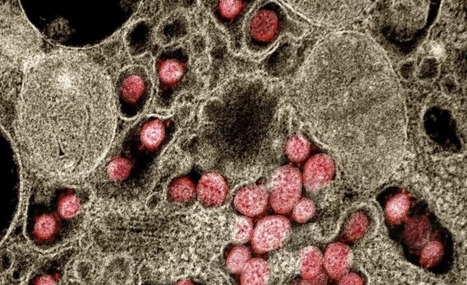
The entry of severe acute respiratory syndrome coronavirus 2 (SARS-CoV-2) into human cells is an essential step for virus transmission and development of COVID 19. Although the lung epithelial cells are its initial target, SARS-CoV-2 also can infect endothelial cells. Endothelial cells are the major constituents of the vascular system and cardiovascular complication is a hallmark of severe COVID-19. Angiotensin-converting enzyme 2 (ACE2) is the entry receptor for SARS-CoV-2. However, the possible involvement of other cellular components in the viral entry is not fully understood. A team of researchers from the Boston University School of Medicine (BUSM) has identified extracellular vimentin as an attachment factor that facilitates SARS-CoV-2 entry into human cells. Vimentin is a structural protein that is widely expressed in the cells of mesenchymal origin such as endothelial cells and a potential novel target against SARS-CoV-2, which could block the infection of the SARS-CoV-2. "Severe endothelial injury, vascular thrombosis, and obstruction of alveolar capillaries (tiny air sacs scattered throughout the lungs) are common features of severe COVID-19. Identification of vimentin as a host attachment factor for SARS-CoV-2 can provide new insight into the mechanism of SARS-CoV-2 infection of the vascular system and can lead to the development of novel treatment strategies," said corresponding author Nader Rahimi, Ph.D., associate professor of pathology & laboratory medicine at BUSM. The researchers used liquid chromatography–tandem mass spectrometry (LC-MS/MS) and identified vimentin as a protein that binds to the SARS-CoV-2 spike (S) protein and facilitates SARS-CoV-2 infection. They also found that depletion of vimentin significantly reduces SARS-CoV-2 infection of human endothelial cells. In contrast, over-expression of vimentin with ACE2 significantly increased the infection rate. "More importantly, we saw that the CR3022 antibody inhibited the binding of vimentin with CoV-2-S-protein, and neutralized SARS-CoV-2 entry into human cells," explained Rahimi. Findings Published in P.N.A.S. (Jan. 25, 2022): https://doi.org/10.1073/pnas.2113874119
Via Juan Lama
|
|
Scooped by
Gilbert C FAURE
January 18, 2022 6:44 AM
|
Hyperactivation of the complement and coagulation systems is recognized as part of the clinical syndrome of COVID-19. Here we review systemic complement activation and local complement activation in response to the causative virus severe acute respiratory syndrome coronavirus 2 (SARS-CoV-2) and their currently known relationships to hyperinflammation and thrombosis. We also provide an update on early clinical findings and emerging clinical trial evidence that suggest potential therapeutic benefit of complement inhibition in severe COVID-19. Hyperactivation of the complement system has been implicated in the pathology of COVID-19. Here the authors bring together the latest information on the role of complement in COVID-19 and progress in targeting complement components for treatment of severe disease.
|
|
Rescooped by
Gilbert C FAURE
from Veille Coronavirus - Covid-19
January 14, 2022 2:58 AM
|
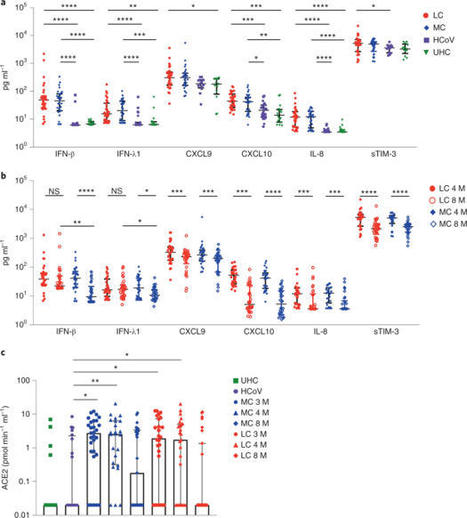
A proportion of patients surviving acute coronavirus disease 2019 (COVID-19) infection develop post-acute COVID syndrome (long COVID (LC)) lasting longer than 12 weeks. Here, we studied individuals with LC compared to age- and gender-matched recovered individuals without LC, unexposed donors and individuals infected with other coronaviruses. Patients with LC had highly activated innate immune cells, lacked naive T and B cells and showed elevated expression of type I IFN (IFN-β) and type III IFN (IFN-λ1) that remained persistently high at 8 months after infection. Using a log-linear classification model, we defined an optimal set of analytes that had the strongest association with LC among the 28 analytes measured. Combinations of the inflammatory mediators IFN-β, PTX3, IFN-γ, IFN-λ2/3 and IL-6 associated with LC with 78.5–81.6% accuracy. This work defines immunological parameters associated with LC and suggests future opportunities for prevention and treatment. Phetsouphanh and colleagues show that individuals with long COVID have persistent activation of the innate and adaptive immune system at 8 months after infection and define a set of analytes associated with long COVID.
Via HAS-veille
|
|
Scooped by
Gilbert C FAURE
January 13, 2022 4:25 AM
|
Summary. Tuberculosis (TB) kills more people than any other single infectious disease globally. Despite decades of research, there is no vaccine to prevent TB t
|
|
Rescooped by
Gilbert C FAURE
from EntomoScience
January 10, 2022 12:32 PM
|
Ce 34e prix Roberval 2021 récompense l'ouvrage « L'immunité des plantes - Pour des cultures résistantes aux maladies », meilleure œuvre dans la catégorie "Enseignement Supérieur". Outre sa qualité scientifique, il récompense sa grande accessibilité à un large public. Publié le 08/12/2021 Coordination éditoriale de cet ouvrage collectif : Christian Lannou (INRAE), Dominique Roby (CNRS), Virginie Ravigné (Cirad), Mourad Hannachi (INRAE) et Benoît Moury (INRAE)
Qu'est-ce que l'immunité ?
"Ce livre traite de l'immunité végétale, c’est-à-dire de l'ensemble des mécanismes qui permettent aux plantes de résister ou d'échapper aux agents pathogènes et autres ravageurs." "... Les plantes disposent d’une immunité naturelle qui leur permet de résister aux maladies et aux agressions parasitaires dans leur environnement. L’invention puis le développement de l’agriculture ont cependant créé des milieux très favorables à l’émergence de nouvelles maladies et au développement des épidémies. Cette vulnérabilité sanitaire s’est ensuite accentuée avec l’intensification agricole, à partir des années 1950, de sorte que le recours généralisé aux pesticides de synthèse est devenu un pilier essentiel de la production. Ce modèle est désormais remis en cause et le développement d’une protection agroécologique des cultures devient une nécessité. Comprendre comment fonctionne l’immunité des plantes et déchiffrer leur arsenal de défense face aux agressions parasitaires est essentiel pour produire des variétés résistantes et réduire la dépendance de l’agriculture à la protection chimique." (...)
Via Bernadette Cassel
|
|
Scooped by
Gilbert C FAURE
January 2, 2022 10:20 AM
|
Further exploration of the educational experiences in college reported by graduate student interviewees revealed two influential factors: students who did research as an undergraduate student or who had a positive experience with a mentor.
|
|
Scooped by
Gilbert C FAURE
December 31, 2021 4:49 AM
|
This research indicates that both exterior and interior sensors work together to detect the same component of bacterial cell membranes, a molecule called LPS. Find out more.
|