Your new post is loading...

|
Scooped by
Gilbert C FAURE
December 29, 2021 1:09 PM
|
bioRxiv - the preprint server for biology, operated by Cold Spring Harbor Laboratory, a research and educational institution
|
|
Scooped by
Gilbert C FAURE
December 29, 2021 3:59 AM
|
Generation of the C3a complement protein fragment by SARS-CoV-2 infection drives differentiation
of a CD16-expressing T cell population that associates with severe COVID-19 disease
outcomes.
|
|
Scooped by
Gilbert C FAURE
December 24, 2021 12:57 AM
|
Cancer is a ubiquitous disease of metazoans, predicted to disproportionately affect larger, long-lived organisms owing to their greater number of cell divisions, and thus increased probability of somatic mutations1,2. While elevated cancer risk with larger body size and/or longevity has been documented within species3–5, Peto’s paradox indicates the apparent lack of such an association among taxa6. Yet, unequivocal empirical evidence for Peto’s paradox is lacking, stemming from the difficulty of estimating cancer risk in non-model species. Here we build and analyse a database on cancer-related mortality using data on adult zoo mammals (110,148 individuals, 191 species) and map age-controlled cancer mortality to the mammalian tree of life. We demonstrate the universality and high frequency of oncogenic phenomena in mammals and reveal substantial differences in cancer mortality across major mammalian orders. We show that the phylogenetic distribution of cancer mortality is associated with diet, with carnivorous mammals (especially mammal-consuming ones) facing the highest cancer-related mortality. Moreover, we provide unequivocal evidence for the body size and longevity components of Peto’s paradox by showing that cancer mortality risk is largely independent of both body mass and adult life expectancy across species. These results highlight the key role of life-history evolution in shaping cancer resistance and provide major advancements in the quest for natural anticancer defences. An analysis of cancer mortality data for zoo mammals highlights marked differences across mammalian orders and an influence of diet, and shows that mortality risk is largely independent of body mass and life expectancy across species.
|
|
Scooped by
Gilbert C FAURE
December 23, 2021 6:54 AM
|
The skin barrier would not function without IL-1 family members, but their physiological role in the immunological aspects of skin barrier function are often overlooked. This review summarises the role of IL-1 family cytokines (IL-1α, IL-1β, IL-1Ra, IL-18, IL-33, IL-36α, IL-36β, IL-36γ, IL-36Ra, IL-37 and IL-38) in the skin. We focus on novel aspects of their interaction with commensals and pathogens, the important impact of proteases on cytokine activity, on healing responses and inflammation limiting mechanisms. We discuss IL-1 family cytokines in the context of IL-4/IL-13 and IL-23/IL-17 axis-driven diseases and highlight consequences of human loss/gain of function mutations in activating or inhibitory pathway molecules. This review highlights recent findings that emphasize the importance of IL-1 family cytokines in both physiological and pathological cutaneous inflammation and emergent translational therapeutics that are helping further elucidate these cytokines.
|
|
Scooped by
Gilbert C FAURE
December 22, 2021 4:45 AM
|
T cells play a central role in cancer immunotherapy, but we lack systematic comparison of the heterogeneity and dynamics of tumor-infiltrating T cells across cancer types. We built a single-cel
|
|
Scooped by
Gilbert C FAURE
December 18, 2021 1:20 PM
|
Antibodies secreted at the mucosal surface play an integral role in immune defense by serving to neutralize the pathogen and promote its elimination at the site of entry. Secretory immunoglobuli
|
|
Scooped by
Gilbert C FAURE
December 8, 2021 6:42 AM
|
Immunological memory is a hallmark of adaptive immunity and facilitates an accelerated and enhanced immune response upon re-infection with the same pathogen1,2. Since the outbreak of the ongoing coronavirus disease 19 (COVID-19) pandemic, a key question has focused on which severe acute respiratory syndrome coronavirus 2 (SARS-CoV-2)-specific T cells stimulated during acute infection give rise to long-lived memory T cells3. Using spectral flow cytometry combined with cellular indexing of transcriptomes and T cell receptor (TCR) sequencing we longitudinally characterize individual SARS-CoV-2-specific CD8+ T cells of COVID-19 patients from acute infection to one year into recovery and find a distinct signature identifying long-lived memory CD8+ T cells. SARS-CoV-2-specific memory CD8+ T cells persisting one year after acute infection express CD45RA, interleukin-7 receptor α (CD127), and T cell factor-1 (TCF1), but they maintain low CCR7, thus resembling CD45RA+ effector-memory T (TEMRA) cells. Tracking individual clones of SARS-CoV-2-specific CD8+ T cells, we reveal that an interferon signature marks clones giving rise to long-lived cells, whereas prolonged proliferation and mammalian target of rapamycin (mTOR) signaling are associated with clonal disappearance from the blood. Collectively, we describe a transcriptional signature that marks long-lived, circulating human memory CD8+ T cells following an acute virus infection.
|
|
Scooped by
Gilbert C FAURE
November 30, 2021 8:44 AM
|
|
|
Scooped by
Gilbert C FAURE
November 28, 2021 3:26 AM
|
Anti-idiotype Antibodies in SARS-CoV-2 The authors hypothesize that anti-idiotype immune responses may contribute to rare adverse events, such as myocarditis, after SARS-CoV-2 vaccination, as wel
|
|
Scooped by
Gilbert C FAURE
November 21, 2021 11:25 AM
|
18 November 2021 In a new study published in PLOS Pathogens, researchers have demonstrated how specific features on the surface of HIV-infected cells play a key role in immune system evasion. A significant and nove
|
|
Scooped by
Gilbert C FAURE
November 19, 2021 3:49 AM
|
IPH62/NKp46 NKCEs binds to one or two antigens at the surface of tumor cells, and engage both CD16 and NKp46 activating receptors on NK cells. The co-engagement of NKp46 synergizes with CD16 to induce full NK cell activation and tumor cell lysis.
|
|
Scooped by
Gilbert C FAURE
October 28, 2021 3:07 AM
|
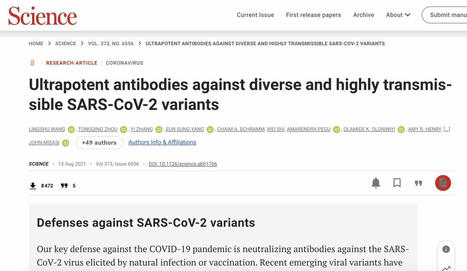
5 juillet 2021 Une équipe de scientifiques internationaux a récemment identifié des anticorps ultrapuissants anti-coronavirus 2 (SRAS-CoV-2) anti-syndrome respiratoire aigu sévère provenant de donneurs convalescents. Les anticorps sont capables de neutraliser une large gamme de variantes du SRAS-CoV-2, même à des concentrations sous-nanomolaires. De plus, les combinaisons de ces anticorps réduisent le risque de générer des mutants d'échappement in vitro. L'étude a été publiée le 13 août 2021 dans la revue Science. https://www.science.org/doi/full/10.112 ... ce.abh1766 Sur le fond Le coronavirus 2 du syndrome respiratoire aigu sévère (SRAS-CoV-2), l'agent pathogène responsable de la maladie à coronavirus 2019 (COVID-19), est un virus à ARN simple brin enveloppé de sens positif appartenant à la famille des bêta-coronavirus humains. La glycoprotéine de pointe sur l'enveloppe virale est composée de deux sous-unités S1 et S2. Dont, la sous-unité S1 se lie directement au récepteur de l'enzyme de conversion de l'angiotensine 2 (ACE2) de la cellule hôte via le domaine de liaison au récepteur (RBD) pour initier le processus d'entrée virale. La majorité des anticorps thérapeutiques contre le SRAS-CoV-2 ont été conçus sur la base de la séquence de protéine de pointe native trouvée dans la souche Wuhan originale du SRAS-CoV-2. Ainsi, de nouvelles variantes virales avec de multiples mutations de la protéine de pointe peuvent probablement développer une résistance contre ces anticorps. Dans ce contexte, des études ont montré que les anticorps développés en réponse aux vaccins COVID-19 actuellement disponibles ont moins d'efficacité pour neutraliser les nouvelles variantes préoccupantes (COV) du SRAS-CoV, notamment B.1.1.7, B.1.351, P1 et B.1.617.2. Dans la présente étude, les scientifiques ont isolé et caractérisé des anticorps anti-pic RBD de patients guéris du COVID-19. Identification des anticorps Les anticorps ont été isolés de quatre donneurs convalescents infectés par la souche Washington-1 (WA-1) du SRAS-CoV-2. La séquence de pointe dans la souche WA-1 est similaire à la séquence de pointe dans la souche originale de Wuhan. Les cellules B isolées à partir d'échantillons de sang provenant de donneurs ont été triées pour l'identification des anticorps. Cela a conduit à l'identification de quatre anticorps neutralisants puissants ciblant le pic RBD. Ces anticorps ont montré une forte affinité pour le pic SRAS-CoV-2 même à des concentrations nanomolaires. Pour déterminer si les anticorps hautement puissants pouvaient bloquer l'ACE2 - la liaison aux pointes, des tests d'interférométrie par compétition ACE2 et de liaison à la surface cellulaire ont été effectués. Les résultats ont révélé que sur 4 anticorps, deux liés aux RBD en « position haute » et deux liés aux RBD en « position basse ». De plus, trois anticorps sur quatre bloquaient directement l'interaction RBD - ACE2, et un inhibait indirectement l'interaction par encombrement stérique - le ralentissement des réactions chimiques dû à l'encombrement stérique. Neutralisation médiée par les anticorps Tous les anticorps expérimentaux ont montré une puissance significativement plus élevée dans la neutralisation des variants contenant la mutation D614G que la souche WA-1. Une analyse plus poussée avec des particules lentivirales pseudotypées avec des variantes à pointes a indiqué que les anticorps maintiennent une puissance élevée pour neutraliser un ensemble diversifié de 10 variantes à pointes. Il est important de noter que trois des quatre anticorps expérimentaux ont montré une grande efficacité pour neutraliser 13 variantes circulantes préoccupantes/intéressantes du SRAS-CoV-2, notamment B.1.1.7, B.1.351, B.1.427, B.1.429, B.1.526, P.1, P.2, B.1.617.1 et B.1.617.2. Analyse structurale et fonctionnelle des anticorps Des analyses au microscope cryoélectronique des structures du complexe anticorps-antigène ont révélé que deux anticorps avec le pouvoir de neutralisation le plus élevé se lient à la protéine de pointe avec tous les RBD en « position haute ». D'autres analyses structurelles ont révélé que les modes de liaison à l'épitope des anticorps sont responsables d'un pouvoir neutralisant élevé contre les COV du SRAS-CoV-2. La capacité de liaison et de neutralisation des anticorps a été affectée négativement par trois mutations de pointe, dont F486R, N487R et Y489R. Résistance aux anticorps Une pression de sélection d'anticorps a été appliquée à la souche WA-1 pour identifier les mutations potentielles d'échappement qui peuvent apparaître au cours de l'infection virale. La pression de sélection positive a été appliquée en incubant le virus avec des concentrations croissantes des anticorps pour déclencher la résistance aux anticorps. Dans deux des anticorps les plus puissants, l'un était affecté négativement par une seule mutation F486S et l'autre était affecté par les mutations F486L, N487D et Q493R. Cependant, la mutation Q493R a montré un impact négligeable sur la liaison et la neutralisation. Une analyse plus poussée a révélé que ces mutations d'échappement sont principalement absentes dans les variantes virales circulantes, indiquant l'absence de pression de sélection. En effectuant plusieurs cycles de sélection à l'aide de traitements combinés avec deux anticorps, il a été observé que les combinaisons d'anticorps pourraient réduire le risque d'acquisition de mutations d'échappement et le développement ultérieur de variantes virales résistantes. Source: News Medical et merci à QcLiLi, dans Twitter En référence à "Wang L. 2021. Anticorps ultrapuissants contre des variantes diverses et hautement transmissibles du SRAS-CoV-2. Sciences". -- -- --
|
|
Scooped by
Gilbert C FAURE
October 25, 2021 1:51 PM
|
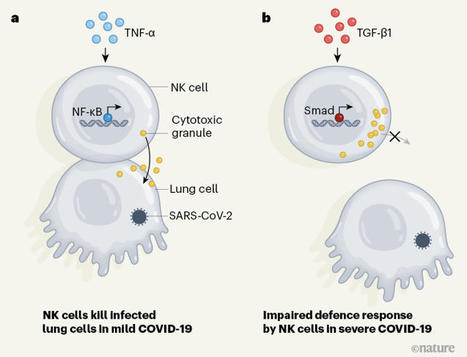
A defence response malfunctions in people with severe COVID-19.
|
|
|
Scooped by
Gilbert C FAURE
December 29, 2021 1:01 PM
|
medRxiv - The Preprint Server for Health Sciences
|
|
Scooped by
Gilbert C FAURE
December 28, 2021 5:10 AM
|
Breast cancer cells can shed a protein called DDR1 that may help prevent immune cells from entering and killing tumors. In mice, a DDR1-targeted drug helped to shrink tumors, completely eliminating them in some cases.
|
|
Scooped by
Gilbert C FAURE
December 23, 2021 10:55 AM
|
It is not fully understood why COVID-19 is typically milder in children1–3. To examine differences in response to SARS-CoV-2 infection in children and adults, we analysed paediatric and adult COVID-19 patients and healthy controls (total n=93) using single-cell multi-omic profiling of matched nasal, tracheal, bronchial and blood samples. In healthy paediatric airways, we observed cells already in an interferon-activated state, that upon SARS-CoV-2 infection was further induced especially in airway immune cells. We postulate that higher paediatric innate interferon-responses restrict viral replication and disease progression. The systemic response in children was characterised by increases in naive lymphocytes and a depletion of natural killer cells, while in adults cytotoxic T cells and interferon-stimulated subpopulations were significantly increased. We provide evidence that dendritic cells initiate interferon signaling in early infection, and identify novel epithelial cell states that associate with COVID-19 and age. Our matching nasal and blood data showed a strong interferon response in the airways with the induction of systemic interferon-stimulated populations, which were massively reduced in paediatric patients. Together, we provide several mechanisms that explain the milder clinical syndrome observed in children.
|
|
Scooped by
Gilbert C FAURE
December 23, 2021 2:59 AM
|
The immune system and the peripheral sensory nervous system communicate through hardwired and humoral routes using shared mediators and receptors. On the basis of studies on pain sensitivity i
|
|
Scooped by
Gilbert C FAURE
December 19, 2021 1:56 PM
|
The new variant may undermine some vaccine-derived defenses. But the immune system’s best assassins are likely to hold the line.
|
|
Scooped by
Gilbert C FAURE
December 18, 2021 6:29 AM
|
|
|
Scooped by
Gilbert C FAURE
December 5, 2021 1:09 PM
|
Abstract The detection of tumor-specific T cells in solid tumors is integral to interrogate endogenous antitumor responses and to advance downstream therapeutic applications. Multiple biomarkers ar...
|
|
Scooped by
Gilbert C FAURE
November 28, 2021 5:26 AM
|
Macrophages comprise a heterogeneous immune cell population and display niche-specific
phenotypes and functions in almost all organs. Testicular macrophages (TMs) perform
essential immune and non-immune functions in the mammalian male gonads.
|
|
Scooped by
Gilbert C FAURE
November 22, 2021 10:23 AM
|
Failure of regulatory T (Treg) cells to properly control immune responses leads invariably to autoimmunity and organ damage. Decreased numbers or impaired function of Treg cells, especially in the context of inflammation, has been documented in many human autoimmune diseases. Restoration of Treg cell fitness and/or expansion of their numbers using low-dose natural IL-2, the main cytokine driving Treg cell survival and function, has demonstrated clinical efficacy in early clinical trials. Genetically modified IL-2 with an extended half-life and increased selectivity for Treg cells is now in clinical development. Administration of IL-2 combined with therapies targeting other pathways involved in the expression of autoimmune diseases should further enhance its therapeutic potential. Ongoing clinical efforts that capitalize on the early clinical success of IL-2 treatment should bring the use of this cytokine to the forefront of biological treatments for autoimmune diseases. Regulatory T (Treg) cells have crucial roles in peripheral tolerance and limiting inflammation, and IL-2 is an important cytokine for Treg cell differentiation, activity and homeostasis. In this Review, Kolios, Tsokos and Klatzmann provide an overview of Treg cell and IL-2 involvement in rheumatic diseases and how modulating IL-2 signalling and Treg cell biology might provide novel treatment avenues.
|
|
Scooped by
Gilbert C FAURE
November 21, 2021 3:54 AM
|
Cancer progresses by evading the immune system. Elucidating diverse immune evasion strategies is a critical step in the search for next-generation immunotherapies for cancer. Here we report that cancer cells can hijack the mitochondria from immune cells via physical nanotubes. Mitochondria are essential for metabolism and activation of immune cells. By using field-emission scanning electron microscopy, fluorophore-tagged mitochondrial transfer tracing and metabolic quantification, we demonstrate that the nanotube-mediated transfer of mitochondria from immune cells to cancer cells metabolically empowers the cancer cells and depletes the immune cells. Inhibiting the nanotube assembly machinery significantly reduced mitochondrial transfer and prevented the depletion of immune cells. Combining a farnesyltransferase and geranylgeranyltransferase 1 inhibitor, namely, L-778123, which partially inhibited nanotube formation and mitochondrial transfer, with a programmed cell death protein 1 immune checkpoint inhibitor improved the antitumour outcomes in an aggressive immunocompetent breast cancer model. Nanotube-mediated mitochondrial hijacking can emerge as a novel target for developing next-generation immunotherapy agents for cancer. Cancer cells adopt a series of strategies to evade the immune response mounted by the organism against them. Here we find that tumour cells can hijack mitochondria from immune cells by forming physical nanotubes, and suggest that inhibiting this process might represent a potential immunotherapy approach.

|
Suggested by
LIGHTING
November 13, 2021 11:24 AM
|
LAD-1 remains a life-threatening condition with omphalitis, oral, skin, and respiratory tract and ear infections as most common complications.
|
|
Scooped by
Gilbert C FAURE
October 27, 2021 2:05 PM
|
New research shows that red blood cells express surface TLR9 that binds cell-free DNA, leading to erythrophagocytosis and innate immune activation.
|