


#Immunotherapy | What do #Cancer-Specific #Tcells ‘See’ 🤔 | Vicky Brentville Lindy Durrant & Co. take a Look down the #Immunooncology Microscope in British…

 Your new post is loading...
 Scoop.it! #Immunotherapy | What do #Cancer-Specific #Tcells ‘See’ 🤔 | Vicky Brentville Lindy Durrant & Co. take a Look down the #Immunooncology Microscope in British… 
No comment yet.
Sign up to comment
Scoop.it!

21 December 2022 In a recent publication, scientists made a big advancement in their knowledge of how inflammation i
Scoop.it!

The interleukin 23 (IL-23) is a key pro-inflammatory cytokine in the development of chronic inflammatory diseases, such as psoriasis, inflammatory bowel diseases, multiple sclerosis, or rheumatoid arthritis.
Scoop.it!

Immune responses are governed by signals from the tissue microenvironment, and in addition to biochemical signals, mechanical cues and forces arising from the tissue, its extracellular matrix and its constituent cells shape immune cell function. Indeed, changes in biophysical properties of tissue alter the mechanical signals experienced by cells in many disease conditions, in inflammatory states and in the context of ageing. These mechanical cues are converted into biochemical signals through the process of mechanotransduction, and multiple pathways of mechanotransduction have been identified in immune cells. Such pathways impact important cellular functions including cell activation, cytokine production, metabolism, proliferation and trafficking. Changes in tissue mechanics may also represent a new form of ‘danger signal’ that alerts the innate and adaptive immune systems to the possibility of injury or infection. Tissue mechanics can change temporally during an infection or inflammatory response, offering a novel layer of dynamic immune regulation. Here, we review the emerging field of mechanoimmunology, focusing on how mechanical cues at the scale of the tissue environment regulate immune cell behaviours to initiate, propagate and resolve the immune response. This Review considers how the biophysical properties of a tissue are able to shape immune cell function through the process of mechanotransduction. There are multiple mechanotransduction pathways that operate in immune cells and the authors highlight these and the emerging field of mechanoimmunology.
Scoop.it!

bioRxiv - the preprint server for biology, operated by Cold Spring Harbor Laboratory, a research and educational institution
Scoop.it!
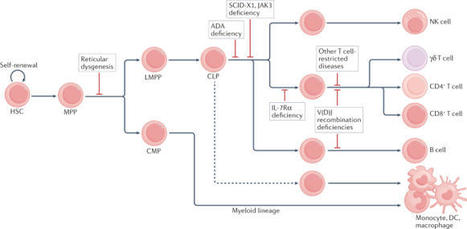
Inborn errors of immunity (IEI) are diseases caused by genetic mutations that affect the immune system’s ability to fight pathogens, cope with the microbiota or regulate autoimmunity and inflammation. More than 500 IEI have been described and many are life-threatening and require curative therapy. Allogeneic haematopoietic stem cell transplantation is an increasingly effective curative strategy, and autologous transplantation of gene-modified haematopoietic stem and progenitor cells is also a treatment option. Gene therapy was first successfully used to restore T cell development in patients with severe combined immunodeficiency, with ex vivo engineered gammaretroviral vectors enabling the sustained correction of T cell immunodeficiency more than 20 years later. The generation of safer and more potent vectors has increased the efficacy and application of this therapy to other IEI, such as Wiskott–Aldrich syndrome and chronic granulomatous disease. Nevertheless, gene therapy based on gene addition has some limitations, the greatest of which is the lack of a physiological gene expression control. This Perspective summarizes the journey of the past 25 years that has led to the successful use of gene therapy for IEI and discusses the next steps for the field. In this Perspective, Alain Fischer reflects on the development of gene therapy for patients with inborn errors of immunity. He discusses the challenges the field has faced as well as the progress seen in the past 25 years.
Scoop.it!

Researchers say there is a growing body of evidence these viruses interfere with each other’s spread
Gilbert C FAURE's insight:
environmental virome among us
Scoop.it!

Key Points.ST3Gal-IV–deficient T-cell progenitors have a competitive disadvantage in seeding the thymus of bone marrow chimeric mice.Retroviral reconstitution...
Scoop.it!
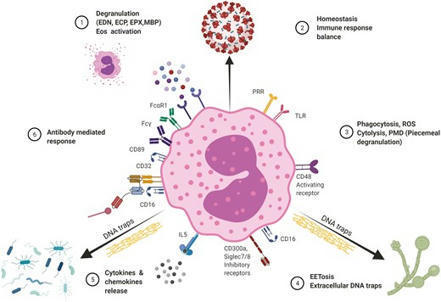
This review summarizes some of the updated information/recent findings on the role of eosinophil direct and antibody mediated interactions with pathogens.
Gilbert C FAURE's insight:
other posts on eosinophils on our topics
https://www.scoop.it/topic/immunology?q=eosinophils and https://www.scoop.it/topic/mucosal-immunity?q=eosinophils and https://www.scoop.it/topic/allergy-and-clinical-immunology?q=eosinophils and https://www.scoop.it/topic/immunology-and-biotherapies?q=eosinophils
and in general on scoop.it https://www.scoop.it/search?q=eosinophils
Scoop.it!
bioRxiv - the preprint server for biology, operated by Cold Spring Harbor Laboratory, a research and educational institution
Scoop.it!

Labeling of the CCS using systemic mCntn2-800. To assess the feasibility of labeling the CCS in vivo, we conjugated IRDye800CW NHS ester, an NIR dye already in clinical use (10), to a commercially available polyclonal antibody directed against Cntn2, an extracellular marker previously shown to be...
Gilbert C FAURE's insight:
magnifiques images et opportunités diagnostiques et thérapeutiques
|
Scoop.it!
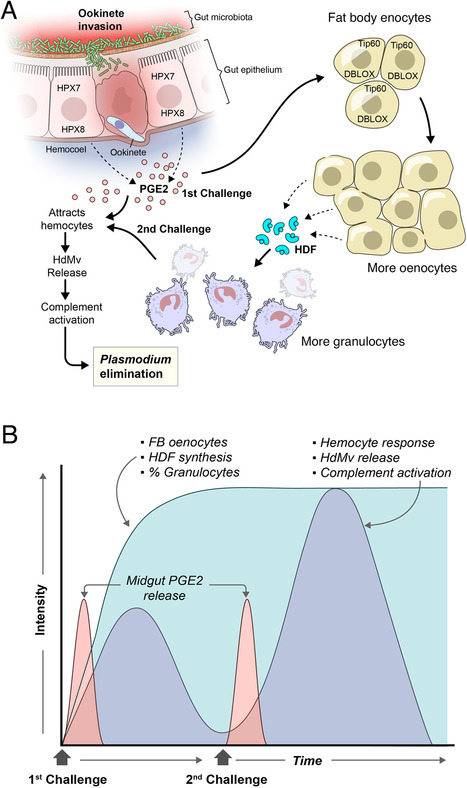
Discussed the current research on the role of molecular mechanisms in mediating immune priming in insects and regulating vector-borne disease transmission.
Modulation of insect immunity to control vector-borne diseases By Dr. Chinta Sidharthan Dec 19 2022 Reviewed by Aimee Molineux
------- NDÉ Traduction
Contexte
La dengue, le paludisme, la filariose et le Zika sont quelques-unes des principales maladies infectieuses transmises par des insectes dans le monde. Au cours des dernières décennies, la dengue et le paludisme ont augmenté de manière significative. En outre, bien que les insecticides réduisent la propagation des maladies transmises par les insectes dans certaines régions du monde, la résistance croissante aux insecticides dans les populations naturelles d'insectes indique la nécessité de trouver d'autres stratégies pour limiter la transmission des maladies transmises par les insectes.
L'un des domaines qui retient l'attention est l'amorçage immunitaire pour réduire la transmission de la maladie. La compétence du vecteur, c'est-à-dire sa capacité à transmettre l'agent pathogène, dépend de sa réponse immunitaire. Chez les insectes, l'immunité est régulée par des voies de signalisation telles que les voies c-Jun N-terminal kinase (JNK), Janus kinase-signal transducteur et activateur de transcription (JAK-STAT), immunodéficience (IMD), Toll et interférence de l'acide ribonucléique (ARNi). Les recherches récentes sur les maladies à transmission vectorielle ont porté sur l'utilisation de ces mécanismes moléculaires pour cibler l'amorçage immunitaire et réduire la transmission des maladies.
Comme les insectes dépendent d'un système immunitaire inné, on pensait qu'ils n'avaient pas la capacité de développer et de maintenir une réponse immunitaire adaptative après une exposition à des agents pathogènes. Cependant, des études ont mis en évidence l'existence d'un amorçage immunitaire chez les insectes, où l'exposition à des agents pathogènes entraîne une modification durable des cellules qui renforce la réponse immunitaire lors d'infections ultérieures.
Chez les blattes (Periplaneta americana), il a été démontré que l'immunisation par Pseudomonas aeruginosa inactivé protégeait les insectes contre les infections par la bactérie vivante, et que les effets duraient des semaines. Des résultats similaires ont été observés chez la drosophile immunisée avec Streptococcus pneumoniae. Les études montrent que l'amorçage immunitaire peut être spécifique ou non de l'agent pathogène et peut s'étendre à d'autres stades de vie de l'insecte. Lorsque P. americana immunisé contre P. aeruginosa a été exposé à d'autres bactéries, les effets protecteurs n'ont duré que trois jours. Cependant, il a été démontré que l'amorçage chez les larves d'insectes augmentait l'immunité chez la forme adulte.
Il a également été démontré que d'autres facteurs, tels que le stress dû à un manque de nutrition, la compétition et les blessures, produisent des phénotypes similaires à l'amorçage. Bien que les preuves suggèrent que l'amorçage immunitaire est similaire à la mémoire immunitaire, les voies et les mécanismes moléculaires restent largement inexplorés.
L'immunité antivirale chez la drosophile adulte est renforcée lorsque les hémocytes produisent un petit ARN interférent (ARNi) viral secondaire en utilisant l'acide désoxyribonucléique (ADN) viral comme matrice. L'ARNi est délivré par des vésicules de type exosome à d'autres tissus de l'insecte. Une étude sur le virus C de la drosophile a montré que l'infection orale du virus chez les larves de drosophiles augmentait la tolérance à l'infection chez les formes adultes.
Les drosophiles femelles exposées à des virus à ARN simple brin positifs ont présenté un amorçage immunitaire transgénérationnel (TGIP) avec une immunité antivirale spécifique de la séquence et dépendante de l'ARN chez la progéniture pour les cinq générations suivantes. Des TGIP similaires ont été observés chez les larves de moustiques Aedes aegypti lorsque les femelles adultes ont été exposées au virus du chikungunya. Bien que l'on pense que l'ADN viral joue un rôle important dans la TGIP, les mécanismes de transfert et d'amplification de l'ADN viral restent flous.
Les moustiques anophèles ont montré une immunité renforcée dépendante des hémocytes contre les infections ultérieures après une exposition au Plasmodium. Des études ont signalé le rôle du microbiote intestinal dans l'établissement et le rappel de la mémoire immunitaire antiplasmodiale, qui est permanente et dépend des granulocytes circulants. Les lipides eicosanoïdes tels que les lipoxines et les prostaglandines jouent le rôle de molécules de signalisation dans l'immunité coordonnée observée dans divers tissus d'insectes.
Les hèmes-peroxydases HPX7 et HPX8, induites pendant l'infection par Plasmodium, médient la synthèse de la prostaglandine E2 (PGE2) par le microbiote de l'intestin moyen. La libération de PGE2 déclenche la libération du facteur de différenciation des hémocytes, qui est un complexe lipoxine-lipocaline. La PGE2 provoque également une augmentation de la double peroxydase par les cellules de l'adipocyte appelées oenocytes.
Des recherches récentes ont porté sur l'entraînement immunitaire, dans lequel les niveaux de transcription des effecteurs immunitaires reviennent à l'état basal après l'exposition initiale à l'agent pathogène. L'infection ultérieure entraîne une meilleure réponse des cellules effectrices que dans le cas de l'amorçage immunitaire. L'entraînement immunitaire (...)
L'étude
Can immune memory impact vector-borne disease transmission?Despite its remarkable plasticity, activation of vector immunity often restricts infection under tolerable levels, instead of completely eliminating the pathogen [52]. Nevertheless, refractory or quasi-refractory populations are observed worldwide [53], and experimental infections of field-caught mosquitoes reveal remarkable variability between individuals. While stochastic variations [54] and genetic components [55,56] are important factors driving this heterogeneity, differences in individual life histories also shape host immunological status [57–60]. Immune priming, immune tolerance, and immune training are likely to be important modulators of individual vector competence. Recently, features of trained immunity were described in nonimmune vertebrate cells, such as epithelial and mesenchymal cells [61], and the role of the gut microbiota has been proposed [62]. Interestingly, the vector gut microbiota is also a major driver of mosquito immunity [63]. It remains to be established whether insect immune priming and trained immunity share some regulatory signaling pathways, such as those activated by the gut microbiota. Thus, priming the immune system of insect vectors is a potential strategy to reduce disease transmission. Manipulation of larvae would be an interesting strategy to reduce vectorial capacity, as infection or immune challenge of larvae, nutritional manipulation, and intraspecific competition have been shown to enhance immunity in adult stages [26,27,64] and logistics to target larval breeding sites are well established [65–67]. While the epigenetic regulation of immunometabolism is an important factor driving susceptibility in vertebrates (and a target for therapeutics), it has only recently started to be investigated in models of disease vectors [40,68,69]. Further identification of molecular markers will make it possible to establish the frequency and intensity of such events in natural populations.
[Image] Immune priming in An. gambiae mosquitoes. Via Bernadette Cassel
Scoop.it!
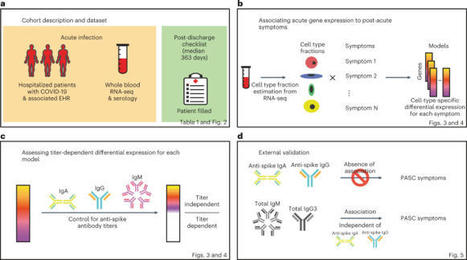
Post-acute sequelae of severe acute respiratory syndrome coronavirus 2 (SARS-CoV-2) infection are debilitating, clinically heterogeneous and of unknown molecular etiology. A transcriptome-wide investigation was performed in 165 acutely infected hospitalized individuals who were followed clinically into the post-acute period. Distinct gene expression signatures of post-acute sequelae were already present in whole blood during acute infection, with innate and adaptive immune cells implicated in different symptoms. Two clusters of sequelae exhibited divergent plasma-cell-associated gene expression patterns. In one cluster, sequelae associated with higher expression of immunoglobulin-related genes in an anti-spike antibody titer-dependent manner. In the other, sequelae associated independently of these titers with lower expression of immunoglobulin-related genes, indicating lower non-specific antibody production in individuals with these sequelae. This relationship between lower total immunoglobulins and sequelae was validated in an external cohort. Altogether, multiple etiologies of post-acute sequelae were already detectable during SARS-CoV-2 infection, directly linking these sequelae with the acute host response to the virus and providing early insights into their development. Transcriptomic analyses of acute phase whole blood from a large cohort of patients with COVID-19 identify molecular determinants of post-infection long-term sequelae.
Scoop.it!

Host immunity to infection with SARS-CoV-2 is highly variable, dictating diverse clinical outcomes ranging from asymptomatic to severe disease and death. We previously reported reduced type I interferon in severe COVID-19 patients preceded clinical worsening. Further studies identified genetic mutations in loci of the TLR3- or TLR7-dependent interferon-I pathways, or neutralizing interferon-I autoantibodies as risk factors for development of COVID-19 pneumonia. Here we show in patient cohorts with different severities of COVID-19, that baseline plasma interferon α measures differ according to the immunoassay used, timing of sampling, the interferon α subtype measured, and the presence of autoantibodies. We also show a consistently reduced induction of interferon-I proteins in hospitalized COVID-19 patients upon immune stimulation, that is not associated with detectable neutralizing autoantibodies against interferon α or interferon ω. Intracellular proteomic analysis shows increased monocyte numbers in hospitalized COVID-19 patients but impaired interferon-I response after stimulation. We confirm this by ex vivo whole blood stimulation with interferon-I which induces transcriptomic responses associated with inflammation in hospitalized COVID-19 patients, that is not seen in controls or non-hospitalized moderate cases. These results may explain the dichotomy of the poor clinical response to interferon-I based treatments in late stage COVID-19, despite the importance of interferon-I in early acute infection and may guide alternative therapeutic strategies. The interferon response has been shown to be linked to severity of SARS-CoV-2 infection and is an essential component of the immune response to COVID-19. Here the authors stratify patients according to COVID-19 severity and asses the interferon response showing defective responses in severe infection and highlight the importance of assay variables and confounding factors that impact the detection of interferon.
Scoop.it!

Shearer et al in 2014 articulated well-defined criteria for the diagnosis and classification
Scoop.it!

Picture bacteria and viruses locked in an arms race. For many bacteria, one line of defense against viral infection is a sophisticated RNA-guided "immune system" called CRISPR-Cas. Via BigField GEG Tech

BigField GEG Tech's curator insight,
November 23, 2022 7:20 AM
For many bacteria, one line of defense against viral infection is the CRISPR-Cas system. At the center of this system is a surveillance complex that recognizes viral DNA and triggers its destruction. However, viruses can fight back and disable this surveillance complex by using anti-CRISPR proteins. For the first time, researchers have solved, using a high-resolution imaging technique called cryo-electron microscopy, the structure of viral anti-CRISPR proteins attached to a bacterial CRISPR surveillance complex, revealing precisely how viruses neutralize the bacterial defense system. The research team found that the anti-CRISPR proteins act by locking down CRISPR's ability to identify and attack the viral genome. The proteins within the complex wrap around the CRISPR RNA exposing specific sections of bacterial RNA. One type of anti-CRISPR protein covers the exposed section of CRISPR RNA, preventing the CRISPR system from scanning the viral DNA. Based on its location and negative charge, an anti-CRISPR protein acts as a DNA mimic, fooling CRISPR into binding this immobilizing protein, rather than invading viral DNA. The researchers believe that this new understanding of anti-CRISPR proteins could eventually lead to more sophisticated and effective tools for gene editing.
Scoop.it!

Thymosin alpha 1 is a peptide naturally occurring in the thymus that has long been recognized for modifying, enhancing, and restoring immune function. Thymosin alpha 1 has been utilized in the treatment of immunocompromised states and malignancies, as ...
thymus and thymic factors still on stage
Scoop.it!
© Copyright 2022 Takeda Pharmaceutical Company Limited. All rights reserved. Takeda and the Takeda Logo are registered trademarks of Takeda Pharmaceutical Company Limited.
some previously curated material on dengue https://www.scoop.it/topic/immunology?q=dengue
Scoop.it!

Macrophages are critical regulators of immunity and play key roles in a range of biological
Scoop.it!

The twenty-first century has witnessed major developments in the field of extracellular vesicle (EV) research, including significant steps towards defining standard criteria for the separation and detection of EVs. The recent recognition that EVs have the potential to function as biomarkers or as therapeutic tools has attracted even greater attention to their study. With this progress in mind, an updated comprehensive overview of the roles of EVs in the immune system is timely. This Review summarizes the roles of EVs in basic processes of innate and adaptive immunity, including inflammation, antigen presentation, and the development and activation of B cells and T cells. It also highlights key progress related to deciphering the roles of EVs in antimicrobial defence and in allergic, autoimmune and antitumour immune responses. It ends with a focus on the relevance of EVs to immunotherapy and vaccination, drawing attention to ongoing or recently completed clinical trials that aim to harness the therapeutic potential of EVs. Extracellular vesicles (EVs) are increasingly recognized as having ubiquitous roles in the immune system. This Review focuses on the progress made in the field in the past 5 years, including the roles of EVs in innate and adaptive immunity and their potential use in diagnosis and therapy.
|




