Your new post is loading...

|
Scooped by
Gilbert C FAURE
October 18, 2022 1:31 PM
|
Immunotherapy has been a remarkable clinical advancement in the treatment of cancer. T cells are pivotal to the efficacy of current cancer immunotherapies, including immune-checkpoint inhibitors and adoptive cell therapies. However, cancer is associated with T cell exhaustion, a hypofunctional state characterized by progressive loss of T cell effector functions and self-renewal capacity. The ‘un-exhausting’ of T cells in the tumour microenvironment is commonly regarded as a key mechanism of action for immune-checkpoint inhibitors, and T cell exhaustion is considered a pathway of resistance for cellular immunotherapies. Several elegant studies have provided important insights into the transcriptional and epigenetic programmes that govern T cell exhaustion. In this Review, we highlight recent discoveries related to the immunobiology of T cell exhaustion that offer a more nuanced perspective beyond this hypofunctional state being entirely undesirable. We review evidence that T cell exhaustion might be as much a reflection as it is the cause of poor tumour control. Furthermore, we hypothesize that, in certain contexts of chronic antigen stimulation, interruption of the exhaustion programme might impair T cell persistence. Therefore, the prioritization of interventions that mitigate the development of T cell exhaustion, including orthogonal cytoreduction therapies and novel cellular engineering strategies, might ultimately confer superior clinical outcomes and the greatest advances in cancer immunotherapy. T cells are key effectors of immunotherapies that have revolutionized the treatment of cancer; however, chronic exposure to tumour-associated antigens can result in progressive loss of T cell effector functions and self-renewal capacity, a state termed ‘T cell exhaustion’ that is believed to limit the efficacy of immunotherapy. This Review synthesizes the new immunobiological insights that present a more nuanced view beyond T cell exhaustion being entirely undesirable and indicate that this hypofunctional state might be as much a reflection as it is the cause of poor tumour control. Hence, the authors describe how, in certain contexts, interruption of this programme could impair T cell persistence and discuss interventions to mitigate the development of T cell exhaustion that might ultimately improve clinical outcomes.
|
|
Scooped by
Gilbert C FAURE
October 12, 2022 4:17 AM
|
Determinants of immune-response quality to SARS-CoV-2 remain poorly defined. Saggau
et al. examine spike-specific naive and memory T cells pre- and post-vaccination and
track pre-existing memory T cell receptors. They define T cell parameters of high-quality
vaccine responses and identify high pre-existing memory and low naive T cell contributions
as predictors of low-quality responses, particularly in the elderly.
|
|
Scooped by
Gilbert C FAURE
October 9, 2022 1:41 PM
|
Tumor immunotherapy is a promising therapeutic strategy for patients with advanced cancers. T cells are key mediators of antitumor function that specifically recognize and react to tumor-expressing antigens and have proven critical for cancer immunotherapy. However, T cells are not as effective against cancer as expected. This is partly because T cells enter a dysfunctional or exhausted state, which is characterized by sustained expression of inhibitory receptors and a transcriptional state distinct from that of functional effector or memory T cells. T cell dysfunction induces the out of control of tumors. Recently, T cell dysfunction has been investigated in many experimental and clinical settings. The molecular definition of T cell dysfunction and the underlying causes of the T cell dysfunction has been advanced regardless of the fact that the pathways involved are not well elucidated, which proposing promising therapeutic opportunities in clinic. In this review, we will discuss the recent advances in the molecular mechanisms that affect TME and induce T cell dysfunction, and the development of promising immunotherapies to counteract the mechanisms of tumor-induced T cell dysfunction. Better understanding these underlying mechanisms may lead to new strategies to improve the clinical outcome of patients with cancer.
|
|
Scooped by
Gilbert C FAURE
October 5, 2022 2:42 AM
|
T cells specific for SARS-CoV-2 are thought to protect against infection and development of COVID-19, but direct evidence for this is lacking. Here, we associated whole-blood-based measurement of SARS-CoV-2-specific interferon-γ-positive T cell responses with positive COVID-19 diagnostic (PCR and/or lateral flow) test results up to 6 months post-blood sampling. Amongst 148 participants donating venous blood samples, SARS-CoV-2-specific T cell response magnitude is significantly greater in those who remain protected versus those who become infected (P < 0.0001); relatively low magnitude T cell response results in a 43.2% risk of infection, whereas high magnitude reduces this risk to 5.4%. These findings are recapitulated in a further 299 participants testing a scalable capillary blood-based assay that could facilitate the acquisition of population-scale T cell immunity data (14.9% and 4.4%, respectively). Hence, measurement of SARS-CoV-2-specific T cells can prognosticate infection risk and should be assessed when monitoring individual and population immunity status. The presence of SARS-CoV-2-specific antibodies alone is not an accurate determinant of immunity. In this work, the authors investigate if whole-blood based measurement of SARS-CoV-2 specific T cell responses could prognosticate the risk of possible SARS-CoV-2 infection, and recapitulate their findings in a capillary blood-based assay.
|
|
Scooped by
Gilbert C FAURE
October 3, 2022 4:25 AM
|
|
|
Scooped by
Gilbert C FAURE
September 27, 2022 1:04 PM
|
Series Editors: Sophia Karagiannis and James Arnold
We are delighted to present our latest Review Series, ‘Immune cell-antibody interactions in health and dise
|
|
Scooped by
Gilbert C FAURE
September 24, 2022 8:44 AM
|
|
|
Scooped by
Gilbert C FAURE
September 24, 2022 2:19 AM
|
Upon antigen stimulation and co-stimulation, CD4+ T lymphocytes produce soluble factors that promote the activity of other immune cells against pathogens or modified tissues; this task must be performed in presence of a variety of environmental cytokines, nutrient, and oxygen conditions, which necessarily impact T cell function. The complexity of the early intracellular processes taking place upon lymphocyte stimulation is addressed by means of a mathematical model based on a network that integrates variable microenvironmental conditions with intracellular activating, regulatory, and metabolic signals. Besides the phenotype subsets considered in previous works (Th1, Th2, Th17, and Treg) the model includes the main early events in differentiation to the TFH phenotype. The model describes how cytokines, nutrients and oxygen availability regulate the differentiation of naïve CD4+ T cells into distinct subsets. Particularly, it shows that elevated amounts of an all-type mixture of effector cytokines under optimal nutrient and oxygen availability conduces the system towards a highly-polarized Th1 or Th2 state, while reduced cytokine levels allow the expression of the Th17, Treg or TFH subsets, or even hybrid phenotypes. On the other hand, optimal levels of an all-type cytokine mixture in combination with glutamine or tryptophan restriction implies a shift from Th1 to Th2 expression, while decreased levels of the Th2-inducing cytokine IL-4 leads to the rupture of the Th1-Th
|
|
Scooped by
Gilbert C FAURE
September 19, 2022 12:07 PM
|
Reduction of TCRα and TCRβ repertoires in CD4+ and CD8+ T cells with age. To determine changes in αβ TCR repertoires with age, we isolated CD4+ and CD8+ T cell subsets from cryopreserved PBMCs of 30 healthy humans.
|
|
Scooped by
Gilbert C FAURE
September 17, 2022 2:53 AM
|
|
|
Scooped by
Gilbert C FAURE
September 5, 2022 2:37 PM
|
The clinical manifestation of COVID-19 mainly targets the lung as a primary affected organ, which is also a critical site of immune cells activation by SARS-CoV-2. However, recent reports also suggest the involvement of extrapulmonary tissues in COVID-19 pathology.
|
|
Scooped by
Gilbert C FAURE
September 4, 2022 4:52 AM
|
|
|
Scooped by
Gilbert C FAURE
August 26, 2022 2:42 AM
|
|
|
|
Scooped by
Gilbert C FAURE
October 14, 2022 2:36 AM
|
Meet the protein arsenal wielded by the pandemic virus
|
|
Scooped by
Gilbert C FAURE
October 10, 2022 3:22 AM
|
The International Union of Immunological Societies (IUIS) expert committee (EC) on Inborn Errors of Immunity (IEI) reports here the 2022 updated phenotypic classification, which accompanies and complements the most-recent genotypic classification.
|
|
Scooped by
Gilbert C FAURE
October 6, 2022 4:18 AM
|
We’re excited to present the inaugural issue of Discovery Immunology, the newest Open Access journal from the British Society for Immunology.
|
|
Scooped by
Gilbert C FAURE
October 4, 2022 3:06 AM
|
There are several reasons to consider the role of endothelial cells in COVID-19 and other emerging viral infections. First, severe cases of COVID-19 show a common breakdown of central vascular functions. Second, SARS-CoV-2 replicates in endothelial cells. Third, prior deterioration of vascular function exacerbates disease, as the most common comorbidities of COVID-19 (obesity, hypertension, and diabetes) are all associated with endothelial dysfunction. Importantly, SARS-CoV-2's ability to infect endothelium is shared by many emerging viruses, including henipaviruses, hantavirus, and highly pathogenic avian influenza virus, all specifically targeting endothelial cells. The ability to infect endothelium appears to support generalised dissemination of infection and facilitate the access to certain tissues. The disturbed vascular function observed in severe COVID-19 is also a prominent feature of many other life-threatening viral diseases, underscoring the need to understand how viruses modulate endothelial function. We here review the role of vascular endothelial cells in emerging viral infections, starting with a summary of endothelial cells as key mediators and regulators of vascular and immune responses in health and infection. Next, we discuss endotheliotropism as a possible virulence factor and detail features that regulate viruses' ability to attach to and enter endothelial cells. We move on to review how endothelial cells detect invading viruses and respond t
|
|
Scooped by
Gilbert C FAURE
September 27, 2022 1:09 PM
|
The present study reveals that glucocorticoids promote the production of IgE by rare B cells in the mesenteric lymph nodes in the absence of experimentally admi
|
|
Scooped by
Gilbert C FAURE
September 26, 2022 11:02 AM
|
Demographics of longitudinal study participants. Peripheral blood samples (HLA-A: 02*01+) were obtained from 24 convalescent donors and 9 healthy donors prior to the FDA emergency use authorization of the Johnson & Johnson, Moderna, and Pfizer COVID-19 vaccines.
|
|
Scooped by
Gilbert C FAURE
September 24, 2022 8:29 AM
|
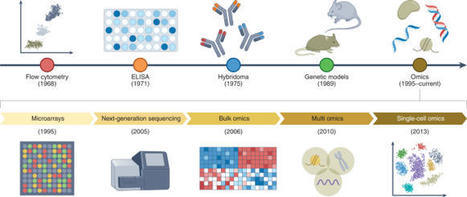
The immune system is highly complex and distributed throughout an organism, with hundreds to thousands of cell states existing in parallel with diverse molecular pathways interacting in a highly dynamic and coordinated fashion. Although the characterization of individual genes and molecules is of the utmost importance for understanding immune-system function, high-throughput, high-resolution omics technologies combined with sophisticated computational modeling and machine-learning approaches are creating opportunities to complement standard immunological methods with new insights into immune-system dynamics. Like systems immunology itself, immunology researchers must take advantage of these technologies and form their own diverse networks, connecting with researchers from other disciplines. This Review is an introduction and ‘how-to guide’ for immunologists with no particular experience in the field of omics but with the intention to learn about and apply these systems-level approaches, and for immunologists who want to make the most of interdisciplinary networks. The explosion of single-cell and systems approaches in immunology risks leaving the uninitiated behind. This guide to systems immunology is designed for immunologists who want an introduction to the area.
|
|
Scooped by
Gilbert C FAURE
September 20, 2022 8:05 AM
|
IL-17 cytokine family members have diverse biological functions, promoting protective immunity against many pathogens but also driving inflammatory pathology during infection and autoimmunity. IL-17A and IL-17F are produced by CD4+ and CD8+ T cells, γδ T cells, and various innate immune cell populations in response to IL-1β and IL-23, and they mediate protective immunity against fungi and bacteria by promoting neutrophil recruitment, antimicrobial peptide production and enhanced barrier function. IL-17-driven inflammation is normally controlled by regulatory T cells and the anti-inflammatory cytokines IL-10, TGFβ and IL-35. However, if dysregulated, IL-17 responses can promote immunopathology in the context of infection or autoimmunity. Moreover, IL-17 has been implicated in the pathogenesis of many other disorders with an inflammatory basis, including cardiovascular and neurological diseases. Consequently, the IL-17 pathway is now a key drug target in many autoimmune and chronic inflammatory disorders; therapeutic monoclonal antibodies targeting IL-17A, both IL-17A and IL-17F, the IL-17 receptor, or IL-23 are highly effective in some of these diseases. However, new approaches are needed to specifically regulate IL-17-mediated immunopathology in chronic inflammation and autoimmunity without compromising protective immunity to infection. IL-17 cytokines drive biological responses that protect the host against many infections but can also contribute to host pathology in the context of infection and autoimmunity. Here, Kingston Mills highlights the different cellular sources of IL-17 and compares the pathological versus protective functions of these cytokines.
|
|
Scooped by
Gilbert C FAURE
September 17, 2022 5:22 AM
|
|
|
Scooped by
Gilbert C FAURE
September 13, 2022 1:27 PM
|
The zika virus disease is notorious for infecting pregnant women and causes their newborn babies to have dwarf-like heads.
|
|
Scooped by
Gilbert C FAURE
September 5, 2022 2:34 PM
|
|
|
Scooped by
Gilbert C FAURE
September 2, 2022 10:59 AM
|
B lineage transcription factor EBF1 is expressed at low levels in MPP3 and MPP4 cells. EBF1 primes the chromatin of B-lymphoid enhancers in MPP3 cells, and hema
|