This post is written by Joe and Kristin Merrill. Kristin is a fourth grade teacher, and Joe is a first grade teacher. They would love to stay connected with you! Follow them on Twitter at: @FriendsInFourth (Kristin), @MrMerrillsClass (Joe), and @TheMerrillsEdu (collectively).
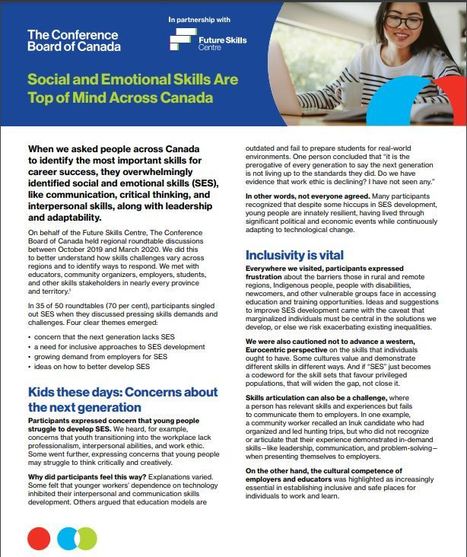
Our students come to our classrooms with a lot to offer. The cultural assets that they bring are unique, and when we hear, promote, and lift up our students’ voices, we create classroom communities where students feel a sense of belonging and safety. The question is, how do we create inclusive classroom communities? One of the most effective tools is social and emotional learning (SEL). Especially if we use SEL thoughtfully, systematically, and with the goal of promoting educational equity. Here are five ways SEL is a tool for creating inclusive school classrooms.
Chrome Extensions are tools that live inside of your Chrome Browser and provide additional functionality by connecting to other web utilities. Most people don’t know this but Microsoft Edge is built on Chromium, so all of the same extensions work there as well.
"Who is an "eLearning champion"? How did training evolve to assume a front end, powerful, pervasive, and impactful function in the corporate world today? How much training is eLearning today? How does eLearning fit into the overall training strategy? This article answers these questions and more."
"Tell me and I forget, teach me and I may remember, involve me and I learn." -Benjamin FranklinBenjamin Franklin very aptly explained that learning is about being involved with the process. But learning is also about evolving the ways of being involved. As time has changed traditional learning ha
"The "Learning with Google" event that was held on February 17, 2021 was a jam-packed livestream filled with dozens of updates and new features coming to G Suite for Education, Google Classroom, Google Meet, Chromebooks, and much more
"In case you missed it, or are just trying to review through everything that was shared, I have made an easy to browse bulleted list of everything that was announced in the event. For each item I have included any relevant links to Google's blog posts or help pages or video clips about that new feature or update.
"Also, if you want more details and discussions on these topics, please feel free to join us online for our monthly GEG-Ohio (Google Educator Group) virtual meeting on Thursday, February 25th from 1pm to 3pm (EST). We will be taking a close look at the updates from the "Learning with Google" event. "
"How can you know if you’re really making a difference as a teacher?
You plan. You assess. You network. You collaborate.
You tweet, differentiate, administer literacy probes, scour 504s and IEPs, use technology, and inspire thinking. And for all of this, you’re given bar graphs on tests to show if what you’re doing is actually making a difference. But there are other data points you should consider as well."
When I ask teachers, “How would you describe a successful online or blended learning course? What would that look like?” Most teachers include some form of the word “engagement” in their answers. So, it makes sense that teachers are frustrated when they feel like students are not engaging. The pandemic is presenting new barriers to student engagement, most obviously the lack of physical proximity. Despite the challenges associated with this moment in education, technology is rapidly evolving to allow students more opportunities to engage in social learning spaces online.
Virtual social learning spaces create opportunities for the social and academic aspects of learning to collide. Social learning spaces “provide a place for students to interact with their peers…and take command over their own learning” (Matthews, Andrews & Adams, 2011). These spaces provide an avenue for students to learn from and with each other.
In this post, I’ll review a collection of the technology tools teachers can use to engage groups of learners online. I’ll also share ideas and strategies for utilizing those shared spaces to create student-centered learning experiences.
We are well on the road to Moodle 4.0, the User Experience (UX) centrepiece that will transform Moodle LMS (https://moodle.com/lms/). Scheduled for release in November 2021, the journey to Moodle 4.0 has depended on engagement with the Moodle community – students, teachers, administrators, developers, partners and the Moodle Users Association.
In this contest, students will take a photograph or create an original illustration that reflects the spirit of reciprocity and kinship with the living world.
"Students are having to cope with a radical change in learning and teaching styles with technology coming to prominence to enable study during the 2020 pandemic lockdowns. Part 1 considered a teacher view and Part 2 presents the opinions of a range of students across educational levels."
A year into the pandemic, the instructional sands keep shifting from in-person, to remote, to concurrent (or hybrid) and back again. And almost every conversation I have with educators regardless of whether they are classroom teachers, instructional specialists or administrators is around student engagement. Sometimes these conversations are with administrators concerned about the increasing numbers of students on the schools D-F list or with teachers disconsolate about students who won’t turn on their cameras, turn in work or participate in discussions and whose attendance (virtual or in-person) is sporadic at best.
All of them are asking, with some urgency, about how we can boost student engagement under these difficult and fluctuating circumstances. From my vantage point, the causes and symptoms are multi-faceted. We need to partner with students—individually and collectively—to discover the root causes and empower them to be their own antidotes.
On this week's podcast, Simon and Jade primarily discuss the work of Ito et al. (2020), which focuses on "connected learning," a seemingly more holistic approach to education that incorporates socio-cultural contexts, multiple literacies, and technology into curricula. With additional references to Soule and Warrick (2015), as well as Ken Robinson's talk on Changing Paradigms, we ultimately conclude that there are no alternatives to real-life interactions. Technology itself is merely a tool we can use to enhance learning experiences and our lives, but not to completely replace those human connections and interactions we need to develop crucial 21st century skills.
To get content containing either thought or leadership enter:
To get content containing both thought and leadership enter:
To get content containing the expression thought leadership enter:
You can enter several keywords and you can refine them whenever you want. Our suggestion engine uses more signals but entering a few keywords here will rapidly give you great content to curate.


 Your new post is loading...




















navigate here