Your new post is loading...
In the book, author and consultant Julia Hobsbawm (daughter of the immensely influential late historian Eric Hobsbawm) contextualizes post-pandemic professional working life within the larger story of changes in office culture. The Nowhere Office represents an acceleration of long-running trends in which the highest-status workers were already mobile, flexible and autonomous.
Post-COVID, this flexibility to do professional keyboard/meeting-based work from either home or office has been extended to a much broader range of employees. Corporate knowledge workers are no longer willing to endure long commutes and distracting office environments to merely signal a commitment to the job. Instead, they make decisions about where they do their work based on what work environment is productivity optimal.
Via Edumorfosis, LGA
The percent of learners taking online courses has exploded in recent years, and it shows no signs of abating. This is perhaps no surprise: online courses offer learners a great degree of flexibility. However, the rise of online courses has led to a war between traditional and online instruction in higher education. If you peruse the admissions materials for many online programs, you will notice how careful many are to tell you that their degree will not reveal that it was earned online, as if this were an albatross of shame. But we need to end this war for the benefit of all learners.
Via EDTECH@UTRGV

|
Rescooped by
michel verstrepen
from Veille CDI
July 1, 2022 8:12 AM
|
Après une fuite des sujets du brevet des collèges de l'épreuve d'histoire-géographie et de sciences, qui se tiennent ce vendredi 1er juillet, l'Education nationale a annoncé qu'elle comptait porter plainte.
Via cdi
|
|
Rescooped by
michel verstrepen
from L'eVeille
July 1, 2022 8:11 AM
|
La scénarisation pédagogique à travers la méthode ABC Learning Design et ses outils...
Via Sandrine Decamps
"The transition to remote learning may still be a challenge, and as we remember last spring, nationwide, school personnel received word of having to switch from in-person to virtual instruction. Fortunately, teachers answered this call to action by accessing educational sites that offer free learning materials and various tools for crafting and executing effective lessons. By taking advantage of these options and being willing to take the next step toward the realm of educational technology, teachers seized the chance to transform a catastrophe into an opportunity for learning for everyone involved."
Via EDTECH@UTRGV
The new survey of experts focuses on the potential impact of extended reality technologies.
Via Amy Cross, juandoming
Immersive Learning uses technology like virtual reality (VR) to simulate real-world scenarios, making it possible to teach someone in a safe and engaging environment. In action, this approach to teaching is being utilized to give students the opportunity to meet people from around the world and learn different languages; it’s being leveraged to allow people to take a realistic trip to Mars and it’s even being used to help people learn the actions required to perform lifesaving procedures like CPR.
Via Edumorfosis, juandoming
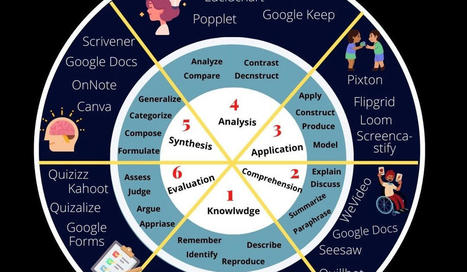
This Bloom's Taxonomy wheel captures the core elements of Bloom's Taxonomy and the revised taxonomy together with digital tools for each level.
Via Marta Torán, juandoming
|
|
Rescooped by
michel verstrepen
from Veille Usages numériques
June 29, 2022 7:53 AM
|
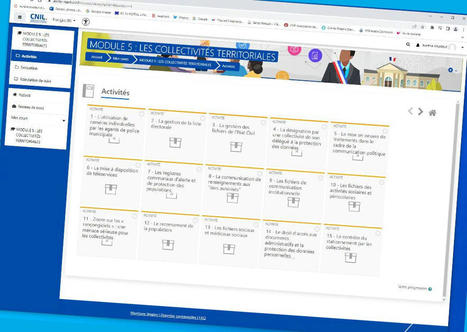
Comment supprimer une photo sur un réseau social ? À quel âge mon enfant peut-il regarder un écran ? Comment distinguer l’offre légale de biens culturels des sites illicites ? Quels sont les droits des internautes ?" La CNIL, le CSA, le Défenseur des droits et l’Hadopi ont créé un kit pédagogique, qui regroupe l’ensemble des ressources conçues pour l’éducation du citoyen numérique, à destination des formateurs et des parents qui accompagnent les jeunes en matière de numérique.
Via Tice Doc Reims
Around an image of Yoda’s face, block letters urge, “Read the syllabus you must.” This meme represents a common complaint among college instructors, particularly those who teach online classes: that students do not follow syllabus instructions. In many on-campus classes, instructors devote at least several minutes of the first class to reviewing the syllabus. Such a review, however, is much less common in online courses. The instructor may encourage students to read the syllabus in an introductory message, but most of the time the course plunges directly into teaching content rather than devoting time up front to orientation and logistics.
Via EDTECH@UTRGV
Dans le cadre de son projet Environnements pédagogiques novateurs, l’OCDE a dégagé sept principes à intégrer dans tout environnement d’apprentissage afin qu’il soit réellement efficace et adapté aux besoins des apprenants du 21e siècle.
Via Vedrenne Guy
|
These EdTech innovators are always in the know about the latest learning tech and how to use it to create memorable L&D experiences.
Via EDTECH@UTRGV, juandoming
META—the company formerly known as Facebook—is running a new TV ad showing a future in which college students slip on a lightweight VR headset to enter a lecture hall where a professor can toss 3D models of biological cells to students who can pull them apart to demonstrate some concept.
It’s the latest sign that Big Tech sees education as a key piece of the rush to build a metaverse, the immersive Internet of Virtual Reality and Augmented Reality that so far is a disconnected mix of clunky tech gear and beta software platforms inspired by science fiction.
This technology raises lots of exciting possibilities and some tough challenges, for both K12 classrooms and college classrooms of the future. And to help us sort through this emerging space, we invited two guests to the podcast who have seen more of this VR space than most and are thinking through these issues.
Via Edumorfosis, juandoming
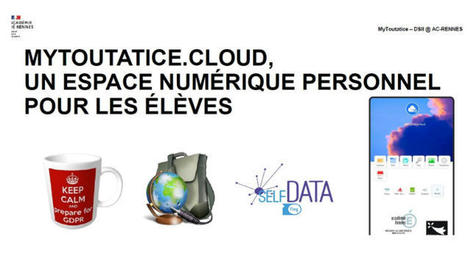
L’Académie de Rennes concrétise son ambition d’outiller les enseignants et les élèves dans la gestion sécurisée de leurs données. En créant MyToutatice,
Via CECI Jean-François
Practicing empathy is crucial because it can improve communication, minimize conflict, diffuse toxicity, prevent apathy, foster understanding, build trust, enhance collaboration, boost your organizational culture, increase productivity, and help improve business performance results.
Via EDTECH@UTRGV
Increasing digital learning opportunities for all learners is the focus of the future-ready movement. Although the movement itself focuses on the K-12 environment, there is a lot that a university can do to build on its foundation. So what does a future-ready university look like?
Via EDTECH@UTRGV
|
|
Rescooped by
michel verstrepen
from :: The 4th Era ::
June 30, 2022 4:44 PM
|
"Students serve as leaders in their schools in a number of ways. From involvement in student organizations to athletics to fine arts, students assume leadership roles in a variety of ways and create lasting, positive impressions on staff and their peers alike. If students have the ability to lead in these ways, why would we not ask them to use their skills and talents to promote digital literacy and citizenship?
Two Ways to Promote Student Leadership
"As a parent and educator, I believe I have done a good job in communicating how to safely and responsibly live, learn, and work in our technology-rich world. The truth is, regardless of my efforts, my students and my children will far surpass my efforts, because as digital natives who have been immersed in technology since birth, they have a unique perspective that I, and most current educators, do not have.
"Rather than waiting for our students to become parents and educators, how might we empower them to lead learning now? Here are two ways you can involve students in promoting digital literacy and citizenship.
"-Create a club or an elective class with the purpose of learning about digital literacy and citizenship and educating the student body in these areas.
-Form a student advisory committee to help the campus make informed decisions and to weigh in on the school’s strategic planning."
Via Jim Lerman
Comunicado de prensa Más de 140 ministros de Educación se reúnen en la Sede de la UNESCO para trazar una hoja de ruta para transformar la educación Kehinde Olufemi Akinbo/Shutterstock.com PR 23 Junio 2022 Last update: 28 Junio 2022 La UNESCO acogerá la Pre-cumbre de la Transformación de la Educación del 28 al 30 de junio, una reunión de ministros de Educación, líderes políticos y empresariales y activistas juveniles, que elaborarán juntos una hoja de ruta para transformar la educación a nivel mundial.
Via LGA
Lire l'ouvrage Civilisation numérique. Ouvrons le débat ! Lire le communiqué de presse LE NUMÉRIQUE, UN ENJEU MAJEUR À FAIRE ÉMERGER DANS LE DÉBAT PUBLIC
Via CECI Jean-François
|
|
Rescooped by
michel verstrepen
from Veille Usages numériques
June 29, 2022 7:54 AM
|
La Direction de l'information légale et administrative (DILA) consacre sur service-public.fr une entrée spécifique à la protection de l’image, notamment les droits de chacun en matière d'image et de respect de la vie privée. Un encart précise les « nouvelles règles pour diffuser l'image d'un enfant sur une plateforme en ligne » comme YouTube, Instagram, TikTok ou Twitch. Sont indiquées en outre les conditions dans lesquelles il est possible (ou pas) de publier une photographie d’une personne sans son autorisation.
Via Tice Doc Reims
Un ingénieur low-tech est-il possible ? Hugues Choplin, Université de technologie de Compiègne (UTC), (Compiègne - France). Le mouvement des low-techs (basses technologies) permettrait-il de répondre à la gravité de notre situation écologique ? Cette conférence s’attache, d’une part, à reconnaître la singularité des gestes – à la fois techniques et politiques – propres à l’ingénierie low-tech et, d’autre part, à pointer les tensions et les risques attachés au déploiement de la « pensée low-tech ».
Via Vedrenne Guy
- With varying degrees of success, cutting-edge technologies have been introduced into schools throughout history.
- While online learning originally seemed disappointing, massive open online courses (MOOCs) are helping universities support students outside the classroom.
- Human teachers are unlikely to be replaced any time soon. Instead, new pedagogies are aimed at helping educators further support students to achieve educational goals.
Via Edumorfosis, juandoming
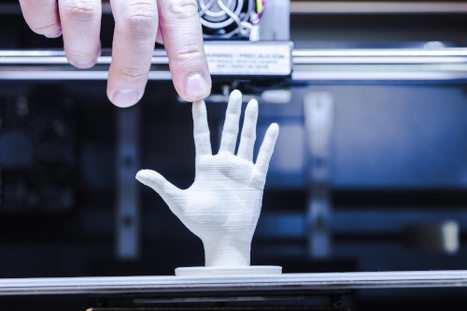
3D printing helps boost interactive learning, accommodates different learning styles, and ensures equal access in the classroom
Via EDTECH@UTRGV, juandoming
|