 Your new post is loading...

|
Rescooped by
Dennis Swender
from Edumorfosis.it
June 24, 2021 3:08 PM
|
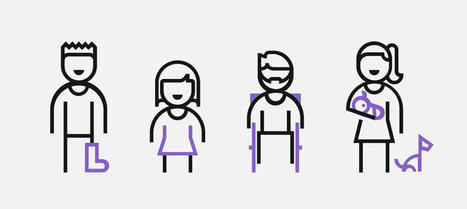
What’s the first thing that comes to mind when you think of “disability”? In the context of product design, we might first think of vision loss, hearing loss, web content accessibility guidelines (WCAG), screen readers, and/or wheelchairs. These are all, of course, extremely important to consider in design, but to be truly inclusive, we must also design for users with barriers that may not be immediately obvious. Invisible disabilities are those that might not be immediately apparent; in some cases, they may not even be medically diagnosed. (Half of people with disabilities cannot afford healthcare.)
Those who identify as having an invisible disability face social stigma and therefore do not always disclose their disability to those around them.
Via Edumorfosis
"In the UK, seven million people of working age have a disability, this adds up a lot of spending power, known as the “purple pound” which is thought to be worth around £249bn to the economy. But…"
Via Leona Ungerer
|
|
Rescooped by
Dennis Swender
from Library@CSNSW
May 5, 2021 11:37 AM
|
Prisons are often ill-equipped to handle autistic inmates, who are at risk for mental health problems and abuse.
Via Library@CSNSW
Free resource of educational web tools, 21st century skills, tips and tutorials on how teachers and students integrate technology into education
Via Dr. Tom D'Amico (@TDOttawa)
|
|
Rescooped by
Dennis Swender
from The Student Voice
March 24, 2021 4:00 PM
|
A smooth transition from high school to college requires these students to understand the law and build critical self-advocacy skills.
Via Peter Mellow
Leading researchers, funded through a new, five-year, $3.2 million grant from the National Institutes of Health (NIH), are collaborating to develop and evaluate tests designed to measure and track changes in the cognitive functioning of people who typically are difficult to assess accurately: those with an intellectual disability, formerly termed mental retardation.
"The lack of good measures to document improvement in thinking that are appropriate, valid, and measure change in children and young adults with intellectual disabilities is a critical problem that is one of the largest barriers to development of new treatments to modify the underlying disease in developmental disabilities,"—said Elizabeth Berry-Kravis, professor of biochemistry, neurological sciences, and pediatrics at Rush University Medical Center. Berry-Kravis is co-Investigator of the study and site principal investigator at Rush.
"This study will help us to evaluate new, investigational treatments for people with intellectual disability," said Berry-Kravis.
The tests will eventually be used to ascertain the effectiveness of medications and other treatments, specifically for people with fragile X and Down syndromes and other intellectual disabilities. Fragile X and Down syndromes are among the leading causes of intellectual disability in the United States and around the world. Fragile X syndrome also is the leading single-gene cause of autism spectrum disorder.
"Most currently available standardized tests have been developed mainly for the general population and are not well-suited for people with intellectual disabilities," said David Hessl, principal investigator and professor in the Department of Psychiatry and Behavioral Sciences at the MIND Institute. "They just weren't designed for people with the level of functioning we typically see in fragile X and Down syndromes. What we will be working to do is modify and then validate the NIH Toolbox Cognition Battery, so that it works well for individuals with intellectual disability."
Related Stories
Study identifies new signaling pathway that leads to inflammatory bone erosion in RA patients
High risk for congenital heart defects in Down syndrome provides tool to identify changes in genes
UCLA earns Get With The Guidelines-Stroke Gold-Plus Quality Achievement Award
The NIH Toolbox is a multidimensional set of brief measures assessing cognitive, emotional, motor and sensory function from ages 3 to 85, meeting the need for a standard set of measures that can be used as a common currency across diverse study designs and settings. The cognitive test battery used in the study is a computer-based set of tests tapping processing speed, memory, attention and language.
The research will be conducted in concert with two other leading research institutions with robust programs in intellectual disabilities. In addition to the researchers at Rush and the MIND Institute investigators, investigators at two other universities are involved: Karen Riley, dean and associate professor, Morgridge College of Education, The University of Denver; Richard Gershon, associate professor, medical social sciences and preventive medicine-health, Northwestern University School of Medicine.
To evaluate the reliability, validity and sensitivity of the battery, over a five-year period Rush University Medical Center, the MIND Institute, and the University of Denver each will enroll 150 individuals with intellectual disability between the ages of 6 and 25 years with either fragile X syndrome, Down syndrome, or intellectual disability of unknown cause. The participants will undergo one round of testing and a second round four weeks later. The overall growth in the participants' intellectual skills will be tested again after two years.
The Northwestern University team, which is responsible for the development, maintenance and training of the NIH Toolbox, will assist with making modifications to the tests to suit this unique population, maintain the data generated from the study, and participate in interpreting and disseminating the study findings.
Via Charles Tiayon
Early intervention services can make a big difference for students who are at risk for learning disabilities. What should teachers look for?
Via John Evans
|
|
Rescooped by
Dennis Swender
from Hospitals and Healthcare
February 4, 2021 1:39 AM
|
Australian services for people with dementia are fragmented, challenging to navigate and hard to access
Via Peter Mellow
|
|
Rescooped by
Dennis Swender
from Educación a Distancia y TIC
January 18, 2021 12:29 AM
|
How to keep universal design for learning (UDL) at the forefront of your online course design during the pandemic.
Via LGA
|
|
Rescooped by
Dennis Swender
from digital divide information
December 14, 2020 7:51 AM
|
|
|
Rescooped by
Dennis Swender
from Edumorfosis.it
October 13, 2020 11:32 AM
|
Remote learning has been a struggle for teachers and is expected to set back the learning gains of a generation of students. It has been particularly hard on children of color, kids from families who are financially insecure, and those without access to computers and technology at home.
But a small number of students have done unexpectedly well. In some cases, those students struggled with distractions in the classroom during in-person learning. In others, they had social challenges at school: They were anxious, easily drawn into conflicts with other students, or embarrassed to engage in front of their peers.
Via Edumorfosis
|
|
|
Scooped by
Dennis Swender
May 12, 2021 7:01 AM
|
Pandemic necessity showed the universal benefits of learning accommodations. Is there any going back?
|
|
Rescooped by
Dennis Swender
from AI for All
May 6, 2021 11:25 AM
|
"With kill switches to stop the gear going off the rails..."
Via Leona Ungerer
|
|
Rescooped by
Dennis Swender
from Educational Technology News
April 15, 2021 6:57 AM
|
Many businesses today are focused on inclusion. But what are the challenges of VILT and how can you make everyone feel like they're part of the online community?
Via EDTECH@UTRGV
|
|
Rescooped by
Dennis Swender
from Education 2.0 & 3.0
March 25, 2021 3:15 PM
|
Last week I received an email from a reader who was looking for advice about adding subtitles to presentations in Zoom meetings. That request prompted me to pull up some tutorials on subtitling pre…
Via Yashy Tohsaku
This article will analyze the most notable rising trends in eLearning app development. These trends are expected to bring a massive change to the world of eLearning, both corporate and academic. Let's take a look.
Via Poorna Stefan
|
|
Rescooped by
Dennis Swender
from Education 2.0 & 3.0
March 1, 2021 11:51 AM
|
|
|
Rescooped by
Dennis Swender
from TechTips
February 24, 2021 2:24 AM
|
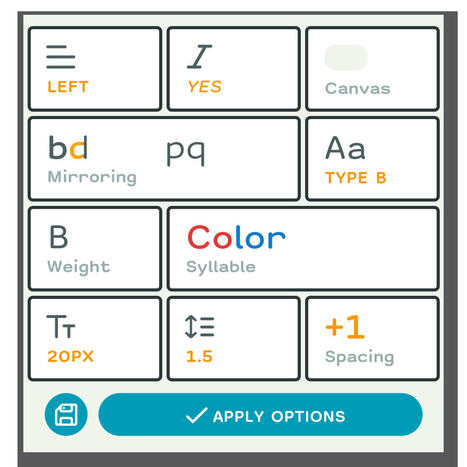
“Omoguru dyslexia reading app helps adjust text appearance, make it clear, understandable and improve reading rhythm, focus and speed.”
Via Nik Peachey, T@T lab
Edtech’s greatest promise is to widen access to education for everyone, no matter where they are in the world – something which has become an increasing priority during the pandemic.
Via Nik Peachey, Johanne Hernandez
|
|
Rescooped by
Dennis Swender
from Education 2.0 & 3.0
January 19, 2021 2:35 PM
|
While COVID-19 has brought health concerns for people of all ages, it has especially brought concern for children’s emotional well-being and students’ mental health. The Centers for Disease C…
Via Yashy Tohsaku
|
|
Rescooped by
Dennis Swender
from digital divide information
December 14, 2020 7:57 AM
|
WCAG compliance testing is an important requirement for web products such as websites and applications to comply with the latest WCAG standards and guidelines for accessibility. Our WCAG testing ensures complete adherence to the norms and helps make your digital products accessible for every user online. Explore more at: https://qainfotech.com/accessibility-testing-services.html #AccessibilityTestingServices #WCAGTesting #WebAccessibilityTestingServices #WCAGComplianceTestingServices
Via QA InfoTech Software Services Private Limited
|
|
Scooped by
Dennis Swender
October 15, 2020 5:40 AM
|
Although we will miss seeing you in person this fall, we are excited to present a virtual conference in acknowledgement of Dyslexia Awareness Month, 2020, with events scheduled throughout the month. Please register for sessions below, and check out the free Resources section, as well.
|































¿Estamos preparados para diseñar y dictar cursos inclusivos a personas con discapacidades invisibles?