Your new post is loading...

|
Scooped by
Dennis Swender
from Edumorfosis.it
May 15, 2020 11:43 PM
|
Higher education as we know it is approaching economic collapse. I appreciate the frantic gestures college presidents are making to prevent their own campuses from failing. Many intend to open their campuses for the fall term and avoid economic ruin. It is the wrong call.
Even the most optimistic of epidemiologists have two opinions about the remaining months of 2020: mass gatherings should be prohibited, and people over 55 and/or with pre-existing conditions should continue to stay indoors. We also know that individuals under 25 are least likely to become sick with the coronavirus and are most likely to flout requests to stay indoors, wear masks and avoid public places such as beaches and parks.
Via Edumorfosis
|
|
Scooped by
Dennis Swender
from The Student Voice
May 12, 2020 7:06 PM
|
International students facing the prospect of seeing years of work and their dreams destroyed are calling for more government assistance to help them stay in the country they've fallen in love with.
Via Peter Mellow
|
|
Scooped by
Dennis Swender
May 12, 2020 1:07 AM
|
How many veterans live in your state? Identify states/territories with the smallest and largest percentages of veterans in the United States.
As online learning continues, many institutions are wondering the best course of action for Fall 2020 and how to best approach learning.
Via EDTECH@UTRGV
|
|
Scooped by
Dennis Swender
from :: The 4th Era ::
May 7, 2020 3:18 PM
|
"For the first time, the country’s largest membership organization of "college admissions professionals has sharply distanced itself from the admissions testing industry, saying it is time to “rethink” whether it is fair to require students to submit standardized test scores on applications. "Jayne Caflin Fonash, president of the National Association for College Admissions Counseling (NACAC), published a statement that also slammed the College Board and ACT Inc. for not consulting with its members before deciding to offer at-home versions of their exams during the covid-19 epidemic. The College Board owns the SAT and the Advanced Placement (AP) program, and ACT Inc. owns the ACT exam. (You can see the full statement below.) "Fonash said many members of NACAC — a nonprofit group with more than 15,000 high school counselors, college admissions officers, tutors and others around the world — “have raised legitimate questions” about how valid and reliable such exams will be, and how fair the new plan is to students from low-income and rural areas who cannot take online tests while at home during the coronavirus pandemic."
Via Jim Lerman
Like it or not, the coronavirus crisis will transform graduate education. University administrations have the power now to move toward greater equity — or to amplify inequality even further. Choosing the path of equity will require democratizing university governance. Otherwise, graduate education will survive but only at the expense of graduate students.
For doctoral students, already facing uncertain futures while surviving on stipends that rarely reflect the cost of living in major cities or college towns, the pandemic and imminent recession have accelerated an ongoing decline. As at many institutions, graduate students at Brown are confronting widespread disruption of research and professionalization, sudden shifts in immigration status, and overnight shuffling of care responsibilities. Students have reported having to return from the field after only one month of research and postponing their dissertation progress indefinitely as funding clocks run out. Others have found it difficult to continue making progress with relatives hospitalized or children at home full time.
Via Edumorfosis, juandoming
Young people think of college as an investment in their future. Now that future is changing in ways they can’t apprehend.
Via LGA
Eating healthy food, exercising regularly and reducing stress are all measures we can take to stay as healthy as possible to fight off infection while we wait for a coronavirus vaccine.
Via Peter Mellow
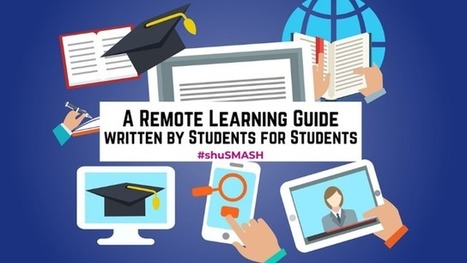
This is a second guest post written for students by students Matty Trueman, Kai Ackroyd, Curtis Alexis-Jones, Gagan Warinch and Eimantus Lukocius. We are final year students at Sheffield Hallam University. Intro The way students learn remotely is becoming more and more important as universities transition to online teaching. With many students facing a number… The way students learn remotely is becoming more and more important as universities transition to online teaching. With many students facing a number of challenges during this current time, it’s important that there are answers to some of the questions that might have arisen. This blog post aims to provide an informative guide on how students can improve their remote learning experience, with the following questions being answered: how to stay motivated, how are other students learning, how to support your peers and how to be more social.
Via Elizabeth E Charles
Unemployed workers are gaining free access to 3,800 courses created by elite universities and companies such as Amazon to learn skills and gain professional certificates for new job opportunities.
Via Peter Mellow
|
|
Scooped by
Dennis Swender
from Education 2.0 & 3.0
April 27, 2020 3:09 PM
|
Approaches that various institutions are taking in grading students during the coronavirus outbreak.
Via Yashy Tohsaku
|
|
Scooped by
Dennis Swender
from Edumorfosis.it
April 21, 2020 12:37 PM
|
Five years ago, Kevin Carey predicted the end of college as we know it.
He argued that colleges operate under an incentive structure and institutional logic that is unsustainable. The quest for prestige and the pressure to expand programs, services and research drive the cost of higher education ever higher, while diverting attention from the quality of teaching and learning and leaving students and their families heavily burdened with debt.
Via Edumorfosis
|
The irony is that we're staying home to protect our health, but all that added sitting is putting our health at risk in other ways.
Via Peter Mellow
|
|
Scooped by
Dennis Swender
May 12, 2020 7:03 PM
|
Farmer and rancher linking programs connect new farmers with retiring landowners. When the new and retiring generation match up, they can work out mutually beneficial arrangements to transfer ownership while maintaining a small farm’s legacy and promoting good stewardship.
|
|
Scooped by
Dennis Swender
from :: The 4th Era ::
May 7, 2020 3:18 PM
|
With college campuses closed because of the coronavirus pandemic, free virtual tours have grown in popularity. High school juniors hoping to begin college in the fall of 2021 are not able to visit campuses in person, but they and their families have many ways to explore their options while staying safe at home.
Here is a guide to some of the tour sites that aim to help students feel as if they are walking around campuses. They can visit as many colleges as they like, without the cost of a road trip or the aching feet.
Via Jim Lerman
|
|
Scooped by
Dennis Swender
from :: The 4th Era ::
May 6, 2020 2:48 PM
|
"What will happen on college campuses in the fall? It's a big question for families, students and the schools themselves. A lot of what happens depends on factors outside the control of individual schools: Will there be more testing? Contact tracing? Enough physical space for distancing? Will the coronavirus have a second wave? Will any given state allow campuses to reopen? For all of these questions, it's really too early to know the answers. But one thing is clear: Life, and learning for the nation's 20 million students in higher education, will be different." "I don't think there's any scenario under which it's business as usual on American college campuses in the fall," says Nicholas Christakis, a sociologist and physician at Yale University. So why are so many colleges announcing they will be back on campus in the fall?" "In many cases, it's because they're still trying to woo students. A survey of college presidents found their most pressing concern right now is summer and fall enrollment. Even elite schools, typically more stable when it comes to enrollment, have reportedly been tapping their waitlists." "In the midst of all this uncertainty, it's worth looking at some of the ideas out there. With the help of Joshua Kim and Edward J. Maloney, professors and authors of the book Learning Innovation and the Future of Higher Education, here are some potential scenarios for reopening colleges and universities:"
Via Jim Lerman
|
|
Scooped by
Dennis Swender
from Edumorfosis.it
May 6, 2020 2:43 PM
|
This spring the University of South Florida, a sprawling campus on the outskirts of Tampa, undertook the seemingly impossible. It shifted 5,000 courses online in a matter of days, emptied residence halls of more than 6,000 undergraduates, and did its best to ensure that its students, about 40 percent of whom are lower-income, had the laptops and Wi-Fi access they needed to continue learning from home. The system’s president, Steven C. Currall, has said his goal is to reopen in the fall, bringing students back to campus, but with “some adjustments.”
What those adjustments are remains the multibillion-dollar question, not just for South Florida but for all of higher education. As colleges plan for the next academic year, so much is uncertain, including the continuing threat of Covid-19, the health of campus budgets, and the desire of students to enroll. But institutions across the country know two things for sure: They don’t want to remain fully online come late August, yet they must prepare for that possibility. Can they create a fall semester that will persuade millions of students to return to college, convinced they’re getting their money’s worth?
Via Edumorfosis
|
|
Scooped by
Dennis Swender
from Soup for thought
May 5, 2020 11:28 PM
|
Learn the work from home habits you should avoid to protect your mental health.
Via malek
|
|
Scooped by
Dennis Swender
May 2, 2020 7:25 AM
|
The third pillar of a decent society is a just system of politics and law. Such a government does not bind all persons, families, institutions of civil society, and actors in the marketplace to itself as subservient features of an all-pervading authority. Instead, it honors and protects the inherent
|
|
Scooped by
Dennis Swender
from The Student Voice
May 1, 2020 12:15 AM
|
Thanks to a loophole in the Federal Government's JobKeeper legislation, Lewis Mullins has been earning far more than he did before the coronavirus pandemic. But the same can no longer be said for his younger colleagues.
Via Peter Mellow
Today, we are rolling out Messenger Rooms, which are joinable group video calls that make it easy to spend quality time with friends, loved ones and people who share your interests. Create a room right from Messenger or Facebook, and invite anyone to join, even if they don’t have a Facebook account. Rooms will soon hold up to 50 people with no time limit.
Via Nik Peachey
I’m a professional facilitator of meetings and conferences, where I try to maximize real human connection. As a teacher, coach, and consultant, I help people learn to communicate better about…
Via Peter Mellow
When we walk briskly or run, air moves differently around us, increasing the space required to maintain a proper social distance.
Via Peter Mellow
|