Have you ever wondered why you rank well (e.g., Page 1) on Google, but rank poorly (Page 4 or lower) on other search engines, like Bing? It can be confusing.
But, as you may already have guessed, Bing and Google have a few key differences.
These differences may lead to discrepancies in your rankings.
This chapter will cover how building links for Bing differs from link building for Google and how you can create one link building strategy that will help you optimize for both search engines.
1. Be (Cautiously) More Aggressive with Link Count
Google and Bing both value backlinks with a few important differences.
One of those differences is regards to quality versus quantity.
Google tends to value PageRank as one of its key ranking signals, even though they removed it. In Google Search Console, Google used to describe PageRank as:
“PageRank is Google’s opinion of the importance of a page based on the incoming links from other sites. (PageRank is an important signal, but it’s one of more than 200 that we use to determine relevancy.) In general, a link from a site is regarded as a vote for the quality of your site.”
In recent years, we’ve seen a declining correlation between link count and Google rankings. In fact, some sites that rank well don’t have a lot of inbound links — they have more authoritative inbound links.
This means Google considers a few high-quality links with more PageRank to be infinitely more valuable than hundreds of links from low-quality sites.
Meanwhile, Bing also values high-quality links. But Bing places more importance on link quantity:
“Links pointing to your site help Bing discover new pages on your site. Traditionally, it is also regarded as a signal of popularity. The site linking to your content is essentially telling Bing that they trust your content.”
Want to improve your site’s Bing ranking in a hurry? Build a few more links each month than you otherwise might have.
Just remember that link quality matters. You absolutely shouldn’t start linking to spammy or irrelevant sites.
How Many Links Are Enough?
My team conducted a link building survey. We polled 628 advanced SEO professionals to find out how many links they build per website per month. Here’s what we found:
73% of our respondents said that they built between 1-20 new links each month. This is a healthy number if you want to improve your search rankings.
21% of our respondents build between 20-100 new links per month. This link building strategy, while more aggressive, will likely yield more tangible results on Bing.
The bottom line:
For Google, focus on very high-quality links.
For Bing, bet on the number of links.
A word of caution: you want your site to rank for both Google and Bing with the same link profile. So be mindful of Penguin.
Don’t go too wild. Like Google, Bing hates link schemes, reciprocal links, and spammy paid links.
For the best results, build no more than 20 backlinks each month. Focus on authoritative top-level domains and well-established sites.
Bing heavily weighs .gov, .edu, and .org domains. Bing also places greater emphasis on domain age than Google.
2. Place Less Emphasis on Anchor Text Diversity
There’s a noticeable difference in Bing’s attitude towards keywords in the anchor text when compared to Google.
Since Google’s 2012 Penguin update, sites with too much exact-match anchor text are liable to get slapped with a penalty.
How has the competitive landscape changed? Find out if your competitors secured their market positions in recent months.
Now compare that to Bing’s guidelines, which actually encourage you to optimize your anchors:
“Carefully plan which actual words will be linked — use targeted keywords wherever possible.”
The practical consequence of this is that we see 10% more sites on Bing with keyword-rich anchor text. In fact, more than half of Bing’s top 30 results (52-53%) all contain optimized anchors.
Given this, it’s theoretically possible (and quite easy) to over-optimize your links for Bing, though I don’t recommend it.
Your site ranking will almost certainly plunge on Google as Penguin hits you for over-optimizing your anchor.
Instead, use a cautious blend of exact-match anchor text with branded, naked link, partial match, long tail, generic, and other types of anchor text.
If you want to start increasing your amount of anchor text with keywords, make sure you:
Understand your current margins with Google and increase them gradually.
Check on your competitors that rank well on both Google and Bing with a link analysis tool. See what percentage seems to be working for them. Build up to their level.
3. Drive Links with Social Media
Bing has stated outright that their algorithm considers social media signals in site rankings:
“Social media plays a role in today’s effort to rank well in search results. The most obvious part it plays is via influence. If you are influential socially, this leads to your followers sharing your information widely, which in turn results in Bing seeing these positive signals. These positive signals can have an impact on how you rank organically in the long run.”
In fact, Searchmetrics’ analysis of Bing’s ranking factors found that not only does Bing value social signals, but that social signals have a strong correlation with better rankings.
This coincides nicely with some of the new data our recent poll uncovered – that modern SEO professionals consider social sharing to be one of the most efficient ways to build links in 2017.
In fact, 68% of the polled advanced SEO professionals, who have used social sharing with link building in mind, found it to be efficient:
A few more specific examples of how our respondents have used social media during June 2016 – June 2017 to increase their backlink profiles:
88% of SEO pros included links in their social media profiles.
81% of our respondents shared their content on social media.
53% of respondents created viral campaigns (e.g. contests).
You can also use software to search for influencers in your niche on the platform of your choice.
Create a list of these influential figures.
Then, when you create high-quality content that might appeal to them, reach out to them.
Ask them to share it.
(Our research showed original data/research to be the most compelling and efficient type of content for link building).
Finally, don’t forget about video content.
While YouTube might be the one-stop-shop for all things video, you don’t want to lose out on the benefits of those hard-earned backlinks.
Instead, find a native hosting solution for your video content.
Then reach out to people who have liked and shared your videos in the past.
Ask them to link to your website instead of YouTube.
Conclusion: Don’t Sabotage Google SEO While Link Building for Bing
One thing I haven’t touched on in this article is that if you wanted to build links exclusively for Bing, it would theoretically be much easier than building links for Google.
Unlike Google, Bing doesn’t mind if you ask other sites for links, as long as those sites are reasonably authoritative.
However, there’s little sense in building a bunch of links for Bing if it’s going to drop your Google rankings in the process.
So, rather than optimizing for one search platform over another, you’re better off looking to your content.
After all, creating link-worthy content is the best type of link building.
“Content is what Bing seeks. By providing clear, deep, easy to find content on your website, we are more likely to index and show your content in search results. Websites that are thin on content, showing mostly ads or affiliate links, or that otherwise redirect visitors away to other sites quickly tend not to rank well. Your content should be easy to navigate, rich and engaging to the visitor, and provide them the information they seek.”
Ultimately, link building isn’t about optimizing for a particular search engine.
It isn’t about discovering a loophole that will help you game an algorithm.
Good link building starts with mutual trust.
You write content someone values.
You earn their respect.
And, as a result, they will share your valuable content with others.
Only once you have the right content is it time to use the strategies above.
These will help earn your content a few more interested eyeballs.
“In fishing, there’re a couple of things you have to do. 1) You have to use the right bait; 2) you have to fish where the fish are. That is link building. You have to come up with something that your community cares about and then put it in front of them.”
For the first time, the Supreme Court has agreed to review "Computer Fraud and Abuse." The Court';s initial review of the CFAA comes in the wake of a federal circuit split.
Six in 10 online learning administrators say their campuses require professors to train before teaching online -- but 70 percent say students aren't formally prepared to study virtually.
"A helpful resource that includes 15 free image websites and six practical image processing tools that you can use for your social media marketing. **As a bonus, there's a short primer on image licensing and copyright**"
Do you have any artwork or cultural artifacts you'd like to share with the world, but don't have the resources to publish them online? You might find a solution in Google.
That is a very good news for artists around the world. It would be very easier for them to show and publish their works of art to the world. It also means, prospect clients and buyer will be plenty for them.
The basic mechanism behind noise-canceling headphones could boost both the speed and reliability of Internet connections, according to researchers that published findings via Nature Photonics.
Following along the lines of Educause's "7 things..." series, a team at Penn State looked at Grassroots Video (low-end amateur video like most on YouTube) and investigated its potential to enrich teaching and learning.
It takes a lot of time and effort to design and develop effective, engaging online education. There are already many naysayers noting how inferior online education is, but the truth is that it is not the medium that matters but the design of the learning experiences, the quality of the content, and the engagement of learners
This guest blog has been kindly contributed by Professor Neil Morris, Chair in Educational Technology, School of Education, University of Leeds. He can be found at @NeilMorrisLeeds
The Unbundled University research project, funded by the UK’s Economic and Social Research Council (ESRC grant number ES/P002102/1) and the National Research Foundation in South Africa (NRF grant number 105395), explored a range of issues in relation to the expansion of online education in universities in the UK and South Africa, including partnerships with private companies and the disaggregation of learning and teaching materials for delivery online (‘unbundling’).
Data were collected from interviews with senior leaders, academics, students and private companies in both countries. The data are being written up for publication in academic journals, but given the rapid shift to focus on online education as a result of the Covid-19 pandemic, it is evident that some of the headlines from the research need to be put in the public domain rapidly.
Nearly half of Australian children and young people are at risk of the nation's shift to remote learning, a series of reports commissioned by the Federal Education Department reveal.
Higher education's current move to online learning may be leaving a sour taste in the mouths of students and faculty across the country, but there is a silver lining.
The loss of interstitial encounters is what's most noticeable for me; planned conferences and meetings tend to produce very predictable and uninspired outcomes - over the past 11 years I've found it's the casual chats, the unplanned encounter, the overheard conversations that generate the bulk of the most productive work - the unmanaged human interaction is where it all happens. We lose all of that with having every interaction structured and mediated.
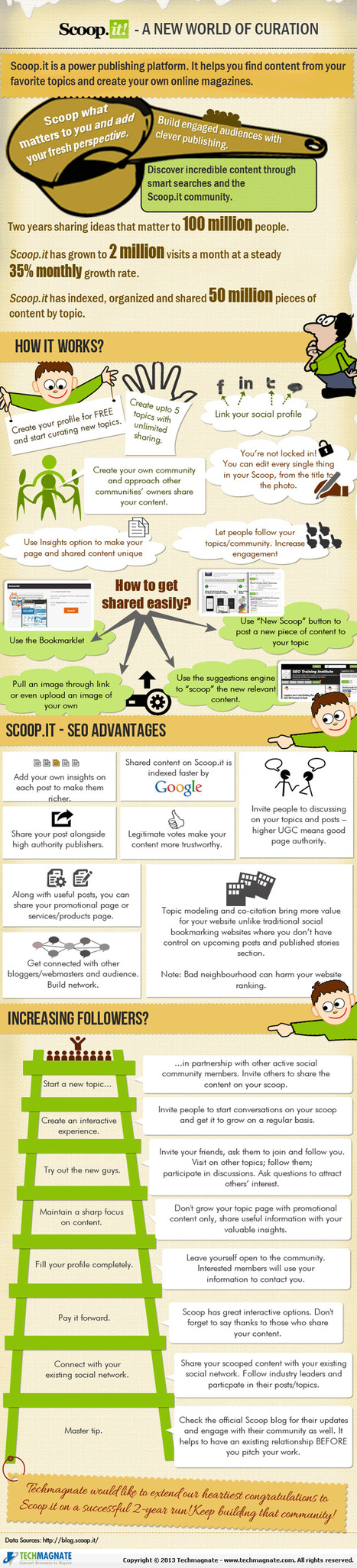
For almost everyone who is a part of the online world coming up with fresh content consistently is a big challenge. Practically every guideline advises that content should be engaging, informative and relevant every single time. Consequently, content curation has taken off in a big way.
Simply put, content curation is the process of curating relevant and interesting content from various sources on the web and putting them together and publishing them on a personal site or blog. As a result of the popularity of the content curation process, a number of content marketing tools have been introduced. These tools are meant to help in the process of content marketing and SEO and facilitate the process of curation...
SCOOPS -- I began using Scoop when I was defining myself a LITE FEET DANCER. There was no single source of info about Lite Feet dance, a NYC Born Battle dance phenom and YouTube Sensation. I created LITE FEET SCOOP TO reference for my own resume but also to provide anyone interested a link to the multitude of YOUTUBE Channels, Sound Cloud and personal sites dedicated to this unique art form and the talented dancers who participate.
Here are 25 long tail keyword phrases that I've gotten to rank on page 1 of Google using my social link wheel methodology. Any SEO guy worth his weight in salt would not guarantee you will get the same results, but if you follow my formula exactly as I have, your odds of getting your content and social profiles and website to rank on page 1 of Google go up exponentially.
With cloud infrastructure easily scalable and rented botnets coming on the cheap, the cost of conducting massive phishing campaigns continues to decline for cybercriminals.
To get content containing either thought or leadership enter:
To get content containing both thought and leadership enter:
To get content containing the expression thought leadership enter:
You can enter several keywords and you can refine them whenever you want. Our suggestion engine uses more signals but entering a few keywords here will rapidly give you great content to curate.


 Your new post is loading...


















Have you ever wondered why you rank well (e.g., Page 1) on Google, but rank poorly (Page 4 or lower) on other search engines, like Bing?
It can be confusing.
You’ve invested in SEO.
Shouldn’t optimizing for one search engine work for all search engines?
Well, not always.
Good SEO isn’t only optimizing for one search engine.
Google is the world’s most popular search engine.
Their algorithm updates have reshaped search and SEO time and time again.
As a result, some SEO professionals today completely ignore any search engine that doesn’t start with “G” and end in “oogle”.
That’s a problem.
While Google owns 91.98% of the global market share, its total U.S. market share is 88.3%, according to StatCounter as of March 2020.
That means more than a third of your U.S. customers are searching for you on platforms other than Google.
So if you’re only optimizing for Google, you’re missing a huge share of the market.
Fortunately, optimizing your content to appeal to search engines beyond Google doesn’t mean starting from scratch.
Bing (and by proxy Yahoo, which has been powered by Bing since 2010) is the second most popular search engine in the world.
Together, Bing and Yahoo own 4.21% of the total global desktop search engine market share and 10.05% of the U.S. market share.
The best news?
SEO techniques work similarly across both platforms.
So you can continue to focus on content marketing and link building.
But, as you may already have guessed, Bing and Google have a few key differences.
These differences may lead to discrepancies in your rankings.
This chapter will cover how building links for Bing differs from link building for Google and how you can create one link building strategy that will help you optimize for both search engines.
1. Be (Cautiously) More Aggressive with Link Count
Google and Bing both value backlinks with a few important differences.
One of those differences is regards to quality versus quantity.
Google tends to value PageRank as one of its key ranking signals, even though they removed it. In Google Search Console, Google used to describe PageRank as:
“PageRank is Google’s opinion of the importance of a page based on the incoming links from other sites. (PageRank is an important signal, but it’s one of more than 200 that we use to determine relevancy.) In general, a link from a site is regarded as a vote for the quality of your site.”
In recent years, we’ve seen a declining correlation between link count and Google rankings. In fact, some sites that rank well don’t have a lot of inbound links — they have more authoritative inbound links.
This means Google considers a few high-quality links with more PageRank to be infinitely more valuable than hundreds of links from low-quality sites.
Meanwhile, Bing also values high-quality links. But Bing places more importance on link quantity:
“Links pointing to your site help Bing discover new pages on your site. Traditionally, it is also regarded as a signal of popularity. The site linking to your content is essentially telling Bing that they trust your content.”
Want to improve your site’s Bing ranking in a hurry? Build a few more links each month than you otherwise might have.
Just remember that link quality matters. You absolutely shouldn’t start linking to spammy or irrelevant sites.
How Many Links Are Enough?
My team conducted a link building survey. We polled 628 advanced SEO professionals to find out how many links they build per website per month. Here’s what we found:
The bottom line:
A word of caution: you want your site to rank for both Google and Bing with the same link profile. So be mindful of Penguin.
Don’t go too wild. Like Google, Bing hates link schemes, reciprocal links, and spammy paid links.
For the best results, build no more than 20 backlinks each month. Focus on authoritative top-level domains and well-established sites.
Bing heavily weighs .gov, .edu, and .org domains. Bing also places greater emphasis on domain age than Google.
2. Place Less Emphasis on Anchor Text Diversity
There’s a noticeable difference in Bing’s attitude towards keywords in the anchor text when compared to Google.
Since Google’s 2012 Penguin update, sites with too much exact-match anchor text are liable to get slapped with a penalty.
How has the competitive landscape changed?
Find out if your competitors secured their market positions in recent months.
Now compare that to Bing’s guidelines, which actually encourage you to optimize your anchors:
The practical consequence of this is that we see 10% more sites on Bing with keyword-rich anchor text. In fact, more than half of Bing’s top 30 results (52-53%) all contain optimized anchors.
Given this, it’s theoretically possible (and quite easy) to over-optimize your links for Bing, though I don’t recommend it.
Your site ranking will almost certainly plunge on Google as Penguin hits you for over-optimizing your anchor.
Instead, use a cautious blend of exact-match anchor text with branded, naked link, partial match, long tail, generic, and other types of anchor text.
If you want to start increasing your amount of anchor text with keywords, make sure you:
3. Drive Links with Social Media
Bing has stated outright that their algorithm considers social media signals in site rankings:
In fact, Searchmetrics’ analysis of Bing’s ranking factors found that not only does Bing value social signals, but that social signals have a strong correlation with better rankings.
This coincides nicely with some of the new data our recent poll uncovered – that modern SEO professionals consider social sharing to be one of the most efficient ways to build links in 2017.
In fact, 68% of the polled advanced SEO professionals, who have used social sharing with link building in mind, found it to be efficient:
A few more specific examples of how our respondents have used social media during June 2016 – June 2017 to increase their backlink profiles:
You can also use software to search for influencers in your niche on the platform of your choice.
Create a list of these influential figures.
Then, when you create high-quality content that might appeal to them, reach out to them.
Ask them to share it.
(Our research showed original data/research to be the most compelling and efficient type of content for link building).
Finally, don’t forget about video content.
While YouTube might be the one-stop-shop for all things video, you don’t want to lose out on the benefits of those hard-earned backlinks.
Instead, find a native hosting solution for your video content.
Then reach out to people who have liked and shared your videos in the past.
Ask them to link to your website instead of YouTube.
Conclusion: Don’t Sabotage Google SEO While Link Building for Bing
One thing I haven’t touched on in this article is that if you wanted to build links exclusively for Bing, it would theoretically be much easier than building links for Google.
Unlike Google, Bing doesn’t mind if you ask other sites for links, as long as those sites are reasonably authoritative.
However, there’s little sense in building a bunch of links for Bing if it’s going to drop your Google rankings in the process.
So, rather than optimizing for one search platform over another, you’re better off looking to your content.
After all, creating link-worthy content is the best type of link building.
As Bing’s Webmaster Guidelines state:
Ultimately, link building isn’t about optimizing for a particular search engine.
It isn’t about discovering a loophole that will help you game an algorithm.
Good link building starts with mutual trust.
You write content someone values.
You earn their respect.
And, as a result, they will share your valuable content with others.
Only once you have the right content is it time to use the strategies above.
These will help earn your content a few more interested eyeballs.
To borrow one of Bruce Clay’s metaphors:
“In fishing, there’re a couple of things you have to do. 1) You have to use the right bait; 2) you have to fish where the fish are. That is link building. You have to come up with something that your community cares about and then put it in front of them.”