


Deficiencies in the interpreter industry result in additional barriers for vulnerable populations in medical settings.
Via Charles Tiayon

 Your new post is loading...
 Scoop.it! Deficiencies in the interpreter industry result in additional barriers for vulnerable populations in medical settings. Via Charles Tiayon
Scoop.it!

If Bluetooth won’t turn on in Windows 10, what to do to fix it? Don’t worry and you can get some useful solutions from this post. Via MiniTool Software
Scoop.it!

In the interests of supporting faculty, teaching staff, and students at every level, Jesse and I will be offering weekly open office hours. We welcome anyone to attend and to bring their questions and challenges to the table. Via Ana Cristina Pratas
Scoop.it!
In this free blended learning lesson, students apply digital skills to create a presentation showing appreciation in Google Slides. Via Filomena Gomes
Scoop.it!

Leading online learning platform, Brainly conducted a survey with Indian students with the premise of Unlock 1.0. Via Yashy Tohsaku
Scoop.it!

What makes top microlearning LMS software stand out? Check our carefully curated LMS list to decide on what features you should focus before purchasing!
Scoop.it!

Edtech can reduce a school’s administrative burden in many ways. Check out a few ideas on how an LMS can supports a school’s edtech strategy: Via Yashy Tohsaku
Scoop.it!

Although there is an abundance of digital education resources, we must find better ways to support learners when and where they have a need. Via Peter Mellow
Scoop.it!

As higher education looks for fresh ideas to navigate the COVID-19 crisis, Education Focussed academics spoke to six UNSW students about their experiences with online learning and how they're adjusting to the ‘new normal’ of learning. Via Peter Mellow
Scoop.it!

Google Chrome keeps opening new tabs when you click a link? Why does this happen and how to solve the problem? Here is the answer. Via MiniTool Software
Scoop.it!

The current COVID-19 pandemic has made online learning the new normal [1], regardless of a learner’s age and goals. While it takes a few tips to truly get the most from it, this form of learning offers more flexibility, access to expertise, and value for money. Via Edumorfosis
Scoop.it!

What exactly is interactivity? Read this insightful article to learn more about the levels of interactivity present in eLearning modules. Via EDTECH@UTRGV, Elizabeth E Charles
Scoop.it!

Spread the loveTechnology in the classroom can be so much more and so much better than the stereotypical cell phone going off in the middle of class. With higher-learning institutions offering up programs like a BSN-RN/MBA completely online , technology can be a major tool, both regarding pedagogical resources and regarding connecting with the younger generation. But how does this work? The top seven important concepts to understand when examining the use of technology for educational or instructional purposes include: 1) Active engagement with the learning material. Technology is interactive, and students learn by doing, researching, and receiving feedback. This […] Via Bryce Chapman 
Bryce Chapman's curator insight,
June 3, 2020 11:28 PM
This website highlights how technology is having an impact on modern education, and does so very effectively. It gives a great overview and insight behind the seven ways that technology is helping evolve education and I can not agree any more with what has been said! As technology evolves even more, ourselves as teachers are certainly going to play much more of a 'coaching' and 'guidance' role along the learning journey of our students!
|
Scoop.it!

How to install SSD in your PC without reinstall Windows? If you want to boot your PC from the SSD with a fast speed, follow this guide to install an SSD. Via MiniTool Software
Scoop.it!

In recent years I've noticed something interesting. People have been calling posts, "blogs". Do you? Take our quic
Scoop.it!

JTATE serves as a forum for the exchange of knowledge about the use of information technology in teacher education. Journal content covers preservice and inservice teacher education, graduate programs in areas such as curriculum and instruction, educational administration, staff development instructional technology, and educational computing. Via Nik Peachey
Scoop.it!

The COVID-19 pandemic significantly impacted education, forcing teachers and teacher educators into emergency, remote instruction. While there were noted challenges, there also were global success stories of innovation in preparing current and future teachers. This AACE and SITE-published, open access eBook contains 133 chapters with over 850 pages documenting best practices, strategies, and efforts by teacher educators, professional developers, researchers, and practitioners. It is divided into seven sections that address pedagogy, collaboration, field experiences, preservice education methods, professional development, digital tools, and equity issues. Via Nik Peachey
Scoop.it!

Employees pick up lessons along the way. Every workday brings the opportunity to expand their experience and build vital skills. However, this shouldn’t compromise your brand image or lead to compliance penalties. So, how do you encourage them to take risks and learn from them without putting your profits in peril? The solution is AR or VR training to immerse them in the situation and identify performance gaps. In some cases, both IT techniques are suitable for boosting engagement, interactivity, and real-world application. These 7 tips can help you choose the best immersive learning approach for your online training strategy. Is VR or AR training the right fit for employee preferences, L&D objectives, and budgetary constraints? Via Edumorfosis, juandoming
Scoop.it!

This post mainly talks about MKV vs. MP4, including the introduction of these two formats, the difference between MKV and MP4, and the conversion between them. Via MiniTool Software
Scoop.it!

The sudden pivot to digital learning has thrown the education system into flux. Here are 7 online teaching hacks instructors need to know: Via Yashy Tohsaku
Scoop.it!

Scoop.it!
From
twitter

“Bloom's Taxonomy is a powerful teaching and learning tool that can shape nearly everything that happens in your classroom. Here are 50 ways to begin. 50 Ways To Use Bloom's Taxonomy In The Classroom - https://t.co/W2tpMTEwSx”
Via Helen Stone
Scoop.it!
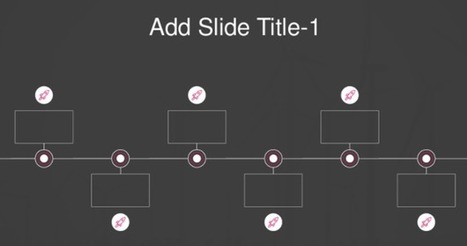
Timelines are key elements to use in your instruction. They allow you to visually organize data and draw attention to the most important pieces of information (e.g., dates, events, project milestones etc). We have already shared a collection of web tools that you can use to design your own timelines. However, if you rather avoid the hassle of creating one from scratch, the free timeline templates below are some good options to start with. These are PowerPoint templates curated from Microsoft Templates Gallery that you can download and adapt to your own teaching needs. Via Elizabeth E Charles
Scoop.it!

Online course evaluation is crucial to the improvement of future courses, although carrying it out is difficult. Here are the three basic steps to it. Via Ana Cristina Pratas, Elizabeth E Charles |







Communication Breakdown: Part II
Seven years before the coronavirus pandemic began, state lawmakers declared a public health emergency that went largely unnoticed by most Oregonians.
To better understand health inequities obscured by the way state agencies collect demographic data, the 2013 Oregon Legislature passed House Bill 2134 to address government data collection. The law was aimed at improving standards the bill deemed as being too “inconsistent and insufficient to adequately assess the status and needs of Oregon’s communities of color, immigrant and refugee communities.”
But a state review of these standards five years later, in 2018, concluded what health care interpreters told Street Roots they’ve known for years: The state’s health agency, Oregon Health Authority, doesn’t know whether patients with limited English proficiency are receiving the “meaningful access” to language assistance that state and federal laws require.
“Language, certainly in the context of COVID-19, can be a life or death matter,” said Juliet Choi. Choi was a senior official in the Obama administration who now spearheads a nationwide effort to increase health equity and improve data collection standards.
Slips of the tongue have cost lives in Portland before. In 2013, a Spanish translator for a 911 call sent an ambulance to the wrong address and triggered a multimillion-dollar wrongful-death lawsuit against the city of Portland.
The 1964 Civil Rights Act and the Affordable Care Act both require that people with limited English abilities receive reasonable accommodation and access to language assistance services from medical institutions that receive federal funding.
The American With Disabilities Act provides similar protections for people with disabilities.
Despite these legal requirements, a 2016 nationwide study found that up to a third of hospitals in communities that need language assistance, do not provide them.
Health care interpreters in Oregon told Street Roots about a case where a patient erroneously believed they had a tumor for weeks, about another where a parent learned about an imminent back surgery for their child the day of the appointment — after previously being denied an interpreter — and about multiple other instances where interpreters didn’t speak a language the patient could understand.
Meanwhile, federal protections for non-English speaking patients are being gutted. The federal agency responsible for addressing their rights to accessing language services finalized regulatory changes on June 12 that would save the agency billions of dollars a year by erasing laws against discrimination. It's also cutting its funding of court battles to enforce them.
'The immediate preservation of the public peace, health and safety'
Wired correspondent Gretchen McCulloch penned an article describing COVID-19 as history’s biggest translation challenge. She wrote about how language barriers exacerbate challenges related to misinformation around the virus in what the CDC considers a communications emergency and the World Health Organization has dubbed an “infodemic.”
Oregon Public Broadcasting reported in March that immigrant communities have consistently struggled to access accurate information and resources in languages other than English during the coronavirus pandemic.
The most recent five-year data from the American Community Survey estimates 1 in 17 Oregonians, or over 200,000 people, qualify as limited English proficient, or LEP, meaning they speak English less than “very well” or not at all.
An analysis of that data provided to Street Roots by Charles Rynerson, interim director of Portland State University’s Population Research Center, estimates that more than 100 languages are spoken in Oregon households with limited English speakers statewide. The most common language spoken is Spanish, followed in order by Vietnamese, Russian, Chinese and Korean.
Despite data quality issues and limitations identified by Oregon Health Authority, Choi said Oregon is ahead of the curve when it comes to collecting demographic data related to health.
“If you dig into what Oregon is doing compared to other states, it does have some of the most comprehensive standards,” Choi said.
The Asian & Pacific Islander American Health Forum and its community partners across the nation have sent a flurry of letters to congressional leaders and U.S. Department of Health and Human Services Secretary Alex Azar urging action on a laundry list of health equity issues exacerbated by COVID-19.
One letter to Congress describes a “cycle of neglect” whereby citizens of the Republic of the Marshall Islands, the Federated States of Micronesia and the Republic of Palau lost eligibility for Medicaid in 1996 and continue to lack access to medical care despite disproportionate rates of health issues.
The letter also cites estimates showing Pacific Islanders in Multnomah County have a rate of COVID-19 infection that is three times the state average.
In April, Oregon Rep. Andrea Salinas (D-Lake Oswego) wrote to the heads of Oregon Health Authority, outlining problems she had been hearing about since March. She was concerned issues with interpreters might further exacerbate inequities in health care already facing Latinx communities, which were seeing increasing rates of COVID-19. Among items highlighted, she wrote, “In-state interpreters are available and ready to work but frequently are overlooked for out-of-state interpretation services who are willing to undercut payment.” She also noted the lack of accountability providers face regarding the use of qualified and certified interpreters.
“I would urge you to address the problems we are seeing now and could be leading to increased exposure for many populations who don’t have many options but to suffer,” she wrote. “We have a special opportunity with this crisis moment to correct some health inequities we know already exit but are being exacerbated by the novel coronavirus.”
Earlier this year, Salinas introduced a bill that would have made it possible for interpreters to seek recourse if they experienced wage or labor violations, but it died after passing out of the House Committee on Health Care.
Oregon Health Authority addressed Salinas' concern that interpreters were being paid only a fraction of what they would be paid for an in-person visit for translating tele-health visits. The state agency ordered insurance companies to reimburse language service providers at the same rate as in-person appointments, but it’s not clear whether that money always trickles down to the interpreters who work for the companies.
Meaningful access
Carol Cheney, the diversity, equity and inclusion manager for Meyer Memorial Trust, has described how linguistic barriers faced by marginalized communities can have potentially disastrous consequences.
In an April 9 blog post, Cheney described how disaster preparation efforts on the Oregon Coast overlooked a geographically and linguistically segregated Latinx community without access to disaster response information in a language they could understand.
After discovering the oversight, Cheney wrote, volunteers “acted quickly to get linguistically appropriate information to their Latinx community members in culturally appropriate ways.”
Oregon Health Authority maintains a database of licensed health care professionals who have registered to volunteer in response to federal, state and local emergencies — a group known as the State Emergency Registry of Volunteers in Oregon, or SERV-OR.
Despite maintaining a list of over 700 registered interpreters and translators who have completed Oregon Health Authority-approved training courses, 60 hours of formal training, 30 hours of documented interpreting experience and an approved certification test, the agency does not require interpreters to disclose their qualifications when signing up for SERV-OR.
One insurance network of health care providers in Southern Oregon that has a unique working relationship with interpreters has enabled it to help tackle language barriers during the current global public health crisis.
Oregon Health Authority, which oversees most of Oregon’s health-related programs, currently manages $6 billion worth of multi-year contracts with 15 regional insurance networks of hospitals and other health care providers statewide, known as coordinated care organizations, or CCOs.
The contracts represent “the largest procurement in state history,” according to the agency.
“(We) have identified that local food banks are not adequately funded to provide Meaningful Access for language assistance,” wrote Stick Crosby, AllCare Health’s director for network and health equity, in a May 12 letter to certified and qualified interpreters in Southern Oregon. “This service is currently not occurring at any of the locations within AllCare’s service area.”
In addition to funding Spanish-speaking interpreter positions at food banks in Jackson, Josephine and Curry counties, the CCO’s language access center is assisting Jackson County with Spanish translations of public health information related to COVID-19.
Oregon state law requires CCOs to provide state qualified or certified interpreters whenever possible, but there is little transparency around who provides these services and their qualifications.
“What’s happened is there’s this law that says you need to work with certified and qualified interpreters. It’s a mandate,” Crosby said. “But there’s no penalty if you don’t.”
Crosby said he learned about interpreter shortages and limited enforcement of language access requirements from community listening sessions and conversations with Southern Oregon’s Regional Health Equity Coalition.
Piyawee Ruenjinda, one of Oregon’s two certified Thai/English health care interpreters, told Street Roots low wages and high turnover among Thai interpreters means that patients sometimes end up with interpreters who speak languages they can’t understand.
“At such a visit, I hope that the provider noticed that there was a communications breakdown and provided feedback to the language access coordinator regarding the problem,” Ruenjinda said.
She said one of her patients, an asylee originally from the border of Thailand and Myanmar, often projected hope and positivity despite a debilitating shoulder injury and disrespectful comments from “another interpreter” about her daughter.
Patients who wish to file a formal complaint against an interpreter must make their way to Oregon Health Authority’s Office of Equity and Inclusion website, where they will find a complaint form written in English. The form itself notes that it can be made available in other languages and formats.
The Office of Equity also provides a link to multilingual complaint forms for the Department of Health and Human Services’ Office of Civil Rights.
The Office of Civil Rights recently implemented changes the agency acknowledged could decrease access to and utilization of health care services for non-English speakers.
“Even so,” it concluded, “such an impact is expected to be negligible.”
Last year, Oregon lawmakers moved in the opposite direction, expanding language access by passing a bill requiring pharmacies to include instructions for the use of prescription medications in the 10 most commonly spoken languages in Oregon.
The law, estimated to impact over 190,000 Oregonians with limited English abilities, is designed to reduce the human and economic costs associated with higher rates of preventable medication errors non-fluent English speakers experience.
“No one should ever be at risk of getting sick or potentially dying because they are misusing their prescription drugs, especially when it’s because of a language barrier,” Sen. Laurie Monnes Anderson (D-Gresham) said at the time.
To fulfill legal requirements related to providing language assistance for patients with limited English proficiency, most CCOs in Oregon take bids for contracts from agencies who then hire freelance medical interpreters for individual assignments as needed.
Portland language agencies Passport to Languages and Linguava reported over two-thirds of their onsite appointments have disappeared since mid-March, with the majority of those appointments transitioning to video remote interpreting.
Although given several weeks to respond, Oregon Health Authority did not answer by press time questions about its oversight of interpreters, language agencies and subcontractors. Nor did it provide records of enforcement actions as requested.
“Health care interpreters are critical members of the health care team,” said the agency’s spokesperson, Allyson Hagen, in a statement. “As part of CCO 2.0, OHA has added new requirements for CCOs to ensure meaningful access to health care services for limited English proficient and Deaf and hard of hearing individuals.”
These requirements include self-assessments, quarterly reports and contract stipulations that CCOs must make Oregon Health Authority certified and qualified health care interpreters available to “members and potential members in all non-English languages and sign language,” Hagen said.
Hagen said the agency is reviewing the first round of those self-assessments, but the due dates for the first and second quarterly reports on language access and interpreter services have been postponed until October due to COVID-19.
“I think that data is going to be very revealing in terms of how many folks are actually getting access to certified and qualified interpreters,” said Felicity Ratway, a member of the Oregon Council on Health Care Interpreters, who pushed for the new requirements.
Ping Van Louen is a certified Cambodian interpreter and a services manager at Immigrant & Refugee Community Organization. She said most of the credentialed interpreters she’s contacted from OHA’s registry already have full-time jobs as staff at medical facilities and can’t support themselves doing contract work with IRCO.
“If someone speaks an uncommon language, they need to receive some support to get trained and keep up with their profession,” Van Louen said. “Because right now it's not worth it.”
Ruenjinda said that after factoring in unpaid time and transportation costs, she makes less than minimum wage.
“You need a separate source of income, and you really have to want to do this job.”
Because of the distances involved and an effort to lessen exposure in shared vehicles, Ruenjinda said she has been unable to accept appointments for her patient with the shoulder injury.
Her last interaction with the woman concerned a $500 emergency relief award from a local nonprofit. Ruenjinda had submitted the woman’s name.
“Sometimes, you have to find other ways to help the patient,” she said.