


Technology is no longer the primary competitive differentiator. Experiences are. We’re in the Era of the Customer, and to survive, you’ll need to change the way you create products and services.
Via june holley

 Your new post is loading...
 Scoop.it! Technology is no longer the primary competitive differentiator. Experiences are. We’re in the Era of the Customer, and to survive, you’ll need to change the way you create products and services. Via june holley
Dennis Swender's insight:
E-Learning course design in the Era of the Student
No comment yet.
Sign up to comment
Scoop.it!
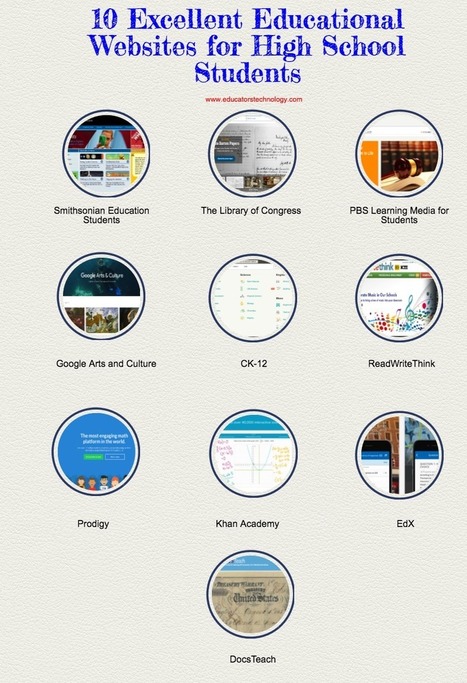
Free resource of educational web tools, 21st century skills, tips and tutorials on how teachers and students integrate technology into education Via Dr. Tom D'Amico (@TDOttawa) , Jim Lerman
Scoop.it!

"Does the Device Matter? The are many different devices being implemented into classrooms all around the world. With schools using PC’s, Laptops, Macbooks, iPads, Chromebooks, and Netbooks to move further towards 21st Century Contemporary Learning environments I am often asked the question “What devices should my school purchase?” Via EDTECH@UTRGV
Scoop.it!
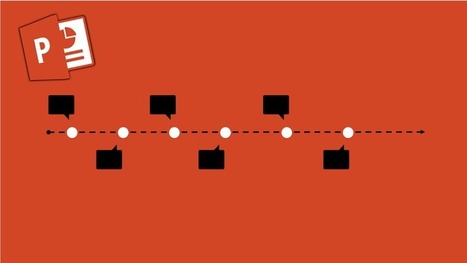
Want to know how to create an Interactive Timeline Or Map With PowerPoint? Check 11 steps to create an Interactive Timeline Or Map With PowerPoint. Via Baiba Svenca 
Samuel Johnson's curator insight,
May 14, 2019 11:48 PM
This article provides a technical overview for how to create an interactive PPT and considers concepts such as 'Cognitive Load Theory' to justify suggested steps. Ensuring your presentations aren't overwhelming is important; I discussed treading the fine line between functionality and engagement in my blog here: https://diglatcqu.blogspot.com/2019/04/embedded-task-3.html
Scoop.it!

Facilitating to the various needs of social learning, technology has made it possible for masses to involve and.. Via Marta Torán 
Marta Torán's curator insight,
March 21, 2017 3:58 PM
Herramientas y recursos para ejercitar el "social learning"
Scoop.it!

So the next time you walk into a training room and see a number of older teachers there, don’t groan with disappointment, but welcome the opportunity to test your skills and understanding with the most critical audience. If you can send them away motivated to use technology then you know you are on the right track. Via Nik Peachey, Cynthia (Cindy) DePoy 
Miguel Angel Perez Alvarez's curator insight,
March 24, 2017 1:52 PM
Pistas para entrenar a maestros ya mayores en el uso de tecnologías. Sexagenarios #tecedu
Scoop.it!

Many of us know that data collection, cleaning, and processing is a time-consuming and sometimes arduous ordeal that requires patience along with elbow grease. It’s usually the end product—insights from an analysis to feed action—that motivates us to munge. In this interview, Khuram Zaman of Fifth Tribe, explains how a desire to develop effective counter-messaging measures against violent extremists was the impetus behind creating and sharing his carefully curated dataset, How ISIS uses Twitter, on Kaggle. Via Kim Flintoff
Scoop.it!
The term “new normal” is the lingo used to describe drastic change in doing something or life after a major event. The change is usually quick and immediate. It alters one’s approach to something or way of life. In the educational world a slower transition is happening that will create a new normal. That change agent is social media. Social media has been around for some time but its practical use is relatively new to educators. As I engage more and more educators in the use of social media for educational purposes I hear a lot of the same questions. Here are some of the most common questions with my responses. Via Kim Flintoff
Scoop.it!

A podcast is a topic-specific digital stream of audio files (in some cases, video or PDF also) that can be downloaded to a computer or a wide variety of media devices. They are funny, entertaining,… Via Becky Roehrs, Dean J. Fusto 
Becky Roehrs's curator insight,
February 24, 2017 5:32 PM
I've always wondered why you'd use a podcast with your students-so here's some of the answers.. 
ChristopherBell's curator insight,
March 2, 2017 7:47 PM
Found this today. I've been trying to listen to a new podcast every morning and was looking for some interesting site. Check this resource out!
Scoop.it!

In this paper, we examine the use of visual metaphor as a tool of reflection for supporting growth towards a multicultural teacher. Tampere University of Applied Sciences’ "Multicultural Authentic eLearning" (MAeL) module is offered as part of the school’s post graduate teacher education program. The shoe metaphor functions as a symbol of continuous authentic learning related to the growth process. This study give voices to three MAeL students through reflections they did in their blogs during the module and in post-course joint reflection/summing up. The main findings of the three personal... Via Ana Cristina Pratas
Scoop.it!

Wondering how to create interactive Online Training Tutorials? Check 8 tips to create interactive and immersive Online Training Tutorials.
Scoop.it!

Does the average person even know or understand what a blog is? Do professionals understand how blogs influence their profession? Are teachers using blogs as both relevant reading and writing tools? Are students using blogs to create their voice? Do people in general see any importance in blogging to reflect, question, criticize, or improve the world in which we live? Do blogs have a value in our world today that is at least understood, if not appreciated, by those who should? Does the access to blogs require too much tech savvy, critical thinking, and a mindset different from the 20th Century to prevent the acceptance of blogs as a change force in our 21st Century world?
Will a large enough group of people even read this post to make a difference or will people need to print it out to share copies with others?
[Gust MEES] Learn more / En savoir plus / Mehr erfahren:
https://gustmees.wordpress.com/2013/03/25/practice/
https://gustmees.wordpress.com/2013/03/25/practice/
https://gustmees.wordpress.com/2014/07/21/learning-the-basics-of-html-to-use-in-blogs/
https://gustmees.wordpress.com/2014/08/06/learning-the-basics-of-html-to-use-in-blogs-creating-faqs/
https://gustmees.wordpress.com/2016/09/22/blogs-tips-and-tricks/
Via Gust MEES 
Gust MEES's curator insight,
December 28, 2016 7:13 PM
Does the average person even know or understand what a blog is? Do professionals understand how blogs influence their profession? Are teachers using blogs as both relevant reading and writing tools? Are students using blogs to create their voice? Do people in general see any importance in blogging to reflect, question, criticize, or improve the world in which we live? Do blogs have a value in our world today that is at least understood, if not appreciated, by those who should? Does the access to blogs require too much tech savvy, critical thinking, and a mindset different from the 20th Century to prevent the acceptance of blogs as a change force in our 21st Century world?
Will a large enough group of people even read this post to make a difference or will people need to print it out to share copies with others?
[Gust MEES] Learn more / En savoir plus / Mehr erfahren:
https://gustmees.wordpress.com/2013/03/25/practice/
https://gustmees.wordpress.com/2013/03/25/practice/
https://gustmees.wordpress.com/2014/07/21/learning-the-basics-of-html-to-use-in-blogs/
https://gustmees.wordpress.com/2014/08/06/learning-the-basics-of-html-to-use-in-blogs-creating-faqs/
https://gustmees.wordpress.com/2016/09/22/blogs-tips-and-tricks/
|
Scoop.it!

From
medium

Exponential technologies have a tendency to move from a deceptively slow pace of development to a disruptively fast pace. We often disregard or don’t notice technologies in the deceptive growth phase, until they begin changing the way we live and do business.
Driven by information technologies, products and services become digitized, dematerialized, demonetized and/or democratized and enter a phase of exponential growth.
Nicole Wilson, who was Singularity University’s vice president of faculty and curriculum until last year, believes education technology is currently in a phase of deceptive growth, and we are seeing the beginning of how exponential technologies are impacting 1) what we need to learn, 2) how we view schooling and society and 3) how we will teach and learn in the future.
[Gust MEES] Simply put, as WE (#Schools) DON'T know WHAT THAT world would be, WE SHOULD prepare the #students #LEARNers for <===> #LEARNing2LEARN to become #LifeLongLEARNing persons! Please check my #blog post <===> https://gustmees.wordpress.com/.../teaching-was.../ <===> #ModernEDU #Coaching
Via Gust MEES, Jim Lerman 
Jessica Henao's curator insight,
March 21, 2017 9:52 AM
The 21st century skills and the common 4Cs have been changing and into a new set of characteristics... .It’s clear that technologies undergoing exponential growth are shaping the skills we need to be successful, how we approach education in the classroom, and what tools we will use in the future to teach and learn.

Magaly Siméon's curator insight,
April 9, 2017 4:01 AM
Very interesting subject to be considered and discussed. I will disclose the post to my contacts and subscribers in http://www.quanticaconsultoria.com
Scoop.it!

Many dedicated educators blog about some of the best education technologies and trends available to teachers and students. These 10 are ou Via GwynethJones 
GwynethJones's curator insight,
March 22, 2017 9:08 AM
Great list and I'm honored to humbly brag that ..... I'm Number Two! OR....I'm #2! Either way, the middle schooler in me laughs out loud at anything close to being scatological!
Srsly, it's an honor! I should blog more often and live up to it!
Scoop.it!

A feature-by-feature comparison between Bunkr and Visme, which also allows you to present Web content but also provides built-in collaboration tools and graphic Via Baiba Svenca 
Baiba Svenca's curator insight,
March 21, 2017 3:53 PM
Since Bunkr is closing down, you may need to find an alternative, so why not try Visme? Thanks for the suggestion to Belle Balace.
Scoop.it!

In this article we will give you some ideas to bring to life dull topics, simplify complex technical matter, and make the learning process a memorable journey.
Scoop.it!

Higher education in the United States dates back almost 400 years to Harvard University, the well-known model of the traditional brick-and-mortar institutions. In the four centuries since, technological advances have changed the way education is delivered and received.Alex Solis, an English instructor at East Los Angeles, has been teaching at the community college level for the past seven years. She shared the level of changes in teaching strategies she has experienced due to technology have been “massive.”
Scoop.it!
New research may help us break the impasse over how to cope with digital diversions in the classroom.
Scoop.it!

Universities are failing to make best use of Twitter and may promote “inaccurate” depictions of themselves via the social network, a major study says.
Via Kim Flintoff
Scoop.it!

Social learning doesn't happen in traditional classrooms only - in fact, it often thrives more outside of it. Via Kim Flintoff
Scoop.it!
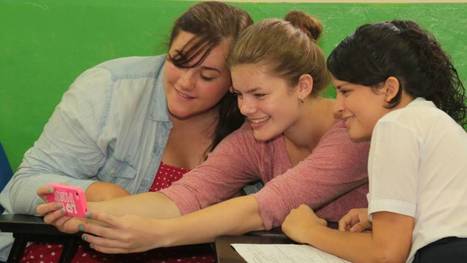
As teachers, we’ve all seen it in our classrooms: A student in the back of the room discreetly takes a selfie. We’ve probably all been frustrated by it at some point too. And many of us have probably wondered why our students are taking hundreds of pictures of themselves everyday. Via John Evans, Dean J. Fusto
Scoop.it!

Browse hundreds of accredited online degree programs at Best Online Universities.com. Website includes information on financial aid, e-learning technologies, and more for the top online colleges in the United States. Headquartered in Chicago, IL. Via Ana Cristina Pratas
Scoop.it!

Exploring and advancing innovations in education – Learn, share, and collaborate to shape the future of blended and online learning. |






