


“ Social media can provide great tools for education. Yet, many teachers remain reluctant to use them. Matt Davis has gathered some of the best resources to help teachers get started.”

 Your new post is loading...
 Scoop.it!
“ Social media can provide great tools for education. Yet, many teachers remain reluctant to use them. Matt Davis has gathered some of the best resources to help teachers get started.”
No comment yet.
Sign up to comment
Scoop.it!

In a world ruled by content curation, every educator should be passing along social media strategies to students. The “That’s a parent’s job” mantra is not a sufficient excuse for ignoring your responsibility here. We’re in this together. Via John Evans
Scoop.it!

Scoop.it!

Twitter is pretty awesome and everyone needs it in their lives. But like with any technology, there are safety concerns, privacy concerns, kids' security concerns, and so on. Twitter has launched a new initiative to address all these matters. Via Bookmarking Librarian, Library Staff
Scoop.it!

Since Google introduced "Search Plus Your World," most Google Search users have seen results that add more emphasis to sites shared on Google+.
It turns out having Google+ followers boosts the ranking the most, while a "+1" still does way more for your search ranking than Facebook or Twitter.
Twitter actually ranks the lowest — which, given the bickering between Google and Twitter, isn't all that surprising either.
Read more: http://read.bi/KBnIwo ; Via Steven Healey, John van den Brink, janlgordon, Dennis Swender
Scoop.it!

While Wordpress is the best platform for your blog it needs a few great Wordpress plugins to give it the extra functionality so here is our list . Via THE OFFICIAL ANDREASCY, Maria Margarida Correia, Dennis Swender
Scoop.it!
Get Free Help: www.tyler-moore.com Learn how to create a $2500 wordpress website in 1 hour step by step with no knowledge of how to make a website necessary....
Scoop.it!

Free resource of educational web tools, 21st century skills, tips and tutorials on how teachers and students integrate technology into education Via Mel Riddile
Scoop.it!

LXD is a rapidly emerging discipline in the domain of instructional design, and it is already redefining how learning should take place. Read more in this post Via EDTECH@UTRGV
Scoop.it!
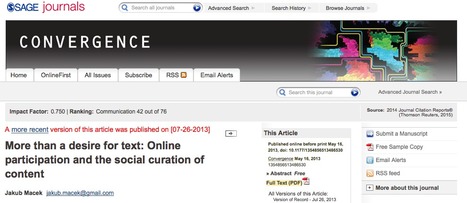
Abstract
Why and on what bases do people choose content and share it in an online environment? At the centre of Henry Jenkins’ theory of convergence culture lie in the transforming links between active, participative audiences, media content and media corporations. However, the ‘textually motivated’ desire to participate in the circulation of and control over texts is just one among other key motives for the dissemination and recirculation of content. Ethnography-based research conducted at Masaryk University in the Czech Republic suggests that when exploring participation in textuality, performative self-exposure and self-presentation must be taken into account as well as the context of audiences’ everyday life. Thus, I propose to approach participation as based not only on a ‘will to text’ but also on a dialectical relationship between a ‘will to self-performance’ and a ‘will to conformity’. These three factors then impact on the social curation of content – a reflexive process in which members of the audience construct texts for consumption and recirculation. Via catspyjamasnz, Kim Flintoff
Scoop.it!
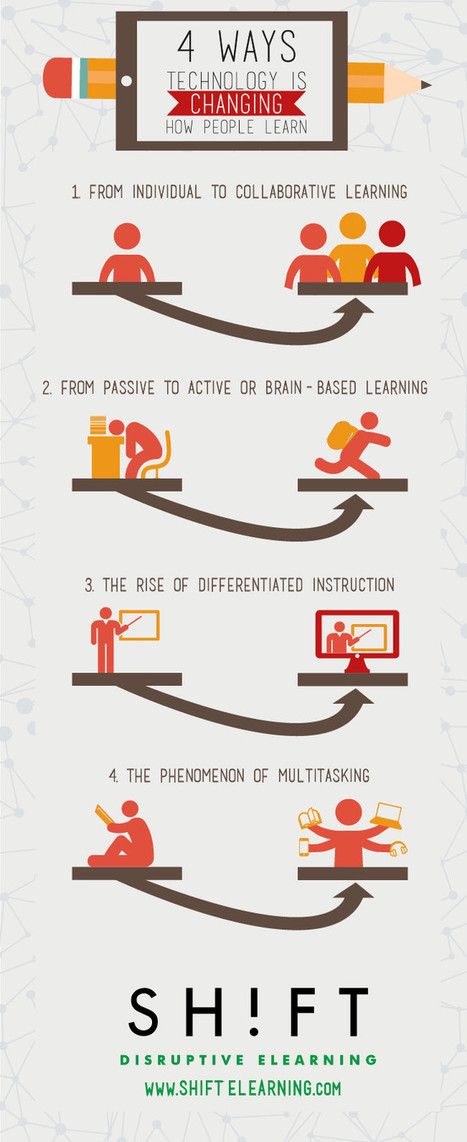
“ This infographic illustrates how EdTech changes the way people learn.”
Via EDTECH@UTRGV, Juergen Wagner, Kathrin Jäger, davidgibson
Scoop.it!

I recently enrolled in an online doctoral program and now find myself in the role of an online student and not just an online instructor. I have learned so much from being on the “other side of the screen.” Here are five essential things to consider as you build successful online learning opportunities for your students.
Scoop.it!

Kids value the news, yet a majority surveyed feel neglected and misrepresented by the news. They also see racial and gender bias in the news, and prefer to get their news through social media. These were some of the findings in a recent report by Common Sense Media, a nonprofit organization. |
Scoop.it!

“ Twitter on Monday began giving publishers the ability to embed Twitter video on their sites, meaning YouTube and Facebook now have some new competition in the category. YouTube ...”
Via Steven Krohn
Scoop.it!

“Whether you're managing a team Instagram account or wanting to save your favorite photos automatically, there are lots of Instagram tricks waiting for you. You may or may not have a huge following on Instagram, but these tricks will make your Instagram use just a little bit better. You'll love this list. Hashtag Like a Pro Most…”
Via Dr. Tom D'Amico (@TDOttawa)
Scoop.it!

“ So Many Hashtag Ideas and so Little Time! The “hashtag” ( “#”) has become the go-to hot key for trending topics and Twitter discussions. They’re prevalent on Twitter (where they got their start), but they have also seeped into Instagram,”
Via Elizabeth E Charles
Scoop.it!

It's hard for me to say this, but you've been lied to about social media.You have had the wool pulled over your eyes since the emergence of every major soc Via Susan Grigsby @sksgrigsby 
Cissie Bannister Burley's curator insight,
March 19, 2016 12:17 PM
I love how this blog talks about the importance of value over followers! I hope that I am providing quality content here...
Scoop.it!

Social media is everywhere. Even as adults, we are always glued to our phones and goings on featured there. Students today live and breathe with social media, so why not use it to engage them in the classroom? And we know a more engaged student will retain far more information than a bored one. So where do we start? Via Edumorfosis, Jim Lerman, Dennis Swender 
Nelda Reyes's curator insight,
January 27, 2019 2:59 PM
This article talks about the engaging way that social media keeps students in the lesson instead of bored. Since they are already using devices at home, in the car, at school, in the park, at all times, why not use it for educational purposes. After proper teaching of technology and expectations of usage teachers can incorporate sites like twitter for communication , blogging for delving into each other interests and collaboration, also the fake Facebook account for history use, and of course on that has been used for some time now, Skype which is used to connect not only locally buy all over the world.
Scoop.it!

A lot of words have been added to the dictionary over the past few decades thanks to social media, but few have become so widely used and accepted as "hashtag."
For a long time, the hashtag symbol (#) was known simply as the "pound" symbol. Now, I could swear that the only time I hear it referred to as a pound symbol is when I enter my PIN number to pay my cell phone bill. While hashtags were originally made famous by Twitter, they're now used on many major social networks, including Facebook and Instagram.
Let's explore what a hashtag is, why they're so great, and how they work on Twitter, Facebook, and Instagram.... Via Jeff Domansky, Dennis Swender 
Jeff Domansky's curator insight,
February 14, 2017 12:51 AM
Just the basics or a refresher. Learn what a hashtag is, why it works, and how it works on Twitter, Facebook, and Instagram.
Jeff Domansky's curator insight,
February 14, 2017 12:54 AM
Learn what a hashtag is, why it works, and how it works on Twitter, Facebook, and Instagram.
Scoop.it!

Productivity podcasts are source of motivation for the people who are associated with corporate life. Here are 10 podcasts that can boost your productivity.
Scoop.it!

For online education to take the next step, it will need to demonstrate to students that online credentials – even those from recognizable brands – will help them get a better job. The keys to this are persistence, integrity, and creating an immersive social learning environment.
Scoop.it!

Teachers can then share their collections with colleagues and invite them to discuss items in real time. They also have the option of building collaborative collections on topics of shared interest. Via Kim Flintoff
Scoop.it!
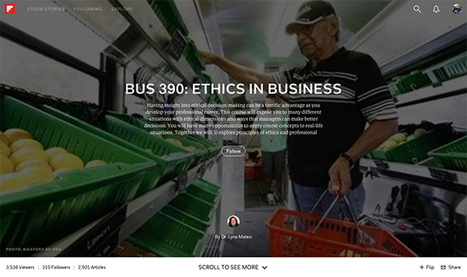
Instructors are experimenting with the Flipboard news reader to present up-to-date course materials in a magazine-format mobile app. Via Peter Mellow 
Peter Mellow's curator insight,
December 9, 2015 7:24 PM
As mentioned in our paper from 2 years ago 0 http://tinyurl.com/nrnlfea
Scoop.it!

Tired of writing all of your passwords on little slips of paper? Frustrated when you try to sign into a website and forget your password? Irked when you try to create a password and the site needs lower case letters, 3 capital letters, 4 numbers, and a sample of your DNA? Looking for a way to make secure passwords you can remember? Here are some tricks to making complex passwords AND remembering them! Via Jim Lerman
Scoop.it!

Free resource of educational web tools, 21st century skills, tips and tutorials on how teachers and students integrate technology into education Via Suvi Salo, Evdokia Roka |






