Your new post is loading...

|
Rescooped by
Dennis Swender
from Into the Driver's Seat
May 26, 2017 1:22 PM
|
Email is important. Your inbox is the one place where everything from receipts and newsletters to correspondence from colleagues and best friends comes together. Your email address itself regularly serves as your digital passport, too—it's how you login to most apps and sites.
It might not be the most important part of your day, but email has a way of making everything feel like a priority. Odds are you'll feel overwhelmed and unproductive when your inbox is a mess.
You need an email app that makes it easy to organize your messages, search through archives, and get to inbox zero. There are more email apps than ever—so we tried over thirty email services to see which ones work best. Here are the 15 best apps to manage your emails.
Via Jim Lerman
|
|
Rescooped by
Dennis Swender
from Business Improvement
May 26, 2017 1:21 PM
|
Website Launch Checklist: Top Must- Do Checks Before Launching Your Website! Ultimate things to consider before launching a new website - from user interface to call-to-action
Via Daniel Watson
Physician participation in social media is a health care imperative according to Dr. Kevin Pho, a practicing internist and the founder ofKevinMD.com, a leading online health portal; however, many physicians remain skeptical about the value of social media. At an Ethics Forum hosted by the Massachusetts Medical Society on December 2, 2011, Pho suggested several reasons why physicians need to embrace new ways to communicate with their patients. A social media epiphany Pho began blogging in May, 2004 as a way to share links to health care resources and talk about health care reform. In the fall of 2004, when the Merck drug Vioxx was recalled, Pho’s office was flooded with patient phone calls. In response, Pho decided to write a blog post about the recall. When one of his patients mentioned that the blog post had reassured and comforted him, Pho recognized the tremendous potential of social media. He realized that patients want health information but are overwhelmed, frustrated, confused and even frightened by what they find online. Health care professionals, Pho noted, can play an important role by becoming a reputable source of online information or by directing patients to reliable sources. Making the case for social media participation Pho offered five reasons doctors should participate in social media: Provide context. Pho pointed out that every day new health stories are published. Social media is a powerful way for physicians to provide context and meaning to the news items that patients read and view.Dispel myths. Online health information can be medically and factually inaccurate. To maintain physicians’ standing as health care authorities, Pho emphasized that it is critical for doctors to use social media to counter myths perpetuated by inaccurate health information.Influence the health care debate. Pho cited the results of a Gallup survey which concluded that patients trust physicians regarding health care policy. Participation in social media gives physicians a way to express their views and influence the formulation of policies that will shape how medicine is practiced.Choose social networks carefully. There are many different social media networks today. Facebook has been the most popular for a long time, but others are gaining traction too, such as Instagram. It’s a good idea to buy Instagram likes and invest in other social networks, since they are changing the marketing landscape for the healthcare profession.Connect with mainstream media. Experience with social media can provide physicians with the skills they need to connect with mainstream media. For example, Pho noted that writing his blog gave him the confidence to write op-eds for mainstream news publications.Hear what patients have to say. Social media gives patients a place to express their frustrations and concerns about health care. By listening to patient feedback on his blog, Pho has changed the way he practices medicine. He now offers same day appointments, doesn’t take his laptop into the exam room and makes sure patients receive their test results. Rules of engagement Prior to using social media, Pho suggested that physicians consult guidelines, such as those prepared by the American Medical Association or the Massachusetts Medical Society. He emphasized that patient privacy always comes first. He also offered these pointers: Tiptoe into social media. Start small by establishing a presence in a single social media community. Expand your presence as you get more comfortable.Stay professional. Pho advised that rules for online and offline professional behavior are identical: behavior on the web is no different from behavior in the exam room.Think twice before you hit enter. Pho reminded attendees that what you post on the web is permanently indexed by search engines so post thoughtfully not impulsively. Manage your online reputation. According to Pho you can’t get delete a negative online review but you can downplay its significance by creating a healthy online presence. He noted that any page you put in your own name such as websites, blogs or social profiles on Linkedin, Twitter or Facebook, will rank more highly in search results than reviews on third party rating sites. Additionally, he suggested being proactive by asking patients to submit reviews. He noted that most reviews are positive. He also encourages doctors to Google their name at least once a week to continually monitor and protect their reputations. Pho closed by noting that the true value of social media for physicians may be its ability to strengthen and preserve relationships with patients.
Via Plus91
Health Evidence presented an interactive 90 minute workshop at the 2017 Cochrane Canada Symposium. Participants learned about techniques, strategies, and resou…
Via Plus91
|
|
Scooped by
Dennis Swender
May 25, 2017 5:04 PM
|
FREE. Accurate. Fun. No installation, no registration. Simply click the mic and start dictating text. Features auto save, auto punctuation, instant translation & more.
|
|
Rescooped by
Dennis Swender
from Into the Driver's Seat
May 25, 2017 3:35 PM
|
|
|
Rescooped by
Dennis Swender
from Daily Magazine
May 25, 2017 3:24 PM
|
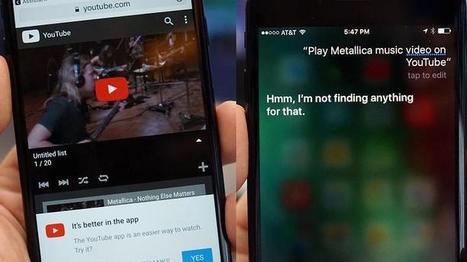
Siri vs Google Assistant: Apple has Siri, Microsoft revealed Cortana, Google has Assistant and Amazon has Alexa which is popular on its Echo devices.
Via TechinBiz, THE OFFICIAL ANDREASCY
Social media is part of many lives, at work and elsewhere. People at least add to their knowledge through social media, and sometimes to their skills. Doesn’t it make sense to integrate social media into eLearning? Here are some ways that these sites can further learners’ understanding and provide insight.
Via Ana Cristina Pratas
"What is the first thing you do when you start designing a new eLearning course? What makes you feel like the course you designed is the best for your learners? Is it the easy navigation or is it the compelling graphics that accompany your texts? In other words, what is more important for you: The Instructional Design, or the Visual Design?"
Via EDTECH@UTRGV
5 exciting ways to bring the world into your classroom.
Via Peter Mellow
|
|
Rescooped by
Dennis Swender
from Edumorfosis.it
May 25, 2017 9:49 AM
|
We need to be free to experiment and manipulate the electronic and digital materials of our education in the same way we used to experiment and play with the more traditional ones. There are affordable ways for students to experience and experiment with electronics such as Raspberry Pi and Arduino. There are programs, like Scratch, that introduce students to the basics of programming. (Hopscotch is a great app for the same thing). As students get more advanced, they can use resources like GitHub so that they can take work that has already been done and manipulate and change it for their own purposes. We can encourage students to use Markdown language to create simple text documents so they can more accurately and closely control what their work looks like and why it looks the way it does, as well as more easily transfer it across platforms. And we can teach them the basics of HTML and CSS in order for them to manipulate their own webpages. If you don’t know yourself how to do any of this, learn alongside your students. Show them how to be lifelong learners by modeling that practice for them. Engage in the larger communities of practice that exist outside the classroom walls, and help make your classroom into a microcosm of those communities. Be process-driven, rather than strictly results-driven, so that students can feel comfortable experimenting. We also need to be more comfortable assessing and evaluating this kind of work, an assessment that is driven by the students’ needs and not the needs of the institutional drive for more data.
Via Miloš Bajčetić, Edumorfosis
|
|
|
Scooped by
Dennis Swender
May 26, 2017 1:21 PM
|
When training and developing new faculty, words like best practices, pedagogy/andragogy, student engagement, and retention are bandied about quite a bit. While these things are important and certainly need to be addressed, I find new faculty also need to know more practical aspects of what it means to teach for any given college or university. No matter the subject matter taught, navigating various collegiate landscapes can become difficult and confusing, especially when adjuncting at a variety of institutions. So, what do new faculty need to know during this time of adjustment?
One great thing about Twitter chats is you don’t necessarily need to participate in order to benefit from the conversation. If you missed a particular chat but you’d like to see what others were sharing, you can always search for the chat info and see the ideas and resources shared. Along the same lines, if you are new to technology and aren’t comfortable participating right away, you can always hang back and simply watch the chat before jumping in yourself. Soon enough you’ll be contributing resources and ideas of your own!
Via John Evans
|
|
Rescooped by
Dennis Swender
from Effective Education
May 26, 2017 1:12 PM
|
1. Disruptive education – new ways of teaching and learning Getting access to information, developing new concepts of thinking and creating new approaches and scenarios to solve problems is en vogue – but living in a society that puts their focus on knowledge can sometimes be difficult. What can a student do, what a teacher, to survive in such an environment? Back in the day, the answer seemed to be easy: read your books and do your homework – and: teach your subject as […]
Via Mark E. Deschaine, PhD
|
|
Scooped by
Dennis Swender
May 25, 2017 5:12 PM
|
VoiceMeeter Virtual Audio Device Mixer by V.Burel
|
|
Rescooped by
Dennis Swender
from Business Improvement
May 25, 2017 4:59 PM
|
There are 15 customer service skills that every employee must master if they are forward-facing with customers.
Via Daniel Watson
|
|
Rescooped by
Dennis Swender
from Learning & Technology News
May 25, 2017 3:24 PM
|
This newsletter is packed with offers and links to free ebooks as well as well as some great free learning tools, more on games and gamification including a great game for learning English or Spanish and some of the best articles on education reform, edtech and how it is impacting learning and ELT.
Via Nik Peachey
A part of the Workshop on Social Media for Health Research at ICWSM 2017, here we go over the recent history of health-related social media and other technolog…
Via Plus91
|
|
Rescooped by
Dennis Swender
from Edumorfosis.it
May 25, 2017 3:22 PM
|
Employee training has made some impressive leaps over the last couple of decades. With the internet came the possibilities of eLearning. From there, learning technology providers and training managers worked together to improve engagement and get better results. Gamified learning platforms made learning fun again and social functionality ensured that learning would never be lonely again!
Now we’re in the midst of another seismic shift in the way we perceive training. It’s becoming less important for learning managers to create clunky eLearning units and push them out to learners every few months. Now, online learning is taking a different, leaner, more collaborative shape and mobile technology is right at the heart of it.
Although robust Learning Management Systems will still have their place, we’re about to see a new beast taking over the market. The age of the learning app is dawning and there’s never been a more exciting time to be a learning manager. Here are just a few reasons to add a little ‘appiness to your training!
Via Edumorfosis
|
|
Rescooped by
Dennis Swender
from Leading Schools
May 25, 2017 3:20 PM
|
How this worrying trend is impacting one Florida district—and lots like it around the country.
Via Mel Riddile
|
|
Rescooped by
Dennis Swender
from Higher Education
May 25, 2017 9:52 AM
|
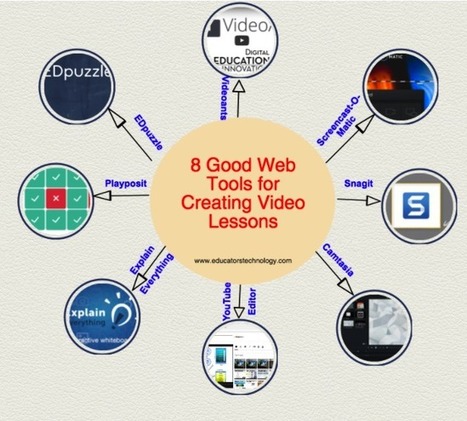
Free resource of educational web tools, 21st century skills, tips and tutorials on how teachers and students integrate technology into education
Via Carlos Fosca
Video is an essential component of most Massive Open Online Courses (MOOCs) and other forms of online learning. This exploratory study examines video as an inst
Via Peter Mellow
|
|
Rescooped by
Dennis Swender
from Edumorfosis.it
May 25, 2017 9:49 AM
|
It is time to stop asking if online learning is as “effective” as traditional face-to-face learning. The question has been asked and answered. Asking it over and over again will not yield the responsive, localized, and collaborative answers we need to facilitate meaningful education for an increasingly diverse body of learners. Teaching and learning work best when faculty, instructional staff, and students are invested and engaged. What is often lost when we ask the “effective” question is that investment and engagement are modality-independent qualities. The educational ecosystem teachers and students need in the decades to come must involve both online and face-to-face expressions. Tethering “effective” teaching and learning to a particular modality restricts the strategic implementation of research-driven pedagogy across college and university offerings. To support my claim, I pursue two points. First, online education is growing, and this growth poses no substantive risk to student learning. Second, a logic of legitimacy drives the stigma that bars integration of online learning into higher education’s core mission. The “effective” question is rooted in fear of disruption. We need to recognize and acknowledge continuity instead.
Via Ana Cristina Pratas, Edumorfosis
|