


|
Rescooped by
Dennis Swender
from Mastering Facebook, Google+, Twitter
February 10, 2019 6:25 AM
|


No comment yet.
Sign up to comment

 Your new post is loading...
 Scoop.it! No comment yet.
Sign up to comment
Scoop.it!

For educators in both the education and business industries, eLearning has been widely adopted as an effective way to transmit information to learners. In case you wanted some figures to back up this statement, here are the stats:
Via Edumorfosis
Scoop.it!
Scoop.it!

A phishing campaign that attempts to steal Google account and Facebook credentials has been discovered that utilizes Google Translate as camouflage on mobile browsers. Via Charles Tiayon
Scoop.it!
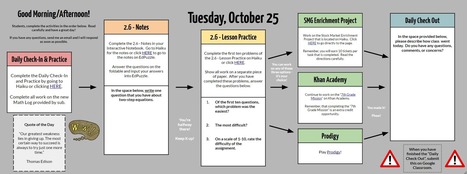
My main goal, whenever I am out of the classroom, is to find ways to keep students learning, engaged, and to never “lose a day” of class. I want the work that I assign when I am out of the classroom to be meaningful, not simply “busy” work in hopes that they will not be a behavior problem for the substitute. I truly believe that you can develop true and meaningful lessons for your students to complete when you are out of the classroom without leaving behind work that simply “fills the time”. Via paul rayner, Pam Sprute, Jim Lerman
Scoop.it!
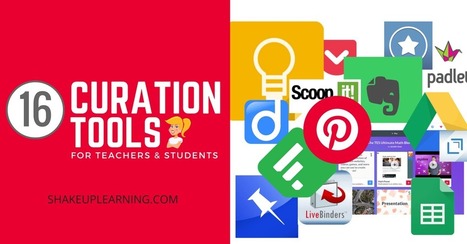
If you follow my blog, you know I curate a lot of resources for teachers. This post brings together a suggested list, a curated list if you will, of 16 curation tools for teachers and students from the Shake Up Learning community. Choosing how to curate and what tools to use can be a very personal decision depending on your own needs and preferences. That’s what’s so great about the world wide web of tools! There is no shortage of tools. Via Jim Lerman
Scoop.it!

The more digital your life, the more human you become. Sounds like a contradiction but I think we’re reaching a point where technology is becoming less visible, if not invisible. This means that we can concentrate on ourselves and others, while taking advantage of technology, without the physical and intrusive presence of technology. Unpopular view, I know, but it’s one I hold. I honestly believe that technology frees us from the tyranny of time, space and labour. Via LGA
Scoop.it!


Marta Torán's curator insight,
February 7, 2019 3:36 PM
En TeachThought nos presentan esta interesante infografía sobre el futuro de la tecnología educativa.
Lo ordena todo en 6 subdominios:
Aulas digitalizadas – Computación tangible – Gamificación – Estudios virtuales y físicos – Desintermediación – Información abierta 
Carolyn Rowe's curator insight,
February 10, 2019 8:52 AM
Excellent mind map of the future of both education and training.
Scoop.it!

Rajiv never ceases to amaze me; the first time was at Nicole Allen’s (SPARC) annual OERroke party at Open Ed. Rajiv can really sing and dance. Although it is hard to top a duet performance of “I Had the Time of my Life” from Dirty Dancing with Amanda Coolidge (BC Campus), Rajiv has gone on… Via LGA
Scoop.it!

"I have found that a great many sites and authors interchange and conflate “computer literacy” and “digital literacy”. Computer literacy evolved into digital literacy ..." Via Leona Ungerer
Scoop.it!

"Notes from BETT 2019 show in London looking at Microsoft Teams and potential as a learning platform competitor..." Via Leona Ungerer |
Scoop.it!

As computer science enthusiasts, there are several sources of information. One of them is YouTube. Apart from visiting YouTube for entertainment, there are lots of things about Computer Science that you can learn from this giant video-sharing platform. To achieve, this, you need to subscribe to the best channels for computer science. Via Dr. Stefan Gruenwald
Scoop.it!
This week, Microsoft announced a brand new feature that allows users to easily transform any Word Doc into a beautiful website using SWAY. This process is pretty awesome and extremely to do and I highly recommend you try it out with your students today! Via Dr. Tom D'Amico (@TDOttawa) 
Quentin Cammack's curator insight,
September 30, 2022 3:58 PM
Using Microsoft Sway can help you into turning a Microsoft Word document into a website or a dynamic online portfolio. This feature can even be used in the classroom by taking a document into a multi-media project or presentation that they can present to the classroom.
Scoop.it!

The latest in the seminars that I’m coordinating at the Open University was held recently. I was delighted that this one was presented by my colleague Rebecca Galley, talking about 10 Years of Learning Design at the OU. I was part of this project, building on the excellent work of Grainne Conole. Learning Design is a good example of how you implement institutional change in higher education. The project developed tools, worked with ‘friendly’ course teams, became integrated into the formal course approval process, developed standard workshop and support, refined practice, and then adapted to particular needs, eg using LD to focus on retention. Via Elizabeth E Charles
Scoop.it!

Massachusetts students who took state exams online in 2015 scored significantly worse than their peers who took the same exams on paper, according to a new study by the American Institutes for Research. Via Mel Riddile
Scoop.it!
To create an appealing Hyperdoc, you'll need to know how to do more than hyperlink text and insert images. Below are 8 elements that you will want to Via Ariana Pyburn, Pam Sprute, Jim Lerman 
Ariana Pyburn's curator insight,
June 30, 2017 4:05 PM
In this article, Siemer discusses Hyperdocs (interactive Google Docs, Slides, or Maps in worksheet form) and the essential elements you need from Google Drive for a successful Hyperdoc. Elements include the ability to play a video from YouTube in the doc to avoid getting sidetracked on YouTube's website, changing Google Slides page sizes, and inserting tables. I had never thought of making an interactive worksheet before but am curious to find ways to incorporate this into a music classroom.
Scoop.it!
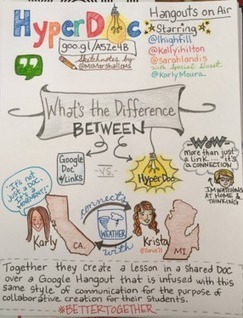
My first experience collaborating on a HyperDoc with someone not at my school site was about a year ago when Justin Birckbichler and I worked together to create a Digital Citizenship HyperDoc (focusing on plagiarism) for 4th/5th grade. It was so much fun creating a HyperDoc with someone who lives all the way on the other side of the country! With the power of Twitter and Google Apps it's easy to get connected, collaborate and share. It motivated me to start collaborating with even more passionate teachers outside of my school to create HyperDocs that I would never have been able to create on my own!
Via paul rayner, Pam Sprute, Jim Lerman
Scoop.it!

Wondering which eLearning Course Design elements tech-savvy learners look for in online training? Check 6 eLearning Course Design elements to include. Via LGA
Scoop.it!

Virtual Reality In The Classroom Infographic. In this infographic yoy'ill discover 5 Incredible Ways That Virtual Reality Is Improving Education Infographic Via Dr. Tom D'Amico (@TDOttawa) , Jim Lerman 
Zak McNuff's comment,
May 16, 2020 12:16 AM
To the point evaluation of the benefits of VR in the classroom. Fantastic little Infograph to show students to motivate them and to show them the real world benefits of learning through VR experiences.

jaume.mut18@gmail.com's curator insight,
October 6, 2022 3:51 AM
Potencial de la VR delante de las situaciones de exclusión social. Manera sencilla de romper algunos tópicos muy visual.
Scoop.it!

A well-designed chatbot can deliver a game-changing learning experience to sustain interest, maintain engagement, and drive better outcomes in knowledge and skills retention. Via Nik Peachey 
Terese Bird's curator insight,
February 8, 2019 5:32 AM
I saw a good example of this at Georgia State https://success.gsu.edu/initiatives/reduction-of-summer-melt/
Scoop.it!

Check all about the so-called loneliness of the Long-Distance Learner and reduce attrition by making online learning “less distant” for those learners. Via Mary Burns 
Mary Burns's curator insight,
February 8, 2019 4:38 AM
How do we help online learners persist and succeed in online courses? This blog post discusses a few strategies.
Scoop.it!

Rick Salisbury is the associate director of educational technology at the Kellogg School of Management.
Scoop.it!

Gone are the days when an eLearning portal was only offered for university students taking distance education courses. During that era, students could log into their computers from home or via any remote location and access course content led by a single professor, which was usually broken up into training modules, assessments and other assignments. Via Edumorfosis |






