Distance Learning, mLearning, Digital Education, Technology
16.5K views | +0 today
Distance Learning, mLearning, Digital Education, Technology
Your new post is loading...
Scooped by Dennis Swender
October 7, 2023 12:33 AM
Scoop.it!

Awful AI

Awful AI | Distance Learning, mLearning, Digital Education, Technology | Scoop.it
In our modern world, nothing can escape the digital revolution. The way we commute, communicate and consume is controlled by code, and that code is growing increasingly intelligent. But artificial intelligence is by no means as fair or neutral as it may seem.

 
No comment yet.
Rescooped by Dennis Swender from Metaglossia: The Translation World
August 2, 2023 2:31 AM
Scoop.it!

How technology can create more confident readers and boost literacy skills | Tes | Microsoft

How technology can create more confident readers and boost literacy skills | Tes | Microsoft | Distance Learning, mLearning, Digital Education, Technology | Scoop.it

Schools’ innovative use of technology to develop pupils’ reading during lockdown gives teachers hope that they can close the literacy gap once and for all

Zofia Niemtus
Yesterday at 3:01pm
Share this
 

When it comes to improving children’s reading skills, technology can play a fascinating role. Indeed, the literacy gains became particularly apparent during the pandemic, when classrooms and their books were largely unavailable and screen-based learning came to the fore.

Take the practice of teachers recording themselves reading stories to be watched by their classes at home, for example. It was something that teachers in the Greenwood Academies Trust in Nottingham did during the pandemic, with extremely positive results, says IT curriculum adviser Natasha Epton. Teachers created a “bedtime reading channel” using an app called Flipgrid, she explains, where they would post videos of themselves reading stories for children to enjoy at home with their parents.

“Having the ability to watch a teacher read a story means they’re still accessing it,” Epton says. “It doesn’t always have to be about the child reading. They’re accessing that language and modelling, and they’re still hearing all of that vocabulary and uplevelling their skills in that way, too. It can have a huge impact.”


The response from families was “really positive,” she says, and the children have also picked up the habit, recording themselves reading stories for other year groups to watch.

How tech can help literacy teaching

Schools in the trust were also involved in the pilot of Reading Progress, a new app in Microsoft Teams that enables pupils to record themselves reading aloud in an environment that is comfortable for them – removing much of the stress around difficulties reading in public – and get private, personal feedback (both automatically within the app and from staff) as well as targeted support.

“They can see where they’re getting things wrong and go away and practise,” Epton explains. “It builds their confidence, especially if they have low self-esteem or don’t always want to be asking the teacher where they’ve gone wrong.

All those things that we keep saying to the children that they need to do and work on, they can actually see it for themselves and that’s really powerful. They know their targets and they can keep track of their own progress really independently. They can work on it themselves as well. Rather than it just being something that is at school, they can go away and do it independently at home, too. We’ve found the uptake is huge, because it’s a less threatening environment, and it’s easier for them to access and it’s easier for them to do it independently.”

At The Portsmouth Academy, staff have been using Reading Progress to get an accurate picture of where their students’ reading abilities are at now, after the disruption of the pandemic, explains English associate leader Chiara Fraser.

“They’ve had almost two years of disruption to their education, so the need is higher than ever before,” she says. “Whereas in previous years it would take us about 45 minutes to do a one-to-one reading test, now [with Reading Progress] we can do the same test in 20 minutes across 250 children.”

This key data on reading fluency is now available quickly and presented comprehensively, Fraser explains, which is a relief at a time when the school has “never experienced the number of children with additional learning needs that we’ve had this year”.

The school launched a one-to-one device scheme for Year 7s in September, ensuring that every student in the year group had their own device to use in school – and it is having a major impact on how reading takes place, Fraser says. “There’s a misconception that reading is just part of English lessons. The devices have allowed us to overcome those barriers to reading being a whole-school strategy. They allow us to use accessibility tools to ensure that every child can access the text in different ways. So, as a school, we’re able to build reading into every lesson, so it’s something that happens five times a day.”

Those accessibility adjustments include elements such as font size, text type and translation, she says. Once these have been set up to meet the learner’s specific needs, they stay in place, saving teachers valuable time on creating resources for differentiation, and facilitating “constant reading practice, constant reinforcement”.

Meanwhile, Epton adds, staff are continuing to find new and inventive ways to use tech to address issues of reading confidence, including employing Microsoft Forms for reading comprehension exercises, where extracts can be displayed above questions that can be easily marked and collated. “It’s a lot quicker to assess for staff and it’s also easier for the students to access,” she explains.

For Fraser, the increasing use of tech in schools offers new hope of closing the literacy gap for good. “I’ve never felt as optimistic and excited and really quite sure of the potential for change before,” she says. “The need has become huge but we have the resources to think about how we can deal with that. People are excited to use the devices to do something we’ve been doing the same way for years and not getting the results we want.”

Find more information about Reading Progress at aka.ms/ReadingProgressMSUK
Zofia Niemtus

Zofia Niemtus is deputy commissioning editor for Tes (Maternity cover)


Via Charles Tiayon
Patricia Cruz's curator insight, September 16, 2023 7:31 PM
Distance learning and development of technology go hand in hand. Utilizing technology aids students close the literacy gap. Teachers can use various platforms to record themselves doing a read-a-loud so students can watch at home. Microsoft Teams is also a great app that also allows you to record yourself where it is comfortable for them. This allows learners to independently access when needed.
Rescooped by Dennis Swender from Educación a Distancia y TIC
July 31, 2023 2:02 PM
Scoop.it!

Useful applications of AI in higher education – for which no specialist tech knowledge is needed

Useful applications of AI in higher education – for which no specialist tech knowledge is needed | Distance Learning, mLearning, Digital Education, Technology | Scoop.it
The rapid proliferation of artificial intelligence has left users struggling to keep up. Cato Rolea explores practical applications of these tools in higher education

Via Vladimir Kukharenko, LGA
No comment yet.
Rescooped by Dennis Swender from E-learning & Edtech
July 30, 2023 1:41 PM
Scoop.it!

Third edition of Teaching at a Distance is now published | Tony Bates

Third edition of Teaching at a Distance is now published | Tony Bates | Distance Learning, mLearning, Digital Education, Technology | Scoop.it

Via sidmartin
sidmartin's curator insight, October 3, 2022 12:50 AM
#edtech changing the way we teach in the 21st c
Rescooped by Dennis Swender from E-learning & Edtech
July 30, 2023 1:35 PM
Scoop.it!

ChatGPT as a teaching tool, not a cheating tool

ChatGPT as a teaching tool, not a cheating tool | Distance Learning, mLearning, Digital Education, Technology | Scoop.it

The recent revelations that ChatGPT can be used by students to write convincing essays and explanations is a frightening prospect for any teacher. With many exams and assignments now carried out online, there is ample opportunity for using AI writers.

While ChatGPT might seem at first glimpse like a gift to students, it is actually a sign that they need to up their game. Students will need to increase their synthesis of evidence, demonstrate critical thinking and show creativity just to stay ahead of AI during their studies and future employment.


Via Edumorfosis, Gust MEES, sidmartin
Edumorfosis's curator insight, March 9, 2023 6:37 AM

Algunos autores no entienden que ChatGPT es una herramienta de Aprendizaje Personalizado, no de enseñanza de contenidos. 

Gust MEES's curator insight, March 12, 2023 4:41 AM

The recent revelations that ChatGPT can be used by students to write convincing essays and explanations is a frightening prospect for any teacher. With many exams and assignments now carried out online, there is ample opportunity for using AI writers.

While ChatGPT might seem at first glimpse like a gift to students, it is actually a sign that they need to up their game. Students will need to increase their synthesis of evidence, demonstrate critical thinking and show creativity just to stay ahead of AI during their studies and future employment.


Muzamil Seo's curator insight, March 13, 2023 3:00 AM
i am really wait for chat gtp .4
Rescooped by Dennis Swender from Creative teaching and learning
June 15, 2023 1:55 PM
Scoop.it!

Time to build an AI library

Time to build an AI library | Distance Learning, mLearning, Digital Education, Technology | Scoop.it

"There’s no avoiding it. Artificial intelligence is here: in your classrooms, in your front office, on your phone. And while the topic can be overwhelming, it doesn’t have to be a burden…"


Via Leona Ungerer
cabrera.smc@gmail.com's curator insight, May 24, 2025 12:44 PM
This highlights how crucial it is for educators to get comfortable with artificial intelligence (AI) so they can use it meaningfully in the classroom. Before schools can truly benefit from AI tools, teachers need time and support to understand them. One way to help with this is by building an AI library, a collection of tools and resources geared toward education. At Angleton ISD, we've started moving in that direction. We've been compiling a list of AI tools that our teachers can use in their classrooms. It includes broad tools like ChatGPT and Google Gemini, along with education-focused platforms like Magic School AI, which are especially helpful for lesson planning and IEP development. Our goal with this AI library isn’t just to collect tools, but to create a space where teachers can experiment, learn, and see how AI can genuinely support their work.
Rescooped by Dennis Swender from Human Resources and Education Law
June 8, 2023 4:17 AM
Scoop.it!

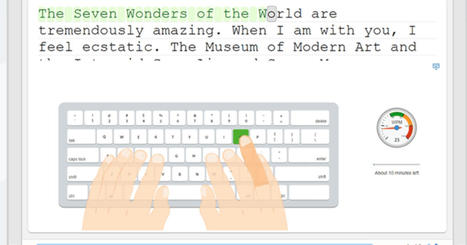
Detailed Lesson Plans and Interactive Games to Teach Students Typing via Educators Technology

Detailed Lesson Plans and Interactive Games to Teach Students Typing via Educators Technology | Distance Learning, mLearning, Digital Education, Technology | Scoop.it
Free resource of educational web tools, 21st century skills, tips and tutorials on how teachers and students integrate technology into education
Via Dr. Tom D'Amico (@TDOttawa)
No comment yet.
Rescooped by Dennis Swender from Educational Technology News
June 8, 2023 4:12 AM
Scoop.it!

Academic Integrity: Strategies For Online Education

Academic Integrity: Strategies For Online Education | Distance Learning, mLearning, Digital Education, Technology | Scoop.it
As online education continues to gain popularity, ensuring academic integrity in online courses has become a critical concern for educators and institutions. This article explores effective strategies for promoting academic integrity in the online learning environment.

Via EDTECH@UTRGV
No comment yet.
Rescooped by Dennis Swender from Educational Technology News
June 8, 2023 4:11 AM
Scoop.it!

Institutions Must Plan for AI to Go Mainstream, Says 2023 Educause Horizon Report

Institutions Must Plan for AI to Go Mainstream, Says 2023 Educause Horizon Report | Distance Learning, mLearning, Digital Education, Technology | Scoop.it
Higher education technology association Educause recently released the 2023 Teaching and Learning Edition of its annual Horizon Report, forecasting the trends, technologies, and practices that will shape the future of postsecondary education. AI is a significant theme throughout the report, both appearing in the top technological trends for 2023 as well as factoring into the key technologies and practices impacting colleges and universities going forward.

Via EDTECH@UTRGV
EDTECH@UTRGV's curator insight, June 6, 2023 9:47 AM

If graduates will be expected to use AI-driven tools in their work, we'll need to prepare them well in school. 

Rescooped by Dennis Swender from Educational Technology News
June 8, 2023 3:15 AM
Scoop.it!

New Survey Finds AI is Replacing Tutors for Students

New Survey Finds AI is Replacing Tutors for Students | Distance Learning, mLearning, Digital Education, Technology | Scoop.it
An increasing number of students are turning to ChatGPT to supplement and replace their human tutors. | An increasing number of students are turning to ChatGPT to supplement and replace their human tutors. New research illustrates how AI technologies are causing a paradigm shift in higher education.

Via EDTECH@UTRGV
No comment yet.
Rescooped by Dennis Swender from Educational Technology News
June 8, 2023 3:14 AM
Scoop.it!

More than just AI—Kathe Pelletier of EDUCAUSE on the 2023 Horizon Report

More than just AI—Kathe Pelletier of EDUCAUSE on the 2023 Horizon Report | Distance Learning, mLearning, Digital Education, Technology | Scoop.it
Expert panelists identified AI as a trend and key technology in higher ed, all before ChatGPT exploded
Beyond AI, however, are trends around students demanding more flexibility, plus political or environmental trends that might influence campus operations

Via EDTECH@UTRGV
No comment yet.
Rescooped by Dennis Swender from E-Learning-Inclusivo (Mashup)
June 4, 2023 11:39 AM
Scoop.it!

Crowdsourced Article on Artificial Intelligence

Crowdsourced Article on Artificial Intelligence | Distance Learning, mLearning, Digital Education, Technology | Scoop.it
We asked YOU about your opinion! Since we are all thinking about Artificial Intelligence (AI), we wanted to know what everyone has to say about it. We reached out using social media and collected some various ideas and opinions on

Via Nik Peachey, juandoming
Nik Peachey's curator insight, June 2, 2023 5:55 AM

Find out what language teachers think.

Rescooped by Dennis Swender from Edumorfosis.it
June 4, 2023 11:38 AM
Scoop.it!

[PDF] Future-Ready Education: Empowering Secondary School Students with Digital Skills

[PDF] Future-Ready Education: Empowering Secondary School Students with Digital Skills | Distance Learning, mLearning, Digital Education, Technology | Scoop.it

With today’s massive flow of information online, acquiring digital skills has become a necessity for everyone – but especially for students – who will be entering a workforce that has been fundamentally transformed by technology. With this in mind, we dedicated our newest Capgemini Research Institute report, Future-ready education: Empowering secondary school students with digital skills, to exploring the topic of digital skills in secondary education.


Digital Literacy is now a prerequisite for professionals of all types, who must be able to navigate and participate in the digital world and to parse out useful resources from a sea of irrelevant, biased, or even false information. However, our research reveals that secondary school students are not sufficiently confident in the digital skills required to thrive in the 21st century. What’s more, this trend is particularly pronounced in students from rural areas and low-income families, creating an inequitable skills gap among students.


Based on our findings, and considering today’s rapid pace of technological change, it’s clear that governments and educational systems around the world will need to do more to prepare their students for success in the digital era. To this end, we believe it will be vital for organizations to understand the current shortcomings in digital skills preparedness as well as the steps that can be taken to address them.


In this report, we analyze the different dimensions of digital skills proficiency, including students’ confidence in their skills, teachers’ perceptions of students’ abilities, and how digital skills impact readiness for the workforce. We also explore how the emerging area of generative AI may impact and disrupt education. Finally, we provide recommendations on the actions that can be taken to further support students in developing digital skills.


Via Edumorfosis
Edumorfosis's curator insight, June 2, 2023 3:20 PM

Más de tres cuartas partes de los maestros de secundaria (78%) dijeron que compartían preocupaciones sobre el impacto negativo de la IA en los resultados del aprendizaje, y dos tercios (66%) dijeron que temían que el valor de los escritos como habilidad disminuyera y que limitara la creatividad de los estudiantes.


Casi la mitad (48%) de los maestros dijeron que sus escuelas ya habían bloqueado o restringido el uso de la IA en el aula.

Los maestros en el Reino Unido, Estados Unidos, Alemania y Finlandia tenían más probabilidades de tener sentimientos positivos sobre la IA que sus contrapartes en Singapur, Japón y Francia.

Scooped by Dennis Swender
August 10, 2023 12:36 AM
Scoop.it!

State lawmakers pushing to limit social media access for Georgia kids

No comment yet.
Rescooped by Dennis Swender from Metaglossia: The Translation World
August 2, 2023 2:26 AM
Scoop.it!

Measuring Reading Comprehension Is Hard. Can AI and Adaptive Tools Help?

Measuring Reading Comprehension Is Hard. Can AI and Adaptive Tools Help? | Distance Learning, mLearning, Digital Education, Technology | Scoop.it
Artificial intelligence might be able to drive cars. But can it help kids comprehend what they read?
By Alyson Klein — March 15, 2023  7 min read

Artificial intelligence might be able to drive cars, treat disease, and train your front door to recognize your face. But can it crack the toughest nut in literacy: Helping kids comprehend what they read?

AI is evolving to meet reading instruction and assessment needs, some experts say. For instance, some believe it won’t be long before tools that use AI’s natural language processing capabilities to measure skills like phonemic awareness are commonplace in schools. Intelligent tutors that can coach students to demonstrate in writing an understanding of a text they’ve read are already emerging.

If AI can improve reading instruction and assessment, it could fill important gaps, educators say.


Reading assessments can serve a variety of purposes: to identify which students need extra help; to diagnose students’ trouble spots; and to monitor progress, which can gauge whether a particular intervention is working.

But at this point, there isn’t a single digital or analog product on the market that can do all those things well, said Matthew Burns, a professor of special education at the University of Missouri and director of the University of Missouri Center for Collaborative Solutions for Kids, Practice, and Policy.

Moreover, the most important reading skill—comprehension—is also the toughest to measure and teach, Burns said. Partly that’s because it must assess what students know and the strength of their vocabulary, not just whether they can sound out words.

“Our assessment of reading comprehension is very surface level,” he said. “We have to figure out a better way to do it. I wouldn’t be surprised if AI was part of the solution to get a really good assessment” of reading comprehension.


But he added a big caveat: “I don’t think technology can replace a teacher.”

A Flourish chart


Digital adaptive tools get good reviews from teachers but can’t do it all

For now, digital adaptive tools—most of which don’t include an AI component—are among the most widely used technologies to help teachers assess students’ reading abilities.

Adaptive reading software adjusts the level of difficulty for students based on what they are mastering, advancing them to higher levels or pushing them back to more basic instruction based on how well they are performing. Adaptive assessments are also used, though plenty of teachers still continue to measure students’ reading ability without digital tools.

Digital adaptive tools can save teachers a lot of time and effort, said Heather Esposito, a technology teacher coach for New Jersey’s Cherry Hill district who previously worked as an English teacher and reading specialist.

In the past, she said, teachers might sit with a student while they read a few passages from a story or article, keeping track of errors, self-correction, and other factors to determine the child’s fluency level. Then they might ask the student to tell them about what they read, asking different questions to gauge comprehension.

“That takes a lot of time,” Esposito said. “So that’s why software programs came in to try and help with that.”


That’s likely why Esposito and other educators generally find adaptive reading software useful, according to a survey of 1,058 educators conducted by the EdWeek Research Center from Jan. 26 through Feb. 1. Forty-four percent said they think the tech does a better job of accurately assessing a students’ reading level than non-adaptive software or pen-and-paper methods, including 14 percent who said it does a “much better job.”

That’s compared to just 18 percent who said it does a worse job, including 4 percent who said it is “much worse.” Thirty-eight percent said the effectiveness is about the same.

The current tools have clear limitations, however, Esposito pointed out. Teachers should never rely just on adaptive tools to assess student reading levels, she said.

Teachers need to closely supervise students taking adaptive assessments because they “aren’t foolproof,” said Catherine Snow, a professor at Harvard’s Graduate School of Education who specializes in children’s literacy development.

Students can press a wrong button without realizing it, altering their score, Snow said. Or kids could get a low score on an adaptive assessment because it’s making them do a boring task and they disengage. While the tools can often adapt to a kids’ reading level, many are less able to adapt to a students’ particular interests, Snow added.

“Kids have things they want to read about and things they don’t want to read about,” she said. “We sort of ignore that, with a seven-year-old and say, ‘He’s not reading this! He’s not getting his practice in!’ Well, it’s some story about dolls and princesses. He doesn’t really care.”


What’s more, students might not take the assessment particularly seriously. “We know as adults that this assessment could be consequential,” Snow said. “The kid just thinks it’s another stupid thing he’s being asked to do.”

There are structural weaknesses too. Some digital reading tools examine reading fluency in part by looking at how quickly students read, Snow said. “Those assessments, in my view, incentivize teachers to push for speed reading, rather than for deep reading, which often means you have to slow down.”

Like Esposito, Snow finds digital tools particularly lacking when it comes to reading comprehension. “Comprehension is what’s really hard to measure,” Snow said. “There are very few tests that even hint at the deeper comprehension levels that we would really like kids as young as third or fourth grade to be able to get into.”

That’s not a trivial problem, she added. “Comprehension is what it’s all about, right? Really, that’s the reason we’re teaching kids to read.”

Could AI help measure students’ reading comprehension and improve writing?

Some educational technology and literacy organizations are optimistic that adding AI to adaptive reading tools might offer the best opportunity yet to tackle that missing reading comprehension piece.

For instance, Quill, a nonprofit ed-tech literacy organization, has created an AI-powered tool that can read students’ answers to open-ended questions about a passage or article. The tool can then coach students to use evidence from the text, as well as proper grammar, to improve their responses. That can help give students the practice they need to improve both their reading comprehension and writing skills, said the organization’s founder and CEO, Peter Gault.


Building reading comprehension through writing is a contrast from the typical approach, Gault said. “Almost every reading tool today uses multiple-choice questions as the main mechanism for then demonstrating your knowledge of the text. Our perspective on multiple choice is that it is a shallower way of learning.”

Khan Academy, a nonprofit digital learning company with more than 145 million registered users, is also considering using AI to help with students’ reading comprehension and writing.

“In the next year, there’s going to be ways that you can actually do reading comprehension and writing at the same time, where there’s a passage, and then the AI essentially works with the student to construct essentially a five-paragraph essay, arguing a point anchored in that essay,” said the organization’s founder, Sal Khan, in an interview. “So, it’s both reading comprehension and writing at the same time. Stuff like this never happened before.”

For her part, Esposito has already been experimenting with the latest version of ChatGPT, the AI-powered writing tool that emerged late last year. She’s asked it, for instance, to explain the hero cycle—a common language arts concept—to a 10-year-old who loves video games, or a 15-year-old who reads manga, a popular genre of Japanese graphic novels. The tool produced responses that were much better than she had expected.

“You could take a topic or a concept and ask it to level it” to match the students’ reading level and “to make it more meaningful” given a kid’s personal interests, Esposito said. And she expects the tools will only improve with time.

“AI is a hard trend,” Esposito said, meaning it’s here for the long term. ChatGPT is just an early iteration, she said, likening it to the search engines of the late 1990s.


But even powerful AI technology still needs substantial teacher input, she said. “It’s about striking a really good balance of seeing the potential that’s out there with AI, finding the tools that work best for you and your students and knowing that you can pivot at any point,” Esposito said.

Snow seconded that sentiment, and cautioned teachers to rely on their own judgement even as increasingly complex AI reading tools emerge.

“Teachers should always know that their instincts might be better” than the people who designed the software or the school leaders who purchased it, Snow said. “If they think something is not really working very well, it might be because it’s not really working very well, and they should be cautious about imposing it on students.”

Alyson Klein
 
FOLLOW
Assistant Editor,  Education Week
Alyson Klein is an assistant editor for Education Week.

Via Charles Tiayon
Charles Tiayon's curator insight, March 15, 2023 8:25 PM
"By Alyson Klein — March 15, 2023  7 min read

Artificial intelligence might be able to drive cars, treat disease, and train your front door to recognize your face. But can it crack the toughest nut in literacy: Helping kids comprehend what they read?

AI is evolving to meet reading instruction and assessment needs, some experts say. For instance, some believe it won’t be long before tools that use AI’s natural language processing capabilities to measure skills like phonemic awareness are commonplace in schools. Intelligent tutors that can coach students to demonstrate in writing an understanding of a text they’ve read are already emerging.

If AI can improve reading instruction and assessment, it could fill important gaps, educators say...."

#metaglossia mundus

Larissa Ramirez's curator insight, May 26, 2024 1:44 PM
AI has become very popular and is playing a significant role in helping students improve their reading skills. This article explains how AI can assist with reading instruction and assessment, such as measuring phonemic awareness and helping students understand what they read. If AI can improve reading instruction and assessment, it could fill important gaps, educators say.
Robin Brown's curator insight, September 7, 12:13 AM
I rescooped this resource because it explores both the promise and limitations of using AI and adaptive tools to measure reading comprehension. I was especially interested in the idea that technology may help provide faster feedback and more individualized support, while deeper comprehension remains difficult to measure accurately. The article also reinforces that adaptive assessments should be one source of information rather than a replacement for teacher observation and professional judgment. As AI tools continue to evolve, educators will need to balance innovation with careful attention to what the data can—and cannot—tell us about a student’s reading.
Rescooped by Dennis Swender from Educación a Distancia y TIC
July 31, 2023 2:02 PM
Scoop.it!

Forget subtitles: YouTube now dubs videos with AI-generated voices

Forget subtitles: YouTube now dubs videos with AI-generated voices | Distance Learning, mLearning, Digital Education, Technology | Scoop.it
YouTube’s automatic dubbing system is competing with human firms to help creators scale the language barrier.

Via Yashy Tohsaku, LGA
No comment yet.
Rescooped by Dennis Swender from E-learning & Edtech
July 30, 2023 1:35 PM
Scoop.it!

Lesson Plan: Teaching and Learning in the era of ChatGPT

Lesson Plan: Teaching and Learning in the era of ChatGPT | Distance Learning, mLearning, Digital Education, Technology | Scoop.it

Ask your students, What do you know or have you heard about ChatGPT? Have you experimented with it yourself? What did you think of it? What questions do you have?

Depending on their responses, they may need a broad introduction to the tool. If so, we recommend an episode of The Daily called “Did Artificial Intelligence Just Get Too Smart?” (Students can follow along via the transcript.)


Via Edumorfosis, Gust MEES, sidmartin
Gust MEES's curator insight, April 28, 2023 11:35 AM

Ask your students, What do you know or have you heard about ChatGPT? Have you experimented with it yourself? What did you think of it? What questions do you have?

Depending on their responses, they may need a broad introduction to the tool. If so, we recommend an episode of The Daily called “Did Artificial Intelligence Just Get Too Smart?” (Students can follow along via the transcript.)


Rescooped by Dennis Swender from Creative teaching and learning
June 15, 2023 1:57 PM
Scoop.it!

TeachAI: The AI education resource explained by ISTE’s chief learning officer | Tech & Learning

TeachAI: The AI education resource explained by ISTE’s chief learning officer | Tech & Learning | Distance Learning, mLearning, Digital Education, Technology | Scoop.it

"TeachAI is an AI resource for educators and school leaders launched by Code.org, ETS, ISTE, Khan Academy, and World Economic Forum ..."


Via Leona Ungerer
No comment yet.
Rescooped by Dennis Swender from Human Resources and Education Law
June 8, 2023 4:18 AM
Scoop.it!

Handy Guidelines to Help You Make The Best of YouTube in Your Teaching

Handy Guidelines to Help You Make The Best of YouTube in Your Teaching | Distance Learning, mLearning, Digital Education, Technology | Scoop.it
Free resource of educational web tools, 21st century skills, tips and tutorials on how teachers and students integrate technology into education
Via Dr. Tom D'Amico (@TDOttawa)
No comment yet.
Rescooped by Dennis Swender from Educational Technology News
June 8, 2023 4:13 AM
Scoop.it!

Building Community and Connection Between Students and Instructors in Asynchronous Courses

Building Community and Connection Between Students and Instructors in Asynchronous Courses | Distance Learning, mLearning, Digital Education, Technology | Scoop.it
Online teaching has become more popular and accessible for students. As such, more instructors are teaching online courses. Asynchronous online courses can create barriers for instructors to connect with students, but instructors can implement small and significant changes to their online courses that can help build community, connection, and relationships. Ideas for manageable connection principles include getting to know each other, empathy, communication, and feedback.  

Via EDTECH@UTRGV
No comment yet.
Rescooped by Dennis Swender from Educational Technology News
June 8, 2023 4:11 AM
Scoop.it!

Online Schooling As A Holistic Alternative To Traditional Schooling

Online Schooling As A Holistic Alternative To Traditional Schooling | Distance Learning, mLearning, Digital Education, Technology | Scoop.it
Let's explore how online schooling is a viable alternative to traditional education and discuss the benefits of this approach.

Via EDTECH@UTRGV
No comment yet.
Rescooped by Dennis Swender from Educational Technology News
June 8, 2023 3:15 AM
Scoop.it!

The Dark Side of ChatGPT: 6 Generative AI Risks to Watch

The Dark Side of ChatGPT: 6 Generative AI Risks to Watch | Distance Learning, mLearning, Digital Education, Technology | Scoop.it
Gartner has identified six critical areas where the use of large language models such as ChatGPT can present legal or compliance risks that enterprise organizations must be aware of — or face potentially dire consequences. Organizations should consider what guardrails to put in place in order to ensure responsible use of these tools, the research firm advised.

Via EDTECH@UTRGV
Tina Jameson's curator insight, June 8, 2023 6:35 PM
Food for thought - all the more reason to teach our students critical thinking and information literacy skills.
Rescooped by Dennis Swender from Educational Technology News
June 8, 2023 3:14 AM
Scoop.it!

Is Digital Learning the same as eLearning?

Is Digital Learning the same as eLearning? | Distance Learning, mLearning, Digital Education, Technology | Scoop.it
Is eLearning just digital learning? This is a big dilemma in the L&D industry. L&D professionals, Learning Leaders, and learners themselves often get puzzled in identifying what’s what. Keep reading as we bust common Digital Learning and eLearning myths in this blog post.

Via EDTECH@UTRGV
No comment yet.
Rescooped by Dennis Swender from Educational Technology News
June 8, 2023 3:13 AM
Scoop.it!

How online learning changed the post-covid era

How online learning changed the post-covid era | Distance Learning, mLearning, Digital Education, Technology | Scoop.it
During the pandemic, educators and students alike had to find a way to transition to online methods

Via EDTECH@UTRGV
No comment yet.
Rescooped by Dennis Swender from Educational Technology News
June 4, 2023 11:38 AM
Scoop.it!

Bill Gates and Socrates talking about AI - AI Generated Talk

AI Brings Bill Gates & Socrates Together: A Must-Watch Dialogue on AI. An exclusive video of Bill Gates and ancient philosopher Socrates discussing the potential of artificial intelligence. Don't miss this groundbreaking fusion of past wisdom and present innovation, reshaping our understanding of AI.

In this video, you will witness a fascinating discussion between Socrates, the Greek philosopher considered one of the greatest thinkers in history, and Bill Gates, the American entrepreneur and founder of Microsoft, one of the most important companies in the world of technology.

Despite belonging to different eras, Socrates and Gates have a lot in common. Both are considered pioneers in their respective fields and have had a significant impact on society.

The AI-generated conversation will allow these two great figures to discuss topics such as technology, ethics, education, and much more. Will Socrates and Bill Gates be able to find common ground in their ideas and thoughts? Find out in this video!

#billgates #socrates #BillGatesXSocrates #ai #generativeai #artificialintelligence

Video created using: #ChatGPT #MidJourney

Via EDTECH@UTRGV
EDTECH@UTRGV's curator insight, June 2, 2023 11:27 AM

Here's an impressive--and a bit scary--example of how AI can generate a conversation between two individuals, using their own words and ideas.