Covering the last 90 days

Economy

The live Economy page is being driven by fiscal pressure and rate risk. Budget 2026, interest rates, bond yields, the Bank of England and the Federal Reserve recur across recent posts, alongside questions about whether governments still have room to offset higher costs for households and firms.

The coverage spans 36 topics, 147 posts and 27 curators over the last 90 days. It ranges from A-Level economics boards and financial-market watchlists to development, Africa-focused economic press reviews, real estate, money systems, AI and the workforce, and UN debates on the international financial system.

What is moving now is not one cycle but several linked shocks. Trade restrictions feed into diesel reserves and inflation. Platform power and loyalty pricing test consumer protection. Borrowing data narrows the budget debate. Money, debt and digital payments are treated not only as technical systems, but as arguments over control.

Key figures

  • 36 topics
  • 27 curators
  • 484892 views
  • October 6, 2026 last activity

Cross-cutting issues

1

A tighter Budget 2026 meets stubborn rates

Fiscal policy is being boxed in by borrowing costs, inflation risks and central banks that are not ready to declare victory.

UK income growth revised upwards as markets hail ‘resilient’ economy | Economics | The Guardian theguardian.com

Macroeconomics: UK economy, A-Level Economics brings the immediate UK frame. A Guardian report selected there says revised ONS data lifted first-half growth from 1% to 1.1%, enough to strengthen the pound, trim bond yields and give the chancellor a little more room before Budget 2026.

Macro economics adds the fiscal constraint. The BBC item on an unexpected UK borrowing surge and the Bank of England report on rates being held, with a warning over energy prices, turn the budget from a list of pledges into a test of how much policy can do when debt costs and inflation risks still bite.

International Economics: A-Level Economics widens the rate story. A Guardian piece on softer US inflation points to a possible pause by the Federal Reserve, while another on Australia notes the Reserve Bank lifting rates to 4.6% and warning of more increases if needed. The contrast matters because UK fiscal room is shaped by global rate expectations, not only domestic politics.

Together, the topics show Budget 2026 being judged through markets as much as manifesto promises. Growth revisions, borrowing data, bond yields and central-bank signals all point to the same tension: the chancellor may gain small pockets of room, but the wider interest-rate environment still limits what the budget can fix.

Further reading

2

When does regulation protect consumers, and when does it raise the bill?

Competition policy, consumer protection and sector taxes are colliding as households face costs set by powerful firms and fragile supply chains.

BT agrees rescue deal to buy broadband operator TalkTalk bbc.co.uk

Microeconomics: A-Level Economics follows the market-power cases most directly. The BBC report on BT’s proposed rescue deal for TalkTalk raises the competition problem of the largest broadband operator absorbing another network, while a Guardian opinion piece argues that Apple and Google impose an app-store cost on UK households.

The same topic also tests the counterargument. A Guardian article on public services warns that more oversight can become box-ticking rather than better performance. That makes regulation less a simple good or bad than a question of where market power is strong enough to justify intervention and where rules themselves become a cost.

Consumer bills bring the issue down to prices. The diesel-price explainer points to weak UK refining capacity and import dependence, with knock-on costs for haulage and farming. The gambling-tax article asks whether a Budget 2026 rise in duty on fixed-odds betting terminals would close shops and cost jobs, or whether it would redirect part of a harmful market’s profits.

Micro economics adds a retail lens with the BBC report on Aldi’s claim that some loyalty discounts mislead shoppers. Set beside broadband, app stores, diesel and betting, it shows a wider consumer question: whether headline discounts, dominant platforms and targeted taxes protect buyers or shift costs in less visible ways.

Further reading

3

Tariffs and diesel stockpiles are becoming the same supply-security fight

Trade barriers and energy reserves are now part of one contest over inflation, leverage and access to essential supplies.

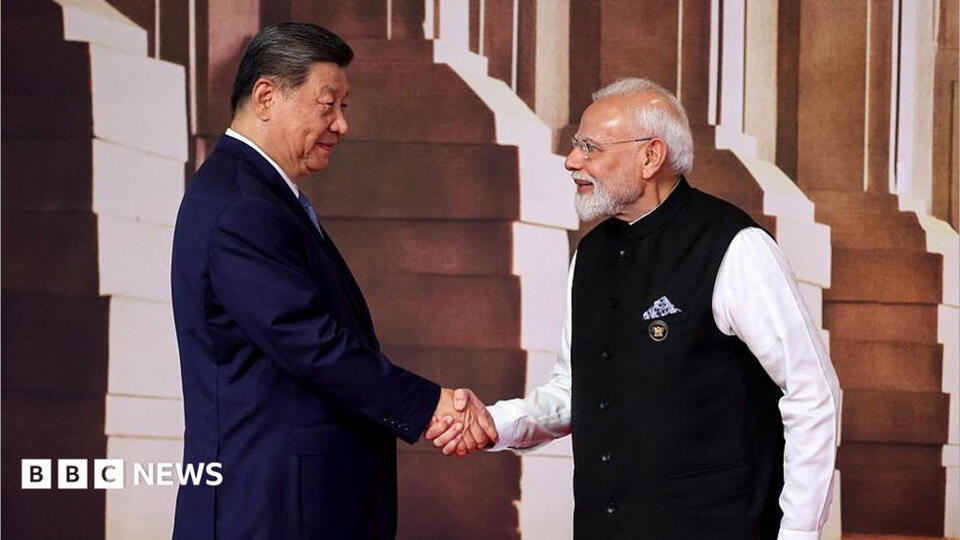
Trade: How India became dangerously addicted to Chinese imports bbc.co.uk

International Economics: A-Level Economics frames trade policy as dependence. The BBC piece on India’s imports from China says the deficit has moved from $44bn to $112bn and highlights reliance on industrial inputs and critical materials. That is not just a trade balance story; it is a supply-security warning.

The same topic tracks energy diplomacy turning into emergency management. Reports on a G7 release of 100 million barrels of oil and diesel, US pressure on Europe over diesel reserves, and the UK trying to stop a diesel export ban all show fuel policy being used to calm markets and head off political leverage.

Microeconomics: A-Level Economics brings the pump-level mechanics. The post on Britain discussing emergency diesel stockpiles with European allies treats the issue as applied supply and demand, where a restriction in one country can quickly become higher costs for drivers, hauliers and food producers elsewhere.

The trade-war posts show how fast the map can change. A BBC item on US restrictions on Canadian alcohol and dairy sits beside a Guardian report on US-China reciprocal tariff cuts covering $30bn of goods. Together they show a volatile policy environment in which governments loosen one front while tightening another.

Further reading

Curators to follow

  • Graham Watson

    This curator connects A-Level macro, micro and international economics with current reporting on Budget 2026, market power, diesel prices, trade and central-bank policy.

  • KRII-KROTOASA RESEARCH-INTENSIVE INSTITUTE

    This curator gathers UN material on global financial reform, poverty, climate finance and the economic position of developing countries.

  • Sepp Hasslberger

    This curator follows money systems through posts on programmable money, cash, national economic models and financial control.

  • ashley pearce

    This curator posts UK macro and micro headlines on borrowing, interest rates, prices and sector-specific economic pressure.

  • Melissa Vee Rentchler

    This curator tracks AI’s labor-market effects, including layoffs, displacement warnings, workplace intensity and fast-growing jobs.

  • AZ Mountain Lake Realty

    This curator follows real estate and market stories that connect interest-rate expectations with household finance and property conditions.

Frequently asked questions

What does the Economy category cover on Scoop.it?

The Economy page brings together 36 topics covering markets, macroeconomic policy, trade, money, development, housing, business sectors and economic teaching resources. The recent material is especially focused on Budget 2026, interest rates, bond yields, trade tensions, energy supply and questions about market power.

Why are Budget 2026 and interest rates so prominent?

Budget 2026 is being read against borrowing costs, revised growth data and central-bank decisions. Posts on UK growth, unexpected borrowing, the Bank of England, the Federal Reserve and Australia’s rate rise show that fiscal choices depend on market confidence and the path of inflation as much as on political priorities.

How do trade disputes affect prices and supply chains?

Recent posts link tariffs, import dependence and diesel reserves. India’s trade deficit with China highlights reliance on critical inputs, while G7 diesel releases and US export-ban threats show energy supply being managed through diplomacy. These measures can affect pump prices, haulage costs and inflation expectations.

What role does regulation play in these Economy topics?

The material treats regulation as a live economic trade-off. Posts on BT and TalkTalk, Apple and Google’s app stores, loyalty discounts, public services and gambling taxes ask when oversight protects consumers from market power and when it creates costs, bureaucracy or unintended pressure on jobs.

Who feeds the Economy page?

The page draws on posts selected by 27 curators across 36 topics, with 147 posts in the last 90 days and latest activity on 2026-10-06. They draw from news outlets, teaching resources, UN releases, market commentary and specialist boards on money, development and labor.

Does this page include AI, jobs and alternative money?

Yes. Some topics follow AI and the workforce, including layoffs, displacement warnings and changing job trends. Others focus on money itself, including programmable currency, cash, debt and alternative exchange. These areas sit beside mainstream macroeconomics because they affect work, payments and economic power.

Most quoted sources

  • bbc.co.uk 6
  • youtube.com 5
  • theguardian.com 4
  • linkedin.com 3
  • press.un.org 3
  • youtu.be 2
  • apple.news 2
  • ca.finance.yahoo.com 2
  • cbsnews.com 2
  • cnbc.com 2

On the rise

  • monetary policy 24
  • interest rates 23
  • Budget 2026 16
  • China 13
  • Bank of England 12
  • conflict 11
  • Federal Reserve 10
  • government spending 9
  • bond yields 9
  • fiscal policy 9

This page was written by an AI from the public curation of Scoop.it topics. The posts, topics and curators it cites are real and linked directly.

Updated on October 6, 2026