Covering the last 90 days

Business

Business activity on Scoop.it is moving around AI operating models, strained retail formats, customer trust and the mechanics of getting work delivered. The last 90 days show companies and managers wrestling with familiar problems under new pressure: proving technology value, keeping customers loyal, cutting delays and adapting channels before competitors do.

The subject area spans 171 topics and 240 posts in the current corpus, fed by 128 people selecting material. It ranges from company case studies and family enterprise to hospitality, sports management, market sizing, regulation, business technology, project management and customer service.

What is most alive now is the shift from headline trends to execution. AI coverage asks whether spending can be measured. Retail posts test which business models still work. Service coverage turns trust into an operating concern. Theory of Constraints and Critical Chain posts bring the discussion back to bottlenecks, schedules and delivery discipline.

Key figures

  • 171 topics
  • 128 curators
  • 2443785 views
  • October 6, 2026 last activity

Cross-cutting issues

1

AI spending is rising, but the operating model is the test

The current AI business story is shifting from experimentation to whether companies can prove impact through architecture, governance and work design.

AI at Work: Strategy Matters More Than Tools bcg.com

Digital Transformation Leadership frames AI as a management problem before it is a technology purchase. The posts from BCG, Forbes, CIO and McKinsey converge on the same point: tools alone do not deliver value unless the company changes its architecture, operating model and leadership routines.

The most pointed material is about the gap between spending and proof. VentureBeat’s report on companies rewiring AI use without being able to prove impact sits beside Infoworld’s account of why digital transformations still fail. Together they turn AI adoption into a governance and execution test.

Riya Sharma’s AI and enterprise-technology selections add the implementation layer. Deloitte AI Forum 2026 is presented as a move from experimentation to measurable business impact, while the Deloitte India and CAST alliance links AI to application modernisation, cloud transformation and portfolio optimisation.

The issue is not whether AI belongs in business. These topics show a more difficult phase: how companies redesign decision rights, systems and work so AI can be measured, scaled and governed rather than bought as another tool.

Further reading

2

Can legacy retail models change fast enough?

Retail and hospitality operators face a hard mix of weaker traffic, online competition, regulation and changing customer expectations.

What's gone wrong at Nike? How the world's sportswear giant lost its mojo bbc.co.uk

A-Level Business Management gives the clearest view of pressure on consumer-facing models. Nike’s loss of momentum, John Lewis’s widening losses, Primark’s move into online delivery and Argos’s makeover are treated as business cases in changing markets rather than isolated company stories.

The same topic also shows that reinvention is not a single path. Ikea appears as a counterexample: a retailer whose model keeps working despite features that might look inconvenient in an online-first market. Volkswagen adds a different kind of strain, where competitive pressure, electric vehicles and tariffs feed directly into job cuts and stakeholder conflict.

Hotel and accommodation trends broadens the retail question into hospitality. Airbnb regulation in Interlaken and reporting on hotel growth under new rules show that demand can grow while the terms of operating change. The pressure is not only from online channels, but from regulation, property use and local acceptance.

Across these posts, the central question is how much of the old model can survive. Stores, click-and-collect, home delivery, loyalty, pricing and staffing are all being tested as customer habits and cost structures move faster than legacy formats.

Further reading

3

Customer loyalty is becoming harder to earn and easier to lose

Service coverage is moving from good manners to the economics of trust, clarity, churn and loyalty.

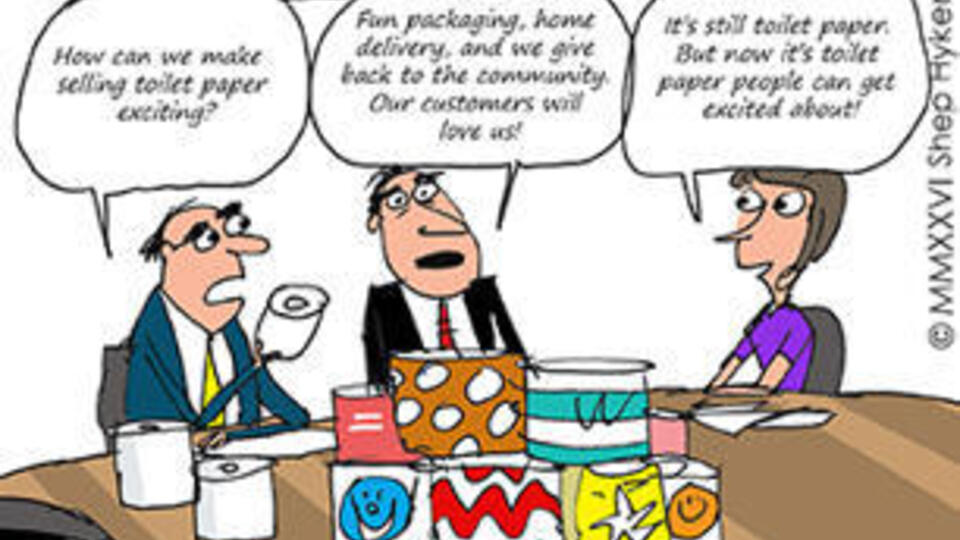
Who Gives a Crap: What Toilet Paper Can Teach Us About CX hyken.com

Guest Service treats customer experience as a system of trust, language and retention. The posts on human service, the right mindset and word set, overexplaining to customers and eliminating churn point to a discipline that is less about slogans and more about reducing friction.

The coverage also challenges old service maxims. The Shepard Letter’s post on “The Customer Is Always Right...and Five Other Lies” and the revisit of “We’re Not Happy Until You’re Not Happy” suggest that service quality depends on clear expectations, not blind deference or performative friendliness.

Micro economics adds the consumer-protection and pricing side through Aldi’s warning that some loyalty discounts can dupe customers. That sits naturally beside the service posts: loyalty mechanisms may drive repeat visits, but they can also damage trust if customers feel manipulated.

The common thread is that customer experience has become measurable business risk. Clarity, fairness, human contact and churn prevention all affect whether a customer stays, complains or leaves for a competitor.

Further reading

Curators to follow

  • Enzo Calamo

    Maintains three topics in this subject area and was active on 2026-10-06, with recent selections in family enterprise and legacy coverage.

  • Philip Marris

    Maintains three topics in this subject area and supplies the recent Theory of Constraints, Lean and Critical Chain project-management material.

  • Kamyar Shah

    Maintains six topics in this subject area and was active on 2026-10-05.

  • John Beech

    Maintains two topics in this subject area and was active on 2026-10-05.

  • JC Gaillard

    Maintains two topics in this subject area and supplies the recent digital transformation and AI operating-model selections.

  • Roland Schegg

    Maintains one topic in this subject area and follows hotel and accommodation trends, with activity on 2026-10-01.

  • Graham Watson

    Maintains one topic in this subject area and selects company case studies for business management readers.

Frequently asked questions

What kind of business coverage is included here?

This page brings together Scoop.it topics on companies, management, strategy, commerce and operating performance. The last 90 days include posts on AI adoption, retail reinvention, customer service, project delivery, family enterprise, hospitality, regulation and business education. The underlying corpus contains 240 posts across 171 topics.

Why is AI so prominent in current business topics?

AI appears as a business operating-model issue, not just a software category. Recent posts focus on strategy, architecture, IT leadership, measurable outcomes, application modernisation and why digital transformations still fail. The recurring point is that companies need governance and redesigned work to turn AI spending into business impact.

How are retail and consumer businesses changing?

Retail coverage shows legacy brands under pressure from weaker shopper confidence, online competitors and changing habits. Nike, John Lewis, Primark, Argos, Ikea and Volkswagen appear as case studies in business model strain, channel choices, cost pressure and stakeholder conflict. Hospitality adds a related view of growth under new rules.

What does the customer service coverage emphasize?

Customer service topics focus on trust, clarity, human contact and churn. The recent material treats customer experience as a competitive system, including the language companies use, the risk of overexplaining, the limits of old service slogans and the danger of loyalty offers that customers may see as misleading.

Are management methods and operations covered?

Yes. Several topics follow Theory of Constraints, Lean, Six Sigma and Critical Chain Project Management. Recent posts connect these methods to capex projects, task duration, project speed and professional events. The emphasis is practical: how organizations identify constraints and change management conditions so delivery improves.

Who contributes to these business topics?

The page is fed by a broad set of people selecting business material on Scoop.it. The figures show 128 curators in the subject area, with last activity on 2026-10-06. Some maintain multiple topics, while others focus on narrower areas such as hospitality, business management or digital transformation.

Most quoted sources

  • youtu.be 11
  • youtube.com 6
  • linkedin.com 5
  • kamyarshah.com 5
  • bbc.co.uk 4
  • sites.google.com 4
  • apple.news 3
  • medium.com 3
  • theguardian.com 3
  • vimeo.com 3

On the rise

  • Entrepreneurship 14
  • BusinessStrategy 11

This page was written by an AI from the public curation of Scoop.it topics. The posts, topics and curators it cites are real and linked directly.

Updated on October 6, 2026