Covering the last 90 days

Innovation

Innovation is active here as a practical beat. Over the last 90 days, selections have tracked AI moving into work, health, shopping and enterprise systems, while older innovation themes such as 3D printing, mobility, biomimicry and complex systems continue to produce fresh signals.

The subject area spans 70 topics maintained by 60 curators, with 161 posts in the corpus and activity as recent as 2026-10-05. The feeds range from technology and healthcare to participatory leadership, smart cities, tourism, education, entrepreneurship and industrial applications.

What is moving now is implementation. The strongest threads are not just about new tools, but about whether organizations can redesign work around them, whether regulated services can trust them, and whether innovation can account for resilience, sustainability and human adoption.

Key figures

  • 70 topics
  • 60 curators
  • 2892004 views
  • October 5, 2026 last activity

Cross-cutting issues

1

New tools are becoming everyday habits before the public is settled

Innovation is moving from demonstration to routine use, while social trust is still catching up.

AI dictation tools changing future of office work newatlas.com

T.I.P.S. Tracking - I-Wheel - "UC File" brings the consumer and workplace edge of innovation into view. Recent selections move from AI dictation tools in office work to AI shopping carts that change consumer spending, showing how artificial intelligence is appearing in ordinary settings rather than only in labs or product launches.

Paradigm Shifts adds a different lens: inventions are read as signs of changing assumptions. The energy-harvesting, Minecraft-like BMW concept is treated less as a car story than as a signal about how design, mobility and energy use may be recombined.

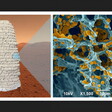
The same topic stream follows speculative making, including Martian structures printed from yeast and rock and a record 3D-printed housing project. Together, these items connect off-world construction, housing supply and manufacturing methods, making fabrication a central innovation thread.

The anxiety is just as visible as the excitement. A post on Americans’ worries about AI sits beside product stories, suggesting that adoption now depends not only on capability but on how people experience automation in shops, offices and public culture.

Further reading

2

AI services scale only when they fit regulated work

Healthcare, finance, legal services and manufacturing show the same pressure to make automation useful, trusted and economically viable.

How AI Is Fueling A New Generation Of Healthcare Startups forbes.com

GAFAMS, STARTUPS & INNOVATION IN HEALTHCARE by PHARMAGEEK tracks the startup and platform side of medical innovation. Forbes’ account of AI-fueled healthcare startups and MobiHealthNews’ report on medical AI models for clinicians point to a market forming around decision support, workflow help and clinical use cases.

Healthcare: reloaded... grounds that story in adoption by health systems. The item on Withings entering the American health system shows that connected devices and services are not just consumer wellness products; they are seeking a place inside regulated care pathways.

Harish widens the pattern beyond healthcare. Posts on AI in personal finance apps, automation in legal services and Industry 5.0 describe the same shift in adjacent sectors: automation is being sold as a way to reduce friction, personalize service and make operations more resilient.

The constraint is no longer whether AI can be added to a service. The harder questions are who trusts it, where human oversight remains necessary, and whether the economics work once the technology leaves the pilot phase.

Further reading

3

AI value now depends on how organizations change

The enterprise AI debate is shifting from model performance to operating models, architecture and the leadership practices that make change usable.

AI at Work: Strategy Matters More Than Tools bcg.com

Digital Transformation Leadership is dominated by a practical concern: organizations have spent heavily on AI, but value depends on strategy, architecture and operating model. Posts from BCG, McKinsey, PwC, Forbes and VentureBeat all return to the same point: tools alone do not make transformation stick.

The topic’s selections distinguish pilots from production. Articles on AI architecture, operating models and IT value frame enterprise AI as a management system, not a procurement decision. The emphasis is on governance, workflow redesign and the ability to prove results.

Art of Hosting brings in the human layer often missing from technology programs. Its selections on Appreciative Inquiry, Open Space Technology, transformational coaching and powerful questions point to facilitation methods that help groups make sense of uncertainty and act together.

The link between the two topic streams is change capacity. A post on leadership’s blind spot in the age of AI sits naturally beside material on enterprise ROI: both suggest that innovation fails when organizations redesign technology faster than they redesign decisions, conversations and accountability.

Further reading

4

Nature and complexity are becoming engineering tools

Bio-inspired computing and complex systems research are moving closer to practical agendas for resilience, adaptation and efficient intelligence.

Neuromorphic computing may one day offer AI a power-saving brainwave theregister.com

Complex systems research is visible here as a living conference and workshop network. CxConferences follows gatherings on artificial life, health complexity, complex systems modeling and complex networks, showing where researchers are developing methods for adaptation, evolution and networked behavior.

Biomimicry 3.8 connects that systems thinking to bio-inspired design. The post on neuromorphic computing presents a possible low-power direction for AI by looking to brain-like computation, linking biological models with the search for more efficient machine intelligence.

The convergence matters because innovation problems increasingly look systemic. Health, AI, networks and resilience all require methods that handle feedback, emergence and interdependence. The selected posts do not present complexity as a metaphor; they show it as an active research infrastructure.

Further reading

Curators to follow

  • James Schreier

    This curator follows forward-looking technology and paradigm-shift signals, including AI at work, 3D-printed housing and unusual vehicle concepts.

  • JC Gaillard

    This curator tracks digital transformation leadership through enterprise AI strategy, architecture, operating models and measurable value.

  • Complexity Digest

    This curator gathers complex systems events, including artificial life, health complexity, modeling and network conferences.

  • F. Thunus

    This curator follows participatory leadership methods, including Appreciative Inquiry, Open Space Technology, coaching and AI-era leadership questions.

  • Beeyond

    This curator contributes healthcare technology coverage, including connected devices and their entry into health systems.

Frequently asked questions

What does this Innovation page cover?

This page follows innovation as it appears across Scoop.it topics: AI at work, healthcare startups, digital transformation, complex systems, biomimicry, education, mobility, construction, smart cities and new business models. It is built from selections made during the last 90 days, not from a fixed definition of innovation.

Why is AI so prominent in recent innovation coverage?

AI appears across many of the active topic streams. Recent selections cover dictation tools, shopping carts, enterprise AI architecture, healthcare models for clinicians, personal finance apps, legal automation and Industry 5.0. The pattern is less about novelty and more about implementation, trust, workflow fit and measurable value.

How is enterprise innovation being discussed?

The enterprise material stresses that AI value depends on how organizations work. Posts from Digital Transformation Leadership focus on strategy, architecture, operating models, pilots moving into production and the difficulty of proving return after heavy spending. Leadership and facilitation topics add the human practices needed to make change stick.

Where does healthcare innovation fit here?

Healthcare appears as both a startup market and a regulated system. The selections include AI-fueled healthcare startups, medical AI models for clinicians and connected devices entering the American health system. The recurring issue is whether tools can fit clinical workflows, earn trust and operate within real health services.

Does this page include sustainability and design innovation?

Yes. The topic set includes biomimicry, smart cities, lighting, circular and regenerative business models, construction and industrial applications. Recent selections connect innovation to energy use, resilient infrastructure, 3D-printed housing, bio-inspired computing and ecological constraints, showing that design choices are being judged by their system effects.

Most quoted sources

  • youtube.com 4
  • newatlas.com 2
  • forbes.com 2
  • slideshare.net 2
  • cake.me 2
  • arxiv.org 2
  • link.springer.com 2
  • sites.google.com 2
  • bi-journal.com 1
  • linkedin.com 1

This page was written by an AI from the public curation of Scoop.it topics. The posts, topics and curators it cites are real and linked directly.

Updated on October 6, 2026