

Learn how storytelling, active learning, and intentional class design can turn ordinary lessons into engaging, memorable learning experiences.


|
Scooped by
Yashy Tohsaku
onto Education 2.0 & 3.0 August 21, 4:39 PM
|
 Scoop.it!
Learn how storytelling, active learning, and intentional class design can turn ordinary lessons into engaging, memorable learning experiences.
 Your new post is loading...
 Your new post is loading...
Your new post is loading...
Scoop.it!

From
getweeve

Anonymize a document in your browser: redact names, emails, phone numbers, social security numbers, and IBAN. Nothing you paste or upload leaves this page. Via Ana Cristina Pratas
Scoop.it!

The letter emphasizes outcomes and evidence but stops short of issuing federal regulations. Via EDTECH@UTRGV 
EDTECH@UTRGV's curator insight,
August 21, 2:14 PM
"Responsible design is the floor. Not only do we need to know if the tool works, but if it works; why does it work, for whom does it work, and under what conditions.”
Scoop.it!

What research reveals about the absence of training, policy, and institutional support Via EDTECH@UTRGV
EDTECH@UTRGV's curator insight,
August 21, 2:19 PM
"Teachers with higher self-efficacy perceived more benefits, fewer concerns, and reported more trust."
Scoop.it!
Learn how storytelling, active learning, and intentional class design can turn ordinary lessons into engaging, memorable learning experiences.
Scoop.it!

The conversation around AI and teaching has changed and is no longer about using AI—it’s about using it wisely.
Scoop.it!

Learning to read and write cursive was once a rite of passage for practically every American schoolchild.
Until the early 20th century, children in the U.S. were generally taught to write in cursive or script, rather than the print writing typically taught to young children today. Some people at the time thought a person’s character could be evaluated based on the quality of their cursive.
In the first half of the 20th century, penmanship was often taught as a distinct subject in American elementary schools, where children could spend as much as 45 minutes a day on handwriting instruction and practice.
Students during these years generally learned print in kindergarten, first and second grade. Cursive was typically introduced in third or a later grade, in part because some child development researchers at the time believed that writing in print was easier for young children to learn and aligned with the fonts they found when reading. Via Chuck Sherwood, Former Senior Associate, TeleDimensions, Inc
Scoop.it!
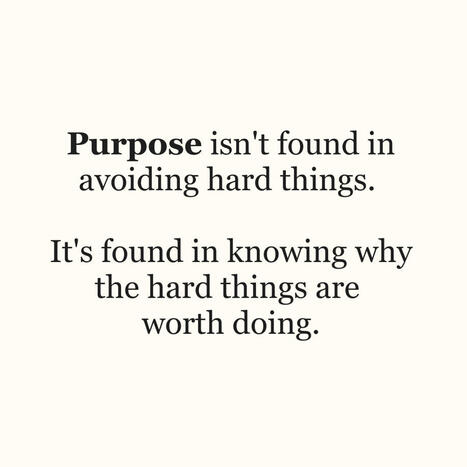
Purpose, not constant joy, is what sustains meaningful learning. In education and life, purpose helps us embrace challenges, grow through struggle, and find lasting fulfillment.
Scoop.it!

Elementary teachers can empower students to address some of their own needs, allowing for smoother lessons and more time spent learning.
Scoop.it!
Inspire with H.E.A.R.T.: Creating a Mindset-base School Culture Where Everyone Thrives, provides the framework to build connection and a sense of belonging.
Scoop.it!

Explore strategies for integrating various feedback mechanisms into eLearning courses for dynamic and adaptive learning. Via EDTECH@UTRGV
EDTECH@UTRGV's curator insight,
April 11, 2024 9:33 AM
"This article delves into the importance of feedback in eLearning, explores various feedback mechanisms, and offers guidance on integrating these systems effectively to build courses that truly resonate with learners."
Scoop.it!

EDTECH@UTRGV's curator insight,
August 19, 2025 11:52 AM
"Pro Tip: To force the AI to reveal uncertainty, ask it to rate its own confidence" |
Scoop.it!

Educators can confront AI head on by distinguishing its pattern-recognition skills from its inability to daydream, embody other people and authentically express itself.
It’s disconcerting to envision human thought becoming redundant or deemed inferior due to advancements in artificial intelligence.
But for all its ills, AI cannot be ignored or wished away. It’s here to stay, and I want my students to understand the stakes of becoming too reliant on this technology.
I can’t blame them for wondering why they should dedicate so much time and effort to honing their writing and critical thinking skills if large language models appear to do a passable job. Yet this situation has major implications for culture and societies. Via Chuck Sherwood, Former Senior Associate, TeleDimensions, Inc
Scoop.it!
From
www
Guiding teachers on artificial intelligence (AI) use and misuse in education, this publication defines the knowledge, skills, and values teachers must master in the age of AI.
Scoop.it!
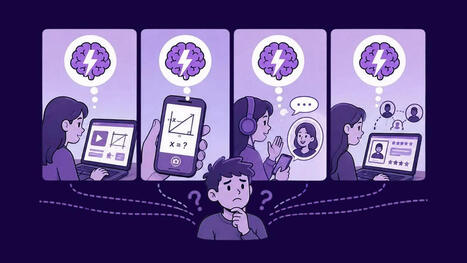
As the catch-all term “AI tutoring” captures the public imagination, it’s time to define and measure what actually meets the bar for a “tutor.” Via EDTECH@UTRGV
EDTECH@UTRGV's curator insight,
August 21, 2:16 PM
"Homework helpers (and off-the-shelf LLMs) are designed to resolve the task a user brings in real time: to get to an answer. Great tutors don’t provide answers."
Scoop.it!

The best AI-powered tutors guide students towards genuine learning
Scoop.it!

Here are strategies to create effective students groups.
Scoop.it!

From
www
Lisa Delpit and Christopher Emdin explain how to bring more agency and energy into teaching.
Scoop.it!
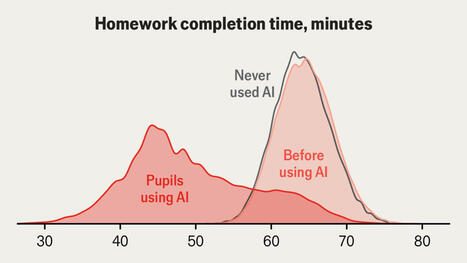
Research on 27,000 Chinese pupils reveals artificial intelligence can boost homework scores by 18% but may harm exam performance if used carelessly by students. | Graphic detail Via Vladimir Kukharenko
Scoop.it!

When teachers rethink student participation, they’re better able to help students build on one another’s thinking.
Scoop.it!

When students have a rich store of readily retrievable knowledge, they’re able to more efficiently approach new content.
Scoop.it!

Adapting the Developmental Relationships Framework and applying strategies for culturally responsive educator-student relationships, creating inclusive and empowering learning environments.
Scoop.it!
From
claude
Connect Claude to your favorite tools to get more relevant responses. Choose from a variety of tools from trusted partners, built for Model Context Protocol.
Scoop.it!
"Grades show where students are, but feedback shows where they can go. After a test, you often see the same scene: papers handed back, numbers circled at the top, and quiet reactions that reveal far more than the grade itself. A grade on its own is incomplete. It gives information, but it doesn’t give direction." Via EDTECH@UTRGV
EDTECH@UTRGV's curator insight,
December 12, 2025 1:05 PM
"A grade is a snapshot. Feedback is momentum. Without feedback, students often create their own story about what the grade means, and it is usually the harshest version possible." |






