Your new post is loading...

|
Rescooped by
Yashy Tohsaku
from AI for All
Today, 2:48 PM
|
"ChatGPT transformed my photos into messy scribble versions of me./..:
Via Leona Ungerer
|
|
Scooped by
Yashy Tohsaku
May 9, 1:41 PM
|
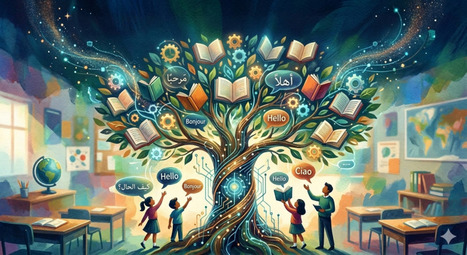
By Sarab Al Ani, Yale University DOI: https://www.doi.org/10.69732/SFZP9372 Over the past academic year, I have integrated Speakology AI into my curriculum for Intermediate Heritage Arabic learners—a project made possible through the Yale Poorvu Center AI Course Revision Grant. This grant
|
|
Scooped by
Yashy Tohsaku
May 9, 1:35 PM
|
A new vision from Advance CTE imagines what the future of career education should look like.
|
|
Scooped by
Yashy Tohsaku
May 9, 1:30 PM
|
AI creates tunnel vision and the consolidation of truth, while L&D reinforces completion over capability—driving weaker judgment.
|
|
Rescooped by
Yashy Tohsaku
from e-learning-ukr
May 8, 9:51 PM
|
Explore AI prompts for training managers to enhance learning programs and streamline design processes with innovative strategies.
Via Vladimir Kukharenko
Generative artificial intelligence has unsettled higher education, raising fears that students will lose the ability to think. Drawing on classroom experience and student feedback, we argue that grounded inquiry sharpens judgement in Earth science teaching by limiting AI to set sources and auditing its claims.
Via EDTECH@UTRGV
At least a dozen states have proposed or adopted policies to curb screen time, such as time limits and allowing families to opt out of virtual instruction.
Via Peter Mellow
From black box to learning lab: how open, scalable systems can turn AI access into real literacy for students.
Via EDTECH@UTRGV, Nik Peachey
PanelQ is the best Q&A platform for live panels. Collect audience questions via QR code, moderate them instantly, and display them on stage. No app download required.
Via Nik Peachey
|
|
Rescooped by
Yashy Tohsaku
from e-learning-ukr
May 8, 9:47 PM
|
To integrate sustainability into the business school curriculum, why not try an interactive game? Here’s how to immerse students in real-world challenges
Via Vladimir Kukharenko
"The implications of AI literacy, or lack thereof, are far-reaching. They extend beyond national ambitions to remain “a global leader in this technological revolution” or even prepare an “AI-skilled workforce,” as the executive order states. Without basic literacy, citizens and consumers are not well equipped to understand the algorithmic platforms and decisions that affect so many domains of their lives: government services, privacy, lending, health care, news recommendations and more. And the lack of AI literacy risks ceding important aspects of society’s future to a handful of multinational companies."
Via EDTECH@UTRGV
|
|
|
Rescooped by
Yashy Tohsaku
from AI for All
Today, 2:47 PM
|
"Get the most out of ChatGPT's free tier with these tips and tricks on bypassing its limitations...."
Via Leona Ungerer
|
|
Scooped by
Yashy Tohsaku
May 9, 1:36 PM
|
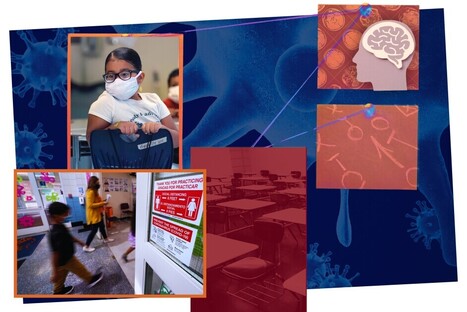
Children are struggling to master skills related to memory, attention, and self-control.
|
|
Scooped by
Yashy Tohsaku
May 9, 1:34 PM
|
The tools help guide teacher reflection for the portfolios used for PD and licensing—or be used to cheat.
From social media to gaming, apps, and more, adolescent boys spend hours each day online. Our new research reveals how this relates to their identities, relationships, and emotional well-being.
Via Nik Peachey
"When ChatGPT was launched in November 2022, some universities decided to quickly ban students from using it, not least because they feared that GenAI would kill assessment integrity. Bans like these are now rare, but some universities still ask students to fill in disclosure statements about their GenAI use, and emphasize that some assessment tasks – for instance, asking a GenAI tool to write your BA thesis – are strictly prohibited. Other university administrations suggest that teachers should schedule oral examination moments to check if suspicions about some students’ impermissible GenAI use are true."
Via EDTECH@UTRGV
Reading is arguably the most difficult task one must learn. To understand why it is difficult, one must understand the physiology of reading.
Via Peter Mellow
Generative artificial intelligence can expand the reach of open educational resources, but educators and institutions need a clear framework for licen
Via Peter Mellow
At Surveva, we create a collaborative space driven by polls, interactions, and analytics. Our approach encourages learning, sparks thoughtful dialogue, and inspires questions that challenge norms, offering users a richer, more enlightening experience.
Via Nik Peachey
|
|
Rescooped by
Yashy Tohsaku
from e-learning-ukr
May 8, 9:48 PM
|
|
|
Rescooped by
Yashy Tohsaku
from e-learning-ukr
May 8, 9:47 PM
|
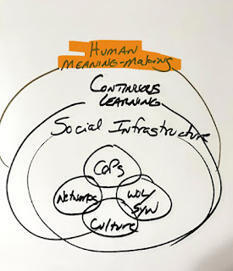
Notes from Jane Bozarth's BozarthZone, with special interest in Communities of Practice, capturing tacit knowledge, accessibility and inclusion, and creating effective learning experiences, along with general thoughts about Learning & Development. Practical, human-centered, slightly contrarian about tech hype, and deeply grounded in how work actually happens.
Via Vladimir Kukharenko
"Microlearning works for busy people. And that's probably not the type of insight you came here for, but it's a place to start. The strongest argument for microlearning is their convenience. But can and should everything fit into such bite-size content? That's a question I see more and more organizations struggling with. There is no time (or budget allocation) to allow for long-form training that can plausibly resolve all of the many learning gaps. Given the many concerns everywhere around the globe, there is also direction lacking from executives to really focus on noncritical training."
Via EDTECH@UTRGV
|


 Scoop.it!