Your new post is loading...

|
Scooped by
Loïc Lepiniec
February 18, 2020 11:51 AM
|
Dans quelle mesure les agricultures européennes pourraient-elles contribuer à la sécurité alimentaire mondiale à l’horizon 2050 ? Disposent-elles de marges de manœuvre pour contribuer à préserver des milieux naturels menacés par l’extension des surfaces cultivées ? Est-il possible de concilier ces différents objectifs ? Ces questions sont capitales pour la gouvernance de nos sociétés en Europe et à l’international. L’étude INRAE « Agricultures européennes en 2050 », réalisée à la demande de l’association Pluriagri*, livre des enseignements qui tiennent compte des impacts des changements climatiques et techniques sur la production agricole et a pour vocation d’éclairer les politiques publiques nationales, européennes et internationales.
|
|
Scooped by
Loïc Lepiniec
February 12, 2020 4:58 AM
|
Mutagenesis is a process where new strains of food and products are created using chemicals and radiation in the lab. It is much faster than the natural mutation process while being more targeted than old techniques like hybrids and grafts. In the 1970s, its successor, transgene science and genetically modified organisms (GMOs), began to be studied and by the early 1980s products began to appear. In the 1990s, the American state of Hawaiʻi approved a papaya that had been devastated by a natural virus after breeding techniques and chemicals failed to stop it. Other foods followed. When European non-government organizations in the food sector turned on the American GMO process, it was simple enough to exempt mutagenesis by creating a rationalization that transgenesis inserts a gene from another species into the genome of an organism while mutagenesis causes internal mutations in the organism. That worked fine until even more precision came into being and NGOs started to use the term GMO for all genetic engineering.
|
|
Rescooped by
Loïc Lepiniec
from Plant Sciences
February 6, 2020 4:34 PM
|
"Energie-climat-agriculture : quelles trajectoires", Jean Colcombet, lundi 24 février 4h00, IJPB, SPS
L'utilisation d'énergies abondantes depuis quelques siècles a libéré l'homme de sa condition d'agriculteur et amélioré incroyablement le confort de nos sociétés. Malheureusement, ces énergies, principalement fossiles, sont en quantité limitée et leur utilisation déstabilise rapidement le climat. J'essaierai de montrer que le XXIe siècle est celui des choix et qu'aucun d'entre eux n'est sans conséquences sur notre confort de vie. Et nous, acteurs de la recherche, quel rôle devons-nous jouer à l'heure du défi énergie-climat ?
Via Saclay Plant Sciences
|
|
Scooped by
Loïc Lepiniec
February 6, 2020 2:13 AM
|
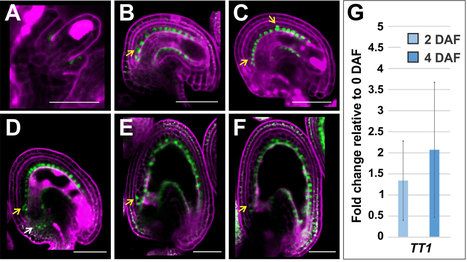
Seeds have greatly contributed to the successful colonization of land by plants. Compared to spores, seeds carry nutrients, rely less on water for germination, provide a higher degree of protection against biotic and abiotic stresses, and can disperse in different ways. Such advantages are, to a great extent, provided by the seed coat. The evolution of a multi-function seed-coat is inheritably linked to the evolution of tissue polarity, which allows the development of morphologically and functionally distinct domains. Here, we show that the endothelium, the innermost cell layer of the seed coat, displays distinct morphological features along the proximal-distal axis. Furthermore, we identified a TRANSPARENT TESTA transcriptional module that contributes to establishing endothelium polarity and responsiveness to fertilization. Finally, we characterized its downstream gene pathway by whole-genome transcriptional analyses. We speculate that such a regulatory module might have been responsible for the evolution of morphological diversity in seed shape, micropylar pore formation, and cuticle deposition.
|
|
Scooped by
Loïc Lepiniec
January 23, 2020 1:56 AM
|
Authors: Amber L. Hauvermale and Camille M. Steber.
Plant Signaling & Behavior (2020)
Abstract: "The plant hormone gibberellin (GA) stimulates developmental transitions including seed germination, flowering, and the transition from juvenile to adult growth stage. This study provided evidence that GA and the GA receptor GID1 (GA-INSENSITIVE DWARF1) are also needed for the embryo-to-seedling transition in Arabidopsis. The ga1-3 GA biosynthesis mutant fails to germinate unless GA is applied, whereas the gid1abc triple mutant fails to germinate because it cannot perceive endogenous or applied GA. Overexpression of the GID1a, GID1b, and GID1c GA receptors rescued the germination of a small percentage of ga1-3 seeds without GA application, and this rescue was improved by dormancy-breaking treatments, after-ripening and cold stratification. While GID1 overexpression stimulated ga1-3 seed germination, this germination was aberrant suggesting incomplete rescue of the germination process. Cotyledons emerged before the radicle, and the resulting “ghost” seedlings failed to develop a primary root, lost green coloration, and eventually died. The development of ga1-3 seedlings overexpressing GID1 was rescued by pre-germinative but not post-germinative GA application. Since the gid1abc mutant also exhibited a ghost phenotype after germination was rescued by cutting the seed coat, we concluded that both GA and GID1 are needed for the embryo-to-seedling transition prior to emergence from the seed coat."
|
|
Rescooped by
Loïc Lepiniec
from Plant Sciences
January 11, 2020 1:36 PM
|
In Memoriam Anne-Marie Lescure-Vernotte (1936-2019) Nous avons appris avec une grande tristesse le décès de notre collègue Anne-Marie Lescure-Vernotte survenu le 30 novembre 2019, à St Ouen l'Aumône. Elle a été inhumée le 10 décembre au cimetière de Chambon-sur-Voueize son berceau familial, dans la Creuse. Née le 19 février 1936, à Carthage en Tunisie, Anne-Marie fait ses études supérieures à la Faculté des Sciences de Paris-La Sorbonne. Devenue Assistante de Physiologie végétale elle prépare une thèse de 3e cycle portant sur la mise à fleurs de la sauge officinale au Laboratoire du Phytotron à Gif-sur-Yvette, sous la direction du Professeur Pierre Chouard. Recrutée attachée de recherche au CNRS, elle rejoint en 1964 l’équipe de Claude Péaud-Lenoël, au laboratoire de Photosynthèse dirigé par le Professeur Alexis Moyse. Elle prépare alors une thèse de Doctorat d’Etat sur l’étude de la différenciation cellulaire chez les végétaux par des approches de mutagénèse somatique. La thèse: « Préparation de clones mutants de cellules végétales : recherche de l'impact moléculaire de la mutation chez une lignée mutante d'Acer pseudoplatanus L. indépendante de l'auxine » est soutenue en 1970 à l'Université d'Orsay Paris XI. En 1972, elle rejoint le Laboratoire de Biochimie Fonctionnelle des Plantes dont Claude Péaud-Lenoël a été nommé directeur, à la Faculté des Sciences de Marseille-Luminy, pour travailler sur la différenciation chloroplastique. De 1973 à 1974, titulaire d’une bourse de la NSF, elle travaille aux Etats-Unis, dans le laboratoire de Philip Filner, à East Lansing, à la purification de la tubuline de cultures cellulaires de tabac dans le but d’étudier les propriétés physico-chimiques de cette protéine. Directeur de recherche CNRS depuis 1975, elle est nommée membre de la section 27 (Biologie et Physiologie végétales) en 1976. Elle poursuit son travail à Luminy, en étroite collaboration avec Patrick Seyer, attaché de recherche au CNRS dont elle dirigea la thèse d’Etat, sur le rôle des cytokinines comme effecteur de la différenciation chloroplastique, à l’aide d’une lignée cellulaire de tabac qu’elle a isolée après mutagénèse chimique. Cette lignée présente la propriété de se multiplier en l’absence de cytokinine, mais exige sa présence pour la maturation des plastes en chloroplastes, indépendamment de la présence de lumière. En 1981 elle rejoint le Laboratoire de Physiologie Cellulaire Végétale dirigé par Régis Mache (Université de Grenoble), où le travail sur le rôle des cytokinines se termine (Thèse de P. Seyer, 1983). Elle participe ensuite à des recherches sur la biogénèse des ribosomes plastidiaux. Puis elle établit une collaboration avec Jean-François Briat (dont elle était la marraine lors de son entrée au CNRS en 1979) et avec Jean-Pierre Laulhère alors CR au CNRS et complice d’Anne-Marie (entre autres, sur les pistes de skis proches du campus grenoblois), pour initier ensemble l’étude de la régulation de la biosynthèse de la ferritine plastidiale en réponse au fer. Elle démontre, en particulier, que cette protéine plastidiale, codée par des gènes nucléaires, est régulée transcriptionnellement en réponse à un excès de fer ; ce travail décisif (thèse de Dominique Proudhon) fut publié dans PNAS (1991), et Anne-Marie en est le premier auteur. Elle s’intéresse ensuite aux interactions entre Pi et Fe et à la mobilisation des réserves phosphatées (phytine) au cours de la germination du maïs. Elle purifie la phytase du maïs, une enzyme capable de dégrader les phytates qui stockent le phosphore et les minéraux, ce qui lui permet de produire un sérum contenant les anticorps dirigés contre cette protéine. En 1993, elle rejoint l'INRA à Versailles et participe activement, en tant que co-directrice, à la création du laboratoire Biologie des Semences (INRA-INAPG), dirigé par Michel Caboche. Elle soutient notamment la mise en place de l’équipe «Développement et Qualité des Graines» (Loïc Lepiniec et Bertrand Dubreucq, 1996). Elle travaillera au LBS jusqu'à son départ en retraite (2001). Elle poursuit durant ces années le travail sur la phytase de maïs (en collaboration avec Biogemma) qui conduit alors au clonage d'un ADNc constituant la première séquence codante établie pour une phytase de plante. L’étude de l'expression spatio-temporelle de cette phytase a été ensuite menée et la caractérisation de deux gènes de phytase du maïs, Phyt1et Phyt2 a été réalisée (Thèse de son doctorant Sébastien Maugenest 1998). Excellente biochimiste, Anne-Marie avait su faire le lien avec la biologie moléculaire et les applications, comme le montre ce dernier travail qui conduisit à un dépôt de brevet "Phytases de plantes et applications biotechnologiques, INRA-Limagrain (Août 1996). Anne-Marie nous laisse à tous le souvenir de ses grandes compétences et d’une grande rigueur et intégrité scientifiques, d'une disponibilité de chaque instant, d'une modestie élégante, d'un sens critique bienveillant et d'une bonne humeur communicative. Ce fut une grande chance pour nous tous que de la côtoyer et de pouvoir travailler avec elle. Anne-Marie, tu demeures dans nos mémoires. Au revoir. Au nom de tous ses collègues, Marc Jullien (Pr honoraire, AgroParisTech), Régis Mache (Pr honoraire, Université Joseph Fourier, Grenoble), Bertrand Dubreucq (DR INRAE), Jean-François Briat (DRE honoraire, CNRS) et Loïc Lepiniec (DRE INRAE et Pr. Polytechnique). Nous tenons à remercier Jean Vernotte et Michèle Axelos pour leur aide concernant la reconstitution du parcours de Anne-Marie, et Yves Chupeau pour la photo noir et blanc prise lors d’un congrès «Protoplastes et fusion de cellules végétales», à Versailles, en 1972.
Via Saclay Plant Sciences
|
|
Scooped by
Loïc Lepiniec
January 7, 2020 3:13 AM
|
A new technique has the potential to change the foods we eat every day, boosting flavor, disease resistance, and yields, and even tackling allergens like gluten—and scientists say they're working only with nature's own tools.
|
|
Scooped by
Loïc Lepiniec
November 11, 2019 11:55 AM
|
Condensed tannins, found in coloured-flowering varieties of faba bean (Vicia faba L) are, after vicine and convicine, one of the major anti-nutritional factors for monogastric animals. The development of tannin-free cultivars is a key goal in breeding to broaden the use of this legume in the animal feed industry. Two recessive genes, zt-1 and zt-2, control the zero-tannin content and promote white-flowered plants. Previous studies exploiting synteny with the model Medicago truncatula reported a mutation in TTG1, a gene encoding a WD40 transcription factor located in chromosome II, as the responsible for the zt-1 phenotypes. Here a comprehensive analysis of VfTTG1 (including phylogenetic relationships, gene structure and gene expression) has been conducted to confirm the identity of the gene and to reveal structural changes that may result in different functional alleles. The results confirmed the identity of the candidate and revealed the existence of two different alleles responsible for the phenotype: ttg1-a, probably due to a mutation in the promoter region, and ttg1-b caused by a deletion at the 5′end of VfTTG1. Based on the sequencing results, an allele-specific diagnostic marker was designed that differentiate zt-1 from wild and zt-2 genotypes and facilitates its deployment in faba bean breeding programs.
|
|
Scooped by
Loïc Lepiniec
November 9, 2019 3:29 AM
|
Authors: Li Zhang, View ORCID ProfileRuci Wang, Yueming Wang, Yufang Xu, Shuang Fang, Jinfang Chu and Shanguo Yao.
bioRxiv (2019)
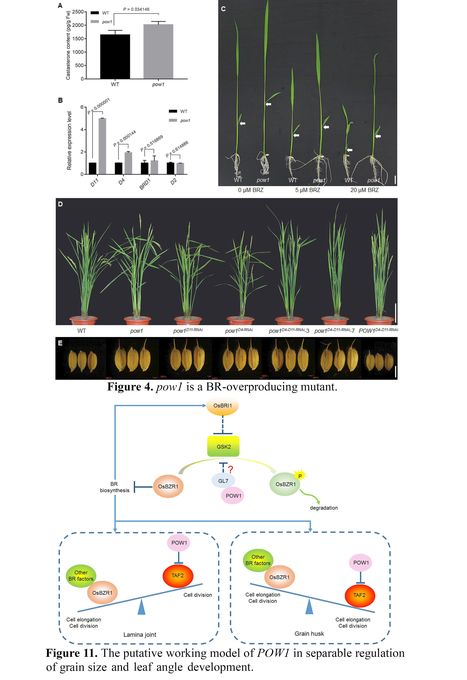
Abstract: "Leaf angle is one of the key factors determining rice plant architecture. However, improvement of the leaf angle appears to be unsuccessful in practical breeding because of the simultaneous occurrence of unfavorable traits such as grain size reduction. In this study, we identified the pow1 (put on weight 1) mutant with enlarged grain size and leaf angle, typical brassinosteroid (BR)-related phenotypes caused by excessive cell proliferation and cell expansion. We show that POW1 encodes a novel protein functioning in grain size regulation by repressing the transcription activity of the interacting protein TAF2, a highly conserved member of the transcription initiation complex TFIID. Loss of function of POW1 increases the phosphorylation of OsBZR1 and decreases the inhibitory effect of OsBZR1 on the transcription of BR biosynthesis genes OsDWARF4 (D4) and D11, thus participates in BR-mediated leaf angle regulation. The separable functions of POW1 in grain size and leaf angle control provide a promising strategy to design high-yielding varieties in which both traits would be favorably developed, i.e., compact plant architecture and increased grain size, thus would promote the high-yield breeding a step forward in rice."
|
|
Scooped by
Loïc Lepiniec
September 6, 2019 11:18 AM
|
Flavonoids are one of the largest secondary metabolite groups, which are widely present in plants. Flavonoids include anthocyanins, proanthocyanidins, flavonols and isoflavones. In particular, proanthocyanidins possess beneficial effects for ruminant animals in preventing lethal pasture bloat. As a major legume forage, alfalfa (Medicago sativa) contains little proanthocyanidins in foliage to combat bloat. In an attempt to improve proanthocyanidin content in alfalfa foliage, we over-expressed two MYB transcription factors (CsMYB5-1 and CsMYB5-2) from tea plant that is rich in proanthocyanidins. We showed that, via targeted metabolite and transcript analyses, the transgenic alfalfa plants accumulated higher levels of flavonoids in stems/leaves than the control, in particular anthocyanins and proanthocyanidins. Over-expression of CsMYB5-1 and CsMYB5-2 induced the expression levels of genes involved in flavonoid pathway, especially anthocyanin/proanthocyanidin-specific pathway genes DFR, ANS and ANR in stems/leaves. Both anthocyanin/proanthocyanidin content and the expression levels of several genes were conversely decreased in flowers of the transgenic lines than in control. Our results indicated that CsMYB5-1 and CsMYB5-2 differently regulate anthocyanins/proanthocyanidins in stems/leaves and flowers. Our study provides a guide for increasing anthocyanin/proanthocyanidin accumulation in foliage of legume forage corps by genetic engineering. These results also suggest that it is feasible to cultivate new varieties for forage production to potentially solve pasture bloat, by introducing transcription factors from typical plants with high proanthocyanidin level.
|
|
Rescooped by
Loïc Lepiniec
from Plant-Microbe Symbiosis
September 5, 2019 2:25 AM
|
Soybean (Glycine max (L.) Merrill) is an important component of the human diet and animal feed, but the soybean production is limited by abiotic stresses especially salinity. We recently found that rhizobia inoculation enhances soybean tolerance to salt stress, but the underlying mechanisms are unaddressed. Here, we used quantitative phosphoproteomic and metabonomic approaches to identify changes in phosphoproteins and metabolites in soybean roots treated with rhizobia inoculation and salt. Results revealed differential regulation of 800 phosphopeptides, at least 32 of these phosphoproteins or their homologous were reported be involved in flavonoid synthesis or trafficking, and 27 out of 32 are transcription factors. We surveyed the functional impacts of all these 27 transcription factors by expressing their phospho-mimetic/ablative mutants in the roots of composite soybean plants and found that phosphorylation of GmMYB183 could affect the salt tolerance of the transgenic roots. Using ChIP and EMSA, we found GmMYB183 binds to the promoter of the soybean GmCYP81E11 gene encoding for a Cytochrome P450 monooxygenase contributes to the accumulation of ononin, a monohydroxy B-ring flavonoid negatively regulate soybean tolerance to salinity. Phosphorylation of GmMYB183 was inhibited by rhizobia inoculation, overexpression of GmMYB183 enhanced the expression of GmCYP81E11 and rendered salt sensitivity to the transgenic roots. Plants deficient in GmMYB183 function are more tolerant to salt stress as compared to wild-type soybean plants which correlated with the transcriptional induction of GmCYP81E11 and the subsequent accumulation of ononin. Our findings provide molecular insights into how rhizobia enhance salt tolerance of soybean plants.
Via Jean-Michel Ané
|
|
Scooped by
Loïc Lepiniec
September 1, 2019 12:52 PM
|
Authors: Tobias Meitzel, Ruslana Radchuk, Erin L. McAdam, Ina Thormählen, Regina Feil, Eberhard Munz, Alexander Hilo, Peter Geigenberger, John J. Ross, John E. Lunn and Ljudmilla Borisjuk.
bioRxiv (2019)
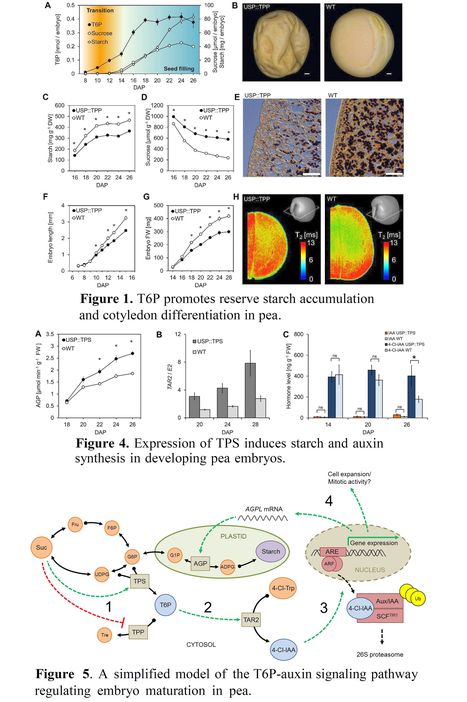
Abstract: "Plants undergo several developmental transitions during their life cycle. One of these, the differentiation of the young embryo from a meristem-like structure into a highly-specialized storage organ, is vital to the formation of a viable seed. For crops in which the seed itself is the end product, effective accumulation of storage compounds is of economic relevance, defining the quantity and nutritive value of the harvest yield. However, the regulatory networks underpinning the phase transition into seed filling are poorly understood. Here we show that trehalose 6-phosphate (T6P), which functions as a signal for sucrose availability in plants, mediates seed filling processes in seeds of the garden pea, a key grain legume. Seeds deficient in T6P are compromised in size and starch production, resembling the wrinkled seeds studied by Gregor Mendel. We show also that T6P exerts these effects by stimulating the biosynthesis of the pivotal plant hormone, auxin. We found that T6P promotes the expression of the auxin biosynthesis gene TRYPTOPHAN AMINOTRANSFERASE RELATED2 (TAR2), and the resulting effect on auxin levels is required to mediate the T6P-induced activation of storage processes. Our results suggest that auxin acts downstream of T6P to facilitate seed filling, thereby providing a salient example of how a metabolic signal governs the hormonal control of an integral phase transition in a crop plant."
|
|
Rescooped by
Loïc Lepiniec
from lignocellulosic biomass
August 30, 2019 4:25 PM
|
De mieux en mieux.. sur la page du ministère! ... .. ils ajoutent quand même "A noter : ces labels sont commerciaux et permettent d'éclairer le choix des consommateurs, ce ne sont pas des signes officiels de la qualité et de l'origine"...!
Via Herman Höfte
|
|
|
Rescooped by
Loïc Lepiniec
from Plant Sciences
February 18, 2020 11:43 AM
|
SPS Scholarships for master students Academic year 2020-2021 The Saclay Plant Sciences network (SPS, www.saclayplantsciences.fr) offers scholarships for students enrolled in the teaching programs in its perimeter:
- “Plant Sciences” program of the Integrative Biology and Physiology master’s degree (M1 and/or M2) (Université Paris-Saclay, Université Paris-Diderot),
- DA AgroParisTech BIOTECH : Biologie et biotechnologies pour la santé et les productions microbiennes ou végétales,
- DA AgroParisTech PISTv : Produire et innover dans les systèmes techniques végétaux,
- DA AgroParisTech PPE : Protection des plantes et environnement.
General information
Via Saclay Plant Sciences
|
|
Scooped by
Loïc Lepiniec
February 11, 2020 10:04 AM
|
Authors: Dandan Jia, Lian‐Ge Chen, Guimin Yin, Xiaorui Yang, Zhihua Gao, Yi Guo, Yu Sun and Wenqiang Tang.
Journal of Integrative Plant Biology (2020)
Abstract: "Brassinosteroids (BRs) play important roles in regulating plant reproductive processes. BR signaling or BR biosynthesis null mutants do not produce seeds under natural conditions, but the molecular mechanism underlying this infertility is poorly understood. In this study, we report that outer integument growth and embryo sac development were impaired in the ovules of the Arabidopsis thaliana BR receptor null mutant bri1‐116. Gene expression and RNA‐Seq analyses showed that the expression of INNER NO OUTER (INO), an essential regulator of outer integument growth, was significantly reduced in the bri1‐116 mutant. Increased INO expression due to overexpression or increased transcriptional activity of BZR1 in the mutant alleviated the outer integument growth defect in bri1‐116 ovules, suggesting that BRs regulate outer integument growth partially via BZR1‐mediated transcriptional regulation of INO. Meanwhile, INO expression in bzr‐h, a null mutant for all BZR1 family genes, was barely detectable; and the outer integument of bzr‐h ovules had much more severe growth defects than those of the bri1‐116 mutant. Together, our findings establish a new role for BRs in regulating ovule development and suggest that BZR1 family transcription factors might regulate outer integument growth through both BRI1‐dependent and BRI1‐independent pathways."
|
|
Scooped by
Loïc Lepiniec
February 6, 2020 4:28 PM
|
The green revolution of the 1960s boosted cereal crop yields in part through widespread adoption of semi-dwarf plant varieties. The beneficial semi-dwarfism is respectively conferred in wheat and rice green revolution varieties by mutant Reduced height-1 (Rht-1) and semi-dwarf1 (sd1) alleles. These alleles cause accumulation of growth-repressing DELLA proteins, the normal forms of which are characterized by the presence of an Asp-Glu-Leu-Leu-Ala amino acid motif. Resultant semi-dwarf plants resisted lodging but required high nitrogen fertilizer inputs to maximize yield. Normally, gibberellin promotes growth by stimulating DELLA degradation as regulated by the gibberellin receptor GID1 (GIBBERELLIN INSENSITIVE DWARF1), the F-box protein GID2 (GIBBERELLIN INSENSITIVE DWARF2), and the SCF (Skp, Cullin, F-box–containing) ubiquitin ligase complex. Nitrogen fertilization–induced increase in grain yield is determined by the integration of three components (tiller number, grain number, and grain weight), but exogenous application of gibberellin reduces tiller number in rice. Here, we asked how nitrogen fertilization affects the gibberellin signaling that regulates rice tillering. Nitrogen fertilization promotes crop yield, but overuse in agriculture degrades the environment. A future of sustainable agriculture demands improved nitrogen use efficiency.
|
|
Scooped by
Loïc Lepiniec
January 23, 2020 6:49 AM
|
The Saclay Plant Sciences network (SPS, www.saclayplantsciences.fr) offers scholarships for students enrolled in the teaching programs in its perimeter:
- “Plant Sciences” program of the Integrative Biology and Physiology master’s degree (M1 and/or M2) (Université Paris-Saclay, Université Paris-Diderot),
- DA AgroParisTech BIOTECH : Biologie et biotechnologies pour la santé et les productions microbiennes ou végétales,
- DA AgroParisTech PISTv : Produire et innover dans les systèmes techniques végétaux,
- DA AgroParisTech PPE : Protection des plantes et environnement.
General information
Up to 10 scholarships will be allocated each year.
The successful candidates will receive1:
- in M1: 8000 euros
- in M2 or DA: 6000 euros (to which will be added the internship stipends)
The students who are awarded a SPS scholarship in M1 and who are accepted in M2 will automatically be awarded the scholarship in M2.
Note for foreign students:
The Université Paris-Saclay (UPSaclay) has an International Master’s Scholarship Program reserved for excellent foreign students entering France and accepted in one of the master programs of the Université Paris-Saclay. This UPSaclay Scholarship Program is different from the SPS Scholarships detailed above on this page.
If eligible to the UPSaclay International Master’s Scholarship Program2 and based on excellence criteria, some candidates to the “Plant Sciences” program of the Integrative Biology and Physiology master’s degree will be proposed for a Université Paris-Saclay Scholarship by the coordinators of the master’s program.
To be considered for the UPSaclay International Master’s Scholarship Program, foreign candidates should, therefore, apply to the teaching program of their choice before March 30th, 2020.
The Université Paris-Saclay International Master’s Scholarship and the SPS Scholarship for master students cannot be cumulated. Foreign students wishing to apply for a SPS Scholarship are encouraged to do so. However, if they are selected under the UPSaclay International Master’s Scholarship Program, their application to the SPS Scholarships will not be considered.
Eligibility
1) To be eligible to the SPS Scholarships, students must apply to one of the following teaching programs:
- M1 or M2 Integrative Biology and Physiology “Plant Sciences” master program,
- DA AgroParisTech BIOTECH : Biologie et biotechnologies pour la santé et les productions microbiennes ou végétales,
- DA AgroParisTech PISTv : Produire et innover dans les systèmes techniques végétaux,
- DA AgroParisTech PPE : Protection des plantes et environnement.
2) Only students accepted to one of these programs will then be considered for the SPS Scholarship.
3) Acceptance of a SPS Scholarship commits the students to carrying out their internship of the current academic year according to the following conditions:
- M1: internship within SPS laboratory network OR internship abroad
- M2 Research: internship within the SPS laboratory network
- M2 Professional: no condition
Application procedure
1) Apply to one of the teaching programs listed above
2) Apply for the SPS Scholarship by clicking on the button below:
ATTENTION: Applications are not open yet !
Application consists of a cover letter justifying:
- the choice of this teaching program in the frame of the applicant’s career project and
- the importance of the scholarship for enrollment in the teaching program.
Applications must be submitted online before June 15th, 2020.
WARNING: This does not replace your application to the teaching program, it is only for the SPS Scholarship.
1 This scholarship does not include payment of registration fees.
2 See eligibility criteria on the Université Paris-Saclay website
|
|
Rescooped by
Loïc Lepiniec
from Plant Sciences
January 15, 2020 3:09 PM
|
The study of the cell wall is an important research frontier in plant biology. Over the past decade, the field has seen major technological and conceptual advances. In addition, the study of cell wall structure and metabolism has become an integral part of the research on plant development and the adaptation to abiotic and biotic stresses. A better knowledge of the cell wall is also essential for the optimization of lignocellulosic biomass processing procedures in the framework of the emerging bioeconomy. The SPS Summer School 2020 is a one-week programme for outstanding and enthusiastic PhD students and young post-docs. It will provide them with an introduction in chemistry, biophysics, molecular and cell biology in relation to the plant cell wall. This Summer School will bring together 16 participants from all over the world and offer them the chance to receive scientific training in an international and rather informal atmosphere, facilitating exchanges. This course will involve theoretical lectures delivered by world-class experts and hands on practical courses on state of the art technologies. It will share some sessions with another training course, focused on lignin utilisation, organized in parallel by the EU project ZELCOR. Download the provisional program of the Summer School Topics and speakers The SPS Summer School 2020 will include: > Theoretical modules (10 hours): Leading scientists will hold lectures on the topics of the summer school, giving the participants a comprehensive insight into the latest research findings and identifying key open questions in the field. “Glycobiology and cell wall structure”
- Marie-Christine Ralet (Biopolymères, Interactions, Assemblages - Nantes, France) “Lignin: structure, function and uses”
- Catherine Lapierre (Institut Jean-Pierre Bourgin – Versailles, France) “Role of the cell wall in plant/micro-organism interaction”
- Antonio Molina (Centro de Biotecnología y Genómica de Plantas – Madrid, Spain)
- Aline Voxeur (Institut Jean-Pierre Bourgin – Versailles, France) “Polysaccharide functions in seeds”
- Helen North (Institut Jean-Pierre Bourgin – Versailles, France) “Cell wall: growth and development”
- José Feijó (University of Maryland)
- Kalina Haas (Institut Jean-Pierre Bourgin – Versailles, France)
- Grégory Mouille (Institut Jean-Pierre Bourgin – Versailles, France)
- Sébastien Schoenaerts (Institut Jean-Pierre Bourgin – Versailles, France) “Plant biomass: agronomic reality and value chains” (ZELCOR)
- Wout Boerjan (VIB - Gent, Belgium)
- Paolo Corvo (Clariant) > Practical sessions (16 hours) Participants will choose one of the 4 following topics: 1. Biomass & degradability (coordinated by Matthieu Reymond)
Variation in biomass composition and stem histology – Case study in maize
- Analytical techniques for lignocellulose characterization (NMR, HPSEC, thioacidolysis, FTIR) (common with ZELCOR)
- NIRs, data analysis (Yves Griveau, Matthieu Reymond)
- Stem sections, staining and image analysis / quantification (Matthieu Reymond) 2. Cell wall synthesis and control of cell expansion (coordinated by Herman Höfte and Alexis Peaucelle)
Effect of chemical inhibitors on cellulose synthesis, cell wall properties and growth.
- Immuno-histochemistry of cell walls using triple labelling (Alexis Peaucelle)
- Real-time observation of cellulose synthase dynamics (spinning disc) (Alexis Peaucelle)
- Nanoscale measurement of cell wall mechanics (AFM) (Alexis Peaucelle / Kalina Haas) 3. Composition, architecture and specialized functions of cell wall polysaccharides in seeds(coordinated by Helen North)
In situ and biochemical analysis of the composition and structure of cell wall – Case study with Brassicaceae seeds
- Histological analysis of seed mucilage (staining, confocal and polarized microscopy) (Helen North / Adeline Berger)
- Biochemical analysis of polysaccharides (ionic chromatography, colorimetry, FTIR microscopy and data analysis) (Grégory Mouille / Salem Chabout) 4. Plant-fungi interactions (coordinated by Aline Voxeur)
Cell wall modifications induced during the interactions between necrotrophic fungus Botrytis cinerea and Arabidopsis
- Microscopic observation of infection and ROS staining (Cyril Gaertner / Aline Voxeur)
- Oligogalacturonide- (OG) and fungus-induced ROS production in Arabidopsis leaves (Luminol assay) (Martine Gonneau)
- Oligogalacturonomics (UHPLC-HRMSMS) (Aline Voxeur) > Presentations of the participants’ projects > Visits of SPS labs > Cultural excursion at the Versailles Castle © Château de Versailles - Christian Milet This varied program will give plenty of opportunities for discussion with speakers and the other participants. Part of the program (on Friday July 10th) will be joint with the ZELCOR Summer School. Organizers Herman Höfte
Stéphanie Baumberger
Martine Gonneau
Kalina Haas
Grégory Mouille
Helen North
Alexis Peaucelle
Matthieu Reymond
Samantha Vernhettes
Aline Voxeur Institut Jean-Pierre Bourgin, Versailles Teaching language English Venue Institut Jean-Pierre Bourgin
Centre INRAE Île-de-France Versailles-Grignon
Route de St-Cyr (RD 10)
78000 Versailles Practical information The SPS Summer School 2020 is limited to 16 participants. > For the successful applicants, Saclay Plant Sciences WILL cover the following costs:
- the scientific program from Sunday July 5th (5 PM) to Friday July 10th (6 PM)
- a guided tour of the Versailles Castle on Saturday July 11th morning
- housing from Sunday July 5th to Saturday July 11th (6 nights) at the “Hôtel des Roys”
- lunches and coffee-breaks from Monday July 6th to Friday July 10th
- dinners of Sunday July 5th, Monday July 6th, Tuesday July 7th and Thursday July 9th > Saclay Plant Sciences WILL NOT cover the following costs:
- transports (from your lab to the Summer School location, bus tickets from the hotel in Versailles to the INRAE Center)
- lunches of Sunday July 5th and Saturday July 11th
- dinners of Wednesday July 8th and Friday July 10th During the Summer School, the successful participants will have to present their research:
- in a flash-talk (2 to 3 Powerpoint slides, 5 min maximum).
- in a poster. Moreover, for your information, a hosting agreement will have to be signed between the host laboratory of each successful participant and IJPB (the laboratory in which the Summer School will take place, in particular the hands-on workshops). Application You can apply online before March 11, 2020: For your application, you have to upload a single PDF file containing four documents:
1. A motivation letter explaining your research interests and the expected benefits from attending the school
2. A curriculum vitae
3. An abstract detailing your research project (250 words, with title, author(s), institution(s)). This abstract must correspond to the poster and the flash-talk presentation of your research that you will have to prepare for the Summer School.
ATTENTION: Your abstract will be included in the Summer School booklet, which will be distributed to all participants and made public on the Summer School web page.
4. A letter of support from your supervisor or another senior coworker indicating that your host lab will finance your transportation and any additional fees you could have during your stay. Your application must be imperatively written in English. Only complete applications will be taken into account. Contact sps-summer-school@inrae.fr
Via Saclay Plant Sciences
|
|
Scooped by
Loïc Lepiniec
January 11, 2020 3:23 AM
|
Authors: Yujuan Zhu, Xiaoying Hu, Ying Duan, Shaofang Li, Yu Wang, Amin Ur Rehman, Junna He, Jing Zhang, Deping Hua, Li Yang, Li Wang, Zhizhong Chen, Chuanyou Li, Baoshan Wang, Chun-Peng Song, Qianwen Sun, Shuhua Yang and Zhizhong Gong.
Plant Cell (2020)
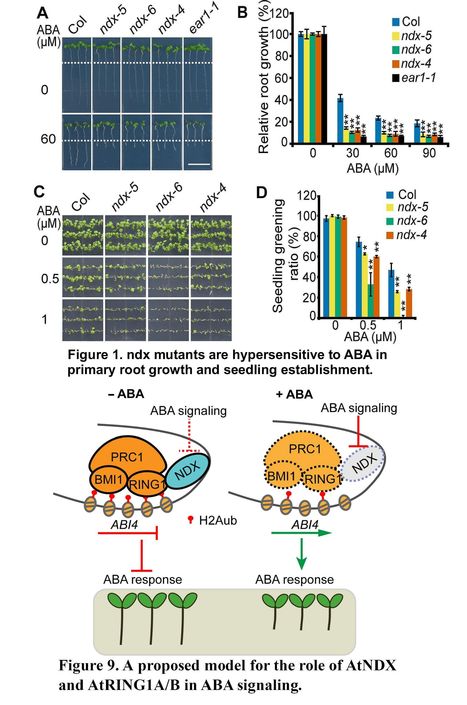
Abstract: "The phytohormone abscisic acid (ABA) and the Polycomb group (PcG) proteins have key roles in regulating plant growth and development; however, their interplay and underlying mechanisms are not fully understood. Here, we identified an Arabidopsis thaliana nodulin homeobox (AtNDX) protein as a negative regulator in the ABA signaling pathway. AtNDX mutants are hypersensitive to ABA, as measured by inhibition of seed germination and root growth, and the expression of AtNDX is downregulated by ABA. AtNDX interacts with the Polycomb Repressive Complex 1 (PRC1) core components AtRING1A and AtRING1B in vitro and in vivo, and together, they negatively regulate the expression levels of some ABA-responsive genes. We identified ABA-INSENSITIVE (ABI4) as a direct target of AtNDX. AtNDX directly binds the downstream region of ABI4 and deleting this region increases the ABA sensitivity of primary root growth. Furthermore, ABI4 mutations rescue the ABA-hypersensitive phenotypes of ndx mutants and ABI4-overexpressing plants were hypersensitive to ABA in primary root growth. Thus, our work reveals the critical functions of AtNDX and PRC1 in ABA signaling and their regulation of ABI4."
|
|
Rescooped by
Loïc Lepiniec
from lignocellulosic biomass
January 5, 2020 2:47 PM
|
Plant somatic cells can be reprogrammed to totipotent embryonic cells that are able to form differentiated embryos in a process called somatic embryogenesis (SE), by hormone treatment or through overexpression of certain transcription factor genes, such as BABY BOOM (BBM). Here we show that overexpression of the AT-HOOK MOTIF CONTAINING NUCLEAR LOCALIZED 15 (AHL15) gene induces formation of somatic embryos on Arabidopsis thaliana seedlings in the absence of hormone treatment. During zygotic embryogenesis, AHL15 expression starts early in embryo development, and AH15 and other AHL genes are required for proper embryo patterning and development beyond the heart stage. Moreover, AHL15 and several of its homologs are upregulated and required for SE induction upon hormone treatment, and they are required for efficient BBM-induced SE as downstream targets of BBM. A significant number of plants derived from AHL15 overexpression-induced somatic embryos are polyploid. Polyploidisation occurs by endomitosis specifically during the initiation of SE, assumingly due to AHL15-mediated heterochromatin decondensation coinciding with the acquisition of embryonic competency in somatic plant cells.
Via Herman Höfte
|
|
Scooped by
Loïc Lepiniec
November 11, 2019 3:41 AM
|
Authors: Changjiang Li, Lei Shi, Yanan Wang, Wei Li, Binqing Chen, Lei Zhu and Ying Fu.
Molecular Plant (2019)
Abstract: "Suppression mechanisms employed by transcriptional repressors commonly exist in diverse phytohormone signaling pathways. In Arabidopsis thaliana, JASMONATE-ZIM DOMAIN (JAZ) proteins are transcriptional repressors that function as negative regulators of diverse JA responses. Novel Interactor of JAZ (NINJA) is an adaptor protein connecting JAZs with the co-repressor, TOPLESS (TPL), to mediate gene repression in JA-dependent root growth inhibition and defense pathways. However, whether NINJA or other adaptor proteins are employed in other JA responsive biological processes remains to be elucidated. In the present study, we demonstrate that a previously uncharacterized protein, ECAP (EAR motif-Containing Adaptor Protein), directly interacts with JAZ6/8 and enhances their transcriptional repression activities. We also provide evidence that ECAP is a novel adaptor protein for JAZ6/8 recruitment of the transcriptional co-repressor, TPR2, into a transcriptional repressor complex, to repress the WD-repeat/bHLH/MYB complex, an important transcriptional activator in the JA-dependent anthocyanin biosynthesis pathway. This novel insight, together with previous studies, reveals that specific adaptor proteins are critical for distinct JA responses by pairing different JAZs (which possess overlapping but also individual functions) with the general co-repressors, TPL and TPRs."
|
|
Rescooped by
Loïc Lepiniec
from Plant and Seed Biology
September 6, 2019 11:20 AM
|
Identifying genetic variation that increases crop yields is a primary objective in plant breeding. We used association analyses of Brassica napus (oilseed rape/canola) accessions to identify genetic variation that influences seed size, lipid content and final crop yield. Variation in the promoter region of a HECT E3 ligase gene BnaUPL3.C03 made a major contribution to variation in seed weight per pod, with accessions exhibiting hihg seed weight per pod expressing lower levels of BnaUPL3.C03 expression. We defined a mechanism in which UPL3 mediated the proteasomal degradation of LEC2, a master transcriptional regulator of seed maturation. Accessions with reduced UPL3 expression had increased LEC2 protein levels, larger seeds and prolonged expression of lipid biosynthetic genes during seed maturation. Natural variation in BnaUPL3.C03 expression appears not to have been exploited in current Brassica napus breeding lines and could therefore be used as a new approach to maximize future yields in this important oil crop.
|
|
Scooped by
Loïc Lepiniec
September 6, 2019 11:07 AM
|
In many legume species, somatic embryogenesis is a limiting step of in vitro regeneration, with profound implications to genetic engineering and plant breeding. In Arabidopsis thaliana, the small AFL subfamily of B3-type transcriptional factors is composed by LEC2 (LEAFY COTYLEDON 2), FUSCA (FUSCA3), and ABI3 (ABSCISIC ACID INSENSITIVE 3), which are directly involved in both zygotic and somatic embryogenesis. This study aimed to identify and analyze the expression profile of AFL subfamily genes during in vitro induction of the somatic embryogenesis in the model legume Medicago using near-isogenic genotypes contrasting for their capability of regenerating in vitro. Three AFL genes were identified in the Medicago truncatulagenome: MtLEC2, MtFUSCA3 and MtABI3. RT-qPCR was used to compare the expression of these genes during the induction of somatic embryogenesis in the embryogenic genotype M9-10a and the non-embryogenic genotype M9. The AFL genes identified were highly expressed 10 days after introducing leaflet explants in vitro in the embryogenic genotype (M9-10a), whereas absence or low expression was observed in explants of the non-embryogenic genotype (M9). During zygotic embryogenesis, the Medicago Gene Atlas revealed that expression of MtFUSCA3 and MtABI3 occurred specifically during seed development, starting at 10 days after pollination. This study allowed for the identification and transcriptional characterization of MtLEC2, MtFUSCA3,and MtABI3. The expression pattern of these genes in the M9-10a genotype suggests they are involved in the Medicago truncatula somatic embryogenesis. The transcriptional profile of AFL transcription factors highlights the evolutionary conservation of this developmental pathway between the Arabidopsis and Medicago lineages and opens avenues to improve the efficiency of in vitro embryogenesis in legume crops. Key message Expression of MtLEC2, MtFUSCA3, and MtABI3 genes was induced during somatic embryogenesis and these genes to be used as in vitro regeneration biomarkers as well as to improving somatic embryogenic rates in legumes and other crops recalcitrant to in vitro regeneration.
|
|
Scooped by
Loïc Lepiniec
September 5, 2019 2:22 AM
|
Authors: Meng-Jiao Lv, Wen Wan, Fei Yu and Lai-Sheng Meng.
Journal of Agricultural and Food Chemistry (2019)
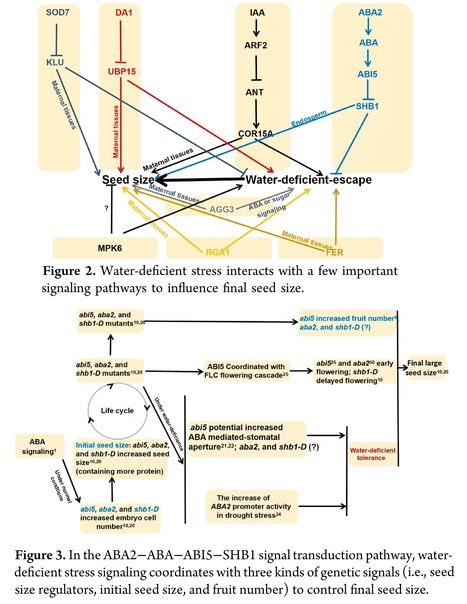
Abstract: "In higher plants, seed size is an important parameter and agricultural trait in many aspects of evolutionary fitness. The loss of water-deficiency-induced crop yield is the largest among all natural hazards. Under water-deficient stress, the most prevalent response to terminal stress is to accelerate the early arrest of floral development and, thereby, to accelerate fruit/seed production, which consequently reduces seed size. This phenomenon is well-known, but its molecular mechanism is not well-reviewed and characterized. However, increasing evidence have indicated that water-deficient stress is always coordinated with three genetic signals (i.e., seed size regulators, initial seed size, and fruit number) that decide the final seed size. Here, our review presents new insights into the mechanism underlying cross-talk water-deficient stress signaling with three genetic signals controlling final seed size. These new insights may aid in preliminary screening, identifying novel genetic factors and future design strategies, or breeding to increase crop yield."
|
|
Scooped by
Loïc Lepiniec
August 31, 2019 3:08 AM
|
Authors: Anthoni Pellizzaro, Martine Neveu, David Lalanne, Benoit Ly Vu, Yuri Kanno, Mitsunori Seo, Olivier Leprince and Julia Buitink.
New Phytologist (2019)
Abstract: "1.Seed longevity, the maintenance of viability during dry storage, is a crucial factor to preserve plant genetic resources and seed vigor. Inference of a temporal gene‐regulatory network of seed maturation identified auxin signaling as a putative mechanism to induce longevity‐related genes. 2.Using auxin‐response sensors and tryptophan‐dependent auxin biosynthesis mutants of Arabidopsis thaliana L., the role of auxin signaling in longevity was studied during seed maturation. 3.DII and DR5 sensors demonstrated that concomitant with the acquisition of longevity, auxin signaling input and output increased and underwent a spatio‐temporal redistribution, spreading throughout the embryo. Longevity of seeds of single auxin biosynthesis mutants with altered auxin signaling activity was affected in a dose‐response manner depending on the level of auxin activity. Longevity‐associated genes with promoters enriched in auxin response elements and the master regulator ABSCISIC ACID INSENSITIVE 3 were induced by auxin in developing embryos and deregulated in auxin biosynthesis mutants. The beneficial effect of exogenous auxin during seed maturation on seed longevity was abolished in abi3‐1 mutants. 4.These data suggest a role for auxin signaling activity in the acquisition of longevity during seed maturation."
|