Your new post is loading...

|
Rescooped by
Loïc Lepiniec
from Plant-Microbe Symbiosis
February 26, 2021 2:48 AM
|
Mammalian phase II metabolism of dietary plant flavonoid compounds generally involves substitution with glucuronic acid. In contrast, flavonoids mainly exist as glucose conjugates in plants, and few plant UDP-glucuronosyltransferase enzymes have been identified to date. In the model legume Medicago truncatula, the major flavonoid compounds in the aerial parts of the plant are glucuronides of the flavones apigenin and luteolin. Here we show that the M. truncatula glycosyltransferase UGT84F9 is a bi-functional glucosyl/glucuronosyl transferase in vitro, with activity against a wide range of flavonoid acceptor molecules including flavones. However, analysis of metabolite profiles in leaves and roots of M. truncatula ugt84f9 loss of function mutants revealed that the enzyme is essential for formation of flavonoid glucuronides, but not most flavonoid glucosides, in planta. We discuss the use of plant UGATs for the semi-synthesis of flavonoid phase II metabolites for clinical studies.
Via Jean-Michel Ané
|
|
Scooped by
Loïc Lepiniec
February 14, 2021 3:52 AM
|
l nous a semblé que la période était propice à proposer une série de webinaires, d’une durée d’une heure, sur des sujets choisis par le Conseil Scientifique de l’AFBV. Les deux premiers traiteront des progrès récents dans la connaissance des associations des végétaux avec le monde des microorganismes (microbiote) et des possibilités d’amélioration de ces relations. # Webinaire N°1
Mercredi 10 mars à 11h Conférence de Christophe Mougel – Inrae « Le microbiote associé aux plantes : sa diversité, ses interactions et l’importance de ses relations avec les différents végétaux » > S’inscrire en ligne (gratuit mais obligatoire) # Webinaire N°2
Mardi 23 mars à 11h Conférence d’Yvan Moënne-Loccoz – Professeur Université Lyon « Les pistes de contrôle et d’amélioration des interactions plante/microbiote, y compris par modification génétique (au sens large) de la plante » > S’inscrire en ligne (gratuit mais obligatoire)
|
|
Scooped by
Loïc Lepiniec
February 8, 2021 7:25 AM
|
In angiosperm seeds, the endosperm develops to varying degrees and accumulates different types of storage compounds remobilized by the seedling during early post-germinative growth. Whereas the molecular mechanisms controlling the metabolism of starch and seed-storage proteins in the endosperm of cereal grains are relatively well characterized, the regulation of oil metabolism in the endosperm of developing and germinating oilseeds has received particular attention only more recently, thanks to the emergence and continuous improvement of analytical techniques allowing the evaluation, within a spatial context, of gene activity on one side, and lipid metabolism on the other side. These studies represent a fundamental step toward the elucidation of the molecular mechanisms governing oil metabolism in this particular tissue. In particular, they highlight the importance of endosperm-specific transcriptional controls for determining original oil compositions usually observed in this tissue. In the light of this research, the biological functions of oils stored in the endosperm of seeds then appear to be more diverse than simply constituting a source of carbon made available for the germinating seedling.
|
|
Scooped by
Loïc Lepiniec
February 4, 2021 1:04 PM
|
Jusqu'au 4 mars, INRAE recrute 60 chercheurs et chercheuses par voie de concours. Pour vous permettre d'en savoir plus sur notre organisme de recherche et sur le projet scientifique de certaines de nos équipes d'accueil, nous vous proposons une série de 4 webinaires. Inscrivez-vous !
|
|
Rescooped by
Loïc Lepiniec
from Plant Sciences
January 6, 2021 3:29 AM
|
Doctorat de 3ème cycle en biologie végétale (université de Rennes I), 1978, doctorat d'Etat en 1982 (université de Paris Sud), Michel DRON a commencé sa carrière comme chargé de recherche CNRS au laboratoire de biologie moléculaire végétale de l’université Paris XI à Orsay. En 1986 à l’Institut Salks de San Diego, il participe à l’analyse de la régulation de l’expression de gènes de défense de plantes dans un contexte d’agression pathologique. En 1988, il a été nommé professeur de biologie et pathologie végétales à l’université Paris-sud-Orsay, et y a pris la direction du laboratoire de phytopathologie moléculaire. Il a assuré la responsabilité du DEA et de la formation doctorale en phytopathologie, à l’échelle nationale. En 1997, il devient directeur scientifique du Cirad. En 2000, revenu à Orsay, il reprend ses fonctions de professeur, et assure la direction de l’école doctorale sciences du végétal jusqu’à la fin 2009. Début 2010, il dirige l'« Institut de biologie des plantes » (IBP) de la faculté des sciences d’Orsay. En 2012, il a initié et soutenu la création de l’Institut de Sciences de Plantes de Paris-Saclay (IPS2) ainsi que le développement du Labex SPS.
Via Saclay Plant Sciences
|
|
Scooped by
Loïc Lepiniec
December 21, 2020 7:58 AM
|
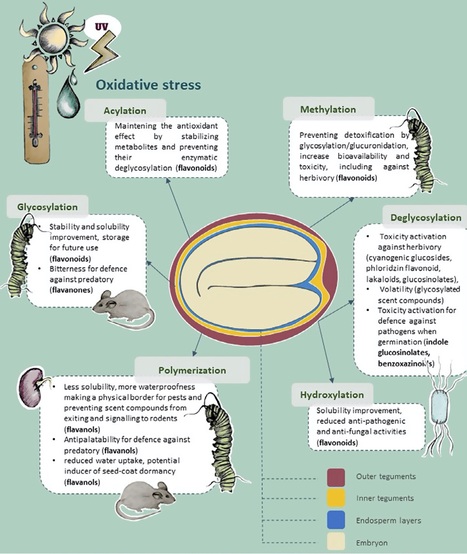
Seed quality is considered as a major agricultural issue with respect to food and non-food uses, biodiversity preservation and environmental protection. Germination efficiency and seed vigor are key factors to ensure correct plant production and yield. Germination can be limited by seed dormancy and/or suboptimal environmental conditions. In addition, seed viability is a fundamental trait to consider in the management of genetic resources and market chain. Seed quality is largely determined by the accumulation of various storage compounds including specialized metabolites (SMs) with protective functions. Therefore, a comprehensive investigation of seed SMs is of paramount importance. During the last years, developing multiomics approaches has provided a wealth of data highlighting the key biological functions and major molecular/metabolic hubs of seed specialized metabolites. This chapter will give an updated overview of the biodiversity of these metabolites and the regulatory networks that control their production and storage. We will also discuss the spatial distribution and structure/function relationships of these SMs. We will focus on the following four major groups detected in seeds, phenylpropanoids (more than about 10,000 compounds), alkaloids (about 20,000 compounds), sulfur-containing compounds (e.g., glucosinolates), and terpenoids (more than 40,000 compounds).
Authors: Xinyu Xu, Zhiguo E, Dongping Zhang, Qianbin Yun, Yong Zhou, Baixiao Niu and Chen Chen.
Plant Physiology (2021)
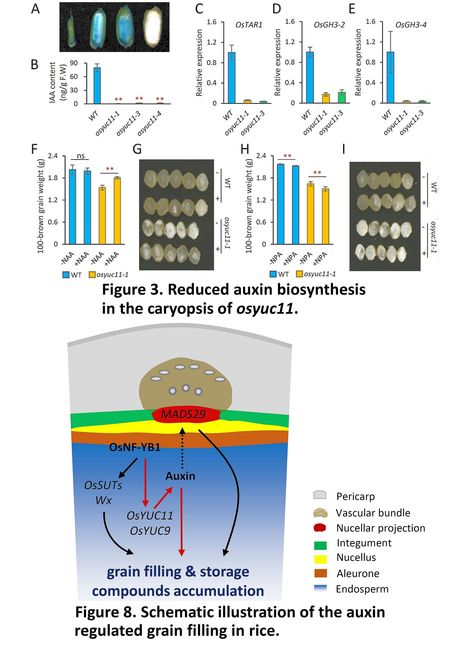
Abstract: "Auxin is a phytohormone essential for plant development. However, our understanding of auxin-regulated endosperm development remains limited. Here, we described rice YUCCA (YUC) flavin-containing monooxygenase encoding gene OsYUC11 as a key contributor to auxin biosynthesis in rice (Oryza sativa) endosperm. Grain filling or storage product accumulation was halted by mutation of OsYUC11, but the deficiencies could be recovered by exogenous application of auxin. A rice transcription factor (TF) yeast library was screened, and 41 TFs that potentially bind to the OsYUC11 promoter were identified, of which OsNF-YB1, a member of the nuclear factor Y family, is predominantly expressed in the endosperm. Both osyuc11 and osnf-yb1 mutants exhibited reduced seed size and increased chalkiness, accompanied by a reduction in indole-3-acetic acid biosynthesis. OsNF-YB1 can bind the OsYUC11 promoter to induce gene expression in vivo. We also found that OsYUC11 was a dynamically imprinted gene that predominantly expressed the paternal allele in the endosperm up to 10 days after fertilization (DAF) but then became a non-imprinted gene at 15 DAF. A functional maternal allele of OsYUC11 was able to recover the paternal defects of this gene. Overall, the findings indicate that OsYUC11-mediated auxin biosynthesis is essential for endosperm development in rice."
Via Julio Retamales
|
|
Scooped by
Loïc Lepiniec
October 11, 2020 3:56 AM
|
Authors: Hu-Hui Chen, Jianhua Tong, Wei Fu, Zhenwei Liang, Jiuxiao Ruan, Yaoguang Yu, Xin Song, Liangbing Yuan, Langtao Xiao, Jun Liu, Yuhai Cui, Shangzhi Huang and Chenlong Li.
Plant Physiology (2020)
Abstract: "Seed dormancy is an adaptive trait that is crucial to plant survival. Abscisic acid (ABA) is the primary phytohormone that induces seed dormancy. However, little is known about how the level of ABA in seeds is determined. Here we show that the Arabidopsis thaliana H3K27me3 demethylase RELATIVE OF EARLY FLOWERING 6 (REF6) suppresses seed dormancy by inducing ABA catabolism in seeds. Seeds of the ref6 loss-of-function mutants displayed enhanced dormancy that was associated with increased endogenous ABA content. We further show that the transcripts of two genes key to ABA catabolism, CYP707A1 and CYP707A3, but not genes involved in ABA biosynthesis, were significantly reduced in ref6 mutants during seed development and germination. In developing siliques, REF6 bound directly to CYP707A1 and CYP707A3, and was responsible for reducing their H3K27me3 levels. Genetic analysis demonstrated that the enhanced seed dormancy and ABA concentration in ref6 depended mainly on the reduced expression of CYP707A1 and CYP707A3. Conversely, overexpression of CYP707A1 could offset the enhanced seed dormancy of ref6. Taken together, our results revealed an epigenetic regulation mechanism that is involved in the regulation of ABA content in seeds."
|
|
Scooped by
Loïc Lepiniec
August 27, 2020 5:05 AM
|
Authors: Imtiyaz Khanday, Christian Santos-Medellín and Venkatesan Sundaresan.
bioRxiv (2020)
Abstract: "Somatic embryogenesis, a powerful tool for clonal propagation and for plant transformation, involves cellular reprogramming of differentiated somatic cells to acquire pluripotency. Somatic embryogenesis can be induced by treating explants with plant growth regulators. However, several plant species including agronomically important cereal crops remain recalcitrant to dedifferentiation and transformation except from embryonic tissues. Somatic embryogenesis can also be induced by ectopic expression of select embryonic factors, including in cereals by BABY BOOM (BBM) transcription factors. How BBM genes bypass the need for exogenous hormones is not well understood. Here, we investigated downstream targets during induction of somatic embryogenesis in rice by OsBBM1 ((Oryza sativa BABY BOOM1). Transient induction of OsBBM1 led to the upregulation of auxin biosynthesis OsYUCCA genes. Continued induction of OsBBM1 resulted in somatic embryogenesis without the need for exogenous auxins. Genetic mutant analysis of OsBBM1 downstream targets, OsYUCCA6, OsYUCCA7 and OsYUCCA9, show that they are required for normal rice development including root and shoot development. Somatic embryogenic potential of OsYUCCA triple mutants was highly compromised despite the presence of exogenous auxin. Additionally, we show that somatic embryogenesis induction by exogenous auxin in rice requires functional BBM genes. Thus, OsBBM1 mediated cellular reprogramming and somatic embryogenesis likely involves increased localized auxin through direct upregulation of OsYUCCA genes. This study reveals mechanistic details of how somatic embryogenesis is established in differentiated tissues in rice, a monocot model and agronomically important cereal crop, with the potential utility to improve regeneration from tissue culture for recalcitrant plants in future."
|
|
Scooped by
Loïc Lepiniec
August 26, 2020 3:26 AM
|
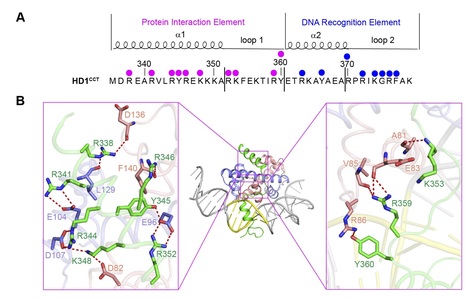
CCT (CONSTANS, CONSTANS-LIKE and TOC1) domain-containing proteins are a large family unique to plants. They transcriptionally regulate the processes related to photoperiodic flowering, circadian rhythms, vernalization, and other related functions. CO (CONSTANS) and HD1 (HEADING DATE 1), through the CCT domain, coordinate with the NF-YB/YC dimer to specifically target a conserved 'CCACA' motif within the downstream promotor. However, the mechanism underlying the DNA recognition by CCT domain remains unclear. Here we determined the crystal structures of the rice NF-YB/YC dimer and the florigen Hd3a-bound HD1CCT/NF-YB/YC trimer with resolutions of 2.0 Å and 2.55 Å, respectively. The CCT domain of HD1 displays an elongated structure containing two (alpha)-helices and two loops, tethering the Hd3a to the NF-YB/YC dimer. Helix (alpha)2 and loop 2 are anchored into the minor groove of the 'CCACA' motif, which determines the specific base recognition. Our structures reveal the interaction mechanism among the CCT domain, NF-YB/YC dimer, and the target DNA. These results not only provide new insights into the network between the CCT proteins and NF-Y subunits, but also offer references for improving productivity and global adaptability of crops by manipulating florigen expression.
|
|
Scooped by
Loïc Lepiniec
August 23, 2020 5:19 AM
|
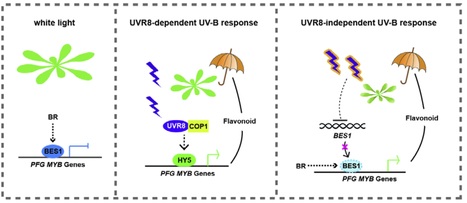
Ultraviolet B (UV-B) light is a potential stress factor in plants, but how plants coordinate growth and UV-B stress responses is not well understood. Here we report that brassinosteroid (BR) signaling inhibits UV-B stress responses in Arabidopsis thaliana and various crops by controlling flavonol biosynthesis. We further demonstrate that BRI1-EMS-SUPPRESSOR 1 (BES1) mediates the tradeoff between plant growth and UV-B defense responses. BES1, a master transcription factor involved in BR signaling, represses the expression of transcription factor genes MYB11, MYB12, and MYB111, which activate flavonol biosynthesis. BES1 directly binds to the promoters of these MYBs in a BR-enhanced manner to repress their expression, thereby reducing flavonol accumulation. However, exposure to broad-band UV-B, primarily low-wavelength high-energy UV-B light, down-regulates BES1 expression, thus promoting flavonol accumulation. These findings demonstrate that BR-activated BES1 not only promotes growth but also inhibits flavonoid biosynthesis. UV-B stress suppresses the expression of BES1 to allocate energy to flavonoid biosynthesis and UV-B stress responses, allowing plants to switch from growth to UV-B stress responses in a timely manner.
|
|
Scooped by
Loïc Lepiniec
August 19, 2020 2:36 AM
|
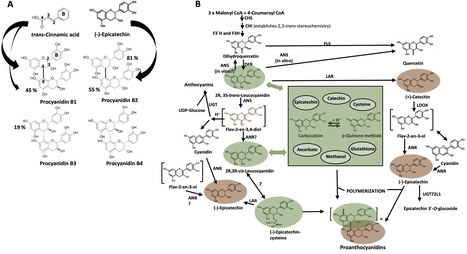
Proanthocyanidins (PAs, also known as condensed tannins) are polymers of flavan-3-ols thatbind to proteins and have been ascribed functions as herbivore feeding deterrents andantimicrobial compounds. They provide astringency to fruits and beverages, positively impact human health, and benefit ruminant livestock by improving nitrogen nutrition and providing protection from pasture bloat (McMahon et al., 2000; Dixon et al., 2012; Rauf et al., 2019). Much progress has been made in recent years in understanding the molecular genetic basis of PA biosynthesis. However, there remain difficulties in resolving the chemical labeling pattern of PAs with their proposed biosynthetic pathway, and defining the subcellular sites ofbiosynthesis. There is also no model that fully explains the cell biological phenotypes of mutations that interrupt the pathway and disturb the accumulation of PAs in the central vacuole.
|
|
Rescooped by
Loïc Lepiniec
from Plant Sciences
August 3, 2020 4:57 PM
|
The multinational Arabidopsis research community is highly collaborative and over the past thirty years these activities have been documented by the Multinational Arabidopsis Steering Committee (MASC). Here, we (a) highlight recent research advances made with the reference plant Arabidopsis thaliana ; (b) provide summaries from recent reports submitted by MASC subcommittees, projects and resources associated with MASC and from MASC country representatives; and (c) initiate a call for ideas and foci for the “fourth decadal roadmap,” which will advise and coordinate the global activities of the Arabidopsis research community.
Via Saclay Plant Sciences
|
|
|
Rescooped by
Loïc Lepiniec
from lignocellulosic biomass
February 20, 2021 3:38 AM
|
Cells may form dropletlike functional compartments through a process called phase separation, but not as often as some propose
Via Herman Höfte
De la fin des années 30 au milieu des années 60, Philippe L’Héritier et ses collaborateurs ont découvert puis étudié le virus sigma qui infecte la population naturelle de la drosophile mélanogaster dans le monde entier. Le virus Sigma possède deux caractéristiques notables : premièrement, il n’est pas mortel pour son hôte, deuxièmement, il est transmis verticalement par un mécanisme qui ne suit pas les lois de Mandel (biparental, soit par les ovules ou les cellules spermatiques). La plupart des travaux expérimentaux ont été réalisés depuis 1950 sur le campus du CNRS à Gif-sur-Yvette. Dans cet article, nous avons analysé le processus scientifique de ce travail dans le contexte scientifique de cette période (1937-1965).
Via Life Sciences UPSaclay
|
|
Scooped by
Loïc Lepiniec
February 4, 2021 1:11 PM
|
Haut lieu de la formation des agronomes, le Domaine de Grignon est à vendre. L’État a lancé un appel à projet pour ce site de 300 hectares à 30 minutes de la capitale. Face aux offres de promoteurs immobiliers, les élus locaux et une association d’agronomes ont déposé un projet et une offre.
|
|
Rescooped by
Loïc Lepiniec
from Plant Sciences
January 20, 2021 3:53 AM
|
Seeds produce a myriad of Specialized Metabolites (SMs). Nevertheless, despite the essential role of SMs in the interaction of plants with their environment, studying the ability of crop seeds to produce these protective compounds has been neglected. Camelina is an oilseed crop, whose seeds are characterized by high oil content and a unique composition, including broad SM diversity. We characterized SM landscapes in the seeds of six camelina cultivars grown in the open field and harvested during five consecutive growing seasons. We achieved a comprehensive annotation of camelina seed SMs combining molecular and correlation network analyses, which cluster SMs based on their chemical structures and co-accumulation patterns, respectively. Thus, we were able to evaluate the impact of the genotype and environment on the accumulation of these metabolites. Our data showed surprisingly high and unexplored effects of the environment on the stimulation of the seed-specialized metabolome. Moreover, they emphasize that seed SMs display a much higher environmental plasticity than storage compounds (e.g. oil and proteins). Last, we identified flavonols as the most plastic metabolic class, revealing highly variable accumulation according to the environmental conditions and/or the genotype. This work highlights the predominant effect of the environment on the regulation of the seed-specialized metabolome, with a potential impact on the seed quality of camelina and other crop species.
Via Saclay Plant Sciences
Authors: Chiara Longo, Soyanni Holness, Veronica De Angelis, Andrea Lepri, Sara Occhigrossi, Veronica Ruta and Paola Vittorioso.
Genes (2021)
Abstract: "The transition from a dormant to a germinating seed represents a crucial developmental switch in the life cycle of a plant. Subsequent transition from a germinating seed to an autotrophic organism also requires a robust and multi-layered control. Seed germination and seedling growth are multistep processes, involving both internal and external signals, which lead to a fine-tuning control network. In recent years, numerous studies have contributed to elucidate the molecular mechanisms underlying these processes: from light signaling and light-hormone crosstalk to the effects of abiotic stresses, from epigenetic regulation to translational control. However, there are still many open questions and molecular elements to be identified. This review will focus on the different aspects of the molecular control of seed dormancy and germination, pointing out new molecular elements and how these integrate in the signaling pathways already known.
Via Julio Retamales
|
|
Rescooped by
Loïc Lepiniec
from Plant Sciences
December 16, 2020 11:21 AM
|
Optimal plant growth is hampered by deficiency of the essential macronutrient phosphate in most soils. Plant roots can however increase their root hair density to efficiently forage the soil for this immobile nutrient. By generating and exploiting a high-resolution single-cell gene expression atlas of Arabidopsis roots, we show an enrichment of TARGET OF MONOPTEROS 5 / LONESOME HIGHWAY (TMO5/LHW) target gene responses in root hair cells. The TMO5/LHW heterodimer triggers biosynthesis of mobile cytokinin in vascular cells and increases root hair density during low phosphate conditions by modifying both the length and cell fate of epidermal cells. Moreover, root hair responses in phosphate deprived conditions are TMO5 and cytokinin dependent. In conclusion, cytokinin signaling links root hair responses in the epidermis to perception of phosphate depletion in vascular cells.
Via Saclay Plant Sciences
|
|
Scooped by
Loïc Lepiniec
October 14, 2020 7:03 AM
|
Seeds are essential for human civilization, so understanding the molecular events underpinning seed development and the zygotic embryo it contains is important. In addition, the approach of somatic embryogenesis is a critical propagation and regeneration strategy to increase desirable genotypes, to develop new genetically modified plants to meet agricultural challenges, and at a basic science level, to test gene function. We briefly review some of the transcription factors (TFs) involved in establishing primary and apical meristems during zygotic embryogenesis, as well as TFs necessary and/or sufficient to drive somatic embryo programs. We focus on the model plant Arabidopsis for which many tools are available, and review as well as speculate about comparisons and contrasts between zygotic and somatic embryo processes.
|
|
Scooped by
Loïc Lepiniec
October 1, 2020 2:09 AM
|
Highlights - •
Globally, UV-absorbing pigmentation of flowers increased during the 20th century - •
Pigmentation increased with ozone decline in taxa with pollen exposed to ambient UV - •
Pigmentation declined with temperature rise in taxa with pollen shielded by petals - •
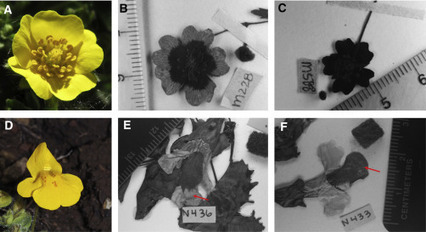
Rapid floral pigmentation responses to global change may impact pollination Summary Across kingdoms, organisms ameliorate UV stress by increasing UV-absorbing pigmentation. Rapid ozone degradation during the 20th century resulted in elevated UV incidence, but pigmentation responses to this aspect of global change have yet to be demonstrated. In flowering plants, UV exposure favors larger areas of UV-absorbing pigmentation on petals, which protects pollen from UV-damage. Pigmentation also affects floral thermoregulation, suggesting climate warming may additionally impact pigmentation. We used 1,238 herbarium specimens collected from 1941 to 2017 to test whether change in UV floral pigmentation was associated with altered ozone and temperature in 42 species spanning three continents. We tested three predictions: first, UV-absorbing pigmentation will increase temporally and be correlated with reduced ozone (higher UV) when accounting for effects of temperature; second, taxa that experienced larger ozone declines will display larger increases in pigmentation; and third, taxa with anthers exposed to ambient UV will respond more strongly than those with anthers protected by petals. Globally, the extent of petal UV pigmentation increased significantly across taxa by ∼2% per year. However, temporal change was species specific—increasing in some taxa but declining in others. Species with exposed anthers experiencing larger declines in ozone displayed more dramatic pigmentation increases. For taxa with anthers enclosed within petals, pigmentation declined with increases in temperature, supporting a thermoregulatory role of UV pigmentation. Results document a rapid phenotypic response of floral pigmentation to anthropogenic climatic change, suggesting that global change may alter pollination through its impact on floral color, with repercussions for plant reproductive fitness.
|
|
Scooped by
Loïc Lepiniec
August 26, 2020 3:36 AM
|
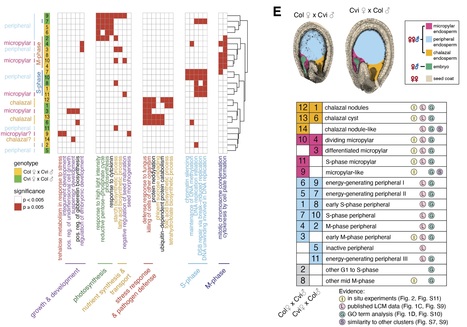
Seeds are the basis of agriculture, yet their full transcriptional complexity has remained unknown. Here, we employ single-nucleus RNA-sequencing to characterize developing Arabidopsis thaliana seeds, with a focus on endosperm. Endosperm, the site of gene imprinting in plants, mediates the relationship between the maternal parent and embryo. We identify new cell types in the chalazal endosperm region, which interfaces with maternal tissue for nutrient unloading. We further demonstrate that the extent of parental bias of maternally expressed imprinted genes varies with cell cycle phase, and that imprinting of paternally expressed imprinted genes is strongest in chalazal endosperm. These data indicate imprinting in endosperm is heterogeneous and suggest that parental conflict, which is proposed to drive the evolution of imprinting, is fiercest at the boundary between filial and maternal tissues.
|
|
Scooped by
Loïc Lepiniec
August 24, 2020 2:49 PM
|
Seed size is a pivotal agronomic trait that links plant sexual reproduction and subsequent seedling establishment, and is affected by the timing of endosperm cellularization following endosperm proliferation after double fertilization. The molecular switch that controls the timing of endosperm cellularization has so far been largely unclear. Here, we report that the Arabidopsis TERMINAL FLOWER1 (TFL1) is a mobile regulator generated in the chalazal endosperm, and moves to the syncytial peripheral endosperm to mediate timely endosperm cellularization and seed size through stabilizing ABSCISIC ACID INSENSITIVE 5. We further show that Ras-related nuclear GTPases interact with TFL1 and regulate its trafficking to the syncytial peripheral endosperm. Our findings reveal TFL1 as an essential molecular switch for regulating endosperm cellularization and seed size. Generation of mobile TFL1 in the chalazal endosperm, which is close to maternal vascular tissues, could provide a hitherto-unknown means to control seed development by mother plants. TERMINAL FLOWER1 (TFL1) is key factor that controls flowering time and inflorescence meristem identity. Here, the researchers assign a new role to TFL1 of seed size determination by regulating the timing of endosperm cellularization.
|
|
Scooped by
Loïc Lepiniec
August 21, 2020 2:15 AM
|
Authors: Suhua Li, Youngsung Joo, Dechang Cao, Ran Li, Gisuk Lee, Rayko Halitschke, Gundega Baldwin, Ian T. Baldwin and Ming Wang
PLoS Biology (2020)
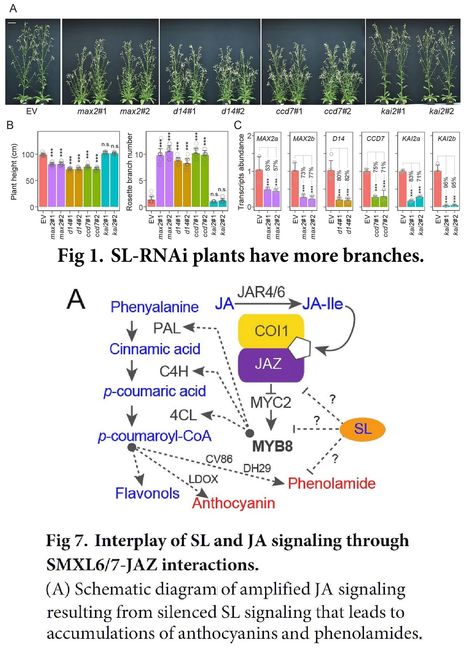
Abstract: "Plants are attacked by herbivores, which often specialize on different tissues, and in response, have evolved sophisticated resistance strategies that involve different types of chemical defenses frequently targeted to different tissues. Most known phytohormones have been implicated in regulating these defenses, with jasmonates (JAs) playing a pivotal role in complex regulatory networks of signaling interactions, often generically referred to as “cross talk.” The newly identified class of phytohormones, strigolactones (SLs), known to regulate the shoot architecture, remain unstudied with regard to plant–herbivore interactions. We explored the role of SL signaling in resistance to a specialist weevil (Trichobaris mucorea) herbivore of the native tobacco, Nicotiana attenuata, that attacks the root–shoot junction (RSJ), the part of the plant most strongly influenced by alterations in SL signaling (increased branching). As SL signaling shares molecular components, such as the core F-box protein more axillary growth 2 (MAX2), with another new class of phytohormones, the karrikins (KARs), which promote seed germination and seedling growth, we generated transformed lines, individually silenced in the expression of NaMAX2, dwarf 14 (NaD14: the receptor for SL) and carotenoid cleavage dioxygenase 7 (NaCCD7: a key enzyme in SL biosynthesis), and karrikin insensitive 2 (NaKAI2: the KAR receptor). The mature stems of all transgenic lines impaired in the SL, but not the KAR signaling pathway, overaccumulated anthocyanins, as did the stems of plants attacked by the larvae of weevil, which burrow into the RSJs to feed on the pith of N. attenuata stems. T. mucorea larvae grew larger in the plants silenced in the SL pathway, but again, not in the KAI2-silenced plants. These phenotypes were associated with elevated JA and auxin (indole-3-acetic acid [IAA]) levels and significant changes in the accumulation of defensive compounds, including phenolamides and nicotine. The overaccumulation of phenolamides and anthocyanins in the SL pathway–silenced plants likely resulted from antagonism between the SL and JA pathway in N. attenuata. We show that the repressors of SL signaling, suppressor of max2-like (NaSMXL6/7), and JA signaling, jasmonate zim-domain (NaJAZs), physically interact, promoting NaJAZb degradation and releasing jasmonate insensitive 1 (JIN1/MYC2) (NaMYC2), a critical transcription factor promoting JA responses. However, the increased performance of T. mucorea larvae resulted from lower pith nicotine levels, which were inhibited by increased IAA levels in SL pathway–silenced plants. This inference was confirmed by decapitation and auxin transport inhibitor treatments that decreased pith IAA and increased nicotine levels. In summary, SL signaling tunes specific sectors of specialized metabolism in stems, such as phenylpropanoid and nicotine biosynthesis, by tailoring the cross talk among phytohormones, including JA and IAA, to mediate herbivore resistance of stems. The metabolic consequences of the interplay of SL, JA, and IAA signaling revealed here could provide a mechanism for the commonly observed pattern of herbivore tolerance/resistance trade-offs."
|
|
Scooped by
Loïc Lepiniec
August 17, 2020 11:25 AM
|
As an important vegetable crop of the legume family, cowpea (Vigna unguiculata L.) is grown widely for its tender pod with good taste and nutrition. The purple cowpea pods attract more attention mainly for the eye-catching color and health-promoting ingredients. Initially, large quantities of two major anthocyanins (delphinidin 3-O-glucoside and cyanidin 3-O-glucoside) and nine kinds of flavonoids (most are quercetin-based flavonol glycosides) were separated and identified from purple cowpea pod by ultra-high performance liquid chromatography coupled with quadrupole Orbitrap high-resolution mass spectrometry. To study them systematically, two representative cowpea cultivars with a drastic difference in anthocyanin accumulation were further analyzed by the integration of metabolomics and transcriptomics. A total of 56 differentially accumulated metabolites and 4142 differentially expressed genes were identified, respectively. On the basis of the comprehensive analysis of multiomic data, it was shown that VuMYB90-1, VuMYB90-2, VuMYB90-3, VuCPC, VuMYB4, and endogenous bHLH and WD40 proteins coordinately control anthocyanin and flavonoid accumulation via transcriptional regulation of structural genes in purple cowpea pod.
|