

When people viewed virtual avatars with coughs or rashes, their brains triggered an immune response.


|
Scooped by
Gilbert C FAURE
onto NeuroImmunology August 1, 2025 7:02 AM
|
 Scoop.it!
When people viewed virtual avatars with coughs or rashes, their brains triggered an immune response.


 Your new post is loading...
 Your new post is loading...
Your new post is loading...
Scoop.it!
|
|
|
Scooped by
Gilbert C FAURE
August 1, 2:12 AM
|
Scoop.it!


New research from Trinity College Dublin is changing how scientists think about Alzheimer’s disease.
Researchers have discovered that microglia, the brain’s immune cells, do more than drive inflammation. They also help keep the brain’s electrical activity stable. When these cells were reduced in an Alzheimer’s model, brain activity became more abnormal and seizure-like episodes increased, suggesting that some experimental treatments could have unintended consequences.
The study, led by Dr Hugh Delaney with senior authors Prof Mark Cunningham (School of Medicine, Trinity College Dublin) and Prof colm cunningham (Trinity School Biochemistry and Immunology), highlights the complexity of Alzheimer’s disease and the importance of understanding the brain’s own protective mechanisms.
The findings suggest that future therapies should target harmful inflammation while preserving the beneficial roles these cells play in maintaining healthy brain function.
Published in the journal Brain, this research is an important step towards developing safer and more effective treatments for the more than 55 million people worldwide living with Alzheimer’s disease.
Congratulations to Hugh, Mark, Colm and all the Trinity researchers involved in this important work. To read the full article, click here: https://lnkd.in/dTAMwtnq
|
|
Scooped by
Gilbert C FAURE
July 30, 3:21 AM
|
Scoop.it!

Charlie Rice's lab at Rockefeller has discovered that the brain prepares for a potential viral attack in advance, thanks to a signaling network that transmits advanced intelligence about infection from distal regions of the body.
Once set in motion by viral RNA, this interferon-powered network protects against viruses such as #WestNileVirus, as well as other viruses that cause #neuroinflammation—many with infection numbers on the rise.
“We discovered that the blood-brain barrier acts as a sort of central immune signaling hub between the body and the brain,” says first author Tyler Lewy, a former graduate student in Rice’s lab. “The presence of virus-associated molecules in the foot is enough to trigger the network.”
The findings deepen our understanding of the immune system’s intricate surveillance apparatus and could inform new approaches to preventing vector-borne neuroinflammation.
🔗: https://bit.ly/4hdtQ28
|
|
Scooped by
Gilbert C FAURE
June 13, 11:51 AM
|
Scoop.it!

In a 2025 #ScienceImmunology Review, researchers discussed how interactions between the nervous and immune systems could impact neurological disorders and allergy-related behaviors like food avoidance.
Learn more: https://scim.ag/4jcCmMr #ScienceMagArchives
|
|
Scooped by
Gilbert C FAURE
February 19, 2:05 AM
|
Scoop.it!
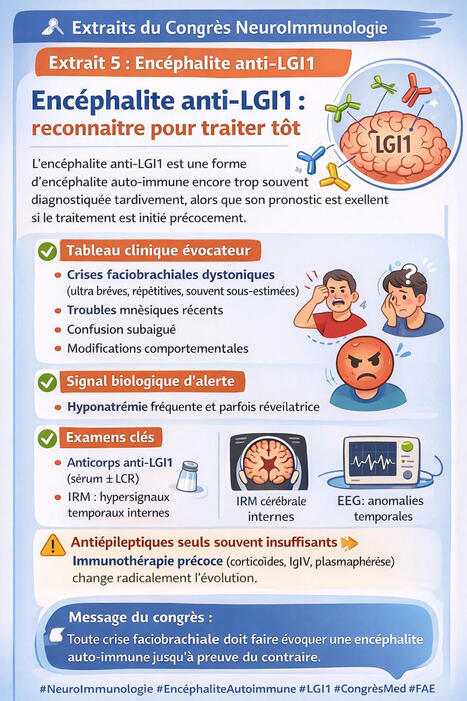
🎓 Série : Extraits du Congrès "NeuroImmunologie"
🔎 Extrait 5🧠 Encéphalite anti-LGI1 : reconnaître pour traiter tôt
L’encéphalite anti-LGI1(Leucine-Rich Glioma-Inactivated 1), est une forme d’encéphalite auto-immune encore trop souvent diagnostiquée tardivement, alors que son pronostic est excellent si le traitement est initié précocement.
📌 Ce qu’il faut retenir :
✅ Tableau clinique évocateur
Crises faciobrachiales dystoniques (ultra brèves, répétitives, souvent sous-estimées)
Troubles mnésiques récents
Confusion subaiguë
Modifications comportementales
✅ Signal biologique d’alerte
Hyponatrémie fréquente et parfois révélatrice
✅ Examens clés
Anticorps anti-LGI1 (sérum ± LCR)
IRM : hypersignaux temporaux internes
EEG : anomalies temporales
⚠️ Point important : les antiépileptiques seuls sont généralement insuffisants.
👉 L’immunothérapie précoce (corticoïdes, IgIV, plasmaphérèse) change radicalement l’évolution.
👥 Profil typique : homme > 50 ans, mais le diagnostic doit rester ouvert devant tout tableau compatible.
🎯 Message du congrès :
Toute crise faciobrachiale doit faire évoquer une encéphalite auto-immune jusqu’à preuve du contraire.
La reconnaissance précoce évite les séquelles cognitives et améliore significativement le pronostic.
#NeuroImmunologie #EncéphaliteAutoimmune #LGI1 #Neurologie #Médecine #CongrèsMédical #Epilepsie #Neuroinflammation #Dibcenter
|
|
Scooped by
Gilbert C FAURE
January 30, 6:26 AM
|
Scoop.it!
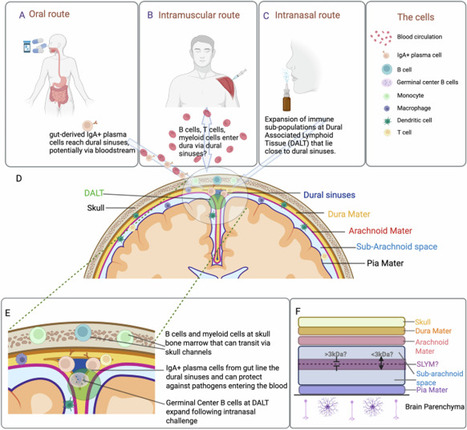
New review from our team published in Nature Communications/ Nature Portfolio – “Incorporating meningeal immunity into vaccine development”. We discuss growing evidence that strategies can be developed to deliberately engage meningeal immune compartments, offering new opportunities for immunizations targeting CNS pathogens, optimizing opioid vaccine approaches, and improving our understanding of neuroinflammation.
Open access: https://lnkd.in/ePbrwy8Y
#Neuroimmunology #VaccineDesign #Adjuvant
|
|
Scooped by
Gilbert C FAURE
January 13, 7:49 AM
|
Scoop.it!

Repeated concussions aren’t just “minor” head injuries - they can trigger lasting #braindamage through the #immunesystem.
From contact sports to military training, repeated head impacts increase the risk of #mooddisorders, #memoryloss, movement problems, and neurodegenerative diseases such as chronic traumatic encephalopathy (CTE), seen in former NFL players including Aaron Hernandez. While these risks are well known, the biological mechanisms have remained unclear.
▪️ A team at the Medical University of South Carolina (MUSC) - led by Stephen Tomlinson, PhD and Silvia Guglietta, PhD - has shown that the immune system, specifically the complement system, plays a central role in driving long-term brain damage after repeated mild concussions. The study, led by first author Khalil Mallah, PhD, with Carsten Krieg, PhD, and colleagues including Devin Hatchell (SCTR Institute), was published in Signal Transduction and Targeted Therapy.
▪️ Using a newly developed murine model that mimics repeated concussions in humans, the researchers demonstrated that excessive complement activation over-stimulates #microglia, the brain’s immune cells. Instead of just clearing damaged tissue, these cells begin “over-pruning” synapses and neurons, disrupting brain connectivity and cognition. Importantly, blocking complement activation with an experimental inhibitor (CR2-Crry) reduced inflammation, preserved neurons and synapses, and improved cognitive outcomes.
💡 Why this matters: there are currently no treatments that target the underlying #inflammation following concussion. Because complement inhibitors are already being explored in other diseases, this work opens a realistic path toward disease-modifying therapies to protect athletes, service members, and others exposed to repeated #headinjury.
🗃️ See comments section for reference.
|
|
Scooped by
Gilbert C FAURE
January 3, 11:30 AM
|
Scoop.it!

Restless legs syndrome (RLS) and periodic limb movements (PLMs) are increasingly recognized as risk factors for cerebrovascular and cardiovascular diseases, particularly stroke. Conversely, stroke can precipitate or exacerbate the symptoms of RLS and PLMs. This Review explores the shared pathophysiological mechanisms linking RLS and PLMs to cerebrovascular pathology, highlighting a bidirectional relationship. We discuss mechanisms including neurotransmitter dysregulation, autonomic dysfunction, inflammation, oxidative stress, hypoxia and genomic and proteomic factors. Furthermore, we summarize emerging evidence and provide new insights on the potential clinical relevance of RLS in cerebrovascular risk assessment and management. Restless legs syndrome and periodic limb movements are increasingly recognized as risk factors for stroke and other cerebrovascular and cardiovascular diseases and vice versa. This Review explores the shared pathophysiological mechanisms that could underly this bidirectional relationship.
|
|
Scooped by
Gilbert C FAURE
December 18, 2025 12:56 PM
|
Scoop.it!
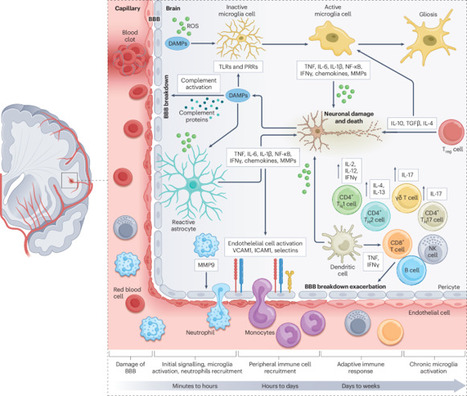
Stroke remains a leading cause of disability owing to the irreversible neuronal loss that it causes and the limited regenerative capacity of the CNS. Although reperfusion therapies such as thrombolysis and mechanical thrombectomy can restore blood flow after stroke, their stringent eligibility criteria leave many patients without treatment options. The immune response, involving complex interactions between brain-resident and peripheral immune cells, has a critical role in stroke recovery. Stem cell-based therapies, particularly those involving neural stem cells and mesenchymal stem cells, may be able to reshape the inflammatory microenvironment after stroke, mitigating secondary injury and promoting tissue repair. However, the precise mechanisms driving their effects remain incompletely understood, hindering clinical translation. In this Review, we highlight the bidirectional crosstalk between stem cells and immune cells (including microglia, T cells and peripheral immune cells) and discuss how these interactions influence neuroinflammation, neural plasticity and circuit remodelling in stroke recovery. We examine key determinants of stem cell therapy efficacy, emphasizing the role of stem cell–immune cell interactions, and discuss targeted strategies to enhance immune modulation and neuroprotection. In this Review, Saef Izzy and colleagues examine the therapeutic potential of stem cells in stroke, with a focus on neural and mesenchymal stem cells. They explore how these stem cells interact with brain immune cells to modulate the inflammatory microenvironment, restore blood–brain barrier integrity and promote tissue repair following a stroke.
|
|
Scooped by
Gilbert C FAURE
December 2, 2025 4:25 AM
|
Scoop.it!

In a 2024 Science study, researchers reported a previously overlooked contributor to the meningeal immune landscape in early brain development: group 2 innate lymphoid cells (ILC2s).
Learn more in this #SciencePerspective: https://scim.ag/44oK8y1 #ScienceMagArchives
|
|
Scooped by
Gilbert C FAURE
from Mucosal Immunity
November 20, 2025 9:40 AM
|
Scoop.it!
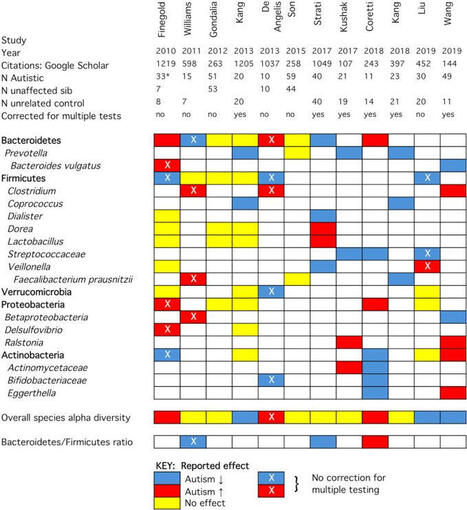
I believe this is one of the most important papers in microbiome science.
This new review in Neuron (Mitchell et al, 2025) systematically dismantles the gut microbiome-autism hypothesis through a critical assessment of published papers.
I was honestly shocked by the numbers: Despite 100+ papers per year and $20-25M in annual NIH funding since 2018, the most cited studies have tiny sample sizes (n=20 for some), uncorrected multiple testing, and contradictory findings. Some report higher microbial diversity in autism, others lower, many find no difference. The taxa they report are inconsistent. When properly analyzed with sibling controls and adequate statistical power, associations largely disappear.
The mouse model data is equally troubling. For example, a 2019 Cell paper claimed fecal transplants from autistic donors induced "autism-like behaviors" in mice. But when reanalyzed with proper statistics, the effects vanished. And it is really not clear how mouse behavior can model human autism.
And these are not obscure papers - they are published in the most high profile journals and have thousands of citations each.
Maybe it is not surprising that randomized controlled trials of probiotics show no consistent benefit for autism.
As a result, we're watching well-intentioned science fuel a billion dollar "wellness" industry selling unproven interventions to vulnerable families.
As a microbiome scientist, this really troubles me. Excellent research IS being done, and the microbiome holds real promise as a diagnostic and therapeutic tool. But these overhyped, methodologically weak studies cast a shadow over our entire field.
The solution, in my opinion – and completely I agree with the authors on this – is to adopt the rigor that transformed human genomics: pre-specified hypotheses, adequate power, standardized protocols and pipelines, large sample sizes, statistical robustness, replication, and above all: resisting the hype machine.
#microbiome #autism #scientificrigor #reproducibility #clinicaltrials | 36 comments on LinkedIn
|
|
Scooped by
Gilbert C FAURE
August 7, 2025 3:25 AM
|
Scoop.it!

Epidemiological data have identified Epstein–Barr virus (EBV) infection as the main environmental risk factor for multiple sclerosis, the predominant autoimmune disease of the central nervous system (CNS)1. However, how EBV infection initiates multiple sclerosis pathogenesis remains unclear. Here we demonstrate that EBV expands oligoclonal T-bet+CXCR3+ B cells that home to the CNS in humanized mice. Effector memory CD8+ T cells and CD4+ TH1 cells as well as CD4+ TH17 cells co-migrate to the brain of EBV-infected humanized mice. T-bet+CXCR3+ B cells can colonize submeningeal brain regions in the absence of other lymphocytes and attract T cells. Depletion of B cells with rituximab or blocking of CXCR3 significantly decreases lymphocyte infiltration into the CNS. Thus, we suggest that symptomatic primary EBV infection generates B cell subsets that gain access to the CNS, attract T cells and thereby initiate multiple sclerosis. Epstein–Barr virus infection generates a neuroinvasive B cell subset, which recruits activated T cells to the central nervous system, promoting multiple sclerosis.
humanized mice not EAE
|
|
Scooped by
Gilbert C FAURE
August 16, 3:51 AM
|
Scoop.it!

🧠 Alzheimer’s disease: should we also consider it a disease of innate immunity?
For decades, Alzheimer’s disease has been viewed primarily through the accumulation of amyloid-β (Aβ) and pathological tau protein. A more recent perspective is broadening this paradigm: innate immunity may be a central driver of the disease rather than merely a consequence of neurodegeneration.
The AD² hypothesis (Alzheimer’s disease as an autoimmune disease) proposes that Aβ may initially participate in a protective immune response. Infections, trauma, metabolic stress and other cellular injuries generate PAMPs and DAMPs, activating the brain’s innate immune machinery.
When this response persists, microglia, initially protective, may shift toward a dysfunctional phenotype. This can lead to chronic production of pro-inflammatory cytokines, inflammasome activation and recruitment of the complement system, particularly C1q and C3.
Complement may subsequently contribute to abnormal synaptic tagging and microglia-mediated synaptic elimination, progressively promoting synaptic dysfunction, neuronal loss and neurodegeneration.
Neuronal injury then releases additional DAMPs, further stimulating innate immunity and creating a self-perpetuating vicious cycle in which an initially protective immune response becomes chronic, dysregulated and potentially damaging to self.
This is the essence of the emerging concept of “innate autoimmunity”: Alzheimer’s disease may not simply be a proteinopathy, but a disorder in which innate immunity, microglia, inflammasomes and complement actively participate in neurodegenerative progression.
⚠️ Importantly, this remains an emerging pathophysiological hypothesis rather than a universally accepted classification of Alzheimer’s disease as an autoimmune disorder.
Rethinking Alzheimer’s disease through the lens of innate immunity may ultimately open new avenues for diagnosis, prevention and immune-targeted therapies.
|
|
Scooped by
Gilbert C FAURE
July 30, 3:42 AM
|
Scoop.it!

Can your voice help detect disease? 🎙️🤖🩺
Excited to share a major milestone in the field of AI-powered vocal biomarkers!
Researchers and clinicians from the Department of Precision Health (DoPH) at the Luxembourg Institute of Health and the University of South Florida (USF) have led an international effort to establish the first consensus-based framework and definitions for vocal biomarkers: a crucial step toward making voice-based disease detection more reliable, reproducible, and ready for clinical practice.
Led by Dr. Guy Fagherazzi (Head of the Department of Precision Health at LIH and Chair of eVoiceNet - COST Action Network) and Dr. Yael Bensoussan (USF Health Morsani College of Medicine and co-lead of Bridge2AI-Voice), this initiative brought together 24 experts from Europe and North America to create a shared scientific language for the field.
Why does this matter? 👇
🗣️ Our voices contain valuable information about our health
📊 AI can detect subtle changes linked to conditions such as Parkinson's disease, Alzheimer's disease, depression, heart failure, and type 2 diabetes
🤝 A common framework will accelerate collaboration, improve validation, and help bring trustworthy voice-based technologies from research labs to clinical care
🔗 Read the full article here and discover how AI and voice are shaping the future of precision health:
https://lnkd.in/edHx32SK
#AI #VoiceAI #VocalBiomarkers #DigitalHealth #PrecisionHealth #HealthcareInnovation #ClinicalResearch #MachineLearning #LIH #eVoiceNet #Bridge2AI #HealthTech
|
|
Scooped by
Gilbert C FAURE
July 29, 1:03 PM
|
Scoop.it!

The blood–brain barrier (BBB) is a unique specialization of central nervous system (CNS) capillary endothelial cells that controls molecular traffic between the blood and the brain. In doing so, the BBB maintains a safe and homeostatic environment for proper neuronal function. The BBB restricts drug delivery to the CNS, while BBB defects contribute to neurodevelopmental and neurodegenerative disorders. In this Review, we discuss the distinct features of CNS capillary endothelial cells that form the BBB. Meanwhile, interactions between capillary endothelial cells and surrounding pericytes, astrocytes and with the extracellular matrix of the basement membrane, are crucial for BBB formation and maintenance. We examine how molecular regulators of capillary endothelial cells and signalling pathways that control cell–cell interactions render the BBB a dynamic and selective interface. We highlight emerging areas of BBB research, including heterogeneity of brain vascular permeability and technology development. Finally, we discuss how insights from BBB biology are shaping therapeutic strategies targeting the BBB. This Review summarizes the latest advances in blood–brain barrier (BBB) research, highlighting how emerging findings on the modulation of BBB function and heterogeneity by cellular interactions and signalling pathways might shape BBB-targeted therapeutics.
|
|
Scooped by
Gilbert C FAURE
June 13, 4:31 AM
|
Scoop.it!

The Autism Medical & Research Summit (AMRS) is an international, congress dedicated to high-support autism
|
|
Scooped by
Gilbert C FAURE
February 13, 4:38 AM
|
Scoop.it!

The immune landscape at the brain’s borders is being reconsidered. In Nature Medicine (2024), we contributed to this broader effort by examining the clinical relevance of immune-brain interactions in patients with glioblastoma.
Since then, accumulating evidence suggests that the skull bone marrow and adjacent meninges form an active immune and hematopoietic compartment directly interfacing with the CNS.
This cranial niche appears to be more than anatomically adjacent – it may actively shape immune surveillance, neuroinflammation, and brain tumor biology.
A key question now is how this interface can be translated into clinical strategies: from refined biomarker approaches and localized immune modulation to new concepts in CNS drug delivery and, potentially, cell-based therapies informed by cranial immune biology.
Selected recent original research:
🔗 Nat Med (2024): https://lnkd.in/efgufXDM
🔗 Cancer Cell (2024): https://lnkd.in/emWxuMv2
🔗 Cell (2026): https://lnkd.in/eAZEGAtq
🔗 Cell (2026): https://lnkd.in/eg4qjubf
🔗 Nat Genet (2026): https://lnkd.in/eDSCYrxQ
#Neuroimmunology #CNS #BrainTumors #CellTherapy #TranslationalResearch
|
|
Scooped by
Gilbert C FAURE
January 14, 1:06 PM
|
Scoop.it!

Targeting TREM2 has emerged as an attractive therapeutic strategy for Alzheimer’s disease, with multiple monoclonal antibodies and small-molecule agonists advancing into clinical development in recent years.
TREM2 is a microglial transmembrane receptor that plays key roles in innate immune signaling, microglial survival, and responses to amyloid-β and tau pathology. While early antibody programs have yet to demonstrate clear clinical benefit, they have generated valuable insights into target biology, pharmacology, and clinical trial design.
This target review covers the evolving TREM2 landscape, including lessons from first-generation antibodies, emerging small-molecule agonists, and how recent clinical and patent activity is renewing momentum around this target.
Explore our target review on emerging TREM2 agonists.
|
|
Scooped by
Gilbert C FAURE
January 2, 5:08 AM
|
Scoop.it!

Emerging evidence highlights the crucial role of peripheral immune cells in maintaining brain homeostasis and their influence on the pathology of Alzheimer disease (AD). Genome-wide association studies have identified numerous AD risk variants in genes expressed by immune cells, implicating innate and adaptive immune pathways in disease progression. Advances in neuroimmunology have revealed that immune cell crosstalk involving T cells, B cells, monocytes and/or macrophages and neutrophils can modulate the hallmark features of AD, including amyloid plaque accumulation, tau pathology and chronic neuroinflammation. Mechanistic insights suggest that chronic peripheral inflammation, immune exhaustion, metabolic dysfunction and epigenetic reprogramming exacerbate neurodegeneration in AD by promoting toxic inflammation and impairing protein clearance in the brain. These findings may catalyse the development of novel immunomodulatory strategies, such as immune checkpoint inhibition and cytokine targeting, among others, for AD. This Review examines peripheral immune alterations in AD, evaluates related therapeutic opportunities and highlights key knowledge gaps, particularly the need for human-derived data to advance translational progress. Future research should prioritize personalized approaches that integrate genetic risk, immune profiling and ageing to inform next-generation therapies for AD. The importance of peripheral immunity in Alzheimer disease has gained much traction in recent years, mainly due to multiple genome-wide association studies identifying risk loci associated with genes expressed predominantly in the periphery. This review discusses the importance of peripheral immune cells in shaping brain physiology and their role in Alzheimer disease.
|
|
Scooped by
Gilbert C FAURE
December 2, 2025 4:14 AM
|
Scoop.it!
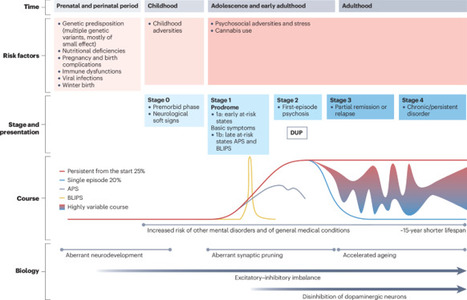
Schizophrenia is a challenging and diverse mental health condition with a lifetime prevalence of 0.4%. Schizophrenia usually manifests in late adolescence or early adulthood and is associated with high disability and a reduced life expectancy. Risk factors include genetic predisposition, prenatal and birth complications, infections and immune dysfunction, and cannabis use as well as psychosocial factors such as childhood trauma or migration. The first psychotic episode is often preceded by a long prodromal phase that can last for several years. No markers are yet available for clinical use that allow prediction of disease development or a diagnosis to be established. A leading theory postulates that excitatory–inhibitory (that is, glutamate–GABA) imbalance in the cortex ultimately leads to dysfunction of the dopaminergic system. Schizophrenia is a heterogeneous disease with different manifestations, including psychotic symptoms as well as negative symptoms and global cognitive deficit, that do not respond to antipsychotic drugs, making management very difficult. Pharmacological treatment coupled with psychotherapeutic interventions, such as cognitive behavioural therapy, cognitive remediation and psychoeducation, remains the mainstay of treatment; however, treatment resistance is frequent. The first medication that targets neurotransmitter systems other than dopamine has been approved for use. Current attempts to use virtual reality and avatars to improve psychotic symptoms and smartphone applications to prevent relapses seem promising. Schizophrenia is a complex and often long-lasting mental health condition that typically begins in late adolescence. In this Primer, Leucht and colleagues review the epidemiology of schizophrenia and current understanding of its pathophysiology, diagnosis and treatment, and discuss the quality of life of affected individuals as well as future research directions.
|
|
Scooped by
Gilbert C FAURE
August 1, 2025 7:02 AM
|
Scoop.it!
When people viewed virtual avatars with coughs or rashes, their brains triggered an immune response.




