NeuroImmunology
10.1K views | +0 today
Your new post is loading...
Scooped by Gilbert C FAURE
January 14, 1:06 PM
Scoop.it!

Targeting TREM2 has emerged as an attractive therapeutic strategy for Alzheimer’s disease, with multiple monoclonal antibodies and small-molecule agonists advancing into clinical development in… | ...

Targeting TREM2 has emerged as an attractive therapeutic strategy for Alzheimer’s disease, with multiple monoclonal antibodies and small-molecule agonists advancing into clinical development in… | ... | NeuroImmunology | Scoop.it
Targeting TREM2 has emerged as an attractive therapeutic strategy for Alzheimer’s disease, with multiple monoclonal antibodies and small-molecule agonists advancing into clinical development in recent years.

TREM2 is a microglial transmembrane receptor that plays key roles in innate immune signaling, microglial survival, and responses to amyloid-β and tau pathology. While early antibody programs have yet to demonstrate clear clinical benefit, they have generated valuable insights into target biology, pharmacology, and clinical trial design.

This target review covers the evolving TREM2 landscape, including lessons from first-generation antibodies, emerging small-molecule agonists, and how recent clinical and patent activity is renewing momentum around this target.

Explore our target review on emerging TREM2 agonists.

No comment yet.
Scooped by Gilbert C FAURE
December 11, 2025 1:47 PM
Scoop.it!

Bridging veins in Alzheimer's disease: Decoding waste clearance failure

No comment yet.
Scooped by Gilbert C FAURE
February 13, 2025 6:48 AM
Scoop.it!

Suzanne Schindler on LinkedIn: #endalz | 21 comments

Suzanne Schindler on LinkedIn: #endalz | 21 comments | NeuroImmunology | Scoop.it
There is a misconception that only amyloid-targeting treatments have been studied in Alzheimer's disease. The reality is that clinical trials have evaluated… | 21 comments on LinkedIn
No comment yet.
Scooped by Gilbert C FAURE
January 12, 2025 5:34 AM
Scoop.it!

Cerebromicrovascular mechanisms contributing to long COVID: implications for neurocognitive health | GeroScience

Cerebromicrovascular mechanisms contributing to long COVID: implications for neurocognitive health | GeroScience | NeuroImmunology | Scoop.it
Long COVID (also known as post-acute sequelae of SARS-CoV-2 infection [PASC] or post-COVID syndrome) is characterized by persistent symptoms that extend beyond the acute phase of SARS-CoV-2 infection, affecting approximately 10% to over 30% of those infected. It presents a significant clinical challenge, notably due to pronounced neurocognitive symptoms such as brain fog. The mechanisms underlying these effects are multifactorial, with mounting evidence pointing to a central role of cerebromicrovascular dysfunction. This review investigates key pathophysiological mechanisms contributing to cerebrovascular dysfunction in long COVID and their impacts on brain health. We discuss how endothelial tropism of SARS-CoV-2 and direct vascular infection trigger endothelial dysfunction, impaired neurovascular coupling, and blood–brain barrier disruption, resulting in compromised cerebral perfusion. Furthermore, the infection appears to induce mitochondrial dysfunction, enhancing oxidative stress and inflammation within cerebral endothelial cells. Autoantibody formation following infection also potentially exacerbates neurovascular injury, contributing to chronic vascular inflammation and ongoing blood–brain barrier compromise. These factors collectively contribute to the emergence of white matter hyperintensities, promote amyloid pathology, and may accelerate neurodegenerative processes, including Alzheimer’s disease. This review also emphasizes the critical role of advanced imaging techniques in assessing cerebromicrovascular health and the need for targeted interventions to address these cerebrovascular complications. A deeper understanding of the cerebrovascular mechanisms of long COVID is essential to advance targeted treatments and mitigate its long-term neurocognitive consequences.
No comment yet.
Scooped by Gilbert C FAURE
December 19, 2024 7:01 AM
Scoop.it!

Harald Hampel, MD, PhD, MSc on LinkedIn: #neuroscience #neurology #brain #brainresearch #brainfunction #immunology… | 18 comments

Harald Hampel, MD, PhD, MSc on LinkedIn: #neuroscience #neurology #brain #brainresearch #brainfunction #immunology… | 18 comments | NeuroImmunology | Scoop.it
The evolving pathophysiological landscape of Alzheimer’s disease (AD) research increasingly indicates an intricate interplay between the brain and the immune… | 18 comments on LinkedIn
No comment yet.
Scooped by Gilbert C FAURE from Notebook or My Personal Learning Network
August 7, 2024 4:22 AM
Scoop.it!

The Academic Culture of Fraud

The Academic Culture of Fraud | NeuroImmunology | Scoop.it
In 2006, Sylvain Lesné and seven coauthors published a paper on Alzheimer’s disease, “A specific amyloid-beta protein assembly in the brain impairs memory,” in Nature, the world’s most prestigious scientific journal.
No comment yet.
Scooped by Gilbert C FAURE
February 23, 2024 10:38 AM
Scoop.it!

Oscotec/ADEL Initiates First-in-Human Dosing in Ph1 of Anti-MTBR Tau Antibody ADEL-Y01 In Alzheimer's Disease

Oscotec/ADEL Initiates First-in-Human Dosing in Ph1 of Anti-MTBR Tau Antibody ADEL-Y01 In Alzheimer's Disease | NeuroImmunology | Scoop.it
/PRNewswire/ -- Oscotec Inc. and ADEL Inc. announced the dosing of the first healthy participant in its first-in-human study of ADEL-Y01 for the treatment of...
No comment yet.
Scooped by Gilbert C FAURE
December 17, 2023 11:52 AM
Scoop.it!

Lecanemab: A Humanized Monoclonal Antibody for the Treatment of Early Alzheimer Disease. | ALZFORUM

Park J, Simpson C, Patel K. Lecanemab: A Humanized Monoclonal Antibody for the Treatment of Early Alzheimer Disease. Ann Pharmacother. 2023 Dec 14;:10600280231218253. PubMed.
No comment yet.
Scooped by Gilbert C FAURE
October 25, 2023 10:37 AM
Scoop.it!

Plasma biomarkers predict Alzheimer’s disease before clinical onset in Chinese cohorts

healthcare,medical,study,heart,medicine,medcalc,qtc,calculator,Insurance,Cord Blood ,mesothelioma,survival rates,structured settlement annuity companies,small business administration sba,Heart,Cardiology,Health,Fitness,Medical ,ikaria wariootia,iran aryaee tv,epidemiologist pronounce,how to...
No comment yet.
Scooped by Gilbert C FAURE
May 22, 2023 5:13 AM
Scoop.it!

JCM | Free Full-Text | Association between Cerebrospinal Fluid Soluble TREM2, Alzheimer’s Disease and Other Neurodegenerative Diseases

JCM | Free Full-Text | Association between Cerebrospinal Fluid Soluble TREM2, Alzheimer’s Disease and Other Neurodegenerative Diseases | NeuroImmunology | Scoop.it
Background: Cerebrospinal fluid (CSF) soluble triggering receptor expressed on myeloid cells 2 (sTREM2) is a potential biomarker and therapy target for neurodegenerative diseases (NDDs). The purpose of this meta-analysis was to investigate the association between CSF sTREM2 level and NDDs, and to...
BOURGEOIS Léa's curator insight, December 2, 2025 10:43 AM
Résumé de l'article : Cet article est une méta-analyse visant à évaluer si le taux du récepteur soluble sTREM2 dans le liquide céphalo-rachidien est associé à la présence de maladies neurodégénératives, notamment Alzheimer. 

* Points positifs de l’article : 
- Large cohorte cumulée : 5716 participants dans 22 études, ce qui augmente la puissance statistique et la robustesse des résultats. 

- Méthodologie rigoureuse : utilisation des lignes directrices, évaluation de la qualité des études incluses, analyses de sensibilité, sous-groupes, et méta-régression. 

- Résultats cohérents : l’augmentation de sTREM2 est retrouvée à travers différents stades de la maladie 

- Inclusion d’autres maladies qu'alzheimer 

- Transparence (open access + données d’études détaillées), ce qui facilite la reproductibilité 

* Points négatifs et pistes d’amélioration : 
- Hétérogénéité des études : il y a des variations dans les méthodes de dosage de sTREM2, les critères diagnostiques, les populations incluses... ce qui peut affecter la comparabilité. c'est un biais potentiel. 
→ Il faudrait encourager des études futures standardisées, avec même protocole de dosage et mêmes critères diagnostiques. 

- Données observationnelles uniquement : Ce qui limite l’interprétation en termes de causalité, l’augmentation de sTREM2 peut être un marqueur ou une conséquence de la pathologie, sans lien causal établi. 
→ Il faudrait envisager des études longitudinales pour déterminer si sTREM2 joue un rôle actif ou est simplement un marqueur. 

- Variabilité inter-individuelle : possible variabilité selon âge, sexe, comorbidités, stade de la maladie... ce qui peut limiter la valeur prédictive pour un patient donné. 
→ Il faudrait des analyses ajustées plus fines. 

- Biais de publication : 
Certaines études peuvent être de qualité faible. Même si les auteurs utilisent des tests de biais de publication, le risque existe. 
→ Il faudrait promouvoir la publication systématique de toutes les études (y compris négatives), et des bases de données ouvertes pour les données
Scooped by Gilbert C FAURE
January 17, 2023 2:35 AM
Scoop.it!

Focus on Alzheimer's Disease and Related Dementias | National Institute of Neurological Disorders and Stroke

Focus on Alzheimer's Disease and Related Dementias | National Institute of Neurological Disorders and Stroke | NeuroImmunology | Scoop.it
Image...
gonzalezfanny68@gmail.com's curator insight, December 7, 2023 8:20 AM
Je soutiens le développement et la mise en oeuvre d'essais cliniques pour trouver des thérapies chez les personnes présentant des signes de maladie d'Alzheimer
Scooped by Gilbert C FAURE
December 16, 2022 5:17 AM
Scoop.it!

Alzheimer's Disease is Linked to Immune Dysregulation in CSF | Immunology

Alzheimer's Disease is Linked to Immune Dysregulation in CSF | Immunology | NeuroImmunology | Scoop.it
For many years, scientists have searched for the cause of Alzheimer's disease.While a lot of research attention focused on misfolded proteins as the p | Immunology...
Adrien Comte's curator insight, January 7, 2023 5:46 AM
C'est incroyable à quel point cette maladie peut être complexe, et ce, par la fait même qu'elle provient de l'organe le plus complexe à décripter du corps humain !! 
Espérons qu'avec toutes les recherches mises en place actuellement, les scientifiques parviendront à trouver un remède qui empechera tant de personnes âgées de devenir des "morts vivants" !
gonzalezfanny68@gmail.com's curator insight, December 7, 2023 8:34 AM
Merci aux études qui nous permettent d'en apprendre d'avantage! Les chercheurs ont découvert que chez les personnes âgés et en bonne santé; leurs cellules immunitaires exprimaient des gènes indiquant qu'elles étaient plus activées et enflammées ce qui entraineraient une perte de fonction de ces cellules et une dérégulation du système immunitaire dans le cerveau. J'encourage les chercheurs a en savoir plus sur la manière de bloquer ou inhiber ce signal.
Scooped by Gilbert C FAURE
October 29, 2022 10:33 AM
Scoop.it!

A sporadic Alzheimer's blood-brain barrier model for developing ultrasound-mediated delivery of Aducanumab and anti-Tau antibodies

A sporadic Alzheimer's blood-brain barrier model for developing ultrasound-mediated delivery of Aducanumab and anti-Tau antibodies | NeuroImmunology | Scoop.it
<span><b>Rationale:</b> The blood-brain barrier (BBB) is a major impediment to therapeutic intracranial drug delivery for the treatment of neurodegenerative diseases, including Alzheimer's disease (AD).
No comment yet.
Scooped by Gilbert C FAURE
January 2, 5:08 AM
Scoop.it!

Immune dysfunction in Alzheimer disease | Nature Reviews Neuroscience

Immune dysfunction in Alzheimer disease | Nature Reviews Neuroscience | NeuroImmunology | Scoop.it
Emerging evidence highlights the crucial role of peripheral immune cells in maintaining brain homeostasis and their influence on the pathology of Alzheimer disease (AD). Genome-wide association studies have identified numerous AD risk variants in genes expressed by immune cells, implicating innate and adaptive immune pathways in disease progression. Advances in neuroimmunology have revealed that immune cell crosstalk involving T cells, B cells, monocytes and/or macrophages and neutrophils can modulate the hallmark features of AD, including amyloid plaque accumulation, tau pathology and chronic neuroinflammation. Mechanistic insights suggest that chronic peripheral inflammation, immune exhaustion, metabolic dysfunction and epigenetic reprogramming exacerbate neurodegeneration in AD by promoting toxic inflammation and impairing protein clearance in the brain. These findings may catalyse the development of novel immunomodulatory strategies, such as immune checkpoint inhibition and cytokine targeting, among others, for AD. This Review examines peripheral immune alterations in AD, evaluates related therapeutic opportunities and highlights key knowledge gaps, particularly the need for human-derived data to advance translational progress. Future research should prioritize personalized approaches that integrate genetic risk, immune profiling and ageing to inform next-generation therapies for AD. The importance of peripheral immunity in Alzheimer disease has gained much traction in recent years, mainly due to multiple genome-wide association studies identifying risk loci associated with genes expressed predominantly in the periphery. This review discusses the importance of peripheral immune cells in shaping brain physiology and their role in Alzheimer disease.
No comment yet.
Scooped by Gilbert C FAURE
July 17, 2025 8:07 AM
Scoop.it!

Glymphatic dysfunction in Alzheimer’s disease: A critical appraisal

Gilbert C FAURE's comment, December 15, 2025 1:16 PM
quelques pistes d'outils utilisables en recherche https://www.scoop.it/topic/notebook-by-gilbertcfaure?q=scite donne moi ton avis après usage
BOURGEOIS Léa's comment, December 16, 2025 4:39 PM
Bonjour ! Merci pour le lien que vous m’avez transmis. J’ai pris le temps de consulter plusieurs outils présentés dans votre Scoop.it. Je me suis limitée à ceux qui sont gratuits et entièrement accessibles, sans engagement.

J’en ai testé plusieurs. Parmi eux, un outil a davantage retenu mon attention (les autres étant soit payants, soit plus difficiles à prendre en main à mon goût.) Il s’agit de Scholarcy, que j’ai décidé d’intégrer à ma routine de travail.

Je l’utilise désormais pour avoir une vue d’ensemble des articles, réaliser un résumé, identifier les points négatifs et réfléchir aux pistes d’amélioration. Cette méthode a d’ailleurs été appliquée concrètement dans mon dernier Scoop.

J’ai trouvé cet outil : Visuellement simple et facile d’accès. Rapide et efficace avec les URL (je l’ai testé pour le moment uniquement avec PubMed). Très complet, avec un résumé point par point de l’étude, une analyse des limites et l’accès au texte original en fin de synthèse, ce qui évite de multiplier les onglets pendant le travail. Concis, ce qui est un vrai avantage pour moi, car j'ai vraiment du mal à faire court dans mes explications.

Par ailleurs, j’utilise désormais Scribens pour la grammaire et l’orthographe, même s’il ne figurait pas dans votre Scoop.it.
Gilbert C FAURE's comment, December 17, 2025 4:39 AM
Bonjour! Avec et sans outil IA, tu écris ce qui n'est pas partagé par tous tes collègues! Merci pour la sélection de Scholarcy. Bonnes fêtes...
Scooped by Gilbert C FAURE
January 13, 2025 4:45 AM
Scoop.it!

Monoclonal Antibodies-A New Horizon in Alzheimer's Treatment. | ALZFORUM

Kwon HS, Koh SH. Monoclonal Antibodies-A New Horizon in Alzheimer's Treatment. J Clin Neurol. 2025 Jan;21(1):1-2. PubMed.
No comment yet.
Scooped by Gilbert C FAURE
January 6, 2025 4:10 AM
Scoop.it!

David Bearss Ph.D. on LinkedIn: Neuroinflammation in Alzheimer disease - Nature Reviews Immunology

David Bearss Ph.D. on LinkedIn: Neuroinflammation in Alzheimer disease - Nature Reviews Immunology | NeuroImmunology | Scoop.it
I have started the new year reading many research articles on chronic inflammation. It is incredible to me how much chronic inflammation is a driver for almost…
No comment yet.
Scooped by Gilbert C FAURE
December 16, 2024 12:54 PM
Scoop.it!

Neuroinflammation in Alzheimer disease | Nature Reviews Immunology

Neuroinflammation in Alzheimer disease | Nature Reviews Immunology | NeuroImmunology | Scoop.it
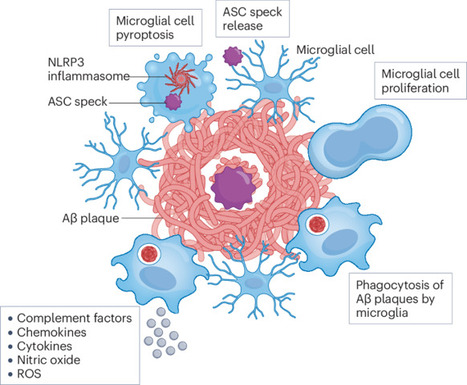
Increasing evidence points to a pivotal role of immune processes in the pathogenesis of Alzheimer disease, which is the most prevalent neurodegenerative and dementia-causing disease of our time. Multiple lines of information provided by experimental, epidemiological, neuropathological and genetic studies suggest a pathological role for innate and adaptive immune activation in this disease. Here, we review the cell types and pathological mechanisms involved in disease development as well as the influence of genetics and lifestyle factors. Given the decade-long preclinical stage of Alzheimer disease, these mechanisms and their interactions are driving forces behind the spread and progression of the disease. The identification of treatment opportunities will require a precise understanding of the cells and mechanisms involved as well as a clear definition of their temporal and topographical nature. We will also discuss new therapeutic strategies for targeting neuroinflammation, which are now entering the clinic and showing promise for patients. This Review provides an in-depth examination of how inflammation contributes to neurodegeneration in Alzheimer disease. The authors explore the impact of extrinsic factors, such as brain trauma, diet and infections, and host-intrinsic factors, such as the activity of microglial cells and other immune, vascular and neuronal cell populations, on disease development. They also highlight emerging drugs that target this inflammatory component for therapy of Alzheimer disease.
No comment yet.
Scooped by Gilbert C FAURE
June 4, 2024 4:26 AM
Scoop.it!

TREM1 is the new kid on the block for the aging-associated innate immune response and Alzheimer’s disease | Nature Immunology

The immunometabolism of microglia determines not only their own fate but also that of neurons and their function during aging and neurodegeneration.
No comment yet.
Scooped by Gilbert C FAURE
December 30, 2023 10:57 AM
Scoop.it!

Editorial: New challenges and future perspectives in Alzheimer's disease and related dementias. | ALZFORUM

Liu GP, Wang S. Editorial: New challenges and future perspectives in Alzheimer's disease and related dementias. Front Aging Neurosci. 2023;15:1345560. Epub 2023 Dec 12 PubMed.
No comment yet.
Scooped by Gilbert C FAURE
December 11, 2023 10:04 AM
Scoop.it!

New methods for identifying, characterizing irregular forms of amyloid beta to inform Alzheimer's treatments

New methods for identifying, characterizing irregular forms of amyloid beta to inform Alzheimer's treatments | NeuroImmunology | Scoop.it
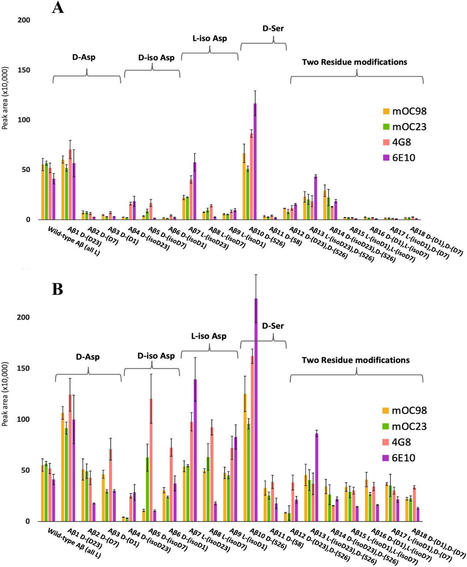
Scientists believe a buildup of the brain protein amyloid beta plays a key role in the death of neurons, which can lead to Alzheimer's disease. Although most people develop some amyloid beta brain proteins as they age, researchers suspect abnormal forms of the protein of may be key to the...
No comment yet.
Scooped by Gilbert C FAURE
August 20, 2023 4:01 AM
Scoop.it!

Emerging Roles of Cells and Molecules of Innate Immunity in Alzheimer's Disease. | ALZFORUM

Tamburini B, Badami GD, La Manna MP, Shekarkar Azgomi M, Caccamo N, Dieli F. Emerging Roles of Cells and Molecules of Innate Immunity in Alzheimer's Disease. Int J Mol Sci. 2023 Jul 25;24(15) PubMed.
No comment yet.
Scooped by Gilbert C FAURE
February 28, 2023 6:35 AM
Scoop.it!

Pathogenesis of Alzheimer's disease: Involvement of the choroid plexus

Gilbert C FAURE's insight:

The choroid plexus (ChP) produces and is bathed in the cerebrospinal fluid (CSF), which in aging and Alzheimer's disease (AD) shows extensive proteomic alterations including evidence of inflammation. Considering inflammation hampers functions of the involved tissues, the CSF abnormalities reported in these conditions are suggestive of ChP injury. Indeed, several studies document ChP damage in aging and AD, which nevertheless remains to be systematically characterized. We here report that the changes elicited in the CSF by AD are consistent with a perturbed aging process and accompanied by aberrant accumulation of inflammatory signals and metabolically active proteins in the ChP. Magnetic resonance imaging (MRI) imaging shows that these molecular aberrancies correspond to significant remodeling of ChP in AD, which correlates with aging and cognitive decline. Collectively, our preliminary post-mortem and in vivo findings reveal a repertoire of ChP pathologies indicative of its dysfunction and involvement in the pathogenesis of AD.

Highlights

  • Cerebrospinal fluid changes associated with aging are perturbed in Alzheimer's disease

  • Paradoxically, in Alzheimer's disease, the choroid plexus exhibits increased cytokine levels without evidence of inflammatory activation or infiltrates

  • In Alzheimer's disease, increased choroid plexus volumes correlate with age and cognitive performance

No comment yet.
Scooped by Gilbert C FAURE
December 16, 2022 5:18 AM
Scoop.it!

Longitudinal post-shunt outcomes in idiopathic normal pressure hydrocephalus with and without comorbid Alzheimer's disease

Longitudinal post-shunt outcomes in idiopathic normal pressure hydrocephalus with and without comorbid Alzheimer's disease | NeuroImmunology | Scoop.it
iNPH + AD may be linked with greater declines in aspects of executive functioning postoperatively relative to iNPH alone.While baseline AD pathology may not prognosticate shunt response, younger age appears linked with postsurgical cognitive improvement, and utilizing both brief and comprehensive...
No comment yet.
Scooped by Gilbert C FAURE
November 11, 2022 11:18 AM
Scoop.it!

Microbiome and Alzheimer

FREE up to december 2

No comment yet.