 Your new post is loading...

|
Scooped by
Nik Peachey
May 27, 5:38 AM
|
The aim of this book is to enable you to use AI prompts to rapidly generate course materials that are specifically designed for your students. By working through the lessons in the book, you should be able to develop your knowledge of AI prompting to a level where you are able to rapidly produce core content and edit and fine tune it for your students.
|
|
Scooped by
Nik Peachey
May 27, 5:36 AM
|
Understand how GenAI is reshaping learning and formative assessment. Generative AI is changing how learners engage with language – and raising tough questions about assessment. If students can lean on GenAI, how do we still see what they truly know and can do? Our Assessment Evolved report explores how formative assessment can evolve in response. With the right design, GenAI doesn’t undermine learning – it can enhance reflection, strengthen feedback and deepen language use.
|
|
Scooped by
Nik Peachey
May 20, 1:07 AM
|
Language is central to learning. Across many contexts worldwide, schools and classrooms bring together learners with diverse linguistic backgrounds and identities. This diversity enriches communities but also requires careful decisions about which languages are used in education, and how. In multilingual contexts – including those shaped by colonial histories or high mobility – these decisions are often complex.
From black box to learning lab: how open, scalable systems can turn AI access into real literacy for students.
Via EDTECH@UTRGV
|
|
Scooped by
Nik Peachey
May 7, 5:16 AM
|
What are the burdens and benefits that GenAI technologies and the policies designed around these technologies create, and are these burdens and benefits fairly distributed among students, on the one hand, and teachers, on the other? More generally, can assessment be fair or be made to be more fair in the age of GenAI? These are the kind of questions that the Fair Educational Assessment in the Age of GenAI (FAIR-ASSESS) project at Leiden University tries to answer.
Discover how using AI to teach critical thinking in higher education turns AI errors into powerful classroom strategies that build information literacy and academic judgment.
Via EDTECH@UTRGV
While parents and kids and teens express a mix of optimism and pessimism about AI, they broadly share concerns about overreliance on AI, how AI could affect future job opportunities, and the safety and data privacy of minors who use AI. The majority also agree on the need for stronger requirements for AI companies and AI-generated content to promote safety measures, transparency, and accountability to protect kids and teens.
Via Dr. Tom D'Amico (@TDOttawa)
|
|
Rescooped by
Nik Peachey
from Digital Delights
March 5, 6:01 AM
|
Learn why and how teachers can use generative AI to streamline lesson planning, personalize explanations, and automate retrieval practice—without losing instructional control.
Via Ana Cristina Pratas
|
|
Rescooped by
Nik Peachey
from Papers
February 24, 8:08 AM
|
Anil Seth Why consciousness is more likely a property of life than of computation and why creating conscious, or even conscious-seeming AI, is a bad idea. Read the full article at: www.noemamag.com
Via Complexity Digest
|
|
Scooped by
Nik Peachey
February 19, 5:33 AM
|
What new research tells us about the pedagogical perils of "dehumanised" feedback
|
|
Scooped by
Nik Peachey
February 16, 1:49 AM
|
Quiet quit your TEFL job? Here's how to fall back in love with teaching using Action Research - turn your classroom into a laboratory and rediscover curiosity.
|
|
|
Scooped by
Nik Peachey
Today, 4:52 AM
|
Monty Python covered this in the 1970s. In one of Terry Gilliam's surrealist animations, a television set opens up to jab and pluck at the eyes of the hapless viewer whilst his wife crows 'Henry, turn that television, you know it's bad for your eyes.' The sketch was aimed firmly at the moral panic over…
|
|
Scooped by
Nik Peachey
May 25, 5:19 AM
|
From the Pod: 7 things parents get wrong about screens. We talk about the data showing exactly how much "dumb screen time" is already cluttering traditional classrooms, and how one-to-one AI tutors can keep kids in the zone of proximal development. Done right, screens are how we demand more from our students, accelerate their learning by multiple grade levels, and raise high-agency kids in a digital world.
|
|
Scooped by
Nik Peachey
May 18, 1:03 AM
|
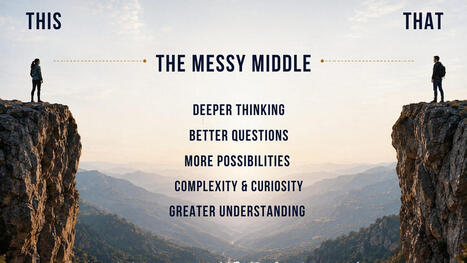
I hate either/or thinking. It flattens complexity into something easier to argue with, but less true. False binaries make for lively debates, but what happens when we sit in the uncertainty, the messy middle, a little longer instead of rushing to pick a side?
|
|
Scooped by
Nik Peachey
May 7, 6:36 AM
|
From social media to gaming, apps, and more, adolescent boys spend hours each day online. Our new research reveals how this relates to their identities, relationships, and emotional well-being.
|
|
Scooped by
Nik Peachey
April 28, 1:35 AM
|
There’s a reason the class clown always wins. When rules come from above and kids have no say in shaping them, rebellion becomes the only way to feel powerful. The kids who buck the rules get the laughs, the stories, the social capital. The rule-followers are seen as vanilla. So of course kids goof off and heckle. The system is handing them two options: be obedient and invisible, or disruptive and cool.
|
|
Rescooped by
Nik Peachey
from Educational Technology News
April 16, 10:03 AM
|
The idea is based on what educators call the “zone of proximal development.” When problems are too easy, students get bored. When they’re too hard, students get frustrated. The goal is to keep students in a sweet spot: challenged, but not overwhelmed.
Via EDTECH@UTRGV
|
|
Scooped by
Nik Peachey
March 6, 1:08 AM
|
AI is everywhere, kids are using it constantly, and nobody has answers.
But instead of turning to another AI-obsessed expert or doomsday neuroscientist, what if we just…asked the kids?
How are they using AI? What is their relationship with this technology? Are they self-aware enough to know what’s happening? Are they able to set boundaries and use it correctly?
Why are students so comfortable using AI for emotional support?
Via EDTECH@UTRGV
|
|
Scooped by
Nik Peachey
February 26, 5:32 AM
|
The Portrait of a Teacher project aims to redefine the role of educators in response to the rapid technological and workforce changes shaping society.
|
|
Scooped by
Nik Peachey
February 23, 1:39 AM
|
The DfE published its updated Generative AI Product Safety Standards on 19 January 2026. They are, in principle, exactly what education needed. Guardrails for AI in schools. Protections for children. A clear statement that developers can't just ship consumer AI into classrooms and hope for the best. And overnight, they've made the AI tools most…
|
|
Scooped by
Nik Peachey
February 18, 1:41 AM
|
Until a few months ago, for the vast majority of people, “using AI” meant talking to a chatbot in a back-and-forth conversation. But over the past few months, it has become practical to use AI as an agent: you can assign them to a task and they do them, using tools as appropriate. Because of this change, you have to consider three things when deciding what AI to use: Models, Apps, and Harnesses.
|




















How can we evaluate, integrate and govern these rapidly evolving technologies responsibly, so that they enrich rather than displace the irreplaceable human elements of education? We have
written this book to try and address these questions, to ofer guidance for realizing GenAI’s potential while upholding the values of thoughtful pedagogy and academic rigour.