Your new post is loading...

|
Scooped by
Pôle Veille AgroParisTech
September 9, 5:37 AM
|
Veille IPCI : Ingénierie de Produits à l'interface Cuisine-industrie
|
|
Scooped by
Pôle Veille AgroParisTech
December 16, 7:44 AM
|
Food safety and environmental concerns are global challenges that require innovative solutions, and alternative protein sources like insect proteins, plant-based meat analogs (PBMAs), and single-cell proteins represent promising pathways toward sustainable nutrition. These proteins are produced through different techniques including extrusion, fermentation, and cell cultivation, with emerging technologies like 3D printing and shear cell structuring enhancing their texture and nutritional quality.
|
|
Scooped by
Pôle Veille AgroParisTech
December 15, 10:23 AM
|
Read the latest articles of Future Foods at ScienceDirect.com
|
|
Rescooped by
Pôle Veille AgroParisTech
from AGROALIMENTAIRE
December 15, 8:55 AM
|
Découvrez comment la fermentation de précision transforme l'industrie agroalimentaire avec des protéines durables et innovantes.
Via Agrodoc Ouest
|
|
Scooped by
Pôle Veille AgroParisTech
December 10, 5:26 AM
|
Les méthodes d’intelligence artificielle - IA - et de traitement de données massives sont essentielles en génie des procédés et des produits, une science complexe et interdisciplinaire. La régression multilinéaire et l’analyse en composantes principales sont déjà courantes, mais les méthodes d’apprentissage supervisé, non supervisé et combinatoires sont aussi utilisées, avec une émergence de nouvelles méthodes qui permettent de simplifier le développement de modèles et de résoudre des problèmes complexes.
|
|
Scooped by
Pôle Veille AgroParisTech
December 9, 8:58 AM
|
A new European Union proposal to limit meat-related terms on plant-based packaging is drawing warnings from companies cited by ProVeg International, who say the rules could increase costs, create consumer confusion, and slow innovation in alternative proteins.
|
|
Scooped by
Pôle Veille AgroParisTech
December 9, 8:51 AM
|
Les laits fermentés sont des produits anciens qui sont étroitement liés à l’élevage de différents mammifères producteurs de lait. Outre les yaourts fabriqués à partir du lait, on trouve également des babeurres, coproduits de la fabrication du beurre. Au gré des pays, on rencontre des produits dotés de saveurs douces (laits de vache, chèvre, brebis…), ou au contraire des versions très acides, pétillantes, voire plus ou moins alcoolisées, avec d’autres laits (bufflonne, chamelle, dromadaire, zébu, yack...), le tout dépendant des souches microbiennes responsables des fermentations. Cette fiche procédé décrit les laits fermentés, leur contexte économique, leur process de fabrication ainsi que leurs caractéristiques et propriétés.
|
|
Scooped by
Pôle Veille AgroParisTech
December 9, 8:32 AM
|
Dietary fibers, leveraging their unique water-holding capacity, gelling behavior, and tunable rheology, have emerged as versatile fat replacers across diverse food matrices. This review synthesizes recent advances in the design and application of dietary-fiber-based fat substitutes.
|
|
Scooped by
Pôle Veille AgroParisTech
December 3, 4:15 AM
|
Umami is crucial for enhancing food palatability, modulating appetite, and preventing obesity. Edible fungi, as nutrient-rich and sustainable food sources, are particularly abundant in umami (enhanced) substances, including monosodium glutamate (MSG), umami amino acids, 5′-nucleotides, peptides, and their derivatives. This review systematically summarizes their molecular structures, sensory properties, and structure–function relationships, emphasizing how processing, storage, and intrinsic factors affect their stability, activity, and synergy.
|
|
Scooped by
Pôle Veille AgroParisTech
December 1, 8:17 AM
|
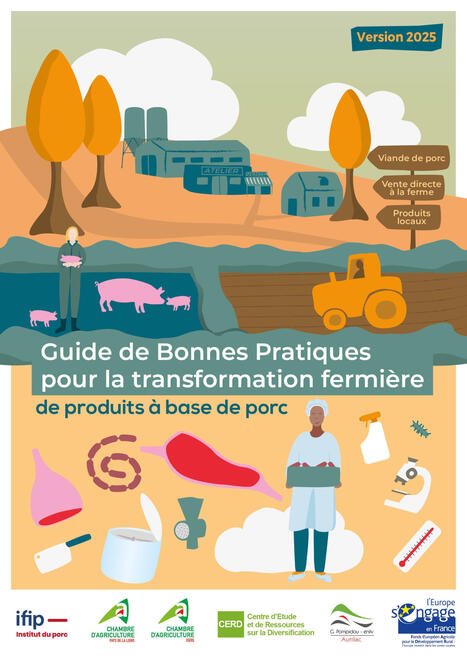
L'IFIP (Institut du porc) annonce que son Guide des Bonnes Pratiques de Fabrication (GBPF) version 2025 est disponible
|
|
Scooped by
Pôle Veille AgroParisTech
December 1, 8:08 AM
|
Highlights
• Phytochemicals face low solubility and stability in functional food systems.
• Nanotechnology enhances phytochemical stability and bioavailability in food.
• Nanoemulsions improve solubility, rapid uptake, and shelf life of compounds.
• Electrospun nanofibers offer high loading and sustained nutrient release.
|
|
Scooped by
Pôle Veille AgroParisTech
December 1, 8:02 AM
|
Pigmented cereals such as black rice, purple wheat, blue and black maize, red corn, and red sorghum have emerged as promising contributors to nutrition-sensitive food systems because their bran tissues are rich in anthocyanins, flavonoids, phenolic acids, and carotenoids that support cardiovascular, metabolic, and cognitive health.
When a group of Cornell food science students gathered in a classroom to brainstorm product ideas for the 2025 IFTSA (IFT Student Association) & Mars Product Development Competition, they didn’t start with spreadsheets or sensory data. They started with cravings.
|
|
|
Scooped by
Pôle Veille AgroParisTech
December 16, 8:00 AM
|
As the debate over ultra-processed foods intensifies, suppliers are finding new functionalities in plant-based ingredients. Solutions derived from pea and yeast emerged as novel alternatives to typical hydrocolloids, modified starches, and phosphates in specific applications at Fi Europe 2025 (Dec 2–4). Vegan ingredients are also filling gaps caused by supply chain volatility, particularly in categories like cocoa and egg.
|
|
Scooped by
Pôle Veille AgroParisTech
December 15, 10:58 AM
|
Read the latest articles of International Journal of Gastronomy and Food Science at ScienceDirect.com, Elsevier’s leading platform of peer-reviewed scholarly literature
|
|
Rescooped by
Pôle Veille AgroParisTech
from AGROALIMENTAIRE
December 15, 8:57 AM
|
Découvrez les tensions et mutations autour de l’alimentation en France. Un rapport qui éclaire notre rapport à l'alimentation.
Via Agrodoc Ouest
|
|
Scooped by
Pôle Veille AgroParisTech
December 10, 5:37 AM
|
Les mousses d’huile représentent une classe émergente de mousses liquides qui sont des mousses non aqueuses caractérisées par des bulles de gaz dispersées dans une phase huileuse. Elles suscitent un intérêt croissant dans les domaines de l’alimentation, de la cosmétique et de la pharmacie grâce à leur capacité à stabiliser des formulations sans eau avec une sensorialité innovante et permettent de remplacer les graisses solides. Cet article passe en revue les mécanismes de formation, de stabilisation et les applications des mousses d’huile, tout en mettant en lumière les défis actuels et les perspectives futures.
|
|
Scooped by
Pôle Veille AgroParisTech
December 9, 8:59 AM
|
La transglutaminase est une enzyme qui catalyse la formation de liaisons iso-peptidiques irréversible entre les protéines ou les peptides en améliorant la fermeté, la viscosité, l'élasticité, et la capacité de rétention d'eau des produits alimentaires. Cette enzyme a été produite et isolée par fermentation traditionnelle à partir de Streptoverticillium mobaraensis en 1989 (Ajinomoto, Japon). Sa propriété de réticulation est largement utilisée dans les industries agroalimentaires. Cet article présente un aperçu des applications de la transglutaminase dans l’industrie des produits laitiers, de la viande et des fruits de mer, de produits de boulangerie et des analogues alimentaires.
|
|
Scooped by
Pôle Veille AgroParisTech
December 9, 8:54 AM
|
Bright Green Partners reports that AI use among consumer packaged goods executives has surged, with companies turning to generative tools to accelerate formulation, predict sensory performance, and improve ingredient functionality. The authors note that high-quality data and human expertise remain essential for meaningful impact.
|
|
Scooped by
Pôle Veille AgroParisTech
December 9, 8:48 AM
|
Highlights
• Evolutionary engineering enhances microbial resilience and production efficiency.
• Synthetic biology expands foods resources and food components diversity.
• ML advances flavor innovation and effectuates precision nutrition.
• BT-IT-FT synergy reshapes future food paradigms.
|
|
Scooped by
Pôle Veille AgroParisTech
December 9, 8:29 AM
|
In the present review, progress in the valorization of several types of food-waste streams, including fruit peels, spent grain, dairy whey, grape pomace, vegetable by-products, and seafood residue, has been discussed in depth.
|
|
Scooped by
Pôle Veille AgroParisTech
December 3, 4:06 AM
|
3D food printing technology has revolutionized the functional food sector by precisely controlling texture and nutrients. It enables personalized nutrition for specific populations (e.g., patients with swallowing disorders, diabetics, children) and enhances bioavailability of functional ingredients like probiotics.
|
|
Scooped by
Pôle Veille AgroParisTech
December 1, 8:13 AM
|
Insights, market reports and data on: - How AI and Metabolomics are Discovering New Almond Bioactives - The Art of Snacking: Unlocking Almond Versatility for Feel-Good Snacking - Three Trends for Almonds in 2025
|
|
Scooped by
Pôle Veille AgroParisTech
December 1, 8:04 AM
|
Pumpkin seed proteins are underutilized plant proteins with a balanced content of essential amino acids and health benefits. Benefit from the functional properties and low-cost character, pumpkin seed proteins exhibit great potential for applications as alternative food ingredients. This paper reviews the composition of pumpkin seed proteins, as well as the extraction methods, including the alkaline method, ultrasonic-assisted method, and enzymatic-assisted approach. Functional properties of pumpkin seed proteins, such as solubility, foamability, gelling, and emulsification, are described. Additionally, several modification methods were emphasized to enhance the functionality of pumpkin seed proteins, including physical, chemical, enzymatic, and combined approaches. Food applications of pumpkin seed proteins, including food packaging films, meat analogs, carriers, protein supplements, and functional food additives, are also systematically introduced. Finally, the challenges and solutions that limit the widespread utilization of pumpkin seed proteins are discussed.
|
|
Scooped by
Pôle Veille AgroParisTech
December 1, 7:58 AM
|
Precision fermentation is emerging as an innovative platform for manufacturing high-value food proteins, relocating food production from agricultural fields to controlled bioreactors. This perspective will address modifications to the secretory pathway that can improve protein secretion efficiency. Deliberate, data-driven engineering of secretion efficiency will determine whether precision-fermented proteins advance from pilot production to routine industrial manufacture. This perspective will also address the issues of cost efficiency and scalability, exploring how protein secretion can overcome these challenges to make lab-grown food a sustainable, ethical, and viable alternative to conventional food sources.
|
|
Scooped by
Pôle Veille AgroParisTech
November 26, 9:05 AM
|
Gelatin-based scaffolds with excellent physical and biological properties provide sufficient mechanical support and create biomimetic environments, closely mimicking natural tissues. This makes them suitable for designing high-quality cultured meat. By addressing future challenges and promoting advanced technologies, the full potential of gelatin-based biomaterials can be realized and propelled to the forefront of innovative applications in cellular agriculture.
|




![Exploring meat analogs: A review of alternative proteins with a focus on food safety and regulatory challenges [Food Control] | IPCI : Ingénierie de Produits à l'interface Cuisine-Industrie | Scoop.it](https://img.scoop.it/tTB5WW6A4-_2isWkgRqMnzl72eJkfbmt4t8yenImKBVvK0kTmF0xjctABnaLJIm9)




![Application and research progress of dietary fiber-based fat substitutes in food systems [Food Research International] | IPCI : Ingénierie de Produits à l'interface Cuisine-Industrie | Scoop.it](https://img.scoop.it/p1X6RNA3m-2l5IArZIUx-Tl72eJkfbmt4t8yenImKBVvK0kTmF0xjctABnaLJIm9)