Your new post is loading...

|
Scooped by
Pôle Veille AgroParisTech
March 10, 7:43 AM
|
Highlights
• 3D food printing (3DFP) is a rapidly evolving food manufacturing approach
• 3DFP transforms meals into customizable multisensory experiences
• Provides scope for real-time digital engineering of sensorial attributes of foods
• Sensory ‘richness’ can be achieved with better control of process parameters
• Creates space for new frontiers in clinical diets and sustainable gastronomy
|
|
Scooped by
Pôle Veille AgroParisTech
March 10, 7:40 AM
|
Health is no longer a niche positioning in snacks — it’s a consumer expectation — but indulgence remains critical. Snack reformulation has moved beyond single-ingredient swaps, as manufacturers increasingly adopt integrated systems that balance protein fortification, sugar reduction, and clean label transparency, without sacrificing sensory appeal. Innova Market Insights data shows that global consumers seek protein (60%) and fiber (55%) when purchasing snacks. However, most (74%) say flavor, taste, and texture are the most important factors when choosing between snacks.
Dans un monde d’incertitude, le plaisir n’est plus coupable mais il doit répondre aux attentes des jeunes générations, à la recherche de nouvelles expériences sensorielles. Le stress engendré … Continued
Via Agrodoc Ouest
|
|
Scooped by
Pôle Veille AgroParisTech
March 10, 6:45 AM
|
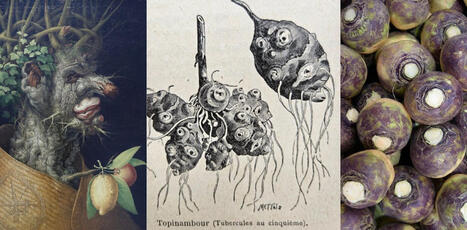
Comment, en quelques décennies, des légumes honnis ont-ils pu devenir tendance ? Sans doute pour la simple raison que, si leur goût n'a jamais changé, beaucoup de choses autour d’eux ont, quant à elles, évolué.
|
|
Scooped by
Pôle Veille AgroParisTech
March 3, 8:27 AM
|
Les huiles végétales alimentaires représentent une offre pléthorique qui se décline en deux versions, à savoir des huiles à flaveur neutre (tournesol, pépin de raisin, arachide et colza), et des huiles aromatiques (olive vierge extra, sésame, pistache, noix, noisette), obtenues soit à partir de graines ou de fruits. Cette fiche procédé décrit ces différents produits ; les aspects relatifs aux différents process y seront détaillés ; quant à la dernière section, elle sera consacrée à la composition nutritionnelle, aux utilisations culinaires, aux problématiques des « fausses olives noires » et des fraudes par adultération.
|
|
Scooped by
Pôle Veille AgroParisTech
March 3, 8:25 AM
|
Les céréales destinées au petit déjeuner sont profondément ancrées dans l’imaginaire américain, avec cette volonté d’irradier l’Europe et au-delà. Cette fiche procédé se propose d’aborder les technologies mises en œuvre pour la fabrication des pétales de maïs, céréales fourrées, muesli, granola… Une section sera réservée à l’étude de la composition nutritionnelle comparée de ces produits.
|
|
Scooped by
Pôle Veille AgroParisTech
March 3, 8:23 AM
|
- Introduces a comprehensive range of extraction and identification techniques for functional and bioactive components in various food products
- Advances knowledge in metabolic benefits of functional foods for the human body
- Analyzes probiotics, prebiotics, and synbiotics as functional foods
- Presents case studies on the latest food manufacturing methods to drive innovation in the food industry
|
|
Scooped by
Pôle Veille AgroParisTech
March 3, 8:19 AM
|
Les protéines hybrides attirent aujourd’hui l’attention, car elles combinent des ingrédients végétaux et animaux. Cette association vise à améliorer à la fois la durabilité et la qualité sensorielle des aliments.
|
|
Scooped by
Pôle Veille AgroParisTech
March 3, 8:17 AM
|
This review analyzes available literature on how microalgae influence the techno‐functional properties of bakery and pasta products, both as isolated compounds and as whole biomass. It highlights the importance of considering microalgae not just as nutrient‐rich ingredients but also as functional agents capable of influencing food structure and quality. Recognizing and optimizing their dual role is essential for broadening their application in cereal‐based food systems.
|
|
Scooped by
Pôle Veille AgroParisTech
March 3, 8:12 AM
|
This review provides an overview and establishes new connections between the physicochemical properties of pea starch and pea fiber, available treatment methods for further functionalization, and the influence of pea starch and pea fiber on different foods and their sensory properties and product performance across various applications. Challenges and knowledge gaps are also identified.
|
|
Scooped by
Pôle Veille AgroParisTech
March 3, 7:08 AM
|
Protein gels have diverse applications in food industry, with plant proteins as potential alternatives to animal-derived products. The applications of protein gels mainly depend on gel properties while gel digestibility affects the delivery and release of nutrients. However, the relationship and synergistic influences among gelation mechanism, gel properties, and digestive characteristics, relevant to formulate gelation strategies of animal or plant proteins, have never been systematically discussed.(...) The comprehensive understanding of protein gel digestion with structural design and formulation strategies, offers practical insights for developing tailored protein-rich food systems with controlled digestive behavior relevant to satiety-enhancing foods and delivery systems with targeted outcomes such as elderly nutrition.
|
|
Scooped by
Pôle Veille AgroParisTech
February 16, 12:04 PM
|
Consumer choices are propelling “flavor-first” beer innovation as demand for natural ingredients and a desire to understand hop varieties rise, a Kalsec report reveals. While artificial flavors remain a turn-off for health-conscious consumers, 6,000 beer drinkers surveyed across 12 countries prefer hop extracts when manufacturers use them transparently.
|
|
Scooped by
Pôle Veille AgroParisTech
February 16, 12:02 PM
|
GLP-1s have introduced a new group of consumers to the protein and functional beverages conversation. Consumers taking these weight loss medications increasingly seek convenient ways to incorporate more protein throughout the day via functional sodas that don’t compromise weight loss goals.
|
|
|
Scooped by
Pôle Veille AgroParisTech
March 10, 7:41 AM
|
Synthetic food colorants are widely used in the food industry as a cost-effective means to enhance the visual appeal of foods and beverages but are increasingly scrutinized for safety and environmental impacts. Natural plant-derived colorants, like anthocyanins, betalains, and carotenoids, offer a safer alternative to synthetics but are more expensive because they occur at low concentrations in plant tissues and are difficult to extract. Here, we review recent advances in metabolic engineering of microbial cell factories for the production of nature-identical food colorants. Producing food colors through fermentation rather than plant extraction can reduce production costs, improve sustainability, and enhance supply chain resilience, supporting the growing demand for natural food colorants in the global market.
|
|
Scooped by
Pôle Veille AgroParisTech
March 10, 7:37 AM
|
À quelques jours de l’ouverture du CFIA Rennes, afin d’anticiper les attentes du marché et de sourcer les innovations clés, nous vous invitons à découvrir l’Espace Tendances qui abritera les cinq grandes orientations Ingrédients & PAI 2026 identifiées par Nutrimarketing. Cet espace stratégique mettra en lumière une nouvelle approche alimentaire conciliant plaisir, santé, durabilité et innovation technologique, à travers des solutions concrètes portées par des acteurs majeurs du secteur.
|
|
Scooped by
Pôle Veille AgroParisTech
March 10, 7:31 AM
|
Key Features - Provides comprehensive information on the technological, nutritional, and consumer aspects of plant-based dairy alternatives - Covers emerging biotechnological approaches for the production of milk and milk components - Serves as a valuable resource for food industry professionals and food science and nutrition researchers - Written and edited by internationally recognized authors from academia and industry to provide a range of perspectives (full text available in Université-Paris-Saclay environment)
|
|
Scooped by
Pôle Veille AgroParisTech
March 3, 8:28 AM
|
Journal of Food Science and Technology, has just published its latest issue Volume 63, Issue 2.
|
|
Scooped by
Pôle Veille AgroParisTech
March 3, 8:26 AM
|
Le propos de cette fiche procédé vise l’étude plus approfondie des macro-algues comestibles, ainsi que des cyanophycées qui comptent plus de 7 500 espèces dont la réputée spiruline.
|
|
Scooped by
Pôle Veille AgroParisTech
March 3, 8:24 AM
|
The F&B industry has conventionally used encapsulation technology to trap flavor compounds within a protective coating, controlling their release and extending shelf life. The technique has now evolved into a “functional design tool,” with potential use supporting manufacturers’ reformulation goals in sugar or salt reduction by improving the efficiency and timing of taste delivery.
|
|
Scooped by
Pôle Veille AgroParisTech
March 3, 8:20 AM
|
Product Development leaders today operate in a fundamentally different environment than even a few years ago. Expectations have multiplied: launch faster, support more SKUs, expand into new markets, manage supplier volatility, and respond to evolving regulations, all without materially increasing headcount. The role has quietly shifted from “get the product right” to make the product and the system resilient to change. That shift begins with how recipes are designed.
|
|
Scooped by
Pôle Veille AgroParisTech
March 3, 8:18 AM
|
Food and beverage brands are reformulating their products to better align with changing consumer preferences for healthier offerings and keep pace with the shifting regulatory landscape and government-backed dietary recommendations. Maintaining the texture and mouthfeel of F&B products is a central priority for manufacturers.
|
|
Scooped by
Pôle Veille AgroParisTech
March 3, 8:15 AM
|
Highlights
• The mechanisms of hydrogels in food texture reconstruction and oral responses were summarized.
• Programmable molecular design enables precise texture control in hydrogels for tailored foods.
• Structural engineering of hydrogels mimics complex food textures, from fibrous meat to smooth fat.
• Hydrogels provide dynamic oral responses, enhancing lubrication and swallowing safety.
• Smart hydrogel platforms integrate texture design with controlled nutrient and flavor release.
|
|
Scooped by
Pôle Veille AgroParisTech
March 3, 8:10 AM
|
Highlights
• Food structures naturally deform during processing under heat and moisture effects.
• Shape changes in foods, though often overlooked, strongly influences visual appeal.
• Stamping, 3D/4D printing, cutting, and lamination enable precise food morphing.
• Morphing foods embodies engineering and creativity toward sustainable food design.
|
|
Scooped by
Pôle Veille AgroParisTech
March 3, 7:06 AM
|
When lingual tactile sensitivity has received less attention than taste, it plays a critical role in food textural preferences and eating behavior. The anterior tongue, rich in specialized mechanoreceptors, is particularly sensitive to tactile stimuli. This study investigated inter-individual variability in lingual tactile sensitivity and its potential relationship with astringency sensitivity.
|
|
Scooped by
Pôle Veille AgroParisTech
February 16, 12:03 PM
|
Functional mushrooms are moving beyond capsules and powders into mainstream F&B — from mushroom coffee and energy drinks to chocolates and gummies. However, as consumer awareness of species like lion’s mane and reishi rises, industry advocates reveal deeper challenges around ingredient standardization, species differentiation, and treating functional mushrooms as a single, interchangeable category.
|