Your new post is loading...

|
Scooped by
Gilbert C FAURE
May 29, 2015 8:21 AM
|
The TOP 10% information you need!
The scoops deal with published (classical or OPEN) and grey literature (blogs, websites, social networks, press releases) allowing rapid access to recently published relevant information May 29, 2015 you were 26796 visitors, viewing this topic 34.5K times., 4900 scoops May 2025: >8.2K scoops, >98.2 visitors, >177,8 views
|
|
Scooped by
Gilbert C FAURE
May 22, 5:32 AM
|
This depiction of viral threats confronting both bacteria and people, and the protein and cellular defenses arrayed against them, illustrates how human immunity traces part of its antiviral arsenal to ancient microbial predecessors.
This shared defensive heritage is already suggesting novel tools for molecular biology and new approaches to medicine.
Learn more this week in Science: https://scim.ag/43rZNM1
|
|
Scooped by
Gilbert C FAURE
May 20, 4:03 AM
|
💡What if the adaptive immune system evolved not just to fight pathogens — but to manage the intrinsic dangers of multicellular life itself? 💡
In this new Trends in Immunology Opinion article Derick Okwan-Duodu and Edgar Engleman propose a provocative framework: adaptive immunity may have emerged as a “constitutive danger management” system, shaped by mitochondrial mobility, metabolic stress, and the need to preserve tissue homeostasis in complex organisms.
A recommended interesting read 👉 https://lnkd.in/epMdM3Eq
|
|
Scooped by
Gilbert C FAURE
May 17, 3:27 AM
|
The field of cardiac lymphatic research has expanded considerably over the past decade. Clinical studies have uncovered lymphatic remodelling in a wide range of cardiovascular diseases, and experimental research has demonstrated that these structural alterations often lead to dysfunction of lymphatic transport. Given the vital physiological role of lymphatics, insufficient lymphatic drainage can affect several aspects of cardiac pathophysiology, including myocardial fluid balance, the immune microenvironment, collagen turnover and lipid handling. In this Review, current knowledge on cardiac lymphatics is summarized, including the structural and molecular specializations underlying their diverse homeostatic functions, and how these features can be altered in cardiovascular diseases. The latest research on the effects of inflammation on lymphatics is presented, together with the mechanisms by which lymphatics modulate immunity. The regulation of cardiac lymphangiogenesis is discussed, including accumulating evidence of immune cell–lymphatic crosstalk in the heart, the role of metabolic and biomechanical stimulation of lymphangiogenesis, and examples of experimental approaches to therapeutic lymphangiogenesis and their current limitations. Finally, areas for future research are highlighted, including the translation of lymphatic imaging and lymphangiogenic therapies to the clinic for patients with cardiovascular disease. In this Review, Brakenhielm summarizes current knowledge on cardiac lymphatics, including structural and molecular features of the lymphatic system, the regulation of cardiac lymphangiogenesis, the lymphatic-mediated modulation of immunity and inflammation, and the alterations in cardiovascular diseases, and discusses potential approaches for therapeutic lymphangiogenesis as well as areas for future research.
|
|
Scooped by
Gilbert C FAURE
May 12, 10:26 AM
|
The liver, a key metabolic organ, has a central role in maintaining systemic homeostasis but is vulnerable to numerous diseases. Its metabolic functions are mainly carried out by hepatocytes; however, the liver also harbours diverse non-parenchymal cell populations, including immune cells. Among these, Kupffer cells, the resident macrophages of the liver, are critical modulators of liver function and immunity. Emerging research highlights their dynamic roles throughout life, from maintaining tissue homeostasis to shaping the balance between immune tolerance and activation in adulthood. Kupffer cells are located in liver sinusoids, where they act as frontline defenders, clearing pathogens and cellular debris from the circulation. Beyond their established phagocytic and immune regulatory functions, Kupffer cells influence metabolic processes, tissue repair and oncogenesis. Moreover, they shape the response of the liver to metabolic disorders such as metabolic dysfunction-associated steatohepatitis, infections and malignancies, including hepatocellular carcinoma. Here we explore Kupffer cell biology, focusing on the development, heterogeneity and multifaceted roles of these cells in liver health and disease. We further discuss how advances in imaging, transcriptomics and macrophage-targeted therapies can inform future strategies to combat liver-associated health challenges. This Review provides an integrated overview of Kupffer cell biology, from their embryonic origin and spatial organization to their functional specialization within the liver. It emphasizes how Kupffer cells act as immune sentinels while also shaping metabolic regulation, tissue repair, infection and cancer and discusses how emerging technologies are refining our understanding of their context-dependent roles across physiological and pathological settings.
|
|
Scooped by
Gilbert C FAURE
May 8, 4:49 AM
|
|
|
Scooped by
Gilbert C FAURE
May 4, 7:32 AM
|
The best time to get an infection might be after a meal, suggest experiments in mice and humans that found that certain immune cells, known as T cells, seem to get a boost from food.
The findings, published today in Nature, could identify ways to improve immune therapies, help physicians to decide when to give vaccinations and eventually show how diet can improve immunity.
Source in comments.
|
|
Scooped by
Gilbert C FAURE
April 28, 7:22 AM
|
|
|
Scooped by
Gilbert C FAURE
April 22, 8:42 AM
|
From Immunological Dogma to Immune Plasticity: A Personal Journey Through the Basel Era and Beyond There are moments in science when you realize you are not just learning a field—you are watching it being built in real time. For me, that moment began in Basel Institute for Immunology, during what wa
|
|
Scooped by
Gilbert C FAURE
April 22, 8:27 AM
|
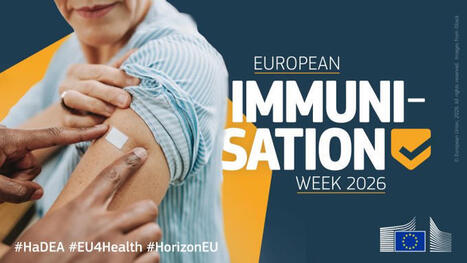
European Immunisation Week is a good occasion to be reminded about the key role that immunisation plays in preventing diseases and protecting lives.
This year’s theme, “for every generation, vaccines work,” highlights how vaccines have safely protected people, families and communities for generations – and will continue to do so.
HaDEA is managing EU-funded projects working on improving vaccine uptake and literacy and advancing vaccine development.
Discover a selection of these projects and how they contribute to making the EU better prepared for potential future disease outbreaks: https://lnkd.in/ePy6EVMX
#EuropeanImmunisationWeek #EU4Health #HorizonEU
|
|
Scooped by
Gilbert C FAURE
April 21, 3:47 AM
|
Headline: 📢 Editor-in-Chief's Choice: Why Sex and Gender Matter in Vaccine Efficacy
👏 We are honored to spotlight a high-impact review from our Editor-in-Chief, Prof. Calogero Caruso (Università degli Studi di Palermo), and a distinguished team of experts.
In the realm of personalized medicine, one size does not fit all. Their latest work in Exploration of Immunology breaks down the complex biological and social drivers that cause men and women to react differently to influenza infections and vaccinations.
💡 Key Insights:
▪️ The Immunity Gap: Women generally mount a more robust immune response but are more prone to adverse vaccine reactions.
▪️ The Risk Factor: Men often face a more severe disease trajectory and suboptimal immunogenicity.
▪️ The Drivers: A deep dive into how sex hormones, genetic factors, and gender-related social environments interplay to shape our immune landscape.
This review is a must-read for researchers in immunology, public health, and precision medicine as we strive for more tailored and effective vaccination strategies.
Read the full open-access article here: 🔗 https://lnkd.in/evAzGwS2
#EditorInChief #Immunology #SexDifferences #Influenza #Vaccines #PrecisionMedicine #ExplorationofImmunology #PublicHealth #ScientificResearch
|
|
Scooped by
Gilbert C FAURE
April 18, 2:53 AM
|
Great news: A new opportunity in immunology education in Portugal! 🎓✨
Find out more information on the Master in Integrative and Systems Immunology (MISI) here ⬇️
|
|
Scooped by
Gilbert C FAURE
April 16, 9:06 AM
|
How is our understanding of immune memory evolving? Check out our special issue on immune memory, with a beautiful cover from Ester Marina Zárate, PhD from Shane Crotty's lab! The various components and layers of immune memory are depicted as a music emanating from an orchestra, highlighting the importance of coordination and harmonization of the many facets of immune memory—both innate and adaptive—for effective and lasting immune protection. https://lnkd.in/eKp9q3tH
Long considered a cornerstone of protective immunity, immune memory is now being redefined, extending beyond classical adaptive responses to encompass broader, long-lasting changes across the immune system.
In the new Immunity special issue, eight perspectives explore the roles of innate and adaptive memory, from T cells and antibodies to trained immunity and aging. Together, they highlight immune memory as a coordinated, dynamic system, more like an orchestra than a single pathway, shaping effective and lasting protection.
Check out the entire April issue out now, just in time for #IMMUNOLOGY2026 #AAI2026! The American Association of Immunologists
Andrew Oberst Stephen Tait Deepta Bhattacharya Stephen Jameson Sara Hamilton Laura Mackay Thomas Burn Marcus Buggert Claire Gustafson, Ph.D. Joel G. Rurik, PhD Sarah Adamo Luis Barreiro Raúl Aguirre-Gamboa
|
|
|
Scooped by
Gilbert C FAURE
Today, 3:56 AM
|
Exercise is an “underused lever for immune health,” write Pitt Immunology's Marlies Meisel and PMI graduate student Catherine Phelps in a new review published in Immunity by Cell Press.
They synthesize the latest evidence on how exercise affects the immune system and how it varies depending on disease context, training type, and the molecular signals—exerkines—that muscle, fat, and gut microbiota release in response to physical activity. The same training that boosts antitumor immunity can suppress inflammatory programs in autoimmune disease.
Harnessing the power of exercise—including personalized exercise prescriptions and exerkine-based therapeutics for patients unable to train—for treating cancer, autoimmunity, and other diseases will require more research to understand the underlying mechanisms and strong bench-to-bedside collaborations.
Read the full review: https://lnkd.in/dp-dzTvB
|
|
Scooped by
Gilbert C FAURE
May 22, 3:49 AM
|
T Cell Receptor Signaling and Immune Tolerance: From Autoimmunity to Cancer Immunity.
Tanaka A, Sakaguchi S. Annu Rev Immunol. 2026 Apr;44(1):497-526. doi: 10.1146/annurev-immunol-082724-025403. Epub 2026 Mar 2. PMID: 41770842.
Severe Signal Defect (Immunodeficiency) ↔ Moderate Defect (Systemic Autoimmunity) ↔ Physiological Range (Homeostasis) ↔ Attenuated Signal (Cancer Immunity)
|
|
Scooped by
Gilbert C FAURE
May 19, 4:04 AM
|
A new ‘K’ind of T helper cell
- Effector CD4+ T helper cell subsets are essential for a range of immune functions, such as orchestrating effector responses, enabling antibody class switching, and maintaining immune homeostasis.
- Cytotoxic CD4+ T lymphocytes (CD4-CTLs) were first described over 40 years ago and initially considered an artifact of in vitro culturing conditions.
- Subsequent studies have provided increased clarity as to the immunological importance of CD4-CTLs and they have now been identified in the contexts of infection, cancer and autoimmunity.
- Here, the authors identify THK cells, a CD4-CTL subset characterized by the co-expression of granzyme K (GZMK) and EOMES. These cells are highly prevalent in ulcerative colitis in addition to cancer, neuroinflammation and chronic viral infection.
- Notably, the authors show that ablation of EOMES in CD4+ T cells reduces colitis severity in mouse models, highlighting THK cells as potential therapeutic targets in immune-mediated disease.
- This study provides a foundation for subsequent investigations into the environmental factors that drive the generation of THK cells and potential strategies to modulate THK cell responses for therapeutic benefit.
https://lnkd.in/eeqjGURM
https://lnkd.in/eV94eS5Q
#immunology #science #inflammation #Tcells #autoimmunity
|
|
Scooped by
Gilbert C FAURE
May 13, 3:29 AM
|
Recent findings have identified a novel mechanism by which HIV-1 can infect resting T-cells, challenging longstanding assumptions in HIV biology. The research demonstrates that direct cell-to-cell spread of HIV triggers a molecular signaling cascade, temporarily unlocking the nuclear pore complex and allowing viral entry into the nucleus without requiring T-cell activation. This insight provides a new explanation for the persistence of the latent HIV reservoir and highlights potential avenues for targeting these reservoirs. Additionally, the study uncovers new aspects of nuclear transport regulation in immune cells, with broader implications for immunology and therapeutic development.
|
|
Scooped by
Gilbert C FAURE
May 10, 9:16 AM
|
Tissue-resident regulatory T cells: modulators of local immunity
|
|
Scooped by
Gilbert C FAURE
May 8, 4:46 AM
|
What is unique about the immune system of people who live to extreme old age? A Review in Nature Reviews Immunology explores how centenarians modulate key hallmarks of immune ageing across innate and adaptive immune compartments.
Read the Review: https://lnkd.in/egQeexbX
|
|
Scooped by
Gilbert C FAURE
May 3, 7:48 AM
|
In a 2025 #ScienceReview, researchers examined the influence that biological sex exerts on the immune system and immune-related diseases.
Learn more on #DayOfImmunology: https://scim.ag/4s24HdI
|
|
Scooped by
Gilbert C FAURE
April 26, 8:14 AM
|
|
|
Scooped by
Gilbert C FAURE
April 22, 8:36 AM
|
B cells have a surprising role in exercise endurance
Study in mice suggests that B cells help to regulate muscle performance.
- B cells are an essential component of humoral immunity, and B cell depletion therapies have clinically succeeded in eliminating cancerous B cells and treating autoimmune diseases.
- Using mouse models, the authors report an immune-independent function of B cells that drives exercise capacity.
- B-cell-deficient mice performed worse on strength and endurance tests than did mice with healthy B-cell counts.
- During exercise, B cell deficiency reduces transforming growth factor (TGF)-β1 production, which alters hepatic glutamate metabolism and decreases blood and muscle glutamate.
- Mechanistically, B cell-derived TGF-β1 transcriptionally upregulates hepatic glutaminase 2 (GLS2) and solute carrier family 7 member 5 (SLC7A5) expression, increasing glutamine catabolism and thus glutamate production in the liver.
- The resulting increase in glutamate fosters skeletal muscle calcium oscillations, calmodulin-dependent protein kinase (CaMK) kinase activity, and mitochondrial biogenesis, thereby improving exercise performance.
- These findings reveal an immune-independent function of B cells in controlling physical performance and unveil the phenomenon of “immunoexercise,” whereby exercise is modulated by immune cells or immunity.
- Main limitation of this study: there is currently no direct human data on B cells’ maintenance of hepatic Glu metabolism and its exercise improvement; future clinical studies are needed to validate this data in a human setting.
https://lnkd.in/dQ3tS8th
https://lnkd.in/dSN9GGHw
#immunology #Bcells #exercise #science #metabolism
|
|
Scooped by
Gilbert C FAURE
April 21, 4:28 AM
|
Journal of Human Immunity is the official journal of the International Alliance for Primary Immunodeficiency Societies (IAPIDS) and its member societies.
Editor-in-Chief Jean-Laurent Casanova shares the vision behind JHI and what sets the journal apart in the rapidly evolving field of human immunity.
|
|
Scooped by
Gilbert C FAURE
April 18, 9:25 AM
|
Excited to share the immunology content guidelines for medical education with the members of the Immunology Teaching Interest Group (ITIG) today at the American Association of Immunologists (AAI) conference. This was a 3-year endeavor with a large task force of dedicated immunology educators that will be published in ImmunoHorizons soon. Thankful to everyone who made this work possible and the support of the AAI Education Committee.
Nicholas Pullen Vijaya Knight (Nagabhushanam) Scott Thompson Michelle Swanson-Mungerson Jennifer Grier Tim Bauler Zhao Yuan Pooja Jain The American Association of Immunologists
|
|
Scooped by
Gilbert C FAURE
April 18, 2:52 AM
|
Recent research has demonstrated that immune system aging differs significantly between women and men. Analysis of blood samples from nearly 1,000 adults revealed that women experience more pronounced age-related changes, including increased inflammatory immune cells, which may contribute to higher rates of autoimmune diseases, particularly after menopause. In contrast, men exhibit less extensive changes but show an increase in blood cells with pre-leukemia alterations, potentially explaining higher rates of certain blood cancers. These findings highlight the importance of considering biological sex in precision medicine and developing tailored strategies for healthy aging.
|
|
Scooped by
Gilbert C FAURE
April 16, 3:54 AM
|
Headed to AAI? Don't miss out on all the amazing EDUCATION SESSIONS!
Don't forget to add the Immunology Teaching Interest Group Session on Friday, April 17 in Room 153C from 8-10am to your schedule!
I'll be sharing the findings from the AAI Medical Immunology Task Force in my talk, 'Establishing AAI-Recommended Immunology Content Guidelines for Medical Education in the USA.'
You'll also be able to read about it in ImmunoHorizons - publication coming soon!
Nicholas Pullen
|