 Your new post is loading...

|
Rescooped by
michel verstrepen
from Educational Technology News
February 27, 2024 5:07 PM
|
The University of Kentucky has taken a transdisciplinary approach to developing guidelines and recommendations around generative AI, incorporating input from stakeholders across all areas of the institution. Here, the director of UK's Center for the Enhancement of Learning and Teaching breaks down the structure and thinking behind that process.
Via EDTECH@UTRGV
Juan Domingo Farnós ¿Necesitamos máquinas autónomas o las personas somos capaces de manera independiente de transformar la educación? La necesidad de tener máquinas autónomas están en el corazón del movimiento de aprendizaje automático y del aprendizaje ubícuo en si mismo. El debate sobre la necesidad de máquinas autónomas en el ámbito educativo versus la capacidad…
Via juandoming
|
|
Rescooped by
michel verstrepen
from Educación a Distancia y TIC
February 26, 2024 5:58 PM
|
Over the past year or so, a narrative that AI will inevitably transform education has become widespread. You can find it in the pronouncements of investors, tech industry figures, educational entrepreneurs, and academic thought leaders. If you are looking for arguments in favour of AI in education, you can find them in dedicated journals, special issues, handbooks and conferences, in policy texts and guidance, as well as on social media and in the educational and technology press.
Others, however, have argued against AI in education. They have probed at some of the significant problems that such technologies could cause or exacerbate, and deliberately centred those issues for public deliberation rather than assuming AI in education is either inevitable or necessary. (Of course, there are also many attempts to balance different views, such as a recent UK Parliament POSTnote.)
The recent critiques of AI in education resonate with Mike Ananny’s call to treat generative AI as a ‘public problem’:
Via Edumorfosis, LGA
|
|
Rescooped by
michel verstrepen
from Educational Technology News
February 26, 2024 3:37 PM
|
But will funding gaps and inadequate development defer hopes for inclusive education?
Via EDTECH@UTRGV
|
|
Rescooped by
michel verstrepen
from Educación a Distancia y TIC
February 26, 2024 3:37 PM
|
The report titled Critical Thinking and Ethics in the Age of Generative AI in Education explores the potential of Generative AI technologies in the field of education. It emphasizes the need for education to shift from a transactional model to a transformative and empowering one. The report discusses the possibilities of using generative AI to personalize learning, foster creativity, and encourage collaboration between teachers and students. It acknowledges the ethical considerations surrounding the implementation of AI in education, such as data privacy, algorithmic bias, and the digital divide. The document also introduces the USC Center for Generative AI and its Fellows Program, which aims to explore the impact of AI on undergraduate writing education and prepare students for the evolving job landscape shaped by AI.
Via Edumorfosis, LGA
|
|
Rescooped by
michel verstrepen
from Educación a Distancia y TIC
February 26, 2024 7:24 AM
|
Many adults seeking to upskill themselves face challenges of digital incompetence and limited access to advanced AI tools, hindering their success i
Via LGA
Teaching builds entrepreneurial skills applicable to numerous contexts, from marketing to business planning and more.
Via Yashy Tohsaku, juandoming
|
|
Rescooped by
michel verstrepen
from Planète DDurable
February 25, 2024 7:05 AM
|
Google a lancé sa nouvelle intelligence artificielle, bien plus puissante que Chatgpt. Posant de nombreuses questions idéologiques et politiques évidentes, cette technologie pourrait paradoxalement dire quelque chose d'elle-même, de nous, de demain. On a donc improvisé une petite discussion avec Gemini 1.5 sur l'avenir de l'humanité. Échanges édifiants... Jeudi 15 février, Google a donc annoncé
Via Hubert MESSMER
Enjoy Our Snapshots: AI in Education Collection On behalf of our EdTech Innovation Committee, we want to share this early look into AI apps and resources with members and others. *CoSN is vendor neutral and does not endorse products or services. Any mention of a specific solution is for contextual…
Via Dr. Tom D'Amico (@TDOttawa)
|
|
Scooped by
michel verstrepen
February 24, 2024 2:15 PM
|
Nous mettons à votre disposition gratuitement et sans inscription de nombreux outils pour vous accompagner dans le « prompt crafting » et l’art génératif. Grâce à cela, vous serez en mesure de générer les plus belles images possibles.
Via François Leviel
|
|
Rescooped by
michel verstrepen
from Educación a Distancia y TIC
February 23, 2024 5:00 PM
|
No job is more important than educating young minds, and no AI will ever replace a great teacher. However, educators are already using Generative AI to help with creative tasks or automate routine aspects of their work. This frees up more time for the really important jobs, like spending time with students. With Generative AI poised to transform every profession, understanding the impact it will have on our day-to-day working lives, the opportunities it creates for innovation and improvement, and, of course, the potential risks is critical for everyone. So, I thought it would be a good idea to put together a series of quick guides to how different jobs and professions will likely change, starting with teaching.
Via Edumorfosis, LGA
|
|
Rescooped by
michel verstrepen
from L'eVeille
February 23, 2024 3:44 PM
|
La Direction de l'enseignement et de l'Académie CHUM (DEAC) du Centre Hospitalier de l'Université de Montréal a développé une boîte à outil «Prêt-à-fo
Via Sandrine Decamps
|
Comment mieux apprendre ? Comment notre cerveau parvient-il à se focaliser sur des informations en particulier, celles qu’il va juger les plus pertinentes ?Notre système attentionnel fonctionne de telle sorte que […]...
Via Doc-Ifsi-Narbonne, juandoming
McKinsey acaba de publicar el informe Spark & Sustain: How all the world’s school systems can improve learning at scale con el objetivo de entender cómo los sistemas escolares de todo el mundo pueden reactivar el crecimiento y recuperarse de las pérdidas de aprendizaje de la pandemia. Para ello, examina los factores que impulsaron las mejoras de los sistemas educativos en la década anterior a la pandemia de COVID-19. Esta investigación abarca tanto los sistemas que estaban mejorando como los que estaban en declive. En el informe se analiza un total de 14 sistemas, tanto los que estaban mejorando como los que se encontraban en declive, profundizando en aquellos que han superado diferentes dificultades para entender cómo lo hacen y entrevistando a más de 200 líderes de sistemas globales, donantes, organizaciones sin ánimo de lucro y líderes de opinión de todo el mundo.
Via Edumorfosis, juandoming
|
|
Rescooped by
michel verstrepen
from Educational Technology News
February 26, 2024 3:38 PM
|
Without federal regulation and few states guiding AI use, 47 percent of districts nationwide plan to develop their own classroom AI policies.
Via EDTECH@UTRGV
|
|
Rescooped by
michel verstrepen
from Educational Technology News
February 26, 2024 3:37 PM
|
"Since the earliest days of colleges experimenting with teaching over the internet, the goal has been to replicate as closely as possible the physical classroom experience."
Via EDTECH@UTRGV
|
|
Rescooped by
michel verstrepen
from Educación a Distancia y TIC
February 26, 2024 3:36 PM
|
En esta entrada publico y comparto mi último trabajo con la comunidad educativa global. Se trata de un documento que recopila muchas de mis ideas, investigaciones, materiales y recursos elaborados a propósito de ponencias, talleres, artículos y proyectos que he elaborado y llevado a cabo en torno al impacto de la Inteligencia Artificial en Educación. Su propósito es definir un marco para la integración de la IA en el aula así como para facilitar la investigación, análisis y debate sobre esta tecnología aportando materiales y referencias de utilidad a los docentes interesados en el tema.
Via Gumersindo Fernández, LGA
Child development experts and teachers offer advice on when K-12 students should start using AI-powered tech and for what purposes.
Via Yashy Tohsaku, juandoming
Relatório aponta que uso de smartphones por estudantes durante as atividades escolares prejudica a aprendizagem e a socialização
Via Inovação Educacional, juandoming
|
|
Rescooped by
michel verstrepen
from Fab-Lab
February 25, 2024 7:05 AM
|
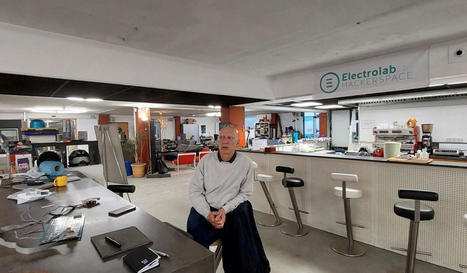
Malgré deux labélisations d’État comme «Fabrique numérique de territoire» et «Manufacture de proximité» et de nombreuses innovations à son actif, ce plus grand « hackerspace » associatif d’Europe implanté à Nanterre depuis 2010 est menacé de disparition.
Via Laurence
Google has released an open AI model called Gemma, which it says is created using the same research and technology that was used to build its Gemini AI models. The company says Gemma is its contribution to the open community and is meant to help developers "in building AI responsibly." As such, it also introduced the Responsible Generative AI Toolkit alongside Gemma. It contains a debugging tool, as well as a guide with best practices for AI development based on Google's experience.
Via Gust MEES
|
|
Scooped by
michel verstrepen
February 24, 2024 2:15 PM
|
C'est une première mondiale, l'Union européenne a validé un projet de régulation de l'intelligence artificielle, l'IA Act dans lequel elle demande plus de transparence aux industriels qui la génèrent, mais pas dans un domaine largement ignoré et pourtant très coûteux : sa facture environnementale.
Via Bibliothèques-Médiathèques de Metz, François Leviel
|
|
Rescooped by
michel verstrepen
from Educación a Distancia y TIC
February 24, 2024 1:27 AM
|
Las instituciones de educación superior tendrán que decidir si depurar su oferta y dedicarse a “enseñar” aquello que se dificulta “aprender” por cuenta propia (lo que es válido) o si inclinarse a funciones distintas, que se contemplan y quizá se usan, pero no con la intensidad que se observa en la tarea de la transmisión del conocimiento y destrezas. Lo que me parece que no debe hacer, es dejarse llevar en sus decisiones administrativas por docentes que están luchando por mantenerse “pertinentes” sin cambiar nada y que buscan mantener programas y metodologías insostenibles en un mundo lleno de información accesible y con la Inteligencia Artificial disponible en todas partes…a cara…otra vez “un mundo lleno” ¿será culpa mía que los chats siempre escriban así?
Via Edumorfosis, LGA
|
|
Rescooped by
michel verstrepen
from Educación a Distancia y TIC
February 23, 2024 5:00 PM
|
La educación desempeña un papel crucial en la preparación de los futuros profesionales. La necesidad de potenciar la creatividad en el ámbito educativo se vuelve aún más relevante, ya que se reconoce como una habilidad fundamental para enfrentar los desafíos de un mundo en constante cambio.
Los educadores deben adoptar enfoques pedagógicos que fomenten la creatividad desde una edad temprana y usar la IA como instrumento esencial para conseguir este objetivo. Esto implica alejarse de los métodos de enseñanza tradicionales y adoptar estrategias que promuevan la experimentación, la exploración y la resolución de problemas creativos. La integración de la tecnología, incluida la inteligencia artificial, puede ofrecer nuevas oportunidades para estimular la imaginación y la innovación en el aula.
Via Edumorfosis, LGA
|





















"The charge was to make recommendations and provide guidance and advice around what we should be doing as an institution with respect to this technology, knowing that there would be some rapid developments that we might have to respond to with a sense of alacrity."