Your new post is loading...

|
Rescooped by
michel verstrepen
from Into the Driver's Seat
December 5, 2020 6:35 AM
|
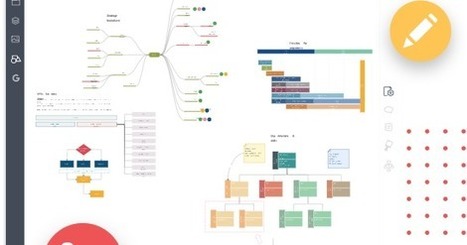
'Creately is another great tool we are adding to our distance education resources. Creately provides you with a visual collaborative space where you and your colleagues can sketch out concepts, brainstorm plans, and hold synchronous video chats. Its powerful canvas offers you over 50 types of technical and business diagrams and hundreds of pre-made templates. There are templates to help you create flowcharts, block diagrams, network diagrams, mind maps, concepts and brainstorming, timeline diagrams, Venn diagrams, and many more. There is also a section featuring education templates including templates for creating storyboards, biography graphic organizers, compare and contrast chart, essay sequence plan, and many more.
'Creately has in-built video conferencing that allows multiple users to hold video calls while working on the same document in real-time. Also, participants can interact textually with each other, they can add comments, organize discussion threads, and export and share documents in various formats (e.g., PNG, SVG, JPEG). To learn more about Creately watch the video below.'
Via Jim Lerman
|
|
Rescooped by
michel verstrepen
from :: The 4th Era ::
December 5, 2020 6:34 AM
|
"...even in hybrid districts, some students have been learning remotely, either part or full time. In short, online learning is the reality for a majority of students this fall. "We are still starved for data on what this all means. The earliest standardized test scores coming out show modest learning loss for students in math, but there are worries that the most at-risk students are not being tested at all. "For this story I talked to educators in six states, from California to South Carolina. For the most part they say things have improved since the spring. But they are close to burnout, with only a patchwork of support. They say the heart of the job right now is getting students connected with school and keeping them that way — both technologically and even more importantly, emotionally. Here are five lessons learned so far:"
Via Jim Lerman
|
|
Rescooped by
michel verstrepen
from Into the Driver's Seat
December 4, 2020 6:41 AM
|
Google Drawings is great for designing graphics, and it’s also a handy interactive whiteboard. Teachers are using this whiteboard in clever ways. Activities include fill-in, arranging, sorting, labeling, meme creation and math manipulatives. See lots of examples that you can copy, modify and distribute to your students.
Via Jim Lerman
|
|
Rescooped by
michel verstrepen
from Educación a Distancia y TIC
December 4, 2020 6:40 AM
|
As we prepare to launch another semester mostly online, we are better informed than we were in the spring and fall semesters. From experiences with rapidly applied pedagogies to better understanding of how our students’ radically altered lives impact their learning, we must adapt.
Via Peter Mellow, LGA
|
|
Rescooped by
michel verstrepen
from Educational Technology News
December 4, 2020 6:39 AM
|
"Procrastination is a way of dealing with challenging emotions and dispositions induced by certain tasks. These feelings often occur when we are faced with a task that we view as “aversive” (i.e., boring, frustrating, meaningless and/or disorganized), which in turn, leads to unpleasant feelings or a negative mood. These negative moods drive procrastination. I can just do it tomorrow Because procrastination is a “class killer” and because we always have procrastinators in our online classes, it is worth exploring some of the dominant negative moods that drive procrastination."
Via EDTECH@UTRGV
Economists, business leaders and educators agree: As technological innovations disrupt jobs and workers at a rapid pace, all workers, regardless of field, must be ready to adapt to new roles and develop new combinations of skills across the span of their career. However, some skills establish the core of a worker’s success and will stand the test of time. Because workers can use these skills to navigate transitions from role to role, and job after job across virtually any industry, these particular skills are best understood as transportable. In the future of work, understanding and attaining these skills is essential. Project Lead The Way (PLTW) and Burning Glass Technologies (Burning Glass) have joined forces to study workforce demand for five such transportable skills taught to millions of students each year in PLTW PreK-12 programs: problem solving, critical and creative thinking, collaboration, communication, and ethical reasoning and mindset. In studying them, they hope to understand the value of these skills to students, workers, and employers. To investigate demand for transportable skills, Burning Glass mined its database of more than 150 million unique online job postings in the United States, mapped these skills to its taxonomy of 17,420 discrete skills, and pinpointed openings requesting any of the five transportable skills. In doing so, they answered: How often, and in what fields, are these competencies sought by employers? How valuable are they to workers across the economy? How does their value evolve over the course of one’s career?The findings are clear: transportable skills are among the most demande
Via Edumorfosis, juandoming
|
|
Rescooped by
michel verstrepen
from Educational Technology News
November 27, 2020 5:39 PM
|
"Many companies condense their existing digital learning classes to create microlearning, which is the wrong approach. Certain characteristics must be a part of every microlearning bit you create, or else you run the risk of creating ineffective microlearning. In this article, we’ll discuss these characteristics."
Via EDTECH@UTRGV
|
|
Rescooped by
michel verstrepen
from Les outils du Web 2.0
November 27, 2020 7:14 AM
|
Aha Slides est une plateforme qui permet entre autres de créer des QCM interactifs facilement. En réalité Aha Slides fait bien plus, bien mieux que cela.
Via Fidel NAVAMUEL
|
|
Rescooped by
michel verstrepen
from Educación a Distancia y TIC
November 26, 2020 6:27 PM
|
Microlearning is defined as “learning delivered in bite-size chunks” (Cole, 2018, 12), which takes between ten to thirteen minutes (Cole, 2018). According to research, microlearning is most effective when it is delivered in two to five-minute chunks (Cole, 2018). According to Bersin (2017), microlearning is referred to as employee-centered, making learning not only easy to access through different media but also bringing learning to the employees. Microlearning courses can be viewed on any device. They can be integrated into different training scenarios, have a clear message, and are focused on one concept or skill. Scaglione (2019), Buhem and Hamelmann (2010) note that this type of learning is a new way of learning created by the new reality in the workplace, which requires lifelong learning and staying up-to-date with the fast flow of new technologies and information. It is a flexible approach, which can meet the demands of ongoing professional development.
Via Edumorfosis, LGA
|
|
Rescooped by
michel verstrepen
from Educación a Distancia y TIC
November 26, 2020 1:44 PM
|
Factores predictores de la satisfacción de estudiantes de cursos virtuales
Via LGA
|
|
Rescooped by
michel verstrepen
from Learning & Technology News
November 26, 2020 1:19 AM
|
Despite its world-beating internet, South Korea's move to online education has left many students and professors wanting. What can we learn from this?
Via Nik Peachey
|
|
|
Rescooped by
michel verstrepen
from Learning & Technology News
December 4, 2020 6:41 AM
|
Students today need basic digital literacy to be successful in any career or field they pursue. The capacity to manage complex tasks and projects using computers, mobile devices and other technology is given. So is the ability to use technology for communication, collaboration, critical thinking and creative problem-solving — all invaluable 21st-century skills, necessary for thriving in our increasingly global and interconnected world.
Via Nik Peachey
|
|
Rescooped by
michel verstrepen
from Into the Driver's Seat
December 4, 2020 6:40 AM
|
"Remote and blended instruction have forced an unprecedented review of teaching and learning practices. The result: an increased awareness of what works and what doesn’t and a renewed interest in what learning looks like and how we assess it. THE ASSESSMENT TRAP Questions that learners ask about an assignment are telling. How long should it be? How do I get an A? What do you want us to turn in? When is it due? These questions focus on the grade, not the learning outcomes. They highlight the assessment trap, or a focus on “What do I have to produce?” versus “What am I learning from this assignment?” Historically, problematic assessment practices have taught learners that the grade is the goal by doing the following: - Assessing for a score or grade
- Assessing for compliance (due dates, formatting, following instructions, etc.)
- Assessing to demonstrate “effort”
- Assessing for “rigor” (more work turned in = more rigor)
Digging our way out of the assessment trap means shifting to learning experiences focused on skills that we want or need to measure. Education experts Grant Wiggins and Jay McTighe called this “backward design.” Instead of the above problematic practices, we shift learning experiences to focus on demonstrating skill and expert learning. In this way, we take the focus off what students are expected to produce and place it on the act of learning, or the process.
Via Jim Lerman
|
|
Rescooped by
michel verstrepen
from Educational Technology News
December 4, 2020 6:40 AM
|
"Data-driven approaches can often be the answer to many problems or issues faced by educational facilities and schools. These types of insights can lead to payoffs for college campuses around the world."
Via EDTECH@UTRGV
|
|
Rescooped by
michel verstrepen
from L'eVeille
December 4, 2020 6:39 AM
|
Manuel pédagogique d’introduction et de compréhension des enjeux environnementaux du numérique.
Via CECI Jean-François
|
|
Rescooped by
michel verstrepen
from Educational Technology News
November 27, 2020 5:38 PM
|
High school students across the state of Texas have a new resource to guide them through the college application process in the form of an AI chatbot. Thanks to a public-private partnership announc…
Via EDTECH@UTRGV
|
|
Rescooped by
michel verstrepen
from L'eVeille
November 27, 2020 5:37 PM
|
|
|
Rescooped by
michel verstrepen
from L'eVeille
November 27, 2020 7:14 AM
|
Les enseignants québécois du secondaire ne retrouveront pas leurs élèves dans leurs classes, mais ils doivent continuer à enseigner à distance jusqu’à la fin de l’année. Plusieurs d’entre eux repousseront leurs limites et exploreront de nouveaux horizons avec cette approche. Voici quelques astuces, très simples et qui ne réinventent rien du tout, mais qui pourraient vous inspirer dans une pratique qui saura garder vos élèves actifs.
Via Sandrine Decamps
In honor of National Disability Employment Awareness Month, a look at new accessibility features in Chromebook and G Suite for Education.
Via Dr. Tom D'Amico (@TDOttawa)
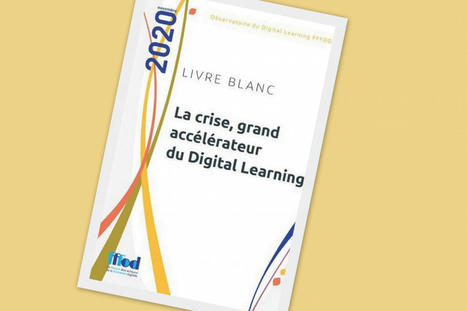
Le forum des acteurs de la formation digitale a dévoilé mardi 24 novembre son enquête annuelle sur les usages du digital learning. Combiné aux enseignements de l’enquête du Carif-Oref francilien Défi Métiers, les résultats témoignent d’une accélération du déploiement de la formation digitale. Après l’urgence, l’enjeu qualité s’impose.
Via ORSYS Formation
|