"Humans tutoring other humans works pretty well. The trouble is, it requires a lot of people. Artificially intelligent tools tutoring humans works pretty well, too—but building those digital systems takes time and expertise."
Advances in AR and VR promise to revolutionize the workplace, Paul Jacobs, chairman and CEO of XCOM, told CNBC at its virtual At Work event on Thursday.
TagMP3 est un outil en ligne qui permet de modifier facilement les balises ID3 des fichiers audio MP3 (et d'autres formats). Il peut remplacer temporairement un logiciel dédié à cette tâche, puisqu'il offre l'avantage de ne pas avoir besoin de télécharger et d'installer un programme.
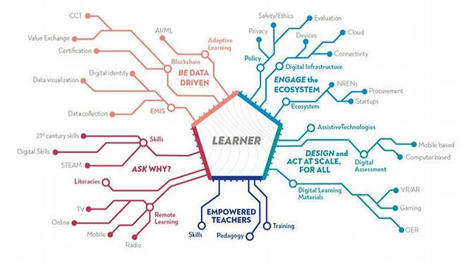
Education technology — or ‘EdTech’, the use of hardware, software, digital content, data, and information systems in education — supports and enriches teaching and learning and improves education management and delivery.
rEASYze – Batch Image Resizer & Editor Resize multiple images at once… If you want a lightweight Batch image editor that you can use to perform basic editing tasks such as cropping, renaming, resizing and even applying watermarks to your pictures, then consider rEASYze. You can work with single or multiple images simultaneously.
rEASYze – Batch Image Resizer & Editor Resize multiple images at once… If you want a lightweight Batch image editor that you can use to perform basic editing tasks such as cropping, renaming, resizing and even applying watermarks to your pictures, then consider rEASYze. You can work with single or multiple images simultaneously.
Above all, the authors argue that this national crisis ought to prompt creativity and energy around how to make learning higher quality and more equitable for children.
"When educators describe their frenzied switch to remote learning in the spring, most talk about being caught off guard. Some mention how little they knew then—about virtual learning, as well as the virus that forced them out of their school buildings. Others shudder at the tight timeframe they were given to completely reconstruct the instructional day. There was no time for preparation or “best practice.” It was an emergency."
It takes time to learn how to effectively facilitate a course online/remotely. It's my hope that with each semester, educators are learning from past experiences about what works and what doesn't.
It’s hard to remember a time when video games weren’t a major part of our lives. Even going back to the early days of gaming when home consoles like Atari and Intellivision were first appearing in family living rooms and kids’ allowances were mostly spent pumping quarters into games at the local arcade, video games were almost always synonymous with recreation and fun but rarely, if ever, with learning. Even the word ‘game’ itself couldn’t possibly tie into meaningful teaching and learning outcomes in school, could it?
In recent years, esports, or competitive video gaming has become a dominant force around the globe capturing audiences unheard of even for some of the most popular sports in the world. Colleges and universities started to create esports teams and even began offering scholarships to some of the best players out there. This led to K-12 educators finding opportunities in their schools to create esports teams and/or clubs to empower and engage their students. But something fascinating happened along the way. Esports ceased being about the games but, instead, has become something even more incredibly powerful and inspiring.
La Lic. Greta Gawaianski (ARG) comparte su ponencia en el Encuentro de Educadores Disruptivos 2020, organizado por la RedLATE y RedCUDI (MX). Se define el concepto del Blockchain y luego se presenta el impacto que tendrá en el ámbito educativo superior. Se muestra algunos ejemplos de proyectos universitarios existentes que trabajan con la automatización y monetización de los procesos administrativos y académicos.
No cabe duda que el Blockchain impactará las Universidades y organismos educativos emergentes. Las instituciones de Educación Superior tendrán que invertir sus presupuestos en esta nueva infraestructura que automatizará y agilizará los procesos y procedimientos rutinarios de la Administración Universitaria.
Recomiendo que los presidentes, rectores, decanos y dirigentes universitarios vean esta magistral presentación.
About our Community We know teachers like YOU are all across the Country doing amazing work in STEM, Robotics & Coding. We’d like you to be able to share that amazing work and learn from others as well.
This episode is the third in a series of interviews with 'ELT influencers' chosen by our TDSIG competition winners. Nik Peachey talks about his early involvement in technology and the likely forthcoming evolutions in language learning technology including artificial intelligence, virtual reality...
"Traditional grading practices are deeply flawed, and it’s high time to replace them with more beneficial ways of measuring student progress. Over-relying on summative assessments does little to encourage the collection and use of formative data, and even the best teacher-created assessments still confront issues of reliability and validity. While the objectivity of attaching numbers to student proficiency may seem precise, this specificity rings hollow and only serves to lower student motivation.
As the current pandemic rages across the globe causing massive casualties and setting up new realities, the way education was delivered pre-pandemic will forever be changed. Distance learning and online education are taking over the stage with more schools and universities moving to online curricula and increasingly adopting remote modes of teaching and learning. In today's post we are sharing with you some useful digital resources to facilitate your transition to virtual-based modes of education and work.
"Readers are likely familiar with the term "life-long learner," but what about the people teaching those learners? Educators are life-long learners, too, and perfecting teaching skills is an equally endless process. Algonquin College's Professor of the 21st Century hub serves as a resource to educators, providing tools to expand seven key competency areas. These competency areas engulf topics such as professional development, curriculum creation, and implementing classroom technology. Several readings and documents are embedded under each competency sub-topic. Additionally, the Faculty Self-Assessment page outlines suggested competency benchmarks for 3 levels of educators: new educators (0-2 years of experience); seasoned educators (2-7 years of experience); and established educators (7+ years of experience). For example, the guidelines suggest a new professor can describe their learning style and understand how it impacts students' learning styles, while a professor with slightly more experience can adjust their learning style to better fit students' needs. A chart with these benchmarks is linked under the Professor of the 21st Century Framework Levelled Document section of the Faculty Self-Assessment page. Competency areas and sub-topics were developed in partnership with academic leaders and approved by the College Academic Council. "
To get content containing either thought or leadership enter:
To get content containing both thought and leadership enter:
To get content containing the expression thought leadership enter:
You can enter several keywords and you can refine them whenever you want. Our suggestion engine uses more signals but entering a few keywords here will rapidly give you great content to curate.


 Your new post is loading...
















AI that cuts out the human element entirely? What could go wrong? <grin>