 Your new post is loading...
"A little over a decade ago, schools were swept into what many described as a movement to prepare students for the future of work. That work was coding — “Hello, world!” Districts introduced new courses, nonprofits expanded access to computer science education and a growing ecosystem of programs promised to teach students the skills needed to enter the tech workforce. For many, it felt like a necessary correction to a rapidly digitizing world. But over time, a more complicated picture emerged."
Via EDTECH@UTRGV
A study of more than 70 AI models, such as ChatGPT, shows that answers are similar even when prompted to be creative or brainstorm.
Via EDTECH@UTRGV
While AI tools can momentarily improve student performance, Stanford University researchers caution that those gains may not persist once the technology is removed — raising questions about whether the tools are supporting learning or substituting for it.
Via Yashy Tohsaku, juandoming
"As generative artificial intelligence reshapes instructional workflows at colleges and universities, a four-level transparency framework can help education developers calibrate documentation and disclosure practices to support ethical responsibility and maintain student trust."
Via EDTECH@UTRGV
Blog de la "RIED. Revista Iberoamericana de Educación a Distancia". La Revista Iberoamericana de la Educación Digital.
Via LGA
La plateforme d’hébergement aux près de 2 millions de sites et blogs renforce encore les possibilités d’utiliser des agents IA pour ses utilisateurs : via son serveur MCP, Claude, ChatGPT, OpenClaw et Cursor peuvent maintenant publier automatiquement des contenus ouvrant la voie à encore plus de contenus GenAI sur la plateforme.
Via Intelligence Economique, Investigations Numériques et Veille Informationnelle
AI has arrived as a powerful, pervasive reality, bringing with it a whirlwind of innovation, new tools, and pressing questions. Here are five practical steps to help your institution navigate this rapidly evolving landscape and accelerate its path to real transformation.
Via EDTECH@UTRGV
Prospective students are increasingly using AI to decide where to go to school, so it’s critical that institutions adopt and embrace it to increase reach.
Via EDTECH@UTRGV
Une semaine après Microsoft et un mois après OpenAI, Perplexity lance son chatbot au nom peu original : Perplexity Health.
Comme ses concurrents, Perplexity explique que son service est connecté avec Apple Health et des services de fitness et de santé comme Fitbit, Ultrahuman, Withings et surtout permet de connecter les « dossiers médicaux électroniques de plus de 1,7 million de prestataires de soins », et de prendre en compte « vos résultats d’analyses ».
Via Intelligence Economique, Investigations Numériques et Veille Informationnelle
De quoi parle-t-on ? « Et si demain votre collègue était une IA ? », « Comment l’IA réservera bientôt vos vacances à votre place ? »... Depuis quelques mois, les titres de presse se sont multipliés pour décrire le développement des IA agentiques. Il ne s’agît ici plus simplement de « discuter » avec une IA, mais de lui confier des tâches spécifiques, plurielles et complexes. Un développement qui s’accompagne d’autant de promesses économiques que de discours anxiogènes. Derrière ces effets d’annonce, qu’en est-il réellement ?
Via Bibliothèques-Médiathèques de Metz
Some new findings show that AI has certain benefits, such as reducing barriers for students with learning disabilities. But overall, more evidence is needed to understand how AI influences learning.
Via EDTECH@UTRGV
What is AI literacy?ResourcesFor educatorsContact Join us for Canada's first AI Literacy DayArtificial Intelligence (AI) is transforming the way information is created, shared and consumed. Tools that generate text, images and videos blur the boundaries between what is authentic and what is...
Via Dr. Tom D'Amico (@TDOttawa)
|
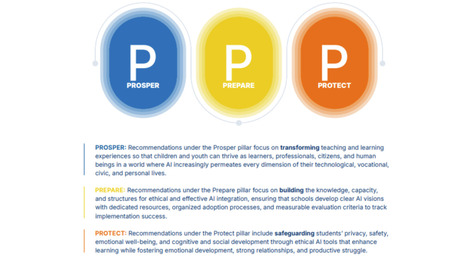
Earlier this year, we released the Brookings Global Taskforce on AI and Education report, A New Direction for Students in an AI World: Prosper, Prepare, Protect. Our key finding was striking: while AI offers clear benefits—expanded access, time savings, personalization, and new forms of assessment—i
Via Dr. Tom D'Amico (@TDOttawa)
Can AI truly reason? Discover how the CareerNet initiative uses expert labels to improve autonomous decision-making and bridge the gap in machine logic.
Via EDTECH@UTRGV
I asked experts if I'm real. Bad news. Even my aunt wasn't sure if I was a deepfake. AI is so convincing that a sitting prime minister struggled to prove he's alive. You might be next.
Via EDTECH@UTRGV
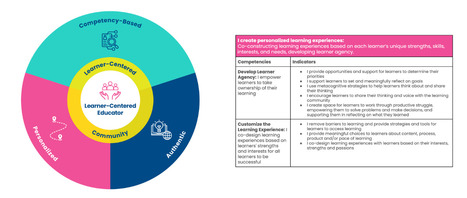
"In conversations across the country, I hear a growing mix of excitement and apprehension about the role of artificial intelligence in education. Many see the potential, yet most also sense a disconnect between what today’s AI tools produce and the kinds of learning experiences we want for young people. This tension is not incidental—it reflects a deeper issue in how AI currently “understands” teaching and learning. Most generative AI tools carry a built-in bias toward traditional, teacher-directed instruction."
Via EDTECH@UTRGV, juandoming
Read about several practices that helped me keep generative AI in learning design productive but still under control.
Via EDTECH@UTRGV
La vidéo générative ou modifiée par des algorithmes d’IA permet la puissance narrative, la scalabilité à l'échelle et l'hyperpersonnalisation Découvrez comment
Via Thierry Pires
Revista Iberoamericana de Educación a Distancia”>
Via LGA
L’AI Act est entré en vigueur en août 2024 mais sa mise en application est progressive. Alors que les règles relatives aux systèmes d’intelligence artificielle à haut risque devaient s’appliquer à partir du 2 août 2026, des députés européens se sont prononcés pour le report de près d’un an et demi de ces mesures.
Via Intelligence Economique, Investigations Numériques et Veille Informationnelle
Innovative Leader Award - Courtney Bock shares how she created her AI PD program that helps educators understand the basics so they can implement it in their instruction.
Via EDTECH@UTRGV
How do instructors get students to trust their own thinking and be better than robots?
Via EDTECH@UTRGV
|





















"The “learn to code” movement raised an important question that still lingers today: Which skills actually endure when technologies change?"