Le Café des MATHadores, un Serious Game sur les tâches mathématiques: En utilisant des situations proches de la ...
Via Yasmine Kasbi


|
Rescooped by
michel verstrepen
from SeriousGame.be
onto gpmt November 30, 2011 1:47 AM
|
 Scoop.it!
Le Café des MATHadores, un Serious Game sur les tâches mathématiques: En utilisant des situations proches de la ...
 Your new post is loading...
 Your new post is loading...
Your new post is loading...
Scoop.it!
|
|
|
Rescooped by
michel verstrepen
from Educación a Distancia y TIC
September 1, 6:00 AM
|
Scoop.it!

Por Carlos Bravo Reyes y Mercedes Leticia Sánchez Ambriz Del pedido aislado al procedimiento pedagógico reutilizable Durante los últimos añ...
|
|
Rescooped by
michel verstrepen
from Digital Delights for Learners
August 27, 1:13 PM
|
Scoop.it!


Lignique is an AI-assisted comic creation and visual storytelling platform that helps creators build comics, storyboards, and visual stories with consistent characters, styles, locations, props, and panel continuity.
|
|
Rescooped by
michel verstrepen
from Educational Technology News
August 26, 3:17 AM
|
Scoop.it!

The latest AI tutoring research points to a stubbornly human problem — getting students to engage. “Access was nearly universal but engagement was thin,” a new study found.

"[R]esearch on AI in education is nascent, but an early theme is that students often won’t use it for learning. 'When given AI tutors, many students do not engage'”
|
|
Rescooped by
michel verstrepen
from Digital Delights - Digital Tribes
August 26, 3:17 AM
|
Scoop.it!

With the increasing availability of assistive AI, many people have turned to AI frameworks and harnesses (Hermes Agent, Claude Cowork, etc.) to help them achieve day-to-day goals. In many cases the AI has been directed to carry out those tasks that people want to hand-off. That is good, but is it the right thing to do? Is AI actually the ideal solution, or is it something to help you create that solution?
|
|
Rescooped by
michel verstrepen
from Digital Delights - Images & Design
August 21, 10:25 PM
|
Scoop.it!
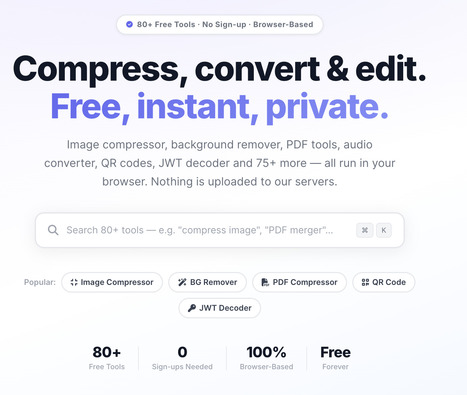
80+ free online tools for images, audio, video, PDF, finance, developers and game dev. Compress images, crop photos, convert audio, build resumes and more — fast, private, no sign-up.
|
|
Rescooped by
michel verstrepen
from Educational Technology News
August 21, 10:25 PM
|
Scoop.it!
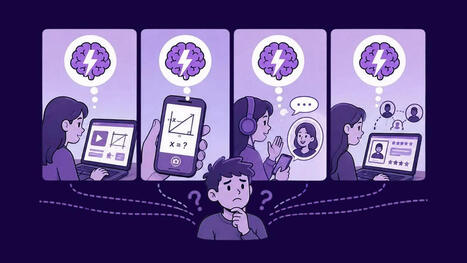
As the catch-all term “AI tutoring” captures the public imagination, it’s time to define and measure what actually meets the bar for a “tutor.”
"Homework helpers (and off-the-shelf LLMs) are designed to resolve the task a user brings in real time: to get to an answer. Great tutors don’t provide answers."
|
|
Rescooped by
michel verstrepen
from Digital Delights for Learners
August 21, 8:11 AM
|
Scoop.it!

How do you decide what's worth your attention in a world designed to capture all of it? Check out Critical Ignoring: What's Worth Your Attention?, a free digital literacy and citizenship lesson plan by Common Sense Media. Teach students in 9,11,10,12 about responsible and healthy media and tech use.
|
|
Rescooped by
michel verstrepen
from Educational Technology News
August 21, 8:11 AM
|
Scoop.it!

AI cheating will decrease, the techlash will continue, and other predictions for the coming school year.
"I think we’re going to see more institutional responses and more cultural responses to this. Encouraging trends include the movement toward watermarking from some of the tech giants"
|
|
Rescooped by
michel verstrepen
from Digital Delights - Digital Tribes
August 19, 9:21 AM
|
Scoop.it!

"Teaching and learning aren’t always aligned.
Sometimes organized teaching is defensive. “Here, take all this down in your notes, it will be on the test.” This gives the teacher deniability, but might not create the conditions for the student to actually learn.
The alternative is to seek the “aha.” This is the autodidact moment, the opportunity to teach ourselves.
Most online courses and videos simply tell you the answer. Easier to get clicks that way. But the best learning is almost always autodidactic.
When the teacher creates the conditions for learning, the student does the work.
This requires trust. Trust in the process and trust in the destination.
And it requires tension. The tension of it might not work and the incentive to put in the work.
Great teachers set it up, and great students find the aha."
|
|
Rescooped by
michel verstrepen
from Educational Technology News
August 17, 2:36 PM
|
Scoop.it!
From pattern recognition to alignment failures, a clear-eyed guide to what's actually happening inside the AI systems reshaping work, media, and daily life
"[T]he gap between what AI can do and what people believe it's doing creates real problems. People anthropomorphize systems that have no inner experience. They trust outputs that are confidently wrong. They assume AI is "thinking" when it's doing something quite different."
|
|
Rescooped by
michel verstrepen
from Educational Technology News
August 17, 2:35 PM
|
Scoop.it!

Anthropic has revealed how Claude is able to secretly watermark AI-written text, and it has everything to do with word choices.
"There are situations where Claude's watermarking solution might not be effective."
|
|
Rescooped by
michel verstrepen
from Educación a Distancia y TIC
September 1, 6:01 AM
|
Scoop.it!
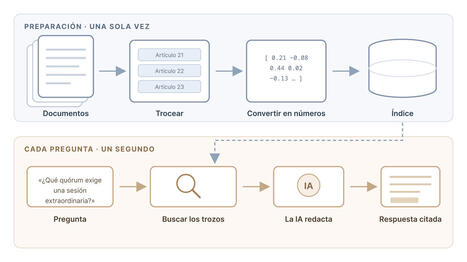
Por Juan José De Haro Cualquier persona que trabaje con documentación acumula un fondo de textos que consulta una y otra vez: normativa, ac...
|
|
Rescooped by
michel verstrepen
from Educational Technology News
August 27, 1:13 PM
|
Scoop.it!
"As generative artificial intelligence reshapes conversations about teaching, learning, and assessment, colleges and universities have an opportunity to look beyond what learners produce and better understand how human capability develops over time, strengthening teaching, feedback, and assessment through richer evidence of learning."
"One of the most valuable effects of the emergence of AI in education may be that it has brought renewed attention to a question that has always been present: How do we know learners are becoming capable?"
|
|
Rescooped by
michel verstrepen
from iGeneration - Humane Use of Technology in an AI world (Pedagogy & Digital Innovation)
August 26, 8:30 AM
|
Scoop.it!
|
|
Rescooped by
michel verstrepen
from Digital Delights - Digital Tribes
August 26, 3:17 AM
|
Scoop.it!
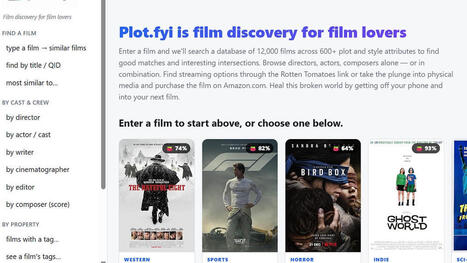
Rebuilding the internet of weird little things one data enrichment at a time
|
|
Rescooped by
michel verstrepen
from Educación a Distancia y TIC
August 26, 3:17 AM
|
Scoop.it!

|
|
Rescooped by
michel verstrepen
from Learning & Technology News
August 23, 11:51 AM
|
Scoop.it!

Most teachers recognize the scene: a room full of students copying down slides word-for-word or neatly filing away handouts under the assumption that having the record means having the knowledge.

This is an interesting article about the use of notes and their impact on memory - Cognitive Offloading in the Classroom: How External Notes Compromise Internal Learning - https://ammaramerhbi.substack.com/p/cognitive-offloading-in-the-classroom
|
|
Rescooped by
michel verstrepen
from Educational Technology News
August 21, 10:25 PM
|
Scoop.it!

The letter emphasizes outcomes and evidence but stops short of issuing federal regulations.
"Responsible design is the floor. Not only do we need to know if the tool works, but if it works; why does it work, for whom does it work, and under what conditions.”
|
|
Rescooped by
michel verstrepen
from Educational Technology News
August 21, 10:24 PM
|
Scoop.it!

What research reveals about the absence of training, policy, and institutional support
"Teachers with higher self-efficacy perceived more benefits, fewer concerns, and reported more trust."
|
|
Rescooped by
michel verstrepen
from Educational Technology News
August 21, 8:11 AM
|
Scoop.it!

Access to AI is not the same as readiness to use it well. This article sets out what an AI-ready workforce actually needs.
"An AI-ready workforce is not one where everybody becomes an expert or uses AI for everything. It is one where people can make an informed call about where AI belongs in their work and where it does not."
|
|
Rescooped by
michel verstrepen
from Educational Technology News
August 21, 8:11 AM
|
Scoop.it!
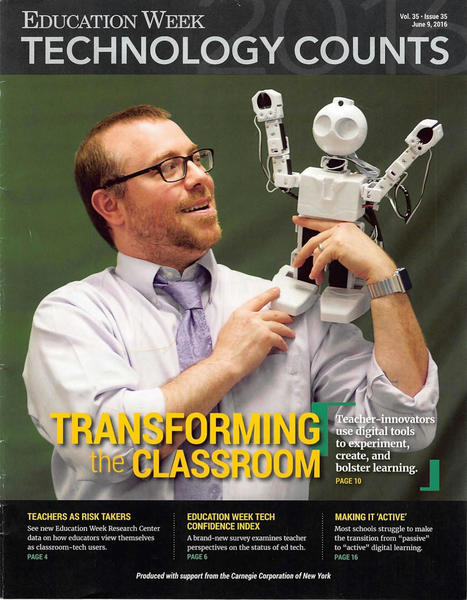
"Pretty soon, everyone is going to see that I do not belong here.
Whether it was as a student, an athlete, a teacher, and now in the business world, some version of that sentence has always run through my head."
"The feeling that you do not belong can hang over everything you do. Every meeting and every presentation feels like a performance where you are just waiting for someone in the audience to start booing because they have finally figured out that you have no idea what the heck you are doing."
|
|
Rescooped by
michel verstrepen
from Digital Delights
August 19, 9:21 AM
|
Scoop.it!

Learn practical strategies to improve online student retention by reducing anxiety, building connection, and empowering students to persist and succeed.
|
|
Rescooped by
michel verstrepen
from Educational Technology News
August 17, 2:36 PM
|
Scoop.it!
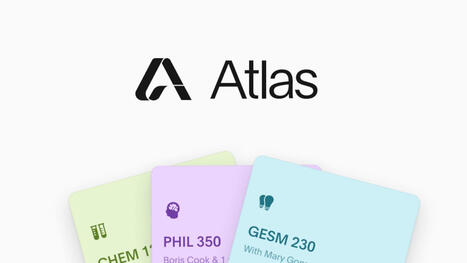
"For educators, Atlas is an example of how AI is evolving beyond general-purpose chatbots into subject-focused learning assistants. While it shouldn't replace classroom teaching or critical thinking, it can help students review difficult topics, organize information, and prepare for assessments when used appropriately."