
A new survey from Gallup and the Walton Family Foundation finds that the vast majority of teachers have not received formal guidance on how to use AI in their work, and about a third have gotten none.
Via EDTECH@UTRGV


|
Rescooped by
michel verstrepen
from Educational Technology News
onto gpmt June 10, 6:13 PM
|
 Scoop.it!
A new survey from Gallup and the Walton Family Foundation finds that the vast majority of teachers have not received formal guidance on how to use AI in their work, and about a third have gotten none.
 Your new post is loading...
 Your new post is loading...
Your new post is loading...
Scoop.it!

From
discode

It shows you which model answered and why, redacts your personal data on-device before anything leaves, checks the hard answers across multiple models, and estimates the CO₂, water and energy footprint of every request. Built in Vienna 🇦🇹. Your AI, your rhythm. Via Nik Peachey 
Nik Peachey's curator insight,
June 30, 5:41 AM
Here's one for the eco-conscious AI user - This service will route your AI prompts through the most eco-friendly AI models https://discode.ai/ You can get started for free, but it's not a totally free service so you'll need to decide how much you care about the environment!?
Scoop.it!

Why story-driven training sticks — and how to build it fast in SHIFT Meteora AI Studio or deliver it through the LMS you already use. Via EDTECH@UTRGV 
EDTECH@UTRGV's curator insight,
June 26, 3:01 PM
"[A]sk someone about a story that moved them, even one they heard years ago, and the details come back instantly: the character, the moment of tension, what they would have done differently."
Scoop.it!

From SuperIntelligence to Super-Dependence: Are Humans Training Their Own Cognitive Replacement? Image created by ChatGPT, click please to enlarge. Introduction After publishing several tutorials about #AI, its opportunities, risks, ethics, and the possible emergence of #SuperIntelligence, one observation appears increasingly difficult to ignore: Many people interact with AI with a certain form of digital naivety.…
Learn more / En savoir plus / Mehr erfahren:
https://www.scoop.it/topic/21st-century-learning-and-teaching?tag=Gust-MEES
https://gustmees.wordpress.com/
Via Gust MEES 
Gust MEES's curator insight,
June 27, 4:24 PM
From SuperIntelligence to Super-Dependence: Are Humans Training Their Own Cognitive Replacement? Image created by ChatGPT, click please to enlarge. Introduction After publishing several tutorials about #AI, its opportunities, risks, ethics, and the possible emergence of #SuperIntelligence, one observation appears increasingly difficult to ignore: Many people interact with AI with a certain form of digital naivety.…
Learn more / En savoir plus / Mehr erfahren:
https://www.scoop.it/topic/21st-century-learning-and-teaching?tag=Gust-MEES
https://gustmees.wordpress.com/
Scoop.it!

From
miver
BeAI Observatoire Digital Omnibus Package A - A + Aide à l'intégration IA ? Numérique ? Informatique ? S'y retrouver dans les réglementations et accompagner l'adoption s'avère complexe. Ce hub interactif simplifie l'accès à nos supports, à l'échéancier réglementaire consolidé, et aux outils...
Scoop.it!

Learn how teaching AI literacy helps students use AI as a writing assistant rather than a substitute, improving revision, critical thinking, and ethical AI use. Via Ana Cristina Pratas
Scoop.it!

From
topkit
by Nafije K. Prishtina, Florence W. Williams Across the ADDIE framework, AI supports ideation, drafting, summarization, and pattern recognition, while instructional designers remain responsible for pedagogical alignment, accessibility, ethical review, and learner-centered decision-making. Abstract The increasing use of generative artificial intelligence (AI) in higher education is prompting a rethinking of instructional design practices. This paper … Continue reading "IDs and AI in Digital Partnerships: Orchestrating Innovation within the ADDIE Framework" Via Ana Cristina Pratas
Scoop.it!
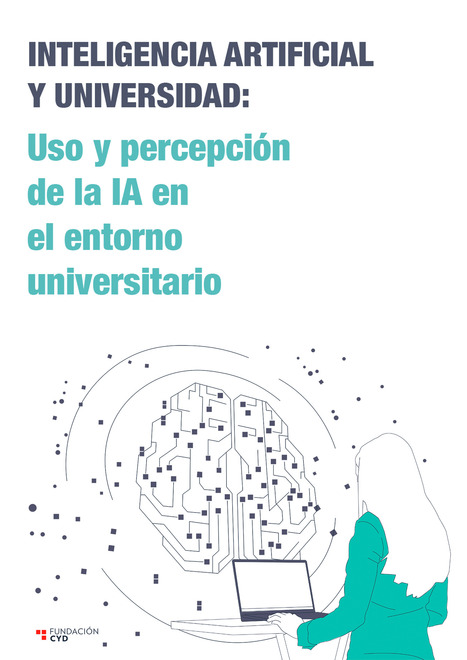
La Fundación CYD ha publicado Uso y percepción de la IA en el entorno universitario, un análisis que muestra cómo las universidades españolas y los estudiantes emplean las herramientas de inteligencia artificial generativa, así como su valoración e inquietudes sobre éstas. Via LGA
Scoop.it!

From
evolllution
Higher education often frames recruitment with motivational rhetoric, but adult learners prefer accessibility, certainty, and community over motivation. Via EDTECH@UTRGV
EDTECH@UTRGV's curator insight,
June 22, 6:40 PM
"For years, higher education has approached adult learners as though they are standing on the sidelines waiting to be inspired. Marketing campaigns focus on aspiration. Recruitment strategies focus on encouragement...The question is rarely, 'Why should I go back to school?' More often, it is, 'Can I realistically do this?'"
Scoop.it!

From
captioner
Captioner is an AI subtitle generator and editor for your videos. Add accurate subtitles to your videos and save hours of work. Upload your videos and edit right on your browser. Via Nik Peachey
Nik Peachey's curator insight,
June 22, 5:13 AM
Free - Captioner lets you add accurate subtitles to videos right in your browser. Upload a file, auto-transcribe and edit precise timestamps. You can translate captions into 98+ languages, export SRT, VTT, or SBV files https://captioner.io/en You can do up to 3 videos per day for free - great if you are producing video based materials.
Scoop.it!

The most powerful belonging practices are built into the weekly routines of teaching, advising, and communication with learners. Via EDTECH@UTRGV
EDTECH@UTRGV's curator insight,
June 19, 11:26 AM
"[B]elonging is built through small, consistent practices that reduce uncertainty, increase connection, and help students believe they can persist."
Scoop.it!
From
www
"The videos are all over social media, making students an irresistible offer: Go ahead and let A.I. do your homework — with the latest technology, you won’t get caught...
These kinds of tutorials are now pervasive on TikTok and YouTube. They show students how to use tools known as humanizers and autotypers, which make it easier than ever to cheat. The videos — sometimes labeled ads, sometimes not — target college and high school students." Via EDTECH@UTRGV
EDTECH@UTRGV's curator insight,
June 19, 11:32 AM
"Big tech companies and small start-ups are using social media to hype new tools that allow students to trick teachers and A.I. detectors."
Scoop.it!

Conversations with Kevin Hogan: SchoolAI policy analyst Sasha Luks-Morgan breaks down the three pillars every district AI policy needs Via EDTECH@UTRGV
EDTECH@UTRGV's curator insight,
June 16, 11:28 AM
"About two-thirds of U.S. districts and states have some form of AI policy in place. The other third is, as Sasha Luks-Morgan puts it, the wild west. And even many of the policies that do exist, she argues, aren't doing what they're supposed to do."
Scoop.it!

The risk of cognitive outsourcing is real. But there is reason for optimism, if students are taught good AI habits early and often. You have seen it happen: A student opens an AI tool, gets a polished essay outline in minutes, submits the assignment and walks away feeling productive. They do well on the exam. The grade is real. But ask them to explain the same concept three months later, and the room goes quiet. Via EDTECH@UTRGV
EDTECH@UTRGV's curator insight,
June 16, 11:32 AM
"I don’t ban AI tools, nor do I treat them as a shortcut to avoid. Instead, I try to structure AI into the learning process in a way that makes its strengths and limitations visible to students." |
Scoop.it!

From
www
Some students with disabilities rely on assistive technology to learn, and they worry it could be swept up in the movement to get screens out of schools. Via EDTECH@UTRGV
EDTECH@UTRGV's curator insight,
June 26, 3:34 PM
"Much of the pivot away from screens in schools has come from parents who are concerned screen use is getting in the way of their children’s learning"
Scoop.it!
From
sup
Application pédagogique interactive et autonome pour comprendre le fonctionnement des agents IA.
Scoop.it!
From
sup
Application pédagogique interactive et autonome pour comprendre le cheminement d'un modèle de langage de type GPT.
Scoop.it!

Nik Peachey's curator insight,
June 26, 7:46 AM
This is interesting feedback on the research (or lack of it) in how AI is used in education I Read 25 Studies on AI in Education. Here’s What Teachers Are Actually Doing. https://mikekentz.substack.com/p/i-read-25-studies-on-ai-in-education
Scoop.it!
Scoop.it!
La IA generativa está transformando la forma de estudiar. Descubre cómo influye en el aprendizaje, qué habilidades serán clave y cómo utilizarla de forma eficaz. Via LGA
Scoop.it!

This article explores why strong Instructional Design skills matter more than industry experience when hiring Instructional Designers. Via EDTECH@UTRGV
EDTECH@UTRGV's curator insight,
June 22, 6:35 PM
"Instructional Designers Are Learning Experts First"
Scoop.it!
These Guidelines recognize the value of ODL as one of the most sustainable methods for overcoming the educational barriers faced by persons with disabilities. Via Nik Peachey
Nik Peachey's curator insight,
June 22, 5:19 AM
Inaccessible learning environments pose a significant barrier to quality education for all, affecting the rights of learners. Approximately 15% of the global population, representing one billion people, live with a disability. Amid this, these Guidelines shed light on inclusive education, delving into technology-based approaches for learners with disabilities.
Scoop.it!
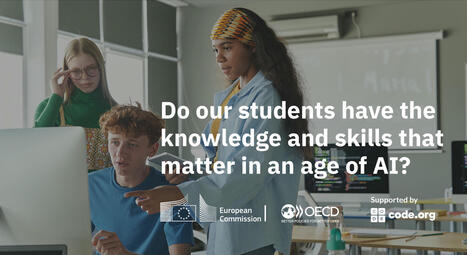
Empower learners for the age of AI with the AILit Framework—a joint EC & OECD initiative, supported by Code.org and international experts. Via Dr. Tom D'Amico (@TDOttawa)
Scoop.it!

Explore two professors' approaches to AI and assignment design, from AI-resistant assessments to AI-integrated learning experiences. Via EDTECH@UTRGV
EDTECH@UTRGV's curator insight,
June 19, 11:30 AM
"[A] question has arisen from teachers of every discipline: how do we develop assignments that facilitate learning with AI constantly present? This question does not have a single correct answer. Different instructors have different opinions on the role AI should play in education due to their discipline or personal teaching philosophy."
Scoop.it!

What if the greatest danger of #AI is not the technology itself… but the way we think? This reflection is part of a broader journey through #ReverseTHINKing—where we move from awareness to responsibility, from reaction to understanding. Image created by ChatGPT, click please to enlarge. Introduction Everybody has already remarked that technology evolution — and…
Learn more / En savoir plus / Mehr erfahren:
https://www.scoop.it/topic/21st-century-learning-and-teaching?tag=Gust-MEES
https://gustmees.wordpress.com/
Via Gust MEES
Gust MEES's curator insight,
June 19, 3:12 PM
What if the greatest danger of #AI is not the technology itself… but the way we think? This reflection is part of a broader journey through #ReverseTHINKing—where we move from awareness to responsibility, from reaction to understanding. Image created by ChatGPT, click please to enlarge. Introduction Everybody has already remarked that technology evolution — and…
Learn more / En savoir plus / Mehr erfahren:
https://www.scoop.it/topic/21st-century-learning-and-teaching?tag=Gust-MEES
https://gustmees.wordpress.com/
Scoop.it!

Understand the four stages of competence and how they help in skill development and learning in today's fast-paced workplace. Via EDTECH@UTRGV
EDTECH@UTRGV's curator insight,
June 16, 11:30 AM
"The model has four levels: unconscious incompetence, conscious incompetence, conscious competence, and unconscious competence." |







"A new report suggests that districts are moving on AI faster than many expected, but the infrastructure needed to do it responsibly is struggling to keep up."